
 Source:
 Due to its fuzzy (Goeppertia rufibarba) short overview
Goeppertia rufibarba is a tropical Brazilian perennial prized as an indoor foliage plant rather than for frequent flowers. Its upright clumps carry glossy, narrow green leaves with purple undersides and unusual reddish hairs that give the plant a soft, velvety appearance. Grow it in bright filtered light, warm temperatures, high humidity, and evenly moist but well-drained potting mix. Small yellow or orange flowers may appear, though blooming is uncommon indoors.
Taxonomic classification
Due to its fuzzy (Goeppertia rufibarba) care guide
Light and placement
Provide bright filtered light or gentle partial shade. An east- or north-facing window is suitable; near a south or west window, diffuse the light or place the plant several feet back. Direct midday sun can scorch the blades, while very dim conditions may cause slower growth, faded color, and weaker, more open clumps. Rotate the pot periodically for even growth.
Watering and humidity
Water when the surface begins to dry but before the root ball becomes fully dry, applying water thoroughly until excess drains away. Empty the saucer and never leave the pot standing in water. Use rainwater, distilled water, or low-mineral water when possible because fluoride and salts may contribute to brown tips. Reduce frequency in winter as light and growth decline, but do not allow prolonged drought.
Soil and growing medium
Use a loose, moisture-retentive houseplant mix based on peat or coco coir with added perlite, fine bark, or another aerating component. The medium should drain freely while remaining lightly moist. Slightly acidic to neutral conditions are suitable; avoid compacted soil, standing water, and heavy garden soil in containers.
Feeding
Feed monthly from spring through summer with a balanced liquid houseplant fertilizer diluted to about half the label strength. Apply only to already-moist soil, and reduce or stop feeding during low-light winter conditions or when the plant is stressed, recently divided, or suffering from root problems. Flush the pot occasionally to limit salt buildup.
Growth and habit
This evergreen species forms an upright, rhizomatous clump rather than a branching shrub. New leaves emerge from the crown and mature gradually, so consistent moisture and stable warmth help maintain a full appearance. Remove aging leaves at the base to improve circulation without cutting healthy foliage unnecessarily.
Planting and repotting
Plant outdoors only in frost-free climates with filtered shade, warm nights, and dependable humidity. Set the crown at the original soil level and allow about 12 to 24 inches of space for an established clump. Water thoroughly after planting and protect new divisions from direct sun and drying wind.
Repot in spring or early summer when roots fill the container or growth slows. Move up only one pot size and keep the rhizomatous crown at the same depth. Refresh part of the mix without aggressively disturbing the roots, then maintain steady moisture while the plant re-establishes.
Propagation and pruning
Propagation
Division of the rhizomatous clump is the practical method. Separate sections during repotting or active growth, ensuring each division has healthy roots and several shoots. Pot immediately into lightly moist, airy mix and keep warm, humid, and shaded until new growth confirms establishment.
Pruning
Remove yellow, brown, or fully damaged leaves at the base with clean scissors. Trim only dead tissue when possible, since cutting healthy leaf blades leaves permanent marks. Disinfect tools between plants, particularly when removing leaves affected by leaf spot or suspected disease.
Overwintering
Keep indoors year-round outside frost-free climates. Maintain temperatures around 65–75°F, protect from cold drafts and windows that become chilly at night, and keep humidity steady during heating season. Do not expose the plant to frost or prolonged temperatures below 60°F. Move it gradually if changing light levels for winter.
Uses
Primarily used as an ornamental indoor foliage plant for homes, offices, conservatories, and shaded containers in frost-free climates. Its velvety leaves and purple undersides provide textural contrast in tropical plant displays. It has no established culinary or medicinal use in the evidence reviewed.
Appearance
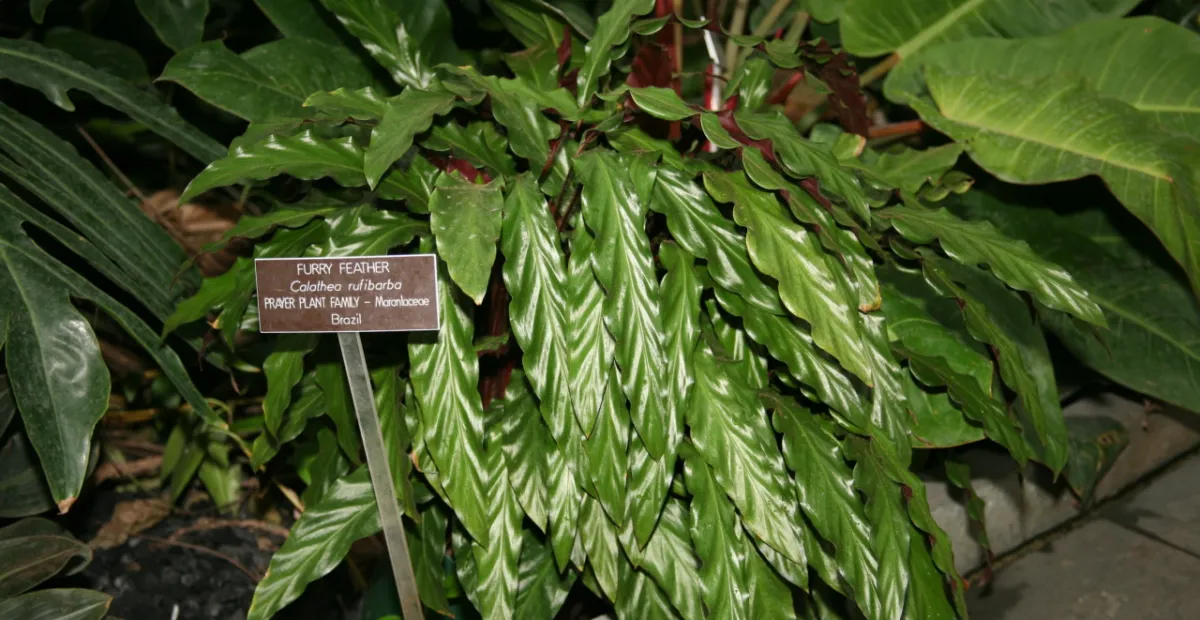
Leaves are narrow and lance-shaped, glossy green above and purple or burgundy beneath. Long reddish hairs cover the petioles, midribs, and lower leaf surfaces, creating the species’ characteristic furry texture. Margins are wavy, and the upright leaves arise from a compact rhizomatous clump.
Flowering
The plant can produce small yellow to orange flowers in compact inflorescences, but flowering is uncommon in cultivation and may be absent indoors. Blooms are secondary to the ornamental foliage and are most likely when the plant receives stable warmth, adequate moisture, and strong filtered light.
Pollination and visitors
No species-specific pollinator or visitor record was located in the sources reviewed. The small flowers are rarely produced in cultivation, so animal attraction cannot be rated confidently.
Goeppertia rufibarba photos
Click any photo for a larger view. Source, author and license are shown separately.
Diseases and pests
Diseases
Prevent root rot by using a draining mix, a pot with drainage holes, and careful watering. Leaf spot is encouraged by wet foliage, poor air circulation, or persistently saturated soil; remove affected leaves, improve airflow, and water at the soil surface. Brown margins may follow low humidity, fluoride-sensitive water, drought, or root stress.
Pests
Watch for spider mites, mealybugs, aphids, and scale, especially in dry indoor air. Inspect leaf undersides and petiole joints regularly. Isolate affected plants, wipe or rinse foliage when appropriate, and use an insecticidal soap or other labeled treatment according to directions. Correct low humidity and plant stress to reduce recurring infestations.
Related diseases and pests
Only Plant Doctor profiles whose host data indicate this plant may be affected are shown here.
 Environmental stressDrought stress
 Environmental stressPoor drainage stress (waterlogging)
 DiseaseEuropean brown rotMonilinia fructigena
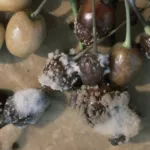 DiseaseBrown Rot of Stone FruitMonilinia fructicola
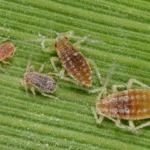 PestMealy Plum AphidHyalopterus pruni (Geoffroy, 1762)
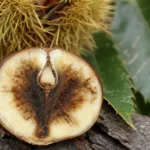 DiseaseChestnut brown rotGnomoniopsis smithogilvyi
 DiseaseAlternaria leaf spot and fruit rotAlternaria alternata
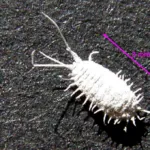 PestObscure mealybugPseudococcus viburni
Toxicity and pollen
ASPCA lists Calathea species as non-toxic to dogs and cats; this species is commonly treated horticulturally under the former Calathea name. No reliable evidence located here indicates a significant human poisoning hazard. Prevent chewing of any houseplant, since plant material can still cause mild gastrointestinal upset, and seek veterinary advice if a pet reacts.
No reliable species-specific airborne-pollen or allergy profile was located. Because this is an insect-associated flowering houseplant with infrequent blooms, exposure is likely limited indoors, but that is not equivalent to a confirmed absence of allergy risk.
Native habitat
Native to Bahia in northeastern Brazil, where it grows in the shaded understory of wet tropical rainforest. Its natural setting provides warm temperatures, diffuse light, humid air, organic moisture-retentive soil, and protection from drying wind—conditions that explain its sensitivity as a houseplant.
Interesting fact
The epithet rufibarba combines Latin words associated with red and beard, referring to the reddish hairs. Its former name was Calathea rufibarba. The species has received the Royal Horticultural Society’s Award of Garden Merit. The dense fuzz is especially visible on leaf undersides, midribs, and petioles.
Frequently asked questions (FAQ)
The most relevant questions about this plant, with short and direct answers.
🌱Quick care
What is Goeppertia rufibarba commonly called?⌄
Goeppertia rufibarba is commonly sold as the Furry Feather Calathea or Velvet Calathea, and it was formerly classified as Calathea rufibarba. Its fuzzy reddish stems and leaf undersides explain the common-name references to fur or velvet.
Is Goeppertia rufibarba easy to care for?⌄
Goeppertia rufibarba is moderately demanding but manageable when its moisture, humidity, light, and temperature stay consistent. It is less forgiving of dry soil, harsh sunlight, and mineral-heavy water than many common houseplants.
How much light does Goeppertia rufibarba need?⌄
Give Goeppertia rufibarba bright filtered light to partial shade. Protect it from direct afternoon sun, which can scorch or fade the leaves, while very low light may slow growth and reduce leaf color.
How often should I water Goeppertia rufibarba?⌄
Water when the surface of the potting mix begins to feel slightly dry, then water thoroughly until excess drains away. Keep the mix evenly moist but never waterlogged, and check more often in warm, bright conditions.
What temperature is best for Goeppertia rufibarba?⌄
Keep Goeppertia rufibarba in a warm, stable room, ideally around 65–75°F. Protect it from cold drafts, heating or air-conditioning vents, and temperatures near freezing because it is frost-tender.
🌤️Environment and placement
Where should I place Goeppertia rufibarba indoors?⌄
Place it near an east- or north-facing window, or a few feet back from a brighter south- or west-facing window behind a sheer curtain. Choose a draft-free location with steady warmth and good ambient humidity.
Does Goeppertia rufibarba need high humidity?⌄
Yes, Goeppertia rufibarba grows best with high humidity, preferably about 60% or higher. A room humidifier is generally more effective than occasional misting, especially during dry U.S. winters.
Can Goeppertia rufibarba grow outdoors?⌄
Goeppertia rufibarba can grow outdoors in warm, frost-free conditions with filtered shade and consistently moist soil. In most of the United States, bring it indoors before temperatures become cold because it does not tolerate frost.
Can Goeppertia rufibarba tolerate low light?⌄
It can tolerate some partial shade, but prolonged low light may cause slower growth and duller foliage. Bright filtered light is the better choice as long as direct sun is blocked.
💧Care and problems
Why are Goeppertia rufibarba leaves turning brown?⌄
Brown leaf tips or edges are commonly linked to low humidity, inconsistent watering, or mineral and fluoride buildup from tap water. Use rainwater, distilled water, or suitable filtered water and keep the root zone evenly moist.
Why are Goeppertia rufibarba leaves curling?⌄
Leaf curling usually indicates water stress, low humidity, cold exposure, or excessive light. Check the soil moisture, raise humidity, and move the plant away from direct sun and drafts.
Why is my Goeppertia rufibarba drooping?⌄
Drooping can result from dry soil, root problems caused by soggy soil, sudden temperature changes, or low humidity. Check the roots and potting mix before watering again rather than following a fixed schedule.
Why are Goeppertia rufibarba leaves turning yellow?⌄
Yellow leaves are often caused by overwatering, poor drainage, aging foliage, or insufficient light. Let excess water drain fully and inspect the roots for softness or decay if the soil stays wet.
What water is best for Goeppertia rufibarba?⌄
Rainwater, distilled water, or low-mineral filtered water is usually best for Goeppertia rufibarba. Tap water may cause brown tips when it contains significant fluoride, salts, or other dissolved minerals.
What pests attack Goeppertia rufibarba?⌄
Common pests include spider mites, mealybugs, aphids, scale, and sometimes thrips or whiteflies. Inspect leaf undersides and fuzzy stems regularly, isolate affected plants, and treat infestations promptly with a houseplant-appropriate method.
How should I clean the fuzzy leaves of Goeppertia rufibarba?⌄
Gently wipe the leaves with a clean, damp, soft cloth when dust accumulates. Avoid abrasive rubbing, leaf-shine products, and frequent misting that leaves mineral deposits on the fuzzy undersides.
Should I fertilize Goeppertia rufibarba?⌄
Fertilize during active spring and summer growth with a balanced houseplant fertilizer diluted according to the label, usually about monthly. Reduce or stop feeding during low-light winter growth, and do not fertilize dry or stressed plants.
🪴Planting and repotting
What soil does Goeppertia rufibarba need?⌄
Use a moisture-retentive but airy, well-drained potting mix, such as quality indoor potting soil amended with perlite and coco coir or peat. The mix should hold moisture without becoming dense, stagnant, or soggy.
How often should I repot Goeppertia rufibarba?⌄
Repot Goeppertia rufibarba when roots fill the container or drainage slows, commonly every two to three years. Move it into a pot only slightly larger and use fresh, well-draining mix.
What type of pot is best for Goeppertia rufibarba?⌄
Choose a pot with drainage holes that is only modestly larger than the root ball. A pot that is too large can hold excess moisture and increase the risk of root rot.
✂️Propagation and pruning
How do you propagate Goeppertia rufibarba?⌄
The most reliable method is division of the plant’s rhizomatous clump during repotting, preferably in late spring or early summer. Separate sections only when each division has viable roots and several healthy shoots.
Can Goeppertia rufibarba be propagated from a leaf or stem cutting?⌄
Leaf or ordinary stem cuttings are not considered a dependable propagation method for Goeppertia rufibarba. Division is preferred because new plants develop from rooted rhizome sections.
Should I prune Goeppertia rufibarba?⌄
Routine pruning is not required, but remove yellow, brown, or badly damaged leaves at the base with clean scissors. Pruning improves appearance and redirects energy toward healthy growth, but it will not repair damaged tissue.
⚠️Toxicity and safety
Is Goeppertia rufibarba toxic to cats?⌄
Goeppertia rufibarba is considered non-toxic to cats according to the ASPCA’s Calathea listing. Even non-toxic plants can cause mild stomach upset if a cat eats a large amount.
Is Goeppertia rufibarba toxic to dogs?⌄
Goeppertia rufibarba is considered non-toxic to dogs according to the ASPCA’s Calathea listing. Prevent excessive chewing because any plant material may still cause temporary digestive upset.
🌸Flowering and special interest
Does Goeppertia rufibarba produce flowers?⌄
Yes, Goeppertia rufibarba may produce small yellow or orange flowers, although flowering is uncommon indoors. Healthy mature plants with suitable warmth, moisture, light, and humidity have the best chance of blooming.
How can I encourage Goeppertia rufibarba to bloom?⌄
Support flowering with bright filtered light, consistent moisture, warm temperatures, adequate humidity, and regular but moderate feeding during active growth. Even under good conditions, indoor flowering is not guaranteed.
Similar plants
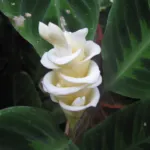 Goeppertia warscewiczii care guideGoeppertia warscewiczii
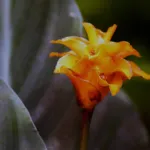 Eternal Flame (Goeppertia crocata) care guideGoeppertia crocata
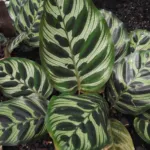 Peacock plant or cathedral windows (Goeppertia makoyana) care guideGoeppertia makoyana
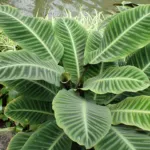 Zebra-plant (Goeppertia zebrina) care guideGoeppertia zebrina
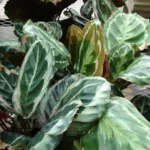 Goeppertia roseopicta care guideGoeppertia roseopicta
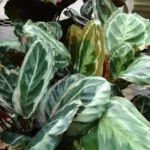 Goeppertia veitchiana care guideGoeppertia veitchiana