
 Source:
 Geranium ‘Sanguineum Album’ short overview
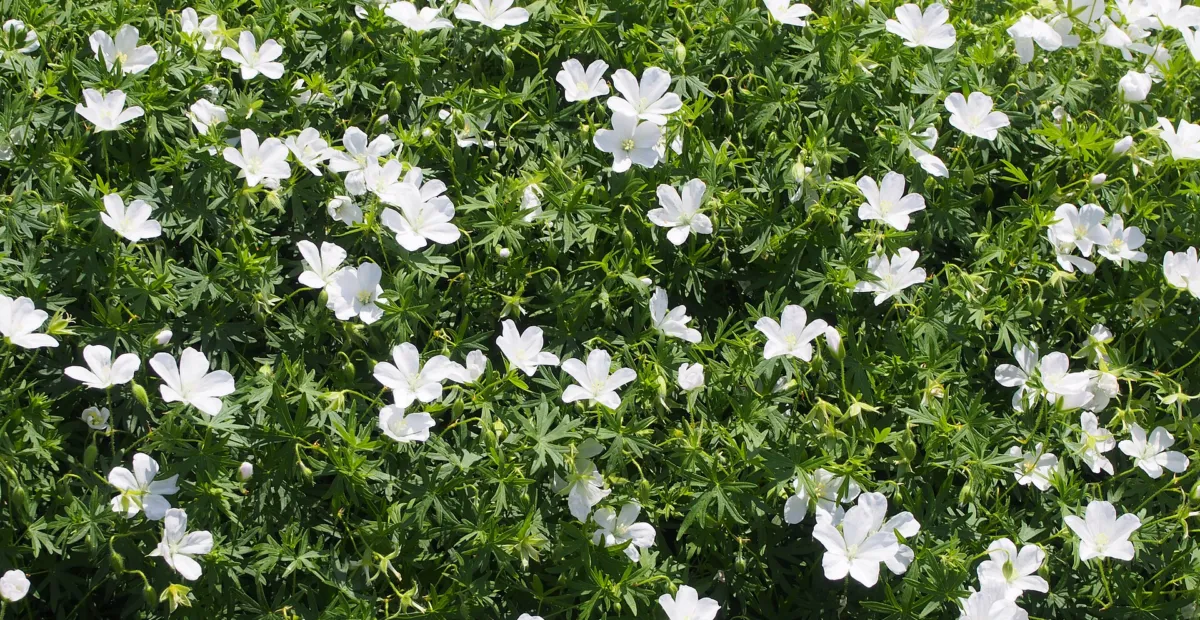
Geranium 'Sanguineum Album' is a refined white-flowered cranesbill with a low, spreading habit and finely divided green leaves. Its clear white blooms appear in late spring to early summer, often with a light rebloom later in the season. This hardy perennial performs best in full sun to partial shade and well-drained soil, making it useful for rock gardens, border fronts, edging, and small groundcover plantings. Foliage can turn red in fall.
Taxonomic classification
Geranium ‘Sanguineum Album’ care guide
Light and placement
Give full sun for the strongest flowering and most compact growth; partial afternoon shade is useful in hot-summer regions. An east- or south-facing border with good air movement is suitable. Too little light produces fewer flowers and looser stems, while intense reflected heat combined with drought can scorch foliage or shorten bloom.
Watering and humidity
Water deeply when the upper few inches of soil begin to dry during the first growing season. Thereafter, provide moderate moisture during active growth, allowing the surface to dry slightly between waterings. Reduce irrigation in cool weather and avoid saturated soil, which can encourage root and crown problems.
Soil and growing medium
Use average, moderately fertile soil that drains freely but does not become chronically dry. Loam amended with compost is suitable, while clay should be improved with organic matter and drainage. The species is generally associated with neutral to slightly alkaline conditions; avoid persistently waterlogged beds and excessively rich, soft growth.
Feeding
Apply a light layer of compost or a balanced, slow-release perennial fertilizer in spring as growth begins. Avoid heavy nitrogen feeding, which can produce lax foliage and reduce flowering. Do not fertilize drought-stressed, newly divided, or dormant plants; water normally before any granular product is applied.
Growth and habit
Forms a dense, mounded clump with prostrate to ascending hairy stems. It can broaden gradually by rooted stems and may self-seed under favorable conditions. Light shearing after flowering can refresh the plant and control spread without requiring intensive maintenance.
Planting and repotting
Plant in spring or early fall, setting the crown at soil level. Space plants about 12–24 inches apart according to the desired groundcover effect. Water thoroughly after planting and keep the root zone evenly moist during establishment; growth becomes more drought tolerant once well rooted.
For container-grown plants, repot in spring when roots fill the pot. Use a quality all-purpose potting mix amended for drainage, and move up only one container size. Divide and refresh crowded clumps during spring or early fall rather than repeatedly shifting an established plant.
Propagation and pruning
Propagation
Divide established clumps in spring or early fall, taking rooted sections with several shoots. Stem or tip cuttings can also be taken during active growth. Seed is possible, but seedlings may not reproduce the cultivar exactly; use vegetative propagation when maintaining the white-flowered selection matters.
Pruning
Deadheading is optional and can be tedious in large plantings. After flowering, lightly shear or trim side stems to refresh the mound and limit spread. Remove tired foliage in late fall or early spring once it has naturally declined; avoid cutting healthy crowns deeply.
Overwintering
Plants in Zones 4–8 generally overwinter outdoors without special protection. After foliage declines, leave the crown undisturbed and apply a light mulch in colder or exposed sites. Avoid heavy winter mulch that stays wet around the crown. Container plants are more vulnerable to freeze-thaw damage and should be sheltered or insulated.
Uses
Use as a border-front perennial, edging plant, rock-garden subject, container specimen, or low groundcover. Its white flowers provide contrast beside darker foliage and its fall coloration adds seasonal interest. It is also suitable for pollinator-oriented plantings where moderate spring and early-summer insect visitation is desired.
Appearance
The plant has small, deeply lobed green leaves, with basal leaves usually broader and stem leaves more finely divided. Stems are branched and hairy, ranging from prostrate to ascending. Clear white flowers distinguish 'Album' from the usual magenta- to crimson-flowered species, while mature foliage may develop vivid red tones in fall.
Flowering
This cultivar bears solitary, clear white, five-petaled flowers above the foliage. Normal flowering is concentrated from late spring into early summer, with occasional sparse rebloom later in summer. Flowers are showy and cup- to saucer-shaped, with fine veins that may be subtle in the white petals.
Pollination and visitors
Reliable references for the species report visits by bees and butterflies; broader Geranium observations also document bumblebees and hoverflies. The white cultivar is expected to provide similar open floral access, but cultivar-specific visitor studies were not located.
Geranium 'Sanguineum Album' photos
Click any photo for a larger view. Source, author and license are shown separately.
Diseases and pests
Diseases
Generally trouble-free, but leaf spots and rust can occur, especially where foliage stays wet or air circulation is poor. Remove affected leaves, water at the soil surface, thin congested growth, and clear fallen foliage at season’s end. Severe or recurring infections may require locally labeled fungicide treatment.
Pests
Occasional sawflies, vine weevils, and capsid bugs may occur. Inspect new growth and leaf undersides, remove isolated pests by hand, and avoid unnecessary insecticides during bloom. Improve plant vigor with adequate light, spacing, and drainage; treat persistent infestations according to local extension guidance.
Related diseases and pests
Only Plant Doctor profiles whose host data indicate this plant may be affected are shown here.

Toxicity and pollen
No reliable authoritative source located specifically documenting toxicity of Geranium 'Sanguineum Album' to people or pets. ASPCA’s geranium warning is for Pelargonium species, commonly called garden geraniums, and should not be automatically applied to hardy Geranium. Avoid deliberate ingestion and seek professional advice if a child or animal consumes plant material.
- Typical season
- May–July in much of the United States, varying by climate
- Pollination / pollen
- Large, insect-associated pollen grains; not typically wind-dispersed in quantity
The flowers are insect-pollinated, so pollen is generally released near visiting insects rather than dispersed in large airborne clouds. A low allergy classification is practical but not a guarantee; sensitive people can still react to direct flower contact or nearby pollen.
Native habitat
The species is native across much of Europe and into temperate Asia, occurring in open grassland, rocky slopes, coastal sandy habitats, and open woodland, often including calcareous or neutral soils. In gardens it adapts well to temperate climates provided drainage is good.
Interesting fact
The cultivar is recognized as a white-flowered form of Geranium sanguineum. Its species name refers to blood-red coloration seen in the straight species, especially in fall foliage. The characteristic crane-like fruit explains the common genus name cranesbill. The cultivar has received recognition in horticultural trials, including RHS Award of Garden Merit records.
Frequently asked questions (FAQ)
The most relevant questions about this plant, with short and direct answers.
🌱Quick care
What is Geranium 'Sanguineum Album'?⌄
Geranium 'Sanguineum Album' is a hardy, clump-forming cranesbill perennial with pure white, five-petaled flowers and deeply lobed green foliage. It typically forms a spreading mound about 8–18 inches tall and 2–3 feet wide.
Is Geranium 'Sanguineum Album' a hardy geranium or a florist geranium?⌄
Geranium 'Sanguineum Album' is a hardy geranium, also called a cranesbill, not the tender florist geraniums in the genus Pelargonium. It is grown outdoors as a herbaceous perennial.
What USDA hardiness zones are suitable for Geranium 'Sanguineum Album'?⌄
Geranium 'Sanguineum Album' is generally hardy in USDA Zones 4–8. In colder regions, its foliage dies back in winter and regrows in spring.
How big does Geranium 'Sanguineum Album' get?⌄
It usually grows about 8–18 inches tall and spreads 2–3 feet wide. Its open, mounding habit makes it useful near the front of borders or as a small-area ground cover.
Is Geranium 'Sanguineum Album' low maintenance?⌄
Yes, Geranium 'Sanguineum Album' is generally low maintenance once established. It needs well-drained soil, moderate watering during establishment, and only optional trimming after flowering.
🌤️Environment and placement
How much sun does Geranium 'Sanguineum Album' need?⌄
Grow Geranium 'Sanguineum Album' in full sun to partial shade. Full sun usually produces the most compact growth and strongest flowering, while light shade is useful in hot climates.
Can Geranium 'Sanguineum Album' grow in partial shade?⌄
Yes, it grows in partial shade, especially with several hours of morning or filtered sun. Heavy shade may result in weaker, more open growth and fewer flowers.
What type of soil is best for Geranium 'Sanguineum Album'?⌄
Use moderately fertile, well-drained loam or amended clay for Geranium 'Sanguineum Album'. It tolerates ordinary and somewhat stony soil, but consistently waterlogged ground can cause root problems.
Can Geranium 'Sanguineum Album' tolerate clay soil?⌄
Yes, Geranium 'Sanguineum Album' can tolerate clay soil if drainage is improved. Incorporate organic matter and avoid planting it where water remains after rain.
Is Geranium 'Sanguineum Album' drought tolerant?⌄
Geranium 'Sanguineum Album' is somewhat drought tolerant after establishment. Water it regularly during its first growing season and during prolonged heat or drought, particularly in sandy soil.
Does Geranium 'Sanguineum Album' tolerate heat and cold?⌄
It has comparatively good tolerance of both hot summers and cold winters for a hardy geranium. Performance still depends on adequate drainage, summer moisture during severe heat, and the local climate.
Where should I plant Geranium 'Sanguineum Album' in the garden?⌄
Plant it at the front of a perennial border, along paths, in a rock garden, or as a small-area ground cover. Give it enough room to spread up to about 3 feet without crowding neighboring plants.
💧Care and problems
How often should I water Geranium 'Sanguineum Album'?⌄
Water Geranium 'Sanguineum Album' when the soil begins to dry, keeping it moderately moist while young. Once established, it can tolerate short dry periods, but flowering and growth improve with consistent moisture.
Should I deadhead Geranium 'Sanguineum Album'?⌄
Deadheading is optional for Geranium 'Sanguineum Album'. Removing faded flowers can improve appearance and may encourage additional blooms, but it can be tedious in large plantings and is not essential.
When should Geranium 'Sanguineum Album' be cut back?⌄
Lightly shear Geranium 'Sanguineum Album' after its main flowering period if the foliage becomes untidy or lanky. Remove old leaves in late fall or early spring, depending on whether you want to retain winter structure.
Why is my Geranium 'Sanguineum Album' not flowering?⌄
Poor flowering is most often caused by insufficient light, excessive shade, drought stress, or overly rich and wet soil. Move or divide the plant only if needed, and provide better light, drainage, and regular moisture.
What pests affect Geranium 'Sanguineum Album'?⌄
Geranium 'Sanguineum Album' has no major pest problems in most gardens. Occasional issues can include sawflies, vine weevils, or sap-feeding insects, especially on stressed plants.
What diseases affect Geranium 'Sanguineum Album'?⌄
Leaf spots, rusts, powdery mildew, and downy mildew can occasionally affect Geranium 'Sanguineum Album'. Improve air circulation, avoid overhead watering, and remove badly affected foliage.
🪴Planting and repotting
When is the best time to plant Geranium 'Sanguineum Album'?⌄
Plant Geranium 'Sanguineum Album' in spring or fall when temperatures are mild. Spring planting gives roots a full growing season to establish, while fall planting works well before the ground freezes.
How far apart should I plant Geranium 'Sanguineum Album'?⌄
Space Geranium 'Sanguineum Album' about 18–24 inches apart for a connected planting while allowing room for its spreading habit. Use wider spacing if you want individual mounds rather than a ground-cover effect.
Can Geranium 'Sanguineum Album' be grown in a container?⌄
Yes, Geranium 'Sanguineum Album' can grow in a container with drainage holes and a well-drained potting mix. Choose a broad container because the plant spreads wider than it grows tall, and water when the mix begins to dry.
Does Geranium 'Sanguineum Album' need winter protection?⌄
Established plants generally do not need winter protection within their hardiness range. In colder or exposed locations, a light mulch after the ground freezes can protect the crown without creating soggy conditions.
✂️Propagation and pruning
How do you propagate Geranium 'Sanguineum Album'?⌄
Propagate Geranium 'Sanguineum Album' by division, basal or tip cuttings, or seed. Division and cuttings are preferred for preserving the named cultivar's white-flowered characteristics.
When should I divide Geranium 'Sanguineum Album'?⌄
Divide Geranium 'Sanguineum Album' in spring as new growth begins or in early fall. Separate healthy crowns with roots and several growing points, then replant them at their original depth.
Can Geranium 'Sanguineum Album' be grown from seed?⌄
It can be grown from seed, but seedlings may not reproduce the named cultivar exactly. For dependable white flowers, use division or vegetative cuttings from a healthy parent plant.
Does Geranium 'Sanguineum Album' spread aggressively?⌄
Geranium 'Sanguineum Album' spreads gradually into a broad mound rather than behaving like an aggressive invasive ground cover. Side stems can be removed if the plant expands beyond its allotted space.
⚠️Toxicity and safety
Is Geranium 'Sanguineum Album' toxic to dogs or cats?⌄
The toxicity of the exact Geranium 'Sanguineum Album' cultivar is not firmly established in the available evidence. Keep pets from chewing it and contact a veterinarian or poison-control service if a pet consumes plant material and develops symptoms.
Is Geranium 'Sanguineum Album' deer resistant?⌄
Geranium 'Sanguineum Album' is commonly reported as relatively deer resistant, although no plant is completely deer-proof. Hungry deer may still browse it, especially when preferred food is scarce.
🌸Flowering and special interest
When does Geranium 'Sanguineum Album' bloom?⌄
Geranium 'Sanguineum Album' typically blooms from late spring into early summer, commonly May and June in much of the United States. It may produce a lighter rebloom later in the season, especially after trimming.
What color are the flowers of Geranium 'Sanguineum Album'?⌄
The flowers are clear white and usually have five petals. Some plants may show subtle pink veining, but the defining feature of 'Album' is its white flower color.
Does Geranium 'Sanguineum Album' rebloom?⌄
Geranium 'Sanguineum Album' may rebloom lightly after its main flowering period, particularly when spent stems are removed or lightly sheared. Rebloom is variable and is usually less abundant than the first flush.
Does Geranium 'Sanguineum Album' have attractive fall color?⌄
Yes, its foliage can develop orange, rust, or red tones in fall, especially in sunny conditions and cool weather. Color intensity varies with climate and seasonal temperatures.
Is Geranium 'Sanguineum Album' attractive to pollinators?⌄
The open flowers of Geranium 'Sanguineum Album' can provide forage for bees and other small pollinators. Its value is greatest when planted alongside other perennials that extend the bloom season.
Similar plants
 Azure Monkshood (Aconitum carmichaelii) care guideAconitum carmichaelii
 Monkshood (Aconitum ‘Stainless Steel’)Aconitum 'Stainless Steel'
 Monkshood (Aconitum ‘Bressingham Spire’)Aconitum 'Bressingham Spire'
 Golden full moon maple (Acer shirasawanum ‘Aureum’)Acer shirasawanum 'Aureum'
 Globosum (Acer platanoides ‘Globosum’)Acer platanoides 'Globosum'
 Striped maple (Acer pensylvanicum) care guideAcer pensylvanicum