
 Source:
Baleares Island date palm (Phoenix canariensis) short overview
Baleares Island date palm (Phoenix canariensis) is a monumental evergreen palm native to the Canary Islands. Its stout, diamond-scarred trunk supports a broad crown of arching blue-green fronds, while cream flowers can develop into orange-yellow date-like fruit. Grow it as a dramatic specimen in full sun, fast-draining soil and a warm site; mature plants need substantial room, and temperatures below about 20°F can cause serious damage.
Taxonomic classification
Baleares Island date palm (Phoenix canariensis) care guide
Light and placement
Give full sun, ideally at least 6 hours of direct light daily, with an open south- or west-facing exposure. Young container plants can tolerate bright partial shade but become stretched and less robust. Insufficient light produces sparse, weak fronds; extreme reflected heat can scorch foliage, especially when roots are dry. Provide airflow without placing the palm in a persistently cold wind tunnel.
Watering and humidity
Water deeply and slowly when the upper soil begins to dry, allowing excess water to drain fully. Keep newly planted palms consistently moist during their first growing season, then reduce frequency as roots establish. Mature specimens are drought tolerant but look better with occasional deep irrigation during prolonged heat. Do not keep containers standing in water; humidity usually needs no special management outdoors.
Soil and growing medium
Use a deep, sharply draining soil or palm mix containing loam, sand or mineral grit. The species tolerates a range from slightly acidic to alkaline conditions, but persistent waterlogging is hazardous. Raised beds or amended planting sites are useful where native soil is heavy clay.
Feeding
Feed established landscape palms in spring and again during the growing season with a slow-release fertilizer labeled for palms and containing magnesium and micronutrients. Apply according to the product label over the root zone, not against the trunk. Do not fertilize drought-stressed, recently transplanted or actively cold-damaged plants until they resume growth.
Growth and habit
This is a solitary, slow-growing palm that gradually develops a massive trunk and a broad, rounded crown. Its mature scale makes placement the main maintenance issue: avoid confined beds, overhead utilities and narrow walkways. Established plants tolerate drought and some salt exposure, but growth is faster and foliage fuller with deep soil and consistent moisture during establishment.
Planting and repotting
Plant in spring or early summer after the risk of damaging cold has passed. Set the root ball at the same depth as it grew, never burying the trunk base. Allow at least 20–30 feet of clear space for a mature landscape specimen, more where fronds or the trunk will overhang paths. Water regularly during establishment, then taper as roots spread.
Repot container plants only when roots have filled the current pot, preferably in spring. Move up one pot size at a time and use a heavy, very well-drained palm mix. Large specimens become difficult to handle; avoid unnecessary root disturbance and provide a stable, weighted container.
Propagation and pruning
Propagation
Fresh seed is the standard method. Clean the fleshy fruit from mature seeds, sow in a warm, well-drained medium and keep evenly moist; germination may occur in about 30 days under favorable conditions. Seedlings are genetically variable and are not an exact clone of the parent.
Pruning
Remove only dead, damaged or hazardous fronds, using eye and skin protection because the leaf bases are sharply spined. Do not strip green fronds unnecessarily or cut into the trunk. Clean and disinfect tools between palms to reduce the risk of transmitting wilt pathogens. Professional pruning is advisable for tall specimens.
Overwintering
In USDA Zones 9–11, protect young palms from forecast freezes with frost cloth and a sheltered microclimate. Avoid plastic touching the foliage and remove protection after temperatures rise. Container plants should be moved to a bright, cool, frost-free location before hard freezes; reduce watering in winter but do not allow the root ball to become bone dry.
Uses
Use as a dramatic lawn, avenue, courtyard or coastal specimen where space permits. It is also grown in large containers while young and is valued for its architectural trunk and evergreen crown. Female plants produce ornamental date-like fruit that can feed birds; the small fruit is edible but not considered a high-quality commercial date. Invasive escape has been reported in some disturbed habitats, especially in parts of California.
Appearance
A massive solitary palm with a stout gray-brown trunk marked by persistent diamond-shaped leaf scars. The crown carries long, arching, pinnately divided fronds with many stiff blue-green leaflets. The lowest leaflets become rigid spines, making the crown and leaf bases distinctive. Cream to yellow-white inflorescences and yellow-orange fruit appear among the leaves.
Flowering
Plants are typically dioecious, with male and female flowers on separate individuals. Cream to yellow-white flowers emerge from large bracts in branched inflorescences. Flowering is commonly recorded in spring or summer in U.S. landscapes, although warm climates may see intermittent flowering outside that window. Female plants need compatible pollen nearby to set abundant fruit.
Pollination and visitors
Male inflorescences produce abundant dry pollen that can be collected by bees; available botanical observations describe bee visitation, although the flowers are not generally regarded as a major nectar resource. Animal visitation and fruit use by birds are also documented, but bird activity is associated mainly with the fruit rather than pollination.
Phoenix canariensis photos
Click any photo for a larger view. Source, author and license are shown separately.
Diseases and pests
Diseases
The major disease concern is Fusarium wilt, which can be fatal and is associated with contaminated pruning tools or planting material. Buy clean nursery stock, disinfect tools between palms, avoid trunk wounds and do not replant susceptible palms in contaminated soil. Remove severely affected plants according to local extension guidance.
Pests
Common concerns include palm scale, mealybugs, mites, and trunk or crown pests in stressed plants. Inspect leaf bases and the crown regularly, improve irrigation and airflow, and use targeted treatments only when identified pests exceed tolerable levels. Avoid injuring the trunk and follow local extension recommendations for serious infestations.
Toxicity and pollen
No strong evidence indicates that Phoenix canariensis is a highly poisonous plant to people or pets. The principal practical hazards are mechanical: sharp leaf-base spines and stiff fronds, plus possible irritation from plant debris. Fruit is described as edible but is small and generally inferior to commercial dates; avoid eating unidentified or spoiled material.
- Typical season
- Typically spring to summer in the United States, varying by climate
- Pollination / pollen
- Dry pollen from male inflorescences; insect-associated and potentially locally airborne
The species produces dry, readily dispersible pollen, especially from male plants. Airborne exposure is generally a lower landscape concern than highly wind-pollinated trees because palms are commonly insect-associated, but sensitive people may still react. Exposure varies with flowering abundance, sex of the plant, weather and proximity.
Native habitat
Phoenix canariensis is endemic to the Canary Islands, where it occurs in subtropical settings ranging from open areas of moist woodland to semi-arid sites with accessible groundwater. It is adapted to warm conditions, mineral or well-drained soils and periodic drought, and is widely cultivated beyond its native range.
Interesting fact
The trunk retains distinctive diamond-shaped scars from old leaf bases.
Lower leaflets are modified into long, sharp spines.
Male and female flowers usually occur on separate plants.
Its ripe fruit changes from green through yellow-orange to darker tones.
The species is endemic to the Canary Islands.
Large specimens can exceed 50 feet in favorable landscapes.
Frequently asked questions (FAQ)
The most relevant questions about this plant, with short and direct answers.
🌱Quick care
What is the common name of Phoenix canariensis?⌄
The verified common name is baleares Island date palm, and its scientific name is Phoenix canariensis. It belongs to the date palm genus, Phoenix, in the palm family Arecaceae.
How much sunlight does baleares Island date palm need?⌄
Baleares Island date palm grows best in full sun, meaning at least 6 hours of direct sunlight daily. Young container plants may tolerate light afternoon shade, but insufficient light can reduce vigor.
How often should I water Phoenix canariensis?⌄
Water Phoenix canariensis moderately, allowing the soil to begin drying between thorough waterings. Once established, it is drought tolerant, but newly planted palms need more consistent moisture while roots develop.
Is Phoenix canariensis drought tolerant?⌄
Yes, Phoenix canariensis is drought tolerant once established. It still performs best with occasional deep watering during prolonged heat or drought, especially in sandy soil.
🌤️Environment and placement
What USDA hardiness zones can grow Phoenix canariensis outdoors?⌄
Phoenix canariensis is generally suited to USDA Hardiness Zones 9A through 11B, with protection needed near its cold limit. Temperatures below about 20°F can cause severe damage or kill the palm.
Can Phoenix canariensis survive frost?⌄
Phoenix canariensis tolerates only limited frost and should be protected from hard freezes. Covering the growing point and preventing prolonged exposure to temperatures near or below 20°F can reduce injury.
Can baleares Island date palm grow in a container?⌄
Yes, baleares Island date palm can be grown in a large container, especially in climates where it must be moved indoors or under protection for winter. Container growth keeps it smaller but does not eliminate its eventual need for substantial space.
How large does Phoenix canariensis get?⌄
Phoenix canariensis can eventually reach about 40 to 60 feet tall and 20 to 40 feet wide in suitable landscapes. Its broad crown and large trunk require a spacious planting site.
Is Phoenix canariensis suitable for a small yard?⌄
Phoenix canariensis is usually not suitable for a small yard because it becomes a very large palm with a wide crown and sharp leaf-base spines. Choose a smaller palm when overhead clearance, walkways, or property lines are close.
Can Phoenix canariensis tolerate coastal conditions?⌄
Yes, Phoenix canariensis has moderate tolerance of salt spray and can perform well in many coastal landscapes. It still needs sharply drained soil and protection from direct, severe exposure where possible.
💧Care and problems
What type of soil does Phoenix canariensis need?⌄
Phoenix canariensis grows in loam, sandy loam, or other sharply drained soil. It tolerates a range of soil textures and pH levels, but persistently wet soil can promote root and trunk problems.
Why are the leaves of my Phoenix canariensis turning yellow?⌄
Yellowing leaves can result from nutrient deficiencies, especially potassium or magnesium deficiency, but pests, disease, poor drainage, and natural aging can also contribute. Inspect the whole crown and use a palm fertilizer only when deficiency is supported by symptoms or soil testing.
Why does Phoenix canariensis have brown or black leaf tips?⌄
Brown or black leaf tips may indicate drought stress, salt buildup, nutrient imbalance, cold injury, or overwatering. Check soil moisture and drainage first, then review recent weather and fertilizer use.
What pests commonly affect Phoenix canariensis?⌄
Common pests include scale insects, mealybugs, thrips, spider mites on container plants, palm weevils, and palm-leaf skeletonizers. Regularly inspect the crown, leaf bases, and undersides of fronds for feeding damage or insects.
What diseases affect Phoenix canariensis?⌄
Phoenix canariensis can be affected by Fusarium wilt, lethal bronzing or related decline diseases, leaf spot, and trunk or butt rots. Avoid trunk injury, prevent chronic wetness, and disinfect pruning tools between palms.
How should I fertilize Phoenix canariensis?⌄
Use a controlled-release palm fertilizer that supplies potassium, magnesium, and micronutrients according to the product label and local extension guidance. Fertilization is most useful during active growth and should not replace correcting poor drainage or watering problems.
🪴Planting and repotting
When is the best time to plant Phoenix canariensis?⌄
Plant Phoenix canariensis during warm weather when the soil is workable and the palm can establish before cold conditions arrive. Avoid planting immediately before a freeze or during periods of waterlogged soil.
How should I plant Phoenix canariensis in the ground?⌄
Plant it at the same depth at which it was growing, in sharply drained soil and a site with full sun and ample long-term space. Keep irrigation directed away from the trunk and do not pile mulch against the base.
Can a mature Phoenix canariensis be transplanted?⌄
Yes, mature Phoenix canariensis can be transplanted, but the operation is specialized and carries a meaningful risk of failure. Professional handling is recommended because damage to the soft growing point, roots, or trunk can be fatal.
How far apart should Phoenix canariensis palms be planted?⌄
Allow generous spacing based on the mature crown, commonly at least 20 feet from large structures or other major palms. The exact distance should account for the expected 20- to 40-foot spread and nearby driveways, utilities, and walkways.
✂️Propagation and pruning
How is Phoenix canariensis propagated?⌄
Phoenix canariensis is propagated primarily by seed. Fresh seeds may germinate in roughly 2 to 3 months when kept warm, around 85°F to 95°F, and evenly moist.
Can Phoenix canariensis be grown from store-bought dates?⌄
It may be possible to germinate seeds from ripe fruit, but ornamental Phoenix canariensis fruit is small and often not very palatable, and seedlings may vary because Phoenix palms can hybridize. Use fresh, fully mature seed for the best chance of success.
How should I prune Phoenix canariensis?⌄
Prune only completely dead or brown fronds, spent flower stalks, and unwanted fruit clusters. Avoid removing green or upright fronds, because over-pruning can reduce vigor and increase vulnerability to pests and disease.
⚠️Toxicity and safety
Are Phoenix canariensis spines dangerous?⌄
Yes, Phoenix canariensis has sharp spines along the lower leaf stems that can puncture skin and injure people or pets. Keep it away from high-traffic paths and use gloves, eye protection, and appropriate tools when pruning.
Is Phoenix canariensis toxic to dogs and cats?⌄
Phoenix canariensis is listed as non-toxic to dogs, cats, and horses. The main household concern is mechanical injury from its sharp spines, plus possible stomach upset if plant material or fruit is eaten.
Are the fruits of Phoenix canariensis edible?⌄
The orange fruits are technically edible, but they are small and generally considered unappealing in flavor. Remove fallen fruit if it creates a slip hazard, attracts pests, or is likely to be eaten by children or pets.
🌸Flowering and special interest
Does Phoenix canariensis produce flowers?⌄
Yes, Phoenix canariensis produces cream to yellow flowers on long, drooping stalks. Male and female flowers occur on separate palms, so a female usually needs pollen from a male palm to produce abundant fruit.
When does Phoenix canariensis fruit?⌄
Female Phoenix canariensis palms produce yellow-orange, date-like fruits after flowering, typically during the warm growing season. Fruit production depends on the palm’s sex, maturity, pollination, and local climate.
Similar plants
 Oenocarpus bacaba care guideOenocarpus bacaba
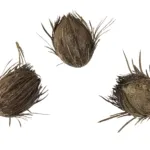 Palm (Oenocarpus bataua) care guideOenocarpus bataua
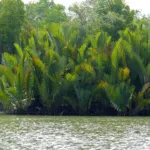 Nipa Palm (Nypa fruticans) care guideNypa fruticans
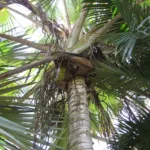 Yellow latan palm (Latania verschaffeltii) care guideLatania verschaffeltii
 Carnarvon Fan Palm (Livistona nitida) care guideLivistona nitida
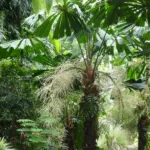 He Queensland fan palm or Australian fan palm (Licuala ramsayi) care guideLicuala ramsayi