
 Source:
Oenocarpus bacaba short overview
Oenocarpus bacaba is a large Amazonian palm native to wet tropical South America, where it grows in humid forests and produces clusters of dark, edible fruits used for beverages and oil. In the United States it is a specialty tropical plant for warm climates, conservatories, and protected containers. Provide strong filtered light or sun, constant moisture, high humidity, excellent drainage, and complete protection from frost.
Taxonomic classification
Oenocarpus bacaba care guide
Light and placement
Provide bright filtered light or full morning sun, with protection from harsh reflected afternoon heat while young. A warm south- or southeast-facing greenhouse position is suitable in the United States. Too little light produces elongated, weak growth and pale fronds; excessive sudden sun can scorch acclimatized foliage, especially in containers.
Watering and humidity
Keep the root zone evenly and consistently moist, watering thoroughly when the surface begins to dry rather than following a rigid calendar. Increase frequency during hot, bright weather and reduce it during cool, low-light periods without allowing the plant to dry hard. High humidity is important, particularly for young plants and heated indoor environments.
Soil and growing medium
Use a fertile, airy medium that holds moisture without becoming stagnant. A blend based on loam, coarse organic matter, and drainage material is suitable for containers. Naturally, the species occurs in wet tropical environments, but roots still benefit from oxygenated soil. A slightly acidic to neutral reaction is a reasonable horticultural target; exact species-specific pH requirements are not well documented.
Feeding
Feed actively growing plants with a complete palm fertilizer at a conservative label rate during warm, bright conditions. Container specimens may benefit from a slow-release formula supplemented with magnesium and micronutrients if deficiency symptoms occur. Do not fertilize drought-stressed, cold-stressed, or recently root-disturbed plants; water the medium first and reduce feeding during cool low-light periods.
Growth and habit
This is a substantial, solitary tropical palm that develops a single trunk and a crown of long pinnate fronds. It is not suited to small indoor spaces once established. Young plants need steady warmth, moisture, and protection from dry air; mature specimens are best maintained as permanent landscape or conservatory plants rather than repeatedly moved.
Planting and repotting
Plant only after consistently warm weather has arrived and the site is reliably frost-free. Set the palm at the same depth at which it was growing, water deeply after planting, and mulch broadly without touching the trunk. Allow generous space for a large mature palm and protect young plants from drying winds while they establish.
Repot container plants only when roots have filled the container, preferably during warm active growth. Use a deep, heavy pot with excellent drainage and avoid disturbing the root ball more than necessary. Because this is a large palm, move it to progressively larger containers rather than attempting frequent repotting.
Propagation and pruning
Propagation
Propagation is primarily by fresh seed. Sow cleaned seeds promptly in a warm, sterile, moisture-retentive but airy medium because tropical palm seed viability commonly declines during storage. Maintain bottom warmth, high humidity, and bright filtered light. Germination timing may be variable and species-specific commercial protocols are limited.
Pruning
Remove only dead, broken, or severely diseased fronds, cutting cleanly without damaging the trunk or crown. Do not strip green fronds for appearance, as excessive pruning reduces vigor. Clean tools between cuts and avoid climbing or heavy maintenance without appropriate palm-safety equipment.
Overwintering
Move containers indoors or into a heated greenhouse before nighttime temperatures approach 45°F. Maintain bright light, warmth, and moderate watering through winter; avoid cold drafts and dry forced-air heat. Outdoor specimens in marginal climates need substantial frost protection, but prolonged freezing is unlikely to be tolerated.
Uses
The dark fruits are an important traditional food resource in parts of Amazonia and are processed into beverages and oil. The palm also has value as a tropical ornamental and ecological fruiting species. In the United States, cultivation is generally restricted to frost-free landscapes or heated protected structures. Food use should rely on correctly identified, properly prepared fruit from a trusted source.
Appearance
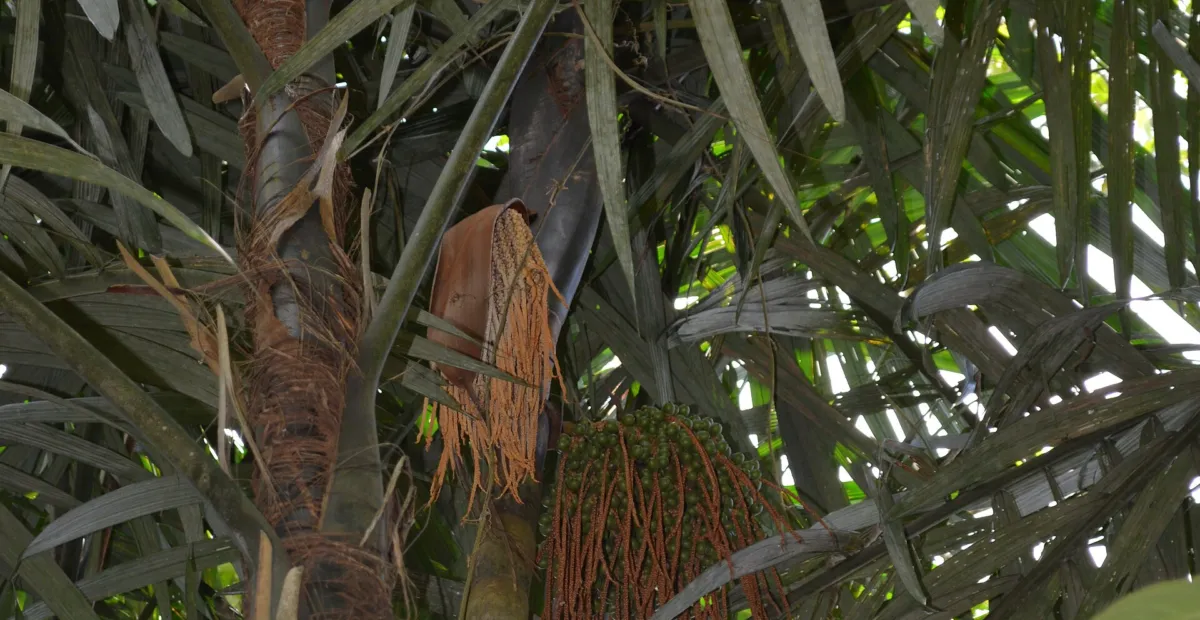
A solitary palm with a slender, usually unbranched trunk and a crown of long, feather-like fronds. The pinnate leaves form an open tropical canopy, while branched inflorescences emerge below the crown and develop into hanging fruit clusters. Dark purple to nearly black fruits are a useful identification feature when present.
Flowering
The inflorescences are branched and produced beneath the crownshaft. Research on Oenocarpus reports separate male and female phases on the same inflorescence, with male activity preceding female receptivity. Anthesis is nocturnal and reproductive activity may occur throughout the year in tropical conditions. Exact flowering months are not reliable for the United States.
Pollination and visitors
Published work on Oenocarpus documents nocturnal, protandrous flowering and floral rewards of pollen. Palm-associated beetles, including Mystrops and curculionid groups, are reported as principal pollinators or visitors in the Oenocarpus complex. The evidence is stronger for the genus and related species than for a fully resolved species-specific visitor list.
Oenocarpus bacaba photos
Click any photo for a larger view. Source, author and license are shown separately.
Diseases and pests
Diseases
Maintain airflow, avoid chronically waterlogged potting media, and remove severely damaged tissue with sterilized tools. Watch for fungal leaf spots or crown problems when foliage stays wet and ventilation is poor. Suspect serious crown decline, foul odor, or rapid spear collapse as a reason to isolate the plant and seek specialist diagnosis.
Pests
Inspect leaf bases, crown tissue, and undersides of fronds for scale insects, mealybugs, mites, and chewing damage. Quarantine new plants, improve airflow, and wash or treat minor infestations early. Avoid routine broad-spectrum insecticides, especially during flowering, because they can harm beneficial insects. Serious crown or trunk symptoms require expert diagnosis.
Toxicity and pollen
No authoritative species-specific human or pet toxicity assessment was located. The ripe fruit is documented as a traditional food, but that does not establish safety for every plant part or preparation. Avoid allowing children or pets to chew unidentified leaves, seeds, or plant material, and use normal hygiene when handling fruit or sap.
- Typical season
- No reliable United States exposure season documented
- Pollination / pollen
- Flower pollen released during insect-associated anthesis
This is a flowering palm that produces pollen, but reliable species-specific measurements of airborne pollen, allergenicity, and United States seasonality were not located. Insect-associated floral biology does not prove zero allergy risk. People with significant pollen sensitivity should avoid close prolonged exposure during flowering and monitor individual reactions.
Native habitat
Oenocarpus bacaba is native to Brazil, Colombia, French Guiana, Guyana, Suriname, and Venezuela. It is associated with wet tropical environments, including humid forest habitats and moist lowland settings. The species is adapted to warm conditions, abundant rainfall, high atmospheric humidity, and soils that retain moisture while remaining sufficiently aerated.
Interesting fact
The species is native to northern South America and the wet tropical biome. Its fruits are used for food and oil. Research on Oenocarpus describes nocturnal anthesis, protandry, floral heat production, and associations with palm-specialist beetles.
Frequently asked questions (FAQ)
The most relevant questions about this plant, with short and direct answers.
🌱Quick care
What is Oenocarpus bacaba?⌄
Oenocarpus bacaba is a tropical, single-stemmed palm in the Arecaceae family, native to wet regions of northern South America. It is grown for its ornamental foliage and edible, dark purple fruits.
How much light does Oenocarpus bacaba need?⌄
Give Oenocarpus bacaba bright filtered light to full sun. Young palms usually establish more reliably with protection from intense midday sun before gradually acclimating.
How often should I water Oenocarpus bacaba?⌄
Water Oenocarpus bacaba often enough to keep the soil evenly moist. Do not allow the root zone to dry completely, but avoid stagnant water around the roots.
Is Oenocarpus bacaba cold hardy?⌄
No, Oenocarpus bacaba is frost tender and should be protected whenever temperatures may fall below 32°F. In most of the United States, it is best grown in a container or heated greenhouse unless planted in a reliably frost-free location.
🌤️Environment and placement
Where can Oenocarpus bacaba grow outdoors in the United States?⌄
Oenocarpus bacaba is best suited to frost-free parts of South Florida, Hawaii, Puerto Rico, and other tropical areas of the United States. Elsewhere, grow it in a container or greenhouse that can be protected during cold weather.
Can Oenocarpus bacaba grow indoors?⌄
Oenocarpus bacaba can be grown indoors while young if it receives very bright light, high humidity, warmth, and consistent moisture. Its eventual size makes long-term indoor cultivation difficult.
What humidity does Oenocarpus bacaba need?⌄
High humidity is preferred because Oenocarpus bacaba comes from wet tropical environments. Dry indoor air can cause brown leaf tips, so use a humidifier, a naturally humid room, or a protected greenhouse.
How large does Oenocarpus bacaba become?⌄
In its native habitat, Oenocarpus bacaba can become a tall palm reaching roughly 65–80 feet. Container-grown specimens remain smaller, but they still need substantial vertical and root space as they mature.
💧Care and problems
What soil is best for Oenocarpus bacaba?⌄
Use fertile, moisture-retentive, well-drained tropical soil with plenty of organic matter. The mix should hold moisture without becoming compacted or waterlogged.
Why are the leaves of my Oenocarpus bacaba turning brown?⌄
Brown leaves commonly result from dry soil, low humidity, salt buildup, cold exposure, or intense sun stress. Check moisture and drainage first, then protect the palm from freezing temperatures and harsh indoor conditions.
Why is my Oenocarpus bacaba not growing?⌄
Slow growth can result from insufficient warmth, low light, drought, poor nutrition, root restriction, or transplant stress. Keep the palm warm and evenly moist, provide strong light, and avoid disturbing the roots unnecessarily.
Does Oenocarpus bacaba need fertilizer?⌄
Oenocarpus bacaba benefits from a balanced palm fertilizer during active warm-season growth. Follow the product label and avoid heavy feeding when the plant is cold, stressed, or growing in poorly drained soil.
Can Oenocarpus bacaba tolerate standing water?⌄
No, Oenocarpus bacaba needs steady moisture but does not tolerate persistently stagnant soil. Use drainage holes and a porous growing medium so excess water can escape.
🪴Planting and repotting
When should I plant Oenocarpus bacaba outdoors?⌄
Plant Oenocarpus bacaba outdoors only after the risk of cold weather has passed and soil temperatures are warm. Choose the warmest protected site available and provide reliable irrigation during establishment.
Can Oenocarpus bacaba be grown in a pot?⌄
Yes, young Oenocarpus bacaba can be grown in a deep container with excellent drainage. Repot only when necessary, moving up one or two pot sizes to limit excess wet soil and root disturbance.
How do I repot Oenocarpus bacaba?⌄
Repot Oenocarpus bacaba when roots fill the container or growth slows from crowding. Keep the root ball intact, use a deep pot with drainage holes, and water thoroughly after repotting.
✂️Propagation and pruning
How is Oenocarpus bacaba propagated?⌄
Oenocarpus bacaba is primarily propagated from fresh seeds. Remove the fruit pulp, sow the seeds in a warm, lightly moist, well-drained medium, and maintain steady tropical temperatures.
How long do Oenocarpus bacaba seeds take to germinate?⌄
Fresh Oenocarpus bacaba seeds may take several weeks to a few months to germinate, and older seed may perform poorly. Warmth, freshness, cleanliness, and consistent moisture are more important than a precise schedule.
Can Oenocarpus bacaba be propagated from cuttings?⌄
Oenocarpus bacaba is not normally propagated from stem cuttings because palms generally lack the growth points needed to produce a new plant that way. Seed propagation is the practical method.
Should I prune Oenocarpus bacaba?⌄
Prune only dead, damaged, or completely brown fronds from Oenocarpus bacaba. Do not remove green fronds unnecessarily, and never cut the central growing point because the palm may not recover.
⚠️Toxicity and safety
Is Oenocarpus bacaba toxic to people or pets?⌄
The toxicity of Oenocarpus bacaba has not been adequately assessed by an authoritative species-specific source. Do not allow children or pets to consume unidentified plant parts, and seek professional medical or veterinary advice after ingestion.
Are Oenocarpus bacaba fruits edible?⌄
The ripe fruits of Oenocarpus bacaba are traditionally used as food and beverages in parts of its native range. For safety, consume only correctly identified, properly prepared fruit from a reliable source.
Does Oenocarpus bacaba have dangerous spines?⌄
Oenocarpus bacaba is not generally known as a heavily spined palm, but its large fronds and fibrous plant parts can still cause scratches or eye injuries. Wear gloves and eye protection when handling mature foliage.
🌸Flowering and special interest
Does Oenocarpus bacaba produce fruit?⌄
Yes, mature Oenocarpus bacaba produces clusters of small, smooth fruits that become purplish-black when ripe. Fruiting is much more likely in warm outdoor conditions than in a typical indoor environment.
What are Oenocarpus bacaba fruits used for?⌄
The ripe fruits are traditionally processed into a thick beverage, broadly comparable in use to other Amazonian palm fruits. They are generally cooked or softened and processed rather than eaten like a conventional fresh berry.
How long does Oenocarpus bacaba take to flower?⌄
A reliable cultivation timetable for first flowering is not well documented. Because it is a large tropical palm, flowering generally requires substantial maturity, strong light, warmth, and consistently favorable growing conditions.
Similar plants
 Nibong palm is an Asian species of palm tree in the family Arecaceae (Oncosperma tigillarium) care guideOncosperma tigillarium
 He Queensland fan palm or Australian fan palm (Licuala ramsayi) care guideLicuala ramsayi
 Palm (Oenocarpus bataua) care guideOenocarpus bataua
 Sugar date palm (Phoenix sylvestris) care guidePhoenix sylvestris
 Carnarvon Fan Palm (Livistona nitida) care guideLivistona nitida
 Baleares Island date palm (Phoenix canariensis) care guidePhoenix canariensis