
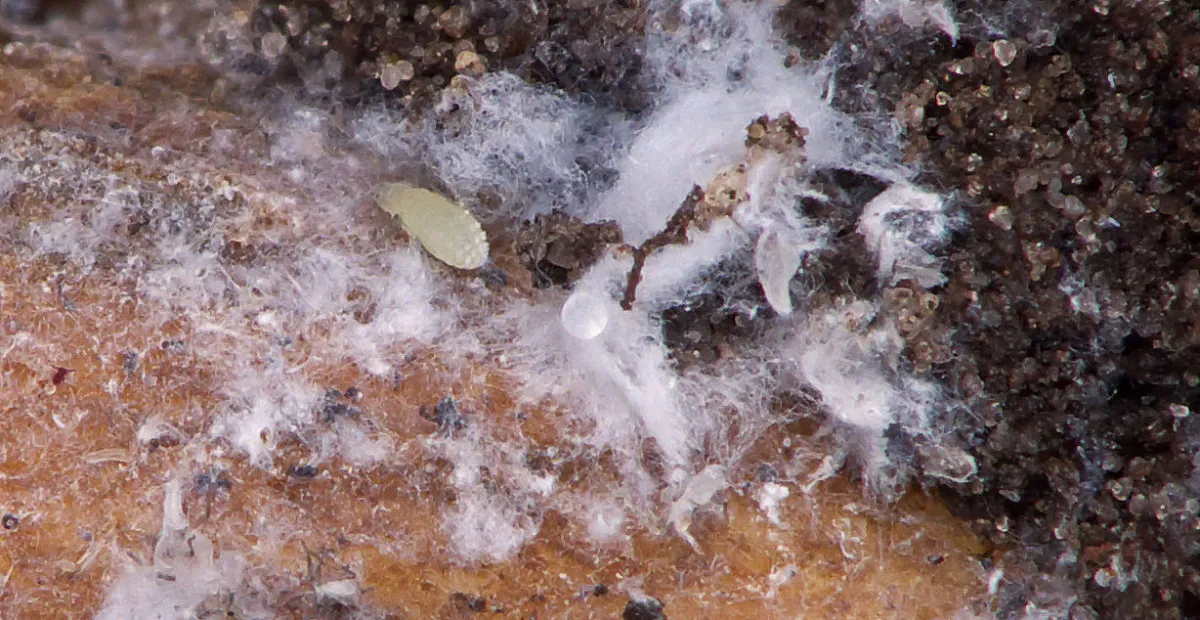
Lettuce Root Aphid
Pemphigus bursariusLettuce Root Aphid overview
Lettuce root aphid, Pemphigus bursarius, is a host-alternating aphid that spends part of its life in swollen galls on poplar leaf stalks and part feeding on lettuce roots. Infested lettuce may wilt during the day, remain undersized or fail to form firm heads. Look for pale aphids and conspicuous white, waxy colonies around the roots, especially in plantings near Lombardy poplar.
Typical conditions
Overview
Pemphigus bursarius, commonly called the lettuce root aphid, is a small aphid in the family Aphididae. It has an unusual two-host life cycle: the primary host is poplar, especially black poplar and Lombardy poplar, while the economically important summer host is lettuce.
Poplar infestations usually produce conspicuous pouch-like or pear-shaped galls on leaf stalks or occasionally leaf midribs, but cause little lasting harm to established trees. On lettuce, the aphids live below ground on fine roots and the crown, where colonies are covered with white, powdery or woolly wax.
Identification should be confirmed carefully because several root-feeding aphids and other Pemphigus species can look similar. Short antennae, inconspicuous or undeveloped cornicles, root colonies and the association with poplar galls are useful clues.
Symptoms and identification
- Lettuce wilts during the warmest part of the day even when the soil is not dry.
- Plants become stunted, heads remain loose or fail to develop normally, and harvest weight declines.
- Fine rootlets turn brown and die; heavy infestations may cover the root system.
- Yellowish, pale or gray aphids occur in clusters among the roots and are coated with white wax.
- Severe, prolonged attacks can cause plant collapse and death.
- On poplar, look for swollen, pouch-like galls on leaf stalks or occasionally along the leaf midrib. These galls are usually more conspicuous than damaging.
Root injury can resemble drought stress, root-knot nematode injury or other disorders that reduce water uptake. Lift suspect plants and wash or gently shake soil from the roots before diagnosing.
Causes and spread
The pest is spread primarily by winged aphids migrating from spring colonies in poplar galls to lettuce and other suitable secondary hosts. It can also persist locally in soil or on volunteer plants and weeds, although the importance of non-poplar sources varies by region and aphid population.
Movement of infested transplants, soil and plant debris can carry colonies short distances. Dry, stressed lettuce is less able to compensate for root feeding. Plantings close to heavily infested Lombardy or black poplars are at greater risk, but poplar proximity alone does not prove that every root aphid colony is P. bursarius.
Life cycle and persistence
In the typical annual cycle, eggs overwinter in bark crevices of poplar. In spring, wingless females hatch and begin feeding on young poplar tissues, inducing galls around the leaf stalk or midrib. Several generations develop inside the galls, and winged forms emerge as the season progresses.
During late spring and summer, winged migrants colonize lettuce roots and suitable related plants. Females reproduce without mating, producing successive generations in the soil. Populations may be greatest in mid to late summer. In late summer or fall, winged forms return to poplar, where sexual forms mate and females lay the overwintering eggs. Some populations may persist on secondary hosts or in soil, so the classic cycle is not universal in every field.
Treatment and control
Confirm the pest by examining the roots rather than treating wilting foliage alone. In a home garden, remove and dispose of severely infested plants, wash soil from reusable tools, and replant the area with a non-host crop when practical. Improve irrigation consistency and reduce plant stress, but avoid repeatedly flooding or overfertilizing damaged plants.
In commercial lettuce, management is mainly preventive because root colonies are protected in soil and are difficult to reach after establishment. Scout representative plants by lifting them and checking fine roots. If infestation is confirmed, consult local Extension guidance and current crop registrations before selecting any intervention.
Low-impact and biological control
Use cultural controls as the foundation of an organically managed program: avoid high-risk poplar plantings, rotate crops, remove infested plants and host weeds, maintain vigorous growth, and improve field sanitation. Biological products based on entomopathogenic fungi, including Beauveria bassiana formulations, have shown potential in some root-aphid systems, but performance depends on formulation, soil moisture, temperature, timing and local registration.
Beneficial predators are valuable for aphids on exposed foliage, but they usually provide limited control of colonies hidden on lettuce roots. Do not assume that foliar releases of lady beetles or lacewings will suppress a below-ground infestation.
Prevention
- Avoid establishing lettuce beds immediately beside Lombardy poplar or black poplar when a recurring root aphid problem is known.
- Inspect nearby poplars in spring for fresh petiole galls and monitor lettuce roots from early crop development onward.
- Use lettuce varieties with documented field resistance or tolerance where they are available and suited to the local production system.
- Remove heavily infested lettuce promptly after harvest and control volunteer lettuce and confirmed alternate-host weeds.
- Rotate lettuce with unrelated crops and avoid carrying infested soil or transplants into clean beds.
- Maintain even irrigation and rapid, healthy crop growth; prevent drought stress without creating saturated soil.
- After an infested crop, cultivate or till the soil and allow it to dry thoroughly when appropriate for the soil type and following crop. Tillage alone may not eliminate the pest.
Interesting facts
- The same species can appear as a gall-forming aphid on poplar and as a wax-covered root aphid on lettuce.
- Poplar galls are produced by the aphid's feeding and plant-tissue manipulation; they shelter developing colonies.
- Root colonies may contain hundreds or thousands of aphids on a severely infested lettuce plant.
- The species is not a single uniform biological population everywhere: host-associated populations and life-cycle patterns can vary among regions and secondary hosts.
- Its short antennae and poorly developed cornicles help distinguish it from many common foliage aphids, but microscopic or specialist confirmation may still be needed.
Use only insecticides legally authorized for lettuce, poplar or the specific crop and pest in the United States and in your state. Follow the current product label exactly, including crop, application site, rate, personal protective equipment, reentry interval and preharvest interval. Product availability and registrations change, and foliar sprays often provide poor control once aphids are protected on roots. Obtain current recommendations from your state Extension service or a licensed crop adviser before treatment.
Affected plants
The plants below are linked to this problem by structured host-plant data. The list updates automatically as new plant profiles are added.
 Lettuce (Lactuca sativa) care guideLactuca sativa
 Celtuce (Lactuca sativa Angustana Group)Lactuca sativa Angustana Group
 Capitata Group (Lactuca sativa Capitata Group)Lactuca sativa Capitata Group
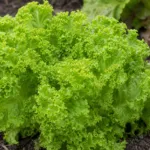 Leaf lettuce (Lactuca sativa Crispa Group)Lactuca sativa Crispa Group
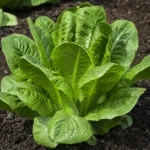 Romaine lettuce (Lactuca sativa Longifolia Group)Lactuca sativa Longifolia Group