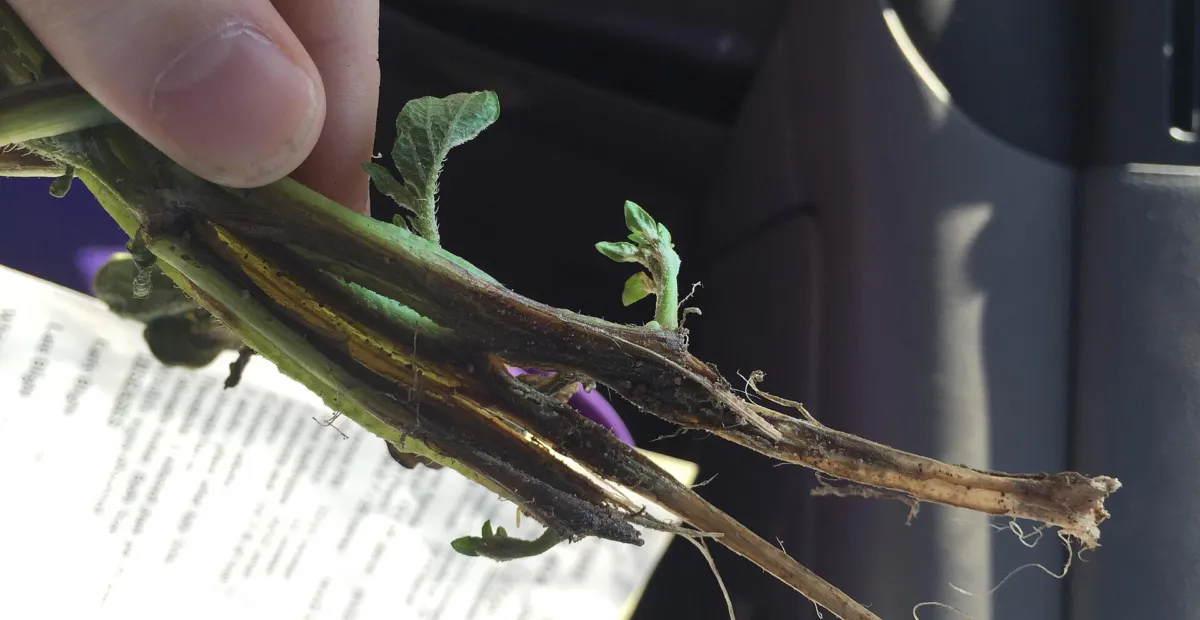
Dickeya solani blackleg and soft rot of potato
Dickeya solaniDickeya solani blackleg and soft rot of potato overview
Dickeya solani is an aggressive bacterial pathogen primarily associated with potato blackleg and tuber soft rot. It is most often introduced in infected seed tubers and can spread through cutting, planting, irrigation, harvesting and grading operations. Symptoms can resemble Pectobacterium blackleg, so laboratory confirmation is important—especially because USDA APHIS does not currently recognize D. solani as known to occur in the United States.
Typical conditions
Overview
Dickeya solani causes a bacterial disease complex commonly described as potato blackleg and soft rot. The principal crop host is potato (Solanum tuberosum), although confirmed reports also exist from hyacinth bulbs and ornamental Muscari. In potato, the bacterium can colonize vascular tissue and rapidly macerate cell walls, producing stem rot, wilt and tuber breakdown.
Above-ground symptoms are not diagnostic by themselves. Pectobacterium species and other Dickeya species can produce similar blackleg and soft-rot symptoms, so species-level identification requires laboratory testing, typically involving isolation plus molecular assays.
Symptoms and identification
Symptoms vary with temperature, moisture, cultivar, inoculum level and infection timing. Wet conditions may produce a slimy, dark brown to black lesion at the stem base that extends upward from the infected seed tuber. Plants may be stunted, yellow, wilted or rapidly desiccate, sometimes with comparatively limited external stem discoloration.
In tubers, soft rot begins as water-soaked, cream to brown macerated tissue and may progress through the vascular ring or from the stolon attachment. Tissue can become cheesy or liquefied, often with an unpleasant odor when secondary microbes are present. Symptoms are easily confused with blackleg caused by Pectobacterium or other Dickeya species.
Causes and spread
The main introduction pathway is infected seed potato, including apparently healthy tubers with low bacterial populations. Spread is favored by cutting seed, planting or harvesting wet tubers, bruising, contaminated knives and machinery, shared bins, wash water, irrigation water, insects contacting exudates, cull piles and volunteer potatoes.
Warm wet weather can accelerate disease development. Because the symptoms resemble other bacterial blacklegs, moving untested seed or equipment between farms can spread the pathogen before its identity is recognized.
Life cycle and persistence
The pathogen is primarily carried in infected seed potatoes and can enter sprouts, stems and developing tubers as the plant grows. Bacteria multiply in moist plant tissues and use cell-wall-degrading enzymes to macerate stems and tubers. Movement between plants and lots occurs mainly through infected planting material, contaminated machinery, wash water, irrigation water, handling and wounds.
Survival in soil without a living host is thought to be limited compared with survival in infected tubers, cull piles, volunteers and contaminated equipment. The disease cycle is therefore driven principally by infected planting stock and sanitation failures rather than long-term soil persistence.
Treatment and control
There is no reliable curative treatment once a potato plant or tuber is systemically infected. Do not rely on foliar fungicides, antibiotics or fertilizer to rescue affected plants.
Mark and isolate suspect lots, remove severely affected plants and tubers, and prevent movement of soil, water and equipment from the area. Have representative stem and tuber tissue tested because D. solani cannot be distinguished reliably from other blackleg and soft-rot pathogens by appearance alone. If a U.S. finding is suspected, promptly contact the state plant regulatory official or USDA APHIS through the appropriate plant-health channel.
For storage, segregate suspect lots so they can be inspected and removed quickly. Maintain clean, dry handling conditions, limit bruising and use temperatures appropriate for the intended potato market and storage duration.
Low-impact and biological control
No organic treatment can cure an infected plant or sterilize an infected tuber. The most effective nonchemical strategy is exclusion and sanitation:
- Plant certified, tested seed potatoes from a reputable supplier; do not save seed from a suspicious lot.
- Remove and securely dispose of symptomatic plants, rotted tubers, volunteer potatoes and cull piles. Do not spread culls on future potato ground.
- Use clean, disinfected knives, planters, sprayers, harvesters, bins and grading equipment. Remove soil and plant debris before applying a labeled disinfectant.
- Improve drainage, avoid standing water and limit irrigation that moves water from diseased areas into healthy rows.
- Reduce wounds and bruising during harvest and handling, and keep storage facilities clean, cool and well ventilated.
Biological products and bacteriophages remain research or locally regulated options rather than dependable homeowner cures; use them only where specifically registered and supported by current local guidance.
Prevention
For U.S. production, prevention should begin with exclusion and rapid diagnosis:
- Buy certified seed potatoes and retain health-certification and lot information.
- Inspect seed for soft rot before planting; use whole seed where practical, or disinfect cutting tools between lots.
- Plant in well-drained soil after soil temperatures are above about 50°F, and prevent prolonged saturation.
- Scout for blackleg, wilt and unexpected tuber rot. Bag representative samples without washing them and submit them to a university diagnostic laboratory or state plant-health authority.
- Clean and disinfect equipment before moving from suspect fields, and clean storage rooms, bins and grading lines before harvest.
- Harvest after vines have naturally died when feasible, minimize bruising, and avoid harvesting wet or excessively warm tubers.
- Remove volunteers and cull piles, and rotate potatoes with non-solanaceous crops; rotation alone will not compensate for infected seed.
Interesting facts
D. solani emerged as a major potato pathogen in Europe during the 2000s and is regarded as more aggressive than several other potato-associated soft-rot bacteria.
The species has a comparatively narrow documented host range. Besides potato, confirmed reports include Hyacinthus orientalis and ornamental Muscari; reports for other plants should not automatically be attributed to D. solani because the genus contains several biologically different species.
USDA APHIS states that the more severe strains, including D. solani, are not known to occur in the United States. A suspect diagnosis should therefore be preserved, reported and confirmed rather than treated as an ordinary blackleg case.
There is no curative pesticide treatment for an already infected potato plant or tuber. Use only products legally authorized for the specific crop, pathogen and use site in the United States, and follow the current product label. Disinfectants for tools, equipment and storage surfaces must likewise be labeled for that use; never apply a surface sanitizer to plants unless the label specifically permits it.
Affected plants
The plants below are linked to this problem by structured host-plant data. The list updates automatically as new plant profiles are added.