
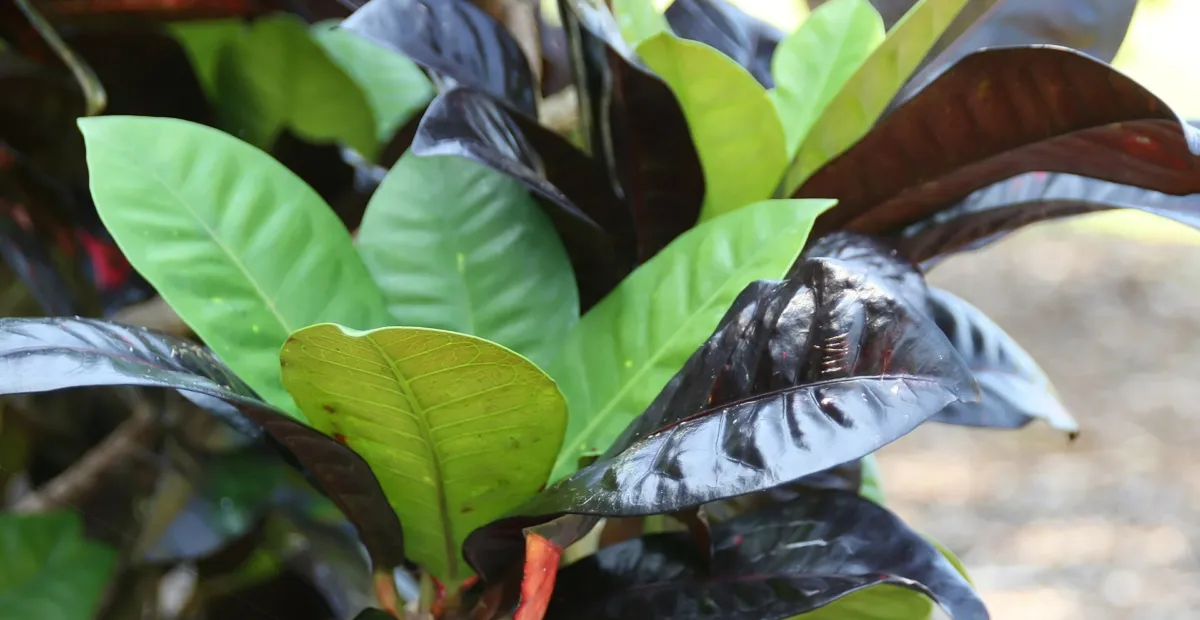
 Source:
 Norma Garden Croton (Codiaeum variegatum ‘Norma’) short overview
Codiaeum variegatum 'Norma' is an evergreen croton cultivar grown for its glossy, oak-like leaves boldly patterned in deep green, red, yellow, and orange. It performs best in bright filtered light with some gentle direct sun, evenly timed watering, warm temperatures, and a fast-draining potting mix. In the United States, it is mainly cultivated indoors or outdoors as a summer container accent, since frost and chilling can cause severe leaf drop.
Taxonomic classification
Norma Garden Croton (Codiaeum variegatum ‘Norma’) care guide
Light and placement
Give bright filtered light with several hours of gentle direct sun, such as an east window or a west window filtered by a sheer curtain. A bright south window can work if intense midday rays are softened. Too little light causes duller colors, stretched growth, and lower-leaf loss; harsh sudden sun may scorch leaves, especially after indoor cultivation.
Watering and humidity
Water thoroughly when the top 1–2 inches of mix feels slightly dry, then let excess drain completely. Do not keep the pot standing in water. Water more often during bright, warm summer growth and less during low-light winter conditions, while avoiding prolonged dryness. Moderate humidity helps reduce stress but does not replace proper drainage.
Soil and growing medium
Use a loose, well-drained potting mix based on peat or coco coir with added perlite, pine bark, or another aerating component. A slightly acidic to neutral reaction is suitable. Avoid dense, waterlogged soil and containers without drainage holes, because saturated roots are prone to decline.
Feeding
Feed during active spring and summer growth with a balanced liquid houseplant fertilizer diluted to half the label rate about every 3–4 weeks. Water first if the mix is dry. Reduce or stop feeding in low-light winter conditions or after repotting until new growth resumes; excess fertilizer can damage roots and intensify salt buildup.
Growth and habit
This cultivar forms an upright, branching woody shrub with a fuller appearance when provided strong light and occasional tip pruning. Low light can produce weaker, more widely spaced growth and loss of lower leaves. Stable conditions are important because sudden relocation, chilling, or watering changes may trigger leaf drop.
Planting and repotting
Plant outdoors only after nights remain consistently above 60°F in a frost-free or seasonal setting. Set the root ball at the same depth as in its nursery container and leave the stem base uncovered. Space outdoor specimens about 24–36 inches apart when a fuller display is desired, allowing room for branching.
Repot in spring when roots have filled the container or growth has slowed. Move up only one pot size and disturb the root ball as little as practical. Use fresh, airy mix and water thoroughly once after repotting, then allow the surface to dry slightly before the next irrigation.
Propagation and pruning
Propagation
Stem cuttings are the practical home method. Take 4–6 inch cuttings from healthy, nonflowering shoots in spring or summer, remove lower leaves, and root them in a warm, humid, airy medium. Wear gloves because the milky sap can irritate skin. Commercial tissue culture has also produced true-to-type 'Norma' plants.
Pruning
Prune in spring or during active growth to remove damaged branches, control height, or encourage branching. Make cuts just above a leaf node with clean tools. Blot or rinse away milky sap and wear gloves; avoid pruning during cold or drought stress.
Overwintering
Bring outdoor containers indoors before temperatures fall to 50°F, inspect for pests, and place them in bright light away from heating vents and cold drafts. Reduce watering during winter but do not allow the root ball to become bone dry. Expect some acclimation leaf drop after a major light or temperature change.
Uses
Used as an indoor specimen or accent plant, a sheltered patio container, seasonal bedding foliage, or a tropical-style foundation accent in frost-free climates. Its colorful leaves also provide cut foliage for floral arrangements. It is not recommended for culinary or medicinal use, and sap exposure should be avoided.
Appearance
‘Norma’ is an upright croton with glossy, leathery leaves described in horticultural sources as oak-like or lobed. The foliage combines deep green with red, yellow, orange, and related warm tones, with color generally strongest in good light. Broken leaves and stems exude milky sap, and older stems become woody and brown.
Flowering
Small, inconspicuous flowers may appear on slender axillary or terminal racemes, especially on mature plants grown outdoors in warm conditions. Male and female flowers are generally separate on the same plant; male flowers are white and showy mainly because of their numerous stamens, while female flowers lack petals. Indoor flowering is uncommon and not the cultivar's principal ornamental feature.
Pollination and visitors
The species produces pollen-bearing male flowers and seed-bearing female flowers on the same plant. The flowers are small and not documented as a major United States pollinator resource; occasional small insects may visit outdoor blooms, but cultivar-specific visitor records for ‘Norma’ are lacking.
Codiaeum variegatum 'Norma' photos
Click any photo for a larger view. Source, author and license are shown separately.
Diseases and pests
Diseases
Overwatering can contribute to root and stem rot. Improve drainage, avoid standing water, and remove damaged tissue with sterile tools. Leaf spotting may worsen with wet foliage and poor air circulation; isolate affected plants, keep leaves dry, and remove badly affected leaves. Persistent decline should prompt inspection of roots and potting media.
Pests
Spider mites are the principal indoor concern, especially in dry air. Scale insects, mealybugs, and thrips may also occur. Inspect leaf undersides and stem joints regularly, isolate infested plants, and use a water spray or labeled horticultural soap or oil according to the product label. Avoid stressing the plant with repeated harsh treatments.
Related diseases and pests
Only Plant Doctor profiles whose host data indicate this plant may be affected are shown here.
 PestCitrus mealybugPlanococcus citri
 PestGreenhouse thripsHeliothrips haemorrhoidalis
 Environmental stressOverwatering
 PestOnion thripsThrips tabaci Lindeman
 PestMelon thripsThrips palmi Karny
 DiseasePear Decline‘Candidatus Phytoplasma pyri’
 PestChilli thripsScirtothrips dorsalis Hood
 PestObscure mealybugPseudococcus viburni
Toxicity and pollen
Species-level extension guidance describes low-severity poisoning, irritating sap, and possible contact dermatitis. Ingestion of larger amounts may cause nausea, vomiting, or diarrhea. Keep plant material and pruning debris away from children and pets, wash hands after handling, and avoid contact with eyes or broken skin.
- Typical season
- Usually late spring through summer when flowering outdoors
- Pollination / pollen
- Small, insect-associated pollen; cultivar-specific airborne behavior not established
Croton pollen is produced in small flowers and is not widely characterized as a major airborne allergen in United States gardening references. Because the plant is often grown indoors and flowers inconspicuously, routine household pollen exposure is likely limited, but sensitive individuals should avoid handling flowers and sap during bloom.
Native habitat
The species is associated with warm tropical and subtropical environments, including coastal habitats, swamp forest, rainforest understory, and montane forest. It prefers warmth, moisture that drains freely, and protection from cold. ‘Norma’ is a cultivated selection rather than a wild habitat form.
Interesting fact
‘Norma’ was developed from a cross of ‘Bravo’ and ‘Ernestine Delarue’ and was later introduced in the United States. Its foliage is the main ornamental feature; flowers are secondary and often overlooked. The cultivar has also been studied in tissue culture, with regenerated plants retaining its variegated appearance.
Frequently asked questions (FAQ)
The most relevant questions about this plant, with short and direct answers.
🌱Quick care
How do I care for Codiaeum variegatum 'Norma' indoors?⌄
Give Codiaeum variegatum 'Norma' bright filtered light, moderate even moisture, warmth, and a loose well-drained potting mix. Let the soil surface dry slightly before watering again, and avoid sudden changes in temperature or light.
How much light does a Norma Garden Croton need?⌄
A Norma Garden Croton needs bright filtered light with some gentle direct sun for strong growth and vivid foliage. Protect it from harsh midday or afternoon sun if the leaves begin to scorch.
How often should I water Codiaeum variegatum 'Norma'?⌄
Water Codiaeum variegatum 'Norma' when the soil surface has dried slightly, then water thoroughly until excess drains from the pot. Do not leave the container standing in water, and reduce watering somewhat during slower winter growth.
What temperature is best for a Norma croton?⌄
Keep a Norma croton warm, ideally around 60–85°F, and protect it from temperatures below 50°F. Cold drafts, sudden temperature changes, and chilled windows can trigger leaf drop.
🌤️Environment and placement
Can I grow Codiaeum variegatum 'Norma' outdoors?⌄
Yes, Codiaeum variegatum 'Norma' can grow outdoors in frost-free conditions or as a warm-season container plant. Move it outside only after temperatures remain above 50°F and acclimate it gradually to outdoor light.
What USDA hardiness zone is suitable for a Norma Garden Croton?⌄
A Norma Garden Croton is generally suited to frost-free USDA Zones 11–12 as a perennial landscape plant. In colder zones, grow it in a container and bring it indoors before temperatures fall below 50°F.
Can a Norma croton tolerate full sun?⌄
A Norma croton may tolerate some full sun when gradually acclimated and kept evenly moist, but bright filtered light is safer in most homes and hot climates. Strong direct midday sun can bleach or burn the foliage.
Why is my Norma croton losing its color?⌄
Insufficient light is the most common reason a Norma croton develops less colorful or greener foliage. Move it closer to a bright window, increasing light gradually to prevent sun stress.
Does Codiaeum variegatum 'Norma' need high humidity?⌄
Codiaeum variegatum 'Norma' grows best with moderate to high humidity, especially indoors during dry winter weather. A humidifier or grouping plants together is generally more reliable than frequent leaf misting.
Where should I place a Norma croton in my house?⌄
Place a Norma croton near a bright east- or south-facing window with filtered light, while keeping it away from cold drafts and heating or air-conditioning vents. A sheer curtain can soften intense direct sun.
💧Care and problems
Why are the leaves falling off my Norma Garden Croton?⌄
Leaf drop commonly follows cold exposure, sudden relocation, low light, overwatering, underwatering, or another abrupt environmental change. Correct the growing conditions consistently and remove only leaves that are fully dead.
Why are the leaves on my Norma croton turning brown?⌄
Brown leaf edges usually indicate dry soil, low humidity, excess fertilizer salts, or intense direct sun. Check the root-zone moisture, flush accumulated salts with clean water, and provide bright filtered light.
Why are my Norma croton leaves curling?⌄
Curling leaves can result from drought stress, cold temperatures, very dry air, or sap-feeding pests such as spider mites. Check the soil and leaf undersides, then correct moisture and temperature problems before treating pests.
What pests attack Codiaeum variegatum 'Norma'?⌄
Common pests include spider mites, mealybugs, and scale insects. Inspect leaf undersides and stems regularly, isolate affected plants, and use an appropriate houseplant pest treatment according to its label.
How do I fertilize a Norma Garden Croton?⌄
Fertilize a Norma Garden Croton lightly during active spring and summer growth with a balanced houseplant fertilizer. Avoid heavy feeding when growth slows in fall and winter, and water beforehand if the soil is dry.
How do I clean Norma croton leaves?⌄
Gently wipe Norma croton leaves with a soft, damp cloth to remove dust and help you spot pests. Avoid abrasive cleaners, leaf-shine products, and rough handling, which can damage the foliage.
🪴Planting and repotting
What soil is best for Codiaeum variegatum 'Norma'?⌄
Use a loose, humus-rich, well-drained potting mix for Codiaeum variegatum 'Norma'. A quality indoor potting mix amended with drainage material is preferable to dense garden soil in containers.
When should I repot a Norma croton?⌄
Repot a Norma croton when roots fill the container, drainage slows, or the plant dries unusually quickly. Move it into a pot only 1–2 inches wider and repot during active growth when possible.
Can I plant a Norma Garden Croton in the ground?⌄
You can plant a Norma Garden Croton in the ground in a frost-free, well-drained location with bright filtered light or partial shade. In colder parts of the United States, treat it as a seasonal annual or keep it container-grown.
✂️Propagation and pruning
How do I propagate Codiaeum variegatum 'Norma'?⌄
Propagate Codiaeum variegatum 'Norma' from stem cuttings or by air layering, preferably during warm active growth. Seed is not recommended for preserving the cultivar because seedlings may not match the parent plant.
Can I propagate a Norma croton from a leaf?⌄
A single leaf generally cannot produce a new Norma croton because it lacks a stem node or growing bud. Use a healthy stem cutting that includes at least one node instead.
How do I take a stem cutting from a Norma Garden Croton?⌄
Take a 4–6-inch stem cutting with at least one node, remove the lower leaves, and place it in a lightly moist, well-drained propagation medium. Keep it warm in bright indirect light until roots and new growth develop.
Can I prune Codiaeum variegatum 'Norma' to make it bushier?⌄
Yes, pruning Codiaeum variegatum 'Norma' just above a leaf node can encourage branching and a fuller shape. Wear gloves because the milky sap may irritate skin, and make major pruning cuts during active growth.
When is the best time to prune a Norma croton?⌄
Early spring, just before vigorous new growth, is a suitable time for substantial pruning of a Norma croton. Remove weak, damaged, or overly leggy stems while avoiding removal of too much foliage at once.
⚠️Toxicity and safety
Is Codiaeum variegatum 'Norma' toxic to cats and dogs?⌄
Codiaeum variegatum 'Norma' has irritating, low-severity toxic sap and should be kept away from pets. Chewing or swallowing plant material may cause gastrointestinal upset, while sap contact can irritate skin and eyes.
Is a Norma Garden Croton poisonous to humans?⌄
A Norma Garden Croton has irritating sap and is considered low-severity toxic if eaten in quantity. Ingestion may cause nausea, vomiting, or diarrhea, and handling damaged stems or leaves can cause skin irritation.
Should I wear gloves when pruning a Norma croton?⌄
Yes, wear gloves when pruning or taking cuttings from a Norma croton because its milky sap can irritate skin and eyes. Wash exposed skin and tools afterward, and keep the sap away from fabrics because it may stain.
🌸Flowering and special interest
Does Codiaeum variegatum 'Norma' flower?⌄
Yes, Codiaeum variegatum 'Norma' can produce small yellow or white flowers, typically during warm-season growth. The flowers are secondary to its ornamental foliage and may be sparse indoors.
How do I get my Norma Garden Croton to flower?⌄
Provide a mature Norma Garden Croton with strong filtered light, warmth, adequate moisture, and active-season nutrition to support flowering. Indoor plants may flower irregularly, and flowers should not be expected if the plant is stressed.
Similar plants
 Azure Monkshood (Aconitum carmichaelii) care guideAconitum carmichaelii
 Monkshood (Aconitum ‘Stainless Steel’)Aconitum 'Stainless Steel'
 Monkshood (Aconitum ‘Bressingham Spire’)Aconitum 'Bressingham Spire'
 Golden full moon maple (Acer shirasawanum ‘Aureum’)Acer shirasawanum 'Aureum'
 Globosum (Acer platanoides ‘Globosum’)Acer platanoides 'Globosum'
 Striped maple (Acer pensylvanicum) care guideAcer pensylvanicum