
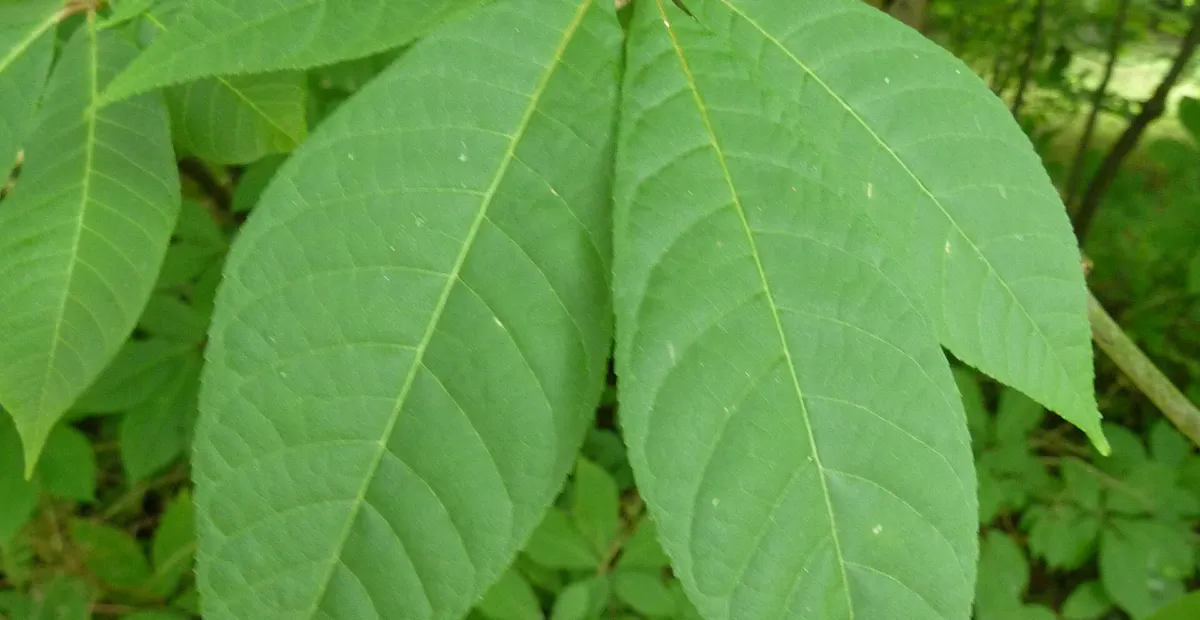
 Source:
 Bottlebrush buckeye (Aesculus parviflora) short overview
Bottlebrush buckeye is a broad, suckering shrub native to parts of the southeastern United States. Its palmate leaves form a lush backdrop for upright summer panicles of small white flowers with conspicuous stamens, while the foliage can turn yellow in fall. Best in moist, fertile soil and partial shade, it works well as a woodland specimen, screen, border planting, or pollinator-garden shrub. Its buckeye fruits and other parts are toxic if eaten.
Taxonomic classification
Bottlebrush buckeye (Aesculus parviflora) care guide
Light and placement
Grow in partial shade to shade, such as a woodland edge, north- or east-facing border, or beneath high-canopy trees. Morning sun or filtered light is generally suitable. Scorched leaves, premature yellowing, or drought stress indicate too much exposure or insufficient moisture; weak, sparse growth can indicate excessively deep shade.
Watering and humidity
Water deeply and regularly during establishment, aiming for evenly moist soil rather than frequent shallow sprinkling. Mature plants tolerate short dry periods better than young ones but perform best with consistent moisture. Increase watering during hot, dry weather and reduce it during cool, wet periods while preventing prolonged drought.
Soil and growing medium
Use fertile, humus-rich soil that holds consistent moisture but drains adequately. Loam is ideal, although the species tolerates sand or clay when moisture is available. Slightly acidic to neutral soil is preferred; avoid highly alkaline, saline, or chronically stagnant conditions.
Feeding
Top-dress with compost in spring or apply a balanced, slow-release fertilizer at label rates as growth begins. Avoid heavy nitrogen feeding, which can produce weak, overly lush growth. Do not fertilize drought-stressed, newly transplanted, or dormant plants.
Growth and habit
A multi-stemmed shrub that gradually forms a broad colony through suckers from the roots or lower trunk. It generally looks best unpruned, with maintenance focused on removing unwanted suckers, crossing stems, or damaged wood rather than forcing a compact shape.
Planting and repotting
Plant in spring or fall when the soil is workable. Set the root flare level with the surrounding soil, water deeply, and mulch without covering the stems. Space about 6–8 feet apart for grouped plantings, or allow more room where a broad colony is desired.
Not generally suited to long-term container culture because it becomes a large, suckering shrub. If temporarily container-grown, transplant while dormant, disturb the roots as little as possible, and move it into the landscape before it becomes root-bound.
Propagation and pruning
Propagation
Propagate from fresh seed sown after appropriate cold stratification, or by layering and division of established suckering colonies. Seed and vegetative methods can be moderate in difficulty because germination and establishment may be slow.
Pruning
Prune in late winter or after flowering to remove damaged, crossing, or weak stems. Remove unwanted root or basal suckers at their origin if the colony is spreading beyond its allotted space. Avoid shearing, which obscures the plant’s naturally broad form.
Overwintering
Generally hardy outdoors in USDA Zones 5–8. Apply a light mulch layer over the root zone before severe winter weather, especially for newly planted shrubs, but keep mulch away from stems. No indoor overwintering is appropriate for established landscape plants.
Uses
Use as a specimen, informal screen, mass planting, woodland-border shrub, foundation accent, or pollinator-garden plant. Its broad suckering habit is useful for naturalistic cover but unsuitable for tight spaces. Fruits are ornamental only and are not edible.
Appearance
Leaves are palmately compound, usually with five leaflets, and remain attractive through the growing season. Gray-brown stems support a dense, rounded to broadly spreading form. Long white flower panicles rise above the foliage, while smooth elongated fruits may develop in fall.
Flowering
Showy flowers appear in early to midsummer in upright cylindrical panicles above the foliage. Individual flowers are small and tubular, with four white petals and conspicuously protruding stamens. Flowering is most often concentrated in June and July, with timing varying by climate.
Pollination and visitors
The conspicuous white panicles are documented as attractive to butterflies and hummingbirds. Flowers provide nectar and pollen during the early-summer bloom period; visitor abundance depends on local habitat and weather.
Aesculus parviflora photos
Click any photo for a larger view. Source, author and license are shown separately.
Diseases and pests
Diseases
Usually trouble-free, but powdery mildew, Verticillium wilt, and wood rots may occur under stressful conditions. Improve air circulation, avoid chronic root saturation, remove badly affected material, and use clean pruning tools.
Pests
No major pest complex is usually reported. Monitor stressed plants for general chewing insects and scale, maintain vigor with proper watering, and avoid unnecessary broad-spectrum insecticides during bloom.
Related diseases and pests
Only Plant Doctor profiles whose host data indicate this plant may be affected are shown here.
 PestEuropean shot-hole borerXyleborus dispar (Fabricius)
 PestJapanese beetlePopillia japonica
 DiseasePhytophthora cambivora root and crown rotPhytophthora cambivora (often written Phytophthora × cambivora in modern taxonomic treatments)
 PestHorse Chestnut Leaf MinerCameraria ohridella Deschka & Dimić
 DiseaseShallow Bark Canker of WalnutBrenneria nigrifluens
 DiseaseApple mosaic virusIlarvirus ApMV
 DiseaseMaple powdery mildewSawadaea bicornis
 Environmental stressUnderwatering
Toxicity and pollen
All parts contain toxic compounds, including aesculin and saponins; the seeds and fruits are especially hazardous if eaten. Keep fallen buckeyes away from children and pets, do not use the plant medicinally, and seek poison-control or veterinary advice after ingestion.
- Typical season
- Typically June–July in much of the United States
- Pollination / pollen
- Insect-dispersed pollen
This is an insect-pollinated flowering shrub, so its pollen is not typically dispersed in large airborne quantities like wind-pollinated tree pollen. However, species-specific allergy data are limited, so a low risk should not be treated as zero risk for sensitive individuals.
Native habitat
Native to moist, rich woods, ravines, and related southeastern U.S. habitats, especially in Alabama, Georgia, South Carolina, and parts of Florida. It favors woodland-edge or understory conditions with dependable moisture and fertile soils.
Interesting fact
The species is a shrub rather than a tree and commonly expands by suckering from the roots or lower stems. Its long-exserted stamens help distinguish it from several other buckeyes. The smooth, elongated fruits may contain one to three toxic seeds.
Frequently asked questions (FAQ)
The most relevant questions about this plant, with short and direct answers.
🌱Quick care
What is bottlebrush buckeye?⌄
Bottlebrush buckeye is a deciduous, multistemmed shrub, scientifically known as Aesculus parviflora, that produces showy white flower panicles in early summer. It is native to parts of the southeastern United States and typically grows 8–12 feet tall and 8–15 feet wide.
How much sunlight does bottlebrush buckeye need?⌄
Bottlebrush buckeye grows best in partial shade to shade. It can tolerate more sun when soil stays consistently moist, but strong sun and drought may cause leaf scorch.
How often should I water bottlebrush buckeye?⌄
Water bottlebrush buckeye regularly so the soil remains evenly moist, especially during its first few growing seasons. Established plants tolerate short dry periods, but hot, dry conditions can cause wilting and leaf scorch.
How big does bottlebrush buckeye get?⌄
Bottlebrush buckeye usually reaches about 8–12 feet tall and 8–15 feet wide. It also spreads by suckers, so a mature planting may form a broad colony.
🌤️Environment and placement
Where should I plant bottlebrush buckeye?⌄
Plant bottlebrush buckeye in a woodland garden, shaded border, rain garden, or other site with partial shade, fertile soil, and dependable moisture. Give it plenty of room to spread naturally rather than treating it as a narrow shrub.
Can bottlebrush buckeye grow in full shade?⌄
Yes, bottlebrush buckeye can grow in full shade, although flowering is often stronger with some filtered or morning sunlight. Avoid hot reflected locations that dry the soil quickly.
Can bottlebrush buckeye grow in full sun?⌄
Bottlebrush buckeye can grow in full sun if the soil remains reliably moist, but partial shade is generally safer. Plants in hot, sunny sites are more prone to drought stress and leaf scorch.
What type of soil does bottlebrush buckeye need?⌄
Bottlebrush buckeye prefers moist, fertile, humus-rich, well-drained soil. It tolerates several soil types, including clay, but performs best when organic matter and moisture are available without prolonged poor drainage.
Is bottlebrush buckeye suitable for a rain garden?⌄
Bottlebrush buckeye can suit a rain garden or moist landscape area if the site is not permanently waterlogged. It tolerates occasional wet conditions but still benefits from reasonably well-drained soil.
What USDA hardiness zones can grow bottlebrush buckeye?⌄
Bottlebrush buckeye is generally hardy from USDA Zones 5 through 9. Local performance can vary with winter exposure, summer heat, soil moisture, and whether the plant is grown near the edge of its range.
💧Care and problems
Does bottlebrush buckeye need fertilizer?⌄
Bottlebrush buckeye usually needs little fertilizer when planted in fertile soil. If growth is weak, have the soil tested before applying a spring fertilizer, because excessive nitrogen can promote foliage at the expense of flowering.
Why are bottlebrush buckeye leaves turning brown?⌄
Brown leaves are often caused by drought, hot sun, or leaf scorch. Water deeply during dry weather, mulch the root zone, and provide afternoon shade if the plant is exposed to intense heat.
Does bottlebrush buckeye have serious pest or disease problems?⌄
Bottlebrush buckeye generally has few serious pest or disease problems. Stress from drought, excessive sun, or poor planting conditions is more likely to cause noticeable foliage damage.
Does bottlebrush buckeye spread aggressively?⌄
Bottlebrush buckeye spreads by suckers from the roots or lower stems and can form colonies over time. It is not generally considered invasive, but remove unwanted suckers if you need to contain its footprint.
🪴Planting and repotting
When is the best time to plant bottlebrush buckeye?⌄
Plant bottlebrush buckeye in spring or fall when temperatures are mild and soil moisture is dependable. Fall planting is especially useful in regions where the ground remains workable and winter is not severe.
How far apart should bottlebrush buckeye be planted?⌄
Space bottlebrush buckeye about 6–8 feet apart for a mass planting, or farther apart for individual specimens that can develop their full spreading form. Allow additional room if you want to minimize future sucker removal.
Can bottlebrush buckeye be grown in a container?⌄
Bottlebrush buckeye is usually better planted in the ground because it becomes a large, spreading shrub with a suckering root system. A young plant can be container-grown temporarily, but long-term container culture is not ideal.
✂️Propagation and pruning
How do you propagate bottlebrush buckeye from seed?⌄
Propagate bottlebrush buckeye from fresh seed collected when the fruit covering begins to crack, then sow it promptly because buckeye seeds lose viability when they dry. Seed-grown plants may take several years to reach flowering size.
Can bottlebrush buckeye be propagated from cuttings?⌄
Yes, bottlebrush buckeye can be propagated from root cuttings or softwood shoots, although results may be less predictable than with some ornamental shrubs. Use healthy material and maintain consistent moisture while roots develop.
Can you transplant bottlebrush buckeye suckers?⌄
Yes, young bottlebrush buckeye suckers can be transplanted when dormant, provided they have an adequate section of root attached. Replant them promptly, keep the soil evenly moist, and expect some transplant stress.
When should bottlebrush buckeye be pruned?⌄
Prune bottlebrush buckeye just after flowering because it blooms on old wood. Remove dead, damaged, crossing, or unwanted suckering growth, and avoid heavy pruning in late winter if you want to preserve the coming season’s flowers.
Can bottlebrush buckeye be cut back severely?⌄
Bottlebrush buckeye tolerates severe rejuvenation pruning when necessary, but heavy cutting removes flower-producing wood and may stimulate vigorous shoots or suckers. For routine maintenance, selective thinning is usually preferable.
⚠️Toxicity and safety
Is bottlebrush buckeye poisonous?⌄
Yes, bottlebrush buckeye is moderately toxic if ingested, with the seeds and fruits posing particular concern. Keep fallen buckeyes away from children and pets, and contact a poison-control or veterinary professional if ingestion occurs.
Are bottlebrush buckeye seeds edible?⌄
No, bottlebrush buckeye seeds are not edible and should never be eaten. All parts of the plant contain toxic compounds, so do not use the seeds as food or allow children or pets to chew them.
Is bottlebrush buckeye safe for dogs, cats, or horses?⌄
Bottlebrush buckeye can be harmful to dogs, cats, and horses if plant material is eaten, especially the seeds. Prevent access to fallen fruits and seek veterinary advice promptly after suspected ingestion.
Is bottlebrush buckeye deer resistant?⌄
Bottlebrush buckeye is often described as relatively deer resistant, but no plant is completely deer proof. Browsing pressure can vary by region, season, deer population, and the availability of other food.
🌸Flowering and special interest
When does bottlebrush buckeye bloom?⌄
Bottlebrush buckeye typically blooms in early to midsummer, commonly from June into July depending on the region. The white flowers are held in upright, bottlebrush-like panicles that can be especially striking in shade.
Why is my bottlebrush buckeye not flowering?⌄
Poor flowering can result from insufficient light, a young plant, drought stress, extreme weather, excess nitrogen, or pruning at the wrong time. Because it flowers on old wood, late-winter pruning may remove the season’s flower buds.
Does bottlebrush buckeye attract pollinators?⌄
Yes, bottlebrush buckeye attracts pollinators, hummingbirds, and butterflies when it is in bloom. Its white flower panicles are particularly useful in shaded or woodland-style pollinator plantings.
Does bottlebrush buckeye have fall color?⌄
Bottlebrush buckeye usually develops yellow fall color, although the display may be brief and vary with weather and growing conditions. Its primary ornamental feature is the summer flower display rather than autumn foliage.
Similar plants
 Azure Monkshood (Aconitum carmichaelii) care guideAconitum carmichaelii
 Monkshood (Aconitum ‘Stainless Steel’)Aconitum 'Stainless Steel'
 Monkshood (Aconitum ‘Bressingham Spire’)Aconitum 'Bressingham Spire'
 Golden full moon maple (Acer shirasawanum ‘Aureum’)Acer shirasawanum 'Aureum'
 Globosum (Acer platanoides ‘Globosum’)Acer platanoides 'Globosum'
 Striped maple (Acer pensylvanicum) care guideAcer pensylvanicum