
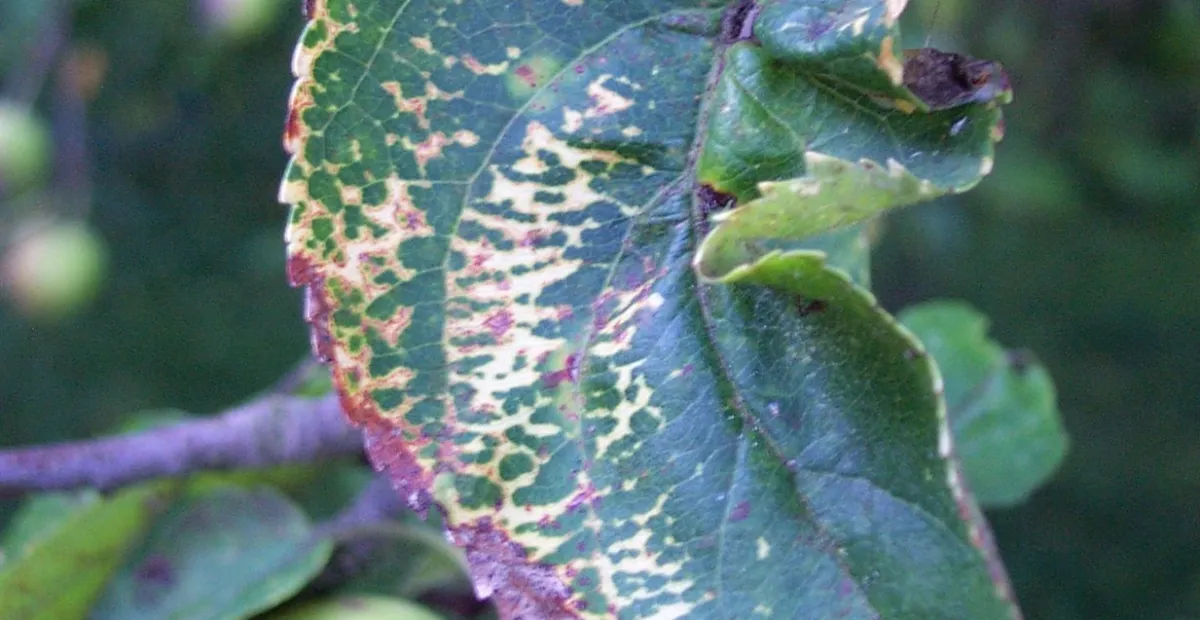
Apple mosaic virus
Ilarvirus ApMVApple mosaic virus overview
Apple mosaic virus is a graft- and root-graft-associated viral disease of apple. Infected leaves develop irregular cream, yellow or white mottling, often along veins; severe infections may cause browning, curling and premature leaf drop. Symptoms vary with the cultivar and virus strain, and growth and yield can decline. There is no curative treatment, so virus-tested planting material and careful propagation hygiene are central to management.
Typical conditions
Overview
Apple mosaic virus, commonly abbreviated ApMV, is an ilarvirus in the family Bromoviridae. In the United States it is generally a low-frequency but persistent problem in orchards, heirloom trees and propagated planting stock. Diagnosis from symptoms alone is unreliable because nutrient imbalance, herbicide injury, variegation, other apple viruses and environmental stress can look similar. Confirmation should use a qualified plant diagnostic laboratory, commonly with serological or molecular testing.
Symptoms and identification
Newly expanding apple leaves may show irregular pale green, yellow, cream or nearly white patches, flecks and bands. Vein-associated chlorosis is common, and affected areas may form a striking mosaic pattern on the upper leaf surface.
On sensitive cultivars or with more severe strains, leaves can curl, develop brown necrotic tissue after hot sunny weather, and drop prematurely. Infected trees may grow slowly, set fewer buds or produce lower yields. Symptom expression can be stronger after a cool spring and may vary between years.
Symptoms are not diagnostic by themselves. ‘Golden Delicious’ and ‘Jonathan’ are often reported as more sensitive, while some cultivars show mild or inconspicuous symptoms. Distinguish the condition from Tulare apple mosaic and other virus diseases where possible through laboratory testing.
Causes and spread
The principal cause is infection by Apple mosaic virus. It is most commonly introduced through infected buds, scions, grafts, rootstocks or other vegetative propagation material.
Within established plantings, natural root grafts can connect adjacent apple trees and permit slow spread. Grafting, budding, pruning or handling operations may also move infected sap between plants when hygiene is poor. The available U.S. extension and research guidance does not identify a routine insect or mite vector for ApMV. Because symptom expression is strain- and cultivar-dependent, apparently healthy source trees should not automatically be considered virus-free.
Life cycle and persistence
ApMV becomes systemic in infected plants and can persist for the life of a woody host. The most dependable orchard pathway is vegetative propagation: infected buds, scions, cuttings or root pieces carry the virus into new trees.
Natural root grafts between adjacent trees can transmit the virus slowly within an orchard. Mechanical transfer during grafting or other operations involving fresh plant wounds is possible when contaminated plant tissue or tools are involved. Pollen and seed transmission have been investigated for some isolates and hosts, but they are not considered the principal management pathway for ordinary U.S. apple production. No known insect or mite vector is established as a routine means of ApMV spread.
Treatment and control
No treatment eliminates ApMV from an infected apple tree. Fungicides, insecticides, fertilizers and pruning cannot cure systemic infection or restore infected tissues.
If symptoms are mild and the tree is not being used for propagation, it may remain in a home orchard with monitoring. Do not use it as a source of buds, scions, cuttings or rootstock material. Remove and replace severely affected, declining or strategically important trees with virus-tested stock. When removal is chosen, dispose of the tree and propagation wood so it cannot be reused for grafting; manage roots and regrowth according to local orchard and disposal requirements.
Low-impact and biological control
There is no organic spray, biological control agent or soil treatment that eradicates ApMV from an infected tree. Organic management therefore relies on exclusion and sanitation.
- Buy virus-tested or certified clean apple trees, rootstocks and scion wood from reputable U.S. nurseries.
- Do not collect budwood, suckers or grafting material from trees with unexplained mosaic symptoms.
- Use clean, disinfected grafting and pruning tools, and avoid moving fresh sap between trees.
- Remove and dispose of severely affected trees when practical, especially in young orchards or propagation blocks.
- Keep infected trees out of propagation programs and monitor nearby trees for recurring symptoms.
Prevention
Plant only virus-tested or certified clean trees, rootstocks and scion material. This is the most effective preventive measure because infected apple trees cannot be cured.
- Purchase from reputable commercial suppliers and retain plant-health certification when available.
- Do not graft from symptomatic, unknown or neglected orchard trees.
- Inspect nursery stock and new plantings for abnormal mosaic before propagation or distribution.
- Sanitize budding and pruning tools between trees, particularly when working with suspected infected material.
- Avoid planting closely spaced infected and healthy trees where natural root grafting may occur.
- Submit representative leaves or dormant tissue to a state university or accredited diagnostic laboratory when identification affects removal, warranty or propagation decisions.
Interesting facts
Apple mosaic is a disease name that can involve more than one virus in apple symptom descriptions; ApMV should not automatically be assumed without testing.
Visible severity depends on both the virus strain and the apple cultivar. Some infected trees continue to crop, while severe combinations can reduce photosynthetic leaf area, growth and yield substantially.
ApMV has been reported from a broad range of woody hosts, including genera in the rose family and hop. A documented host association does not necessarily mean that every host is an important source of spread to apple under field conditions.
No pesticide cures apple mosaic virus, and insecticide or fungicide applications do not eliminate an infected tree. Use only products legally authorized for the crop and problem in the United States, and follow the current product label. Prioritize virus-tested planting material, sanitation, propagation hygiene and removal or replacement of severely affected trees.
Affected plants
The plants below are linked to this problem by structured host-plant data. The list updates automatically as new plant profiles are added.
 Apple tree (Malus domestica) care guideMalus domestica
 Sweet birch (Betula lenta) care guideBetula lenta
 Black Birch (Betula nigra) care guideBetula nigra
 Paper birch (Betula papyrifera) care guideBetula papyrifera
 Silver birch (Betula pendula) care guideBetula pendula
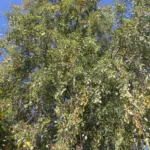 Cutleaf European White Birch (Betula pendula ‘Laciniata’)Betula pendula 'Laciniata'
 Tristis (Betula pendula ‘Tristis’)Betula pendula 'Tristis'
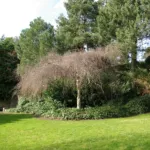 Youngii (Betula pendula ‘Youngii’)Betula pendula 'Youngii'
 Jacquemontii (Betula utilis ‘Jacquemontii’)Betula utilis 'Jacquemontii'
 Ruby red horse-chestnut (Aesculus ‘Carnea Briotii’)Aesculus 'Carnea Briotii'
 Aesculus ‘Pavia’Aesculus 'Pavia'
 Conker-tree (Aesculus hippocastanum) care guideAesculus hippocastanum