
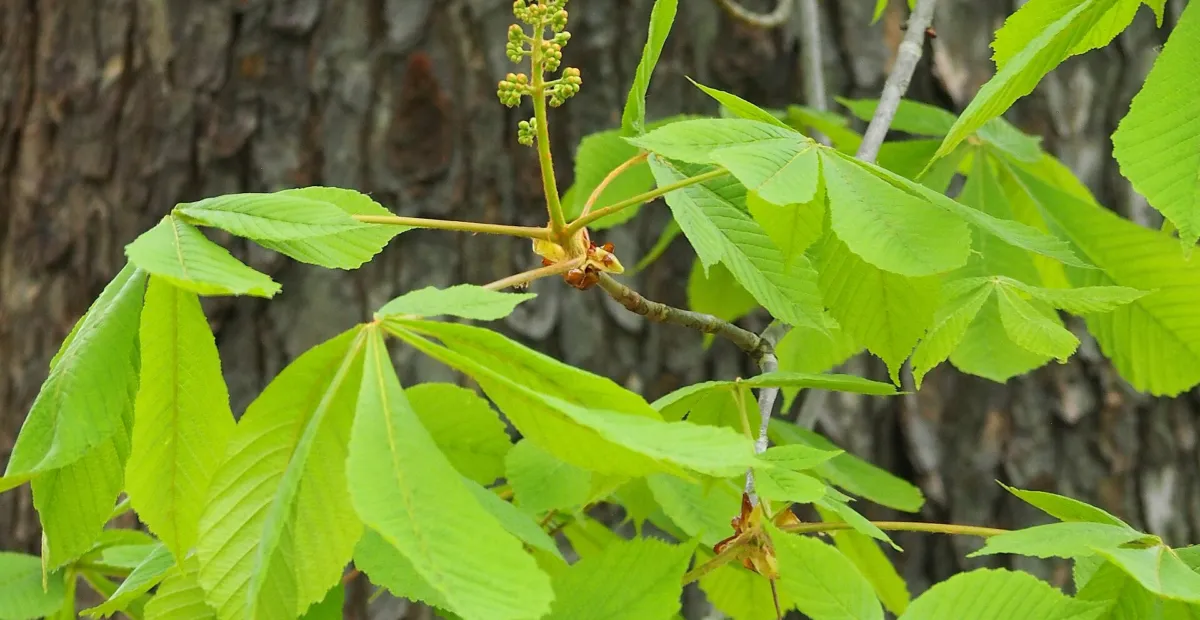
 Source:
 Conker-tree (Aesculus hippocastanum) short overview
Conker-tree (Aesculus hippocastanum) is a large, long-lived deciduous tree from the central Balkans to Türkiye, grown for its broad crown, distinctive seven-part palmate leaves and upright spring panicles of creamy-white flowers. It performs best in full sun to partial shade with deep, moderately moist, well-drained soil. Its spiny capsules contain toxic seeds, so fallen conkers should be kept away from children, dogs, cats and livestock.
Taxonomic classification
Conker-tree (Aesculus hippocastanum) care guide
Light and placement
Choose full sun for the strongest flowering and crown development, or partial shade where summers are hot. An open eastern, southern or western exposure is suitable if the soil remains adequately moist. Sparse growth and weak flowering can indicate excessive shade; scorched leaf margins, premature browning or drought stress indicate too much heat combined with insufficient water.
Watering and humidity
Water deeply and slowly when the upper several inches of soil begin to dry, aiming to wet the full developing root zone rather than sprinkling lightly. Maintain regular moisture during establishment and drought, then reduce frequency for established trees except during prolonged hot, dry weather. Keep mulch several inches away from the trunk.
Soil and growing medium
Use deep, fertile soil that drains reliably but does not dry excessively. Loam is ideal; clay and sand are workable when improved with organic matter and drainage is maintained. A broad pH range is tolerated, from mildly acidic through neutral to mildly alkaline. Avoid persistently waterlogged sites.
Feeding
Feed only when growth is weak or a soil test indicates a deficiency. Apply a thin layer of compost in spring or use a slow-release, balanced tree fertilizer according to its label. Do not fertilize drought-stressed, newly transplanted or visibly diseased trees until watering and root conditions are corrected.
Growth and habit
A vigorous, long-lived tree that develops a broad, rounded crown and substantial scaffold limbs. It is most manageable when given ample space from the beginning. Young trees establish best with consistent deep watering, while mature specimens benefit from protection against soil compaction, severe drought and root disturbance.
Planting and repotting
Plant bare-root or container-grown trees in fall or early spring while dormant. Set the root flare level with, or slightly above, surrounding soil; do not bury the trunk. Allow at least 40–60 feet from buildings, pavement and utility lines for a mature specimen, and water deeply through the first two growing seasons.
Not a practical long-term container tree. Young plants can be shifted into progressively larger containers while dormant, but establish the tree in the ground as soon as possible. Protect the root ball from drying during transplanting and avoid disturbing large roots.
Propagation and pruning
Propagation
Fresh seed is the usual method: sow promptly outdoors or provide cool, moist stratification because seeds lose viability when allowed to dry. Cultivars are commonly propagated by grafting. Seedlings require protection from rodents and should be transplanted while young.
Pruning
Prune sparingly during dormancy to remove dead, damaged, crossing or poorly attached branches and to establish a strong structure in young trees. Avoid topping and large unnecessary cuts. Because mature branches can be heavy, use a qualified arborist for major work.
Overwintering
Hardy in much of the United States when planted in the ground. Young trees benefit from a 2–3 inch organic mulch layer over the root zone, kept away from the trunk, and protection from rodent browsing. Container-grown trees are more vulnerable to root freezing and should not be left exposed through severe winter.
Uses
Used primarily as a large ornamental, shade and avenue tree in parks, campuses and spacious landscapes. The dense crown provides shade and nesting structure, while spring flowers offer nectar and pollen to insects. Seeds are decorative but poisonous and must not be eaten or used as a substitute for edible chestnuts.
Appearance
Leaves are opposite and palmately compound, usually with five to seven serrated leaflets radiating from one point. The tree has stout branches, gray to gray-brown bark and a rounded crown. Creamy-white flower panicles rise above the foliage, followed by green spiny capsules that usually contain one glossy brown seed with a pale hilum.
Flowering
Upright terminal panicles appear in late spring. Individual flowers are creamy white with a yellow basal mark that commonly changes toward red after pollination or as the flower ages. The flowers produce nectar and pollen and are primarily insect-pollinated.
Pollination and visitors
Flowers are primarily insect-pollinated and documented visitors include honey bees, bumblebees, solitary bees and hoverflies. Nectar and pollen are produced in the panicles; the yellow-to-red floral signal is associated with changes in nectar availability.
Aesculus hippocastanum photos
Click any photo for a larger view. Source, author and license are shown separately.
Diseases and pests
Diseases
Watch for leaf blotch, powdery mildew, cankers and bleeding lesions. Improve airflow, avoid trunk and foliage injury, irrigate during drought and remove badly affected fallen leaves. Suspected bleeding canker or major branch dieback warrants assessment by a certified arborist; avoid indiscriminate fungicide use.
Pests
The horse-chestnut leaf miner can produce winding brown mines and premature browning; rake and dispose of fallen leaves where practical. Watch also for scale insects, aphids and borers. Maintain tree vigor with appropriate watering, mulch kept off the trunk and professional diagnosis before treatment.
Related diseases and pests
Only Plant Doctor profiles whose host data indicate this plant may be affected are shown here.
 PestHorse Chestnut Leaf MinerCameraria ohridella Deschka & Dimić
 DiseasePhytophthora cambivora root and crown rotPhytophthora cambivora (often written Phytophthora × cambivora in modern taxonomic treatments)
 DiseaseShallow Bark Canker of WalnutBrenneria nigrifluens
 PestEuropean shot-hole borerXyleborus dispar (Fabricius)
 PestJapanese beetlePopillia japonica
 DiseaseApple mosaic virusIlarvirus ApMV
 DiseaseMaple powdery mildewSawadaea bicornis
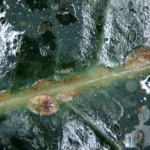 PestBrown Soft ScaleCoccus hesperidum
Toxicity and pollen
All parts are considered poisonous if eaten, with the seeds posing the greatest practical risk because they resemble edible sweet chestnuts. Aesculin and other saponins can cause gastrointestinal upset and, in larger exposures, weakness, neurologic signs or more serious illness. Do not use the seeds as food or home medicine; seek poison-control or veterinary advice after ingestion.
- Typical season
- Typically May to June in much of the United States
- Pollination / pollen
- Airborne tree pollen released during bloom
The tree releases airborne pollen during flowering, generally from late spring into early summer in the United States. It is not appropriate to describe the pollen as allergen-free: horse-chestnut pollen has been documented in airborne pollen studies and can sensitize some people, although its importance varies by region and local tree abundance.
Native habitat
Native populations occur in temperate mountain and valley environments of the central Balkan Peninsula to Türkiye. It is associated with fertile, moisture-retentive but drained soils and climates with cold winters and warm growing seasons. In the United States it is cultivated and locally introduced rather than native.
Interesting fact
The species is not a true chestnut; it belongs to Sapindaceae, the soapberry family. Its flower markings change from yellow to red and help signal whether nectar remains available to visiting insects. The familiar shiny seeds are often called conkers and are toxic despite their chestnut-like appearance.
Frequently asked questions (FAQ)
The most relevant questions about this plant, with short and direct answers.
🌱Quick care
What is the Conker-tree (Aesculus hippocastanum)?⌄
The Conker-tree is a large, deciduous flowering tree in the Sapindaceae family, native to the Balkans and grown for its palmate leaves, upright spring flower clusters, and glossy brown conkers. It is also commonly called horse chestnut in the United States.
How large does Aesculus hippocastanum get?⌄
Aesculus hippocastanum typically grows about 50–75 feet tall and 40–65 feet wide, so it needs substantial space. Its broad, rounded crown makes it better suited to large yards, parks, campuses, and open landscapes than small gardens.
Is Aesculus hippocastanum cold-hardy?⌄
Yes, Aesculus hippocastanum is generally cold-hardy in USDA Zones 3 through 7. Performance can still decline in hot, drought-prone sites or where the soil dries repeatedly.
🌤️Environment and placement
How much sun does a Conker-tree need?⌄
A Conker-tree grows best in full sun, with at least 6 hours of direct light daily, but it also tolerates partial shade. More sun usually supports a fuller crown and better flowering.
What soil is best for Aesculus hippocastanum?⌄
Plant Aesculus hippocastanum in deep, fertile, well-drained soil that retains moderate moisture. It tolerates some clay and alkaline soil, but poorly drained or persistently dry soil can cause stress.
Can Aesculus hippocastanum grow in a lawn?⌄
Yes, Aesculus hippocastanum can grow in a large lawn or open landscape if there is enough room for its mature canopy and falling conkers. Avoid planting it where fruit, surface roots, or low branches would interfere with paths, driveways, or play areas.
Is Aesculus hippocastanum suitable for a small yard?⌄
Usually not, because Aesculus hippocastanum becomes a very large tree with a wide crown and messy, spiny fruits. Choose it only when there is ample vertical and horizontal clearance from buildings, utilities, pavement, and property lines.
💧Care and problems
How often should I water a Conker-tree?⌄
Water a Conker-tree moderately, keeping the root zone evenly moist while it establishes and during prolonged dry weather. Deep watering is especially important during summer drought because dry soil can cause leaf scorch.
Why are my Aesculus hippocastanum leaves turning brown?⌄
Brown leaves on Aesculus hippocastanum are commonly caused by drought-related leaf scorch or fungal leaf blotch. Scorch is often concentrated on sunny or windy portions of the crown, while blotch produces irregular brown lesions that may have yellow margins.
What is Guignardia leaf blotch on Aesculus hippocastanum?⌄
Guignardia leaf blotch is a fungal disease that causes reddish-brown or brown leaf lesions, yellow halos, curling, and sometimes premature leaf drop. Rake and dispose of fallen leaves and improve canopy airflow; fungicides are usually unnecessary for established home landscape trees.
What pests affect the Conker-tree?⌄
Common pests include Japanese beetles, white-marked tussock moth caterpillars, horse-chestnut scale, and, in some regions, leaf-mining moths. The seriousness varies by location, and healthy trees generally tolerate limited cosmetic damage.
Does Aesculus hippocastanum tolerate drought?⌄
Aesculus hippocastanum is only moderately drought-tolerant and may develop leaf scorch when soil stays dry. Mulch the root zone without touching the trunk and provide deep supplemental watering during extended dry periods.
Is Aesculus hippocastanum invasive in the United States?⌄
Aesculus hippocastanum is cultivated in the United States and is listed as invasive or potentially invasive in some regional references, but its invasive status varies by state and habitat. Check your state or local invasive-plant list before planting near natural areas.
🪴Planting and repotting
When is the best time to plant Aesculus hippocastanum?⌄
Plant Aesculus hippocastanum in spring or fall when temperatures are moderate and soil moisture is reliable. Fall planting is often effective in cold-winter areas, while spring planting can be preferable where winter conditions are severe.
How do I plant a Conker-tree?⌄
Dig a wide hole no deeper than the root ball, set the tree with the root flare at soil level, backfill with native soil, and water thoroughly. Add a 2–3-inch layer of mulch over the root zone, keeping it several inches away from the trunk.
Can Aesculus hippocastanum be grown in a container?⌄
Aesculus hippocastanum is not a practical long-term container plant because it develops into a very large tree with an extensive root system. A container may be used temporarily for a young seedling, but permanent planting in the ground is normally required.
Does Aesculus hippocastanum transplant well?⌄
No, Aesculus hippocastanum generally does not transplant well once established. Plant it in its permanent location while young and avoid unnecessary root disturbance.
✂️Propagation and pruning
How do you grow Aesculus hippocastanum from a conker?⌄
Sow fresh conkers outdoors in fall or give them a cool, moist stratification period before spring sowing. Plant them about 1–2 inches deep in a well-drained medium, protect them from rodents, and keep the medium evenly moist.
Can you propagate Aesculus hippocastanum from cuttings?⌄
Aesculus hippocastanum is generally difficult to propagate reliably from ordinary stem cuttings. Fresh seed is the more practical method for home growers, while selected cultivars may require specialized nursery propagation.
When should I prune a Conker-tree?⌄
Prune a Conker-tree during the dormant season to remove dead, damaged, crossing, or poorly attached branches. Because it becomes large, use formative pruning while young and hire a qualified arborist for mature-tree work.
How can I reduce conker production on Aesculus hippocastanum?⌄
Choose a fruitless cultivar such as Aesculus hippocastanum ‘Baumannii’ if reduced conker production is important. A mature fruiting tree cannot usually be made reliably fruitless through routine pruning.
⚠️Toxicity and safety
Are Aesculus hippocastanum conkers poisonous?⌄
Yes, Aesculus hippocastanum conkers are highly toxic if eaten and can cause serious illness. Keep the seeds and fallen plant material away from children, dogs, cats, horses, and other animals.
Which parts of the Conker-tree are toxic?⌄
The seeds, fruits, leaves, flowers, bark, stems, and other tissues of the Conker-tree are considered poisonous if ingested. Do not make tea, food, or home remedies from any part of the plant.
Can dogs eat horse chestnuts from Aesculus hippocastanum?⌄
No, dogs should not eat conkers or any other part of Aesculus hippocastanum. If ingestion occurs, contact a veterinarian or animal poison service promptly rather than waiting for symptoms.
What should I do if someone eats a Conker-tree seed?⌄
Treat ingestion as a potential poisoning emergency and contact Poison Control in the United States at 1-800-222-1222 or seek urgent medical advice. Do not induce vomiting unless a medical professional specifically instructs you to do so.
🌸Flowering and special interest
When does Aesculus hippocastanum bloom?⌄
Aesculus hippocastanum usually blooms in late spring, often during May in temperate parts of the United States. Its white flowers are held in upright clusters that can be about 6 inches or more tall.
What do Aesculus hippocastanum flowers look like?⌄
The flowers are white with pink or yellow markings and appear in upright, showy panicles above the foliage. They attract bees and other pollinating insects.
When do Conker-tree fruits ripen?⌄
Conker-tree fruits develop during summer and usually mature in late summer or fall. The prickly green husks split open to release one or more glossy brown seeds.
Why is my Aesculus hippocastanum not producing conkers?⌄
Aesculus hippocastanum may produce few or no conkers because the tree is young, flowering was damaged, weather limited pollination, or the tree is a fruitless cultivar. Severe leaf disease or pest damage can also reduce seed production.
Are conkers the same as edible chestnuts?⌄
No, conkers from Aesculus hippocastanum are not edible chestnuts and are highly toxic if consumed. True edible chestnuts belong to the unrelated genus Castanea and have different leaves, husks, and fruit characteristics.
Similar plants
 Azure Monkshood (Aconitum carmichaelii) care guideAconitum carmichaelii
 Monkshood (Aconitum ‘Stainless Steel’)Aconitum 'Stainless Steel'
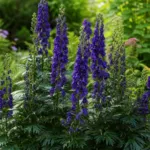 Monkshood (Aconitum ‘Bressingham Spire’)Aconitum 'Bressingham Spire'
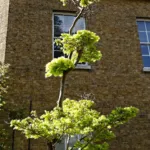 Golden full moon maple (Acer shirasawanum ‘Aureum’)Acer shirasawanum 'Aureum'
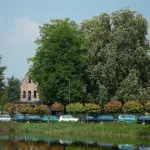 Globosum (Acer platanoides ‘Globosum’)Acer platanoides 'Globosum'
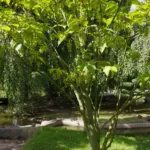 Striped maple (Acer pensylvanicum) care guideAcer pensylvanicum