
 Source:
 Aesculus ‘Pavia’ short overview
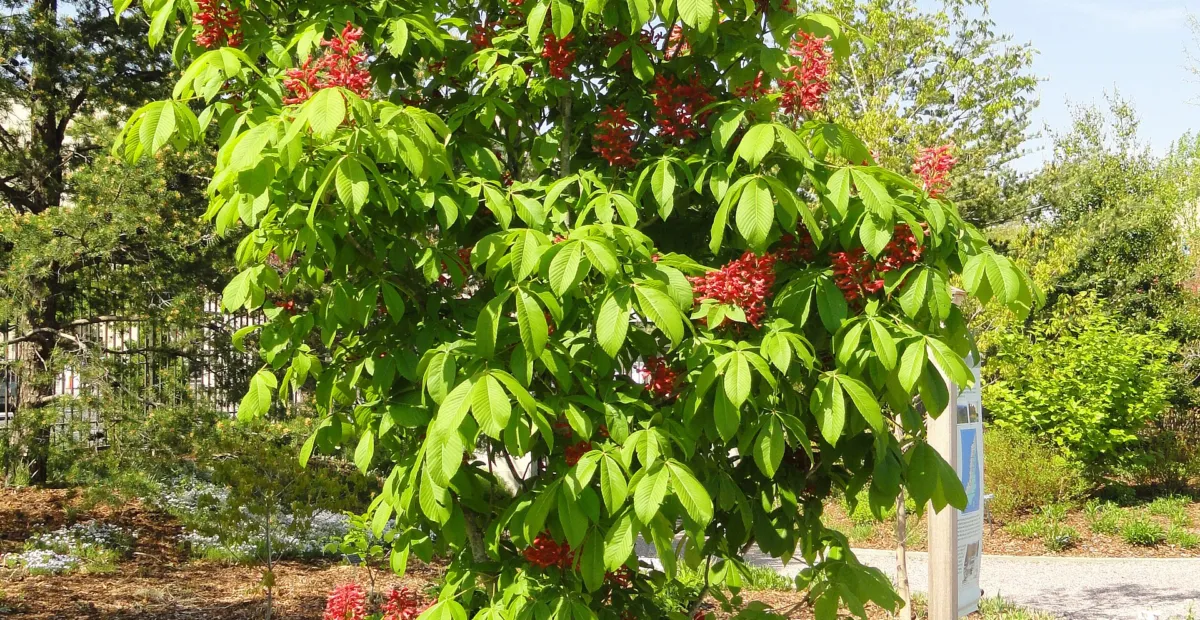
Aesculus 'Pavia' is a horticultural name that is not well documented as a distinct, formally described cultivar. It is best handled cautiously as a name associated with Aesculus pavia, the red buckeye: a deciduous, often multi-stemmed shrub or small tree native to the southeastern United States. The plant bears glossy palmately compound leaves, red tubular spring flowers, smooth capsules and poisonous seeds. Cultivar-specific size, hardiness and flower traits remain uncertain.
Taxonomic classification
Aesculus ‘Pavia’ care guide
Light and placement
Grow in full sun to partial shade. Morning sun with afternoon shade is useful in hot climates, while full sun supports denser growth and flowering when soil stays evenly moist. Excess shade can produce a more open habit; harsh, dry exposure can scorch foliage and intensify drought stress. Avoid reflected heat beside large paved surfaces unless irrigation is reliable.
Watering and humidity
Water deeply and slowly when the upper few inches of soil begin to dry, rather than giving frequent shallow sprinklings. Keep newly planted trees evenly moist through the first two growing seasons. Reduce irrigation after leaf drop and during cool weather, but do not allow the root zone to remain bone-dry for long periods. Good drainage is essential.
Soil and growing medium
Use deep, fertile soil that drains freely but does not dry rapidly. A loam amended with compost is suitable, provided drainage remains good. Slightly acidic soil is preferred; avoid persistently waterlogged ground and heavily alkaline sites. A thick organic mulch helps stabilize root moisture, but keep it away from the trunk.
Feeding
Apply compost or a balanced slow-release fertilizer in early spring if growth is weak or soil fertility is poor. Avoid heavy nitrogen feeding, which can produce soft, overly lush growth and does not reliably improve flowering. Do not fertilize drought-stressed, newly transplanted or visibly diseased plants until they recover.
Growth and habit
Usually forms a clump or broad, rounded shrub, but open-grown plants may develop a small-tree habit. It often leafs out and flowers before taller woodland trees fully shade the site. Early summer or late-summer leaf loss can expose the framework, so place it where later-season background planting can soften the appearance.
Planting and repotting
Plant in fall or early spring while dormant. Set the root flare level with or slightly above the surrounding soil, water deeply after planting, and maintain even moisture during the first two growing seasons. Allow ample room for the mature, broad crown and keep fallen seeds away from children and pets.
Not generally suitable for long-term container culture because Aesculus develops a substantial root system. If grown temporarily in a large container, transplant while dormant, disturb the roots as little as possible, and move it before the root ball becomes congested.
Propagation and pruning
Propagation
Fresh seed is the best-supported method for the species; sow promptly because buckeye seeds should not be allowed to dry. Seed-grown plants may vary and will not necessarily reproduce an unnamed cultivar. Grafting is reported for horticultural material, but a verified scion source and compatible rootstock are essential.
Pruning
Prune only to remove dead, damaged or crossing branches and to preserve a balanced framework. Make corrective cuts after flowering or during dormancy, avoiding unnecessary hard cuts. Remove basal shoots only when a single-trunk or cleaner clump form is desired.
Overwintering
In Zones 5–6, apply a 2–3 in. mulch layer over the root zone after the ground cools, keeping mulch off the trunk. Protect young plants from drying winter winds and rodent damage. Container-grown plants are more vulnerable than established in-ground specimens and should be moved to a sheltered, unheated location where roots do not freeze solid.
Uses
Use as a specimen, woodland-edge accent, informal grouping, rain-garden margin or wildlife planting where spring flowers can be seen. It is not an edible plant: seeds and other tissues should be kept away from people and animals. Early leaf drop and messy fruit and leaf fall make it less suitable beside heavily used patios or walkways.
Appearance
Leaves are opposite and palmately compound, commonly with five, sometimes seven, serrated leaflets. Young branches are smooth and gray-brown, and buds are notably non-resinous. Red tubular flowers occur in upright terminal clusters. The fruit is a smooth, rounded to ovoid capsule containing shiny brown seeds.
Flowering
The species produces terminal panicles of narrow, red, tubular flowers in spring. Flowers may appear before the surrounding tree canopy is fully developed, especially in woodland-edge settings. The exact flowering intensity and timing of 'Pavia' cannot be separated confidently from the species without cultivar documentation.
Pollination and visitors
The tubular spring flowers are documented as nectar resources for bees and hummingbirds, with other insect visitation possible. Visitor records support moderate pollinator value, but a single primary pollinator species is not securely established for the exact named cultivar.
Aesculus 'Pavia' photos
Click any photo for a larger view. Source, author and license are shown separately.
Diseases and pests
Diseases
Leaf blotch, leaf spot, canker, coral spot and honey fungus may occur. Improve air circulation, avoid overhead irrigation, remove diseased fallen leaves, and prune out infected wood during dry weather. Severe or recurring symptoms should be assessed locally because the exact pathogen is not established from a generic symptom alone.
Pests
Horse-chestnut scale and leaf-mining moths may occur. Monitor new growth and foliage, maintain plant vigor, and use targeted treatment only when damage is substantial and the pest is correctly identified.
Related diseases and pests
Only Plant Doctor profiles whose host data indicate this plant may be affected are shown here.
 PestHorse Chestnut Leaf MinerCameraria ohridella Deschka & Dimić
 PestEuropean shot-hole borerXyleborus dispar (Fabricius)
 PestJapanese beetlePopillia japonica
 DiseasePhytophthora cambivora root and crown rotPhytophthora cambivora (often written Phytophthora × cambivora in modern taxonomic treatments)
 DiseaseShallow Bark Canker of WalnutBrenneria nigrifluens
 DiseaseApple mosaic virusIlarvirus ApMV
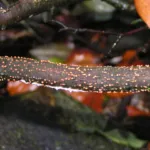 DiseaseCoral Spot CankerNectria cinnabarina
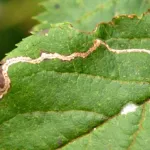 PestApple Leaf Mining MothLyonetia clerkella
Toxicity and pollen
Aesculus species contain saponin-rich and other potentially harmful compounds, especially in seeds and fruit; ingestion can cause gastrointestinal and systemic illness. Do not eat any part, keep fallen seeds away from children and pets, and wear gloves when handling large quantities of plant material. Contact a poison-control or veterinary service after suspected ingestion.
- Typical season
- Spring, generally March–May in much of the United States
- Pollination / pollen
- Insect-dispersed pollen
This is an insect-pollinated flowering tree, so pollen is not typically released in the same abundant airborne clouds as wind-pollinated trees. Nevertheless, flowers can produce allergenic pollen and individual sensitivity varies; the evidence does not justify calling it allergy-free.
Native habitat
Native populations occur in the southeastern and central United States in woodland edges, thickets, slopes, riverbanks and other sites with seasonally moist but generally well-drained soils. It is adapted to warm temperate climates and partial woodland light, while cultivated plants tolerate more sun when soil moisture is adequate.
Interesting fact
Aesculus pavia can flower while still quite young. Its smooth capsules distinguish it from many horse-chestnuts with spiny fruits. Wild plants may occur as understory shrubs, while open-grown specimens can develop a more tree-like crown. Early leaf drop can make the plant look sparse by late summer.
Frequently asked questions (FAQ)
The most relevant questions about this plant, with short and direct answers.
🌱Quick care
What is Aesculus 'Pavia'?⌄
Aesculus 'Pavia' is a deciduous ornamental selection in the buckeye and horse-chestnut genus, grown for its attractive foliage and red spring flowers. It is treated horticulturally as Aesculus pavia, but the requested cultivar or group name should remain Aesculus 'Pavia'.
How much sunlight does Aesculus 'Pavia' need?⌄
Aesculus 'Pavia' grows in full sun to partial shade. It usually flowers and develops a denser form with more sun, while afternoon shade can reduce heat and drought stress in hot climates.
How often should I water Aesculus 'Pavia'?⌄
Water Aesculus 'Pavia' to maintain moderate, even moisture, especially while it is establishing. Water deeply when the soil surface begins to dry, but avoid continually saturated soil because the roots require good drainage.
What USDA zones are suitable for Aesculus 'Pavia'?⌄
Aesculus 'Pavia' is generally suited to USDA Zones 5–9 when planted in an appropriate site. Actual performance depends on winter exposure, local heat, soil moisture, and whether the plant is grown at the edge of its hardiness range.
How large does Aesculus 'Pavia' get?⌄
Aesculus 'Pavia' typically develops as a large shrub or small deciduous tree, often about 10–25 feet tall with a similar or somewhat greater spread. Size varies with climate, moisture, pruning, and whether it grows single-stemmed or multi-stemmed.
🌤️Environment and placement
Where should I plant Aesculus 'Pavia'?⌄
Plant Aesculus 'Pavia' in a spacious landscape location with full sun to partial shade and moist, well-drained soil. It works well as a specimen, understory tree, or flowering accent, but allow room for its mature width and falling fruit.
Can Aesculus 'Pavia' grow in partial shade?⌄
Yes, Aesculus 'Pavia' can grow in partial shade and may appreciate protection from intense afternoon sun in hot, dry locations. Heavier shade generally produces a more open form and may reduce flowering compared with brighter sites.
Does Aesculus 'Pavia' tolerate wet soil?⌄
Aesculus 'Pavia' prefers moist but well-drained soil rather than prolonged saturation. It may tolerate brief moisture, but planting in persistently waterlogged ground can weaken the roots and increase the risk of decline.
Can Aesculus 'Pavia' tolerate drought?⌄
Aesculus 'Pavia' has some drought tolerance after establishment, but it performs best with consistent moisture. Provide supplemental water during extended dry periods, because drought can cause premature leaf drop and a less attractive summer appearance.
Is Aesculus 'Pavia' suitable for a small yard?⌄
Aesculus 'Pavia' can suit a small yard if there is room for a mature plant roughly 10–25 feet tall and wide. Its eventual spread, fruit drop, and toxic seeds should be considered before planting near paths, patios, or play areas.
Is Aesculus 'Pavia' a good understory tree?⌄
Yes, Aesculus 'Pavia' can be a good understory tree because it tolerates partial shade and remains smaller than many large shade trees. For the best flower display, choose a site with bright filtered light or several hours of direct sun.
💧Care and problems
What soil is best for Aesculus 'Pavia'?⌄
Use moist, well-drained loam for Aesculus 'Pavia'. It can tolerate some variation in soil reaction and texture, but improve compacted or poorly drained ground before planting rather than relying on frequent irrigation to compensate.
Why are the leaves of Aesculus 'Pavia' turning brown?⌄
Brown leaves on Aesculus 'Pavia' commonly result from drought, heat, root stress, leaf scorch, leaf blotch, or powdery mildew. Check soil moisture and drainage first, then inspect the foliage for spots, white growth, or progressive browning.
Why is Aesculus 'Pavia' losing leaves early?⌄
Early leaf loss can occur after drought or heat stress and is also associated with leaf diseases. Aesculus 'Pavia' may naturally lose foliage relatively early in the season, but sudden or severe defoliation warrants checking moisture, drainage, and leaf symptoms.
What pests and diseases affect Aesculus 'Pavia'?⌄
Aesculus 'Pavia' can be affected by leaf blotch, powdery mildew, leaf spot, canker, scale insects, and leaf-mining insects. Good air circulation, appropriate watering, removal of badly fallen leaves, and avoiding chronic drought can reduce stress, although specific treatment depends on diagnosis.
Does Aesculus 'Pavia' need fertilizer?⌄
Aesculus 'Pavia' usually does not need routine fertilizer when planted in reasonably fertile soil. If growth is weak or foliage shows a confirmed nutrient deficiency, use a soil test to guide a restrained application rather than fertilizing automatically.
How should I mulch Aesculus 'Pavia'?⌄
Apply a 2–3 inch layer of organic mulch over the root zone, keeping it several inches away from the trunk. Mulch helps conserve moisture and moderate soil temperature, but excessive depth or trunk contact can encourage decay and pest problems.
🪴Planting and repotting
When is the best time to plant Aesculus 'Pavia'?⌄
Plant Aesculus 'Pavia' in spring or fall, when temperatures are moderate and soil moisture is more dependable. In colder parts of its range, spring planting gives roots more time to establish before winter.
How do I plant Aesculus 'Pavia' in the ground?⌄
Dig a hole no deeper than the root ball and about two to three times its width, set the plant with the root flare near soil level, backfill with native soil, and water thoroughly. Maintain even moisture during the first growing season.
Can Aesculus 'Pavia' be grown in a container?⌄
Aesculus 'Pavia' can be grown temporarily in a large container, but it is ultimately better planted in the ground because it becomes a large shrub or small tree. Use a fast-draining mix, avoid standing water, and expect more frequent watering.
Does Aesculus 'Pavia' transplant well?⌄
Aesculus 'Pavia' is best transplanted while young because established plants can be difficult to move successfully. If relocation is necessary, move it during dormancy, preserve as much of the root system as possible, and provide careful aftercare.
✂️Propagation and pruning
How do you propagate Aesculus 'Pavia'?⌄
Aesculus 'Pavia' is most commonly propagated from fresh seed, while selected named forms may require grafting to preserve their traits. Seeds should not be allowed to dry out, and seedlings may not reproduce an exact cultivated selection.
Can I grow Aesculus 'Pavia' from a buckeye seed?⌄
Yes, Aesculus 'Pavia' can be grown from a fresh buckeye seed, although the resulting plant may differ from the parent if it is a selected cultivar. Sow or stratify fresh seed promptly because buckeye seeds lose viability when they dry.
Does Aesculus 'Pavia' need pruning?⌄
Aesculus 'Pavia' usually needs little pruning beyond removing dead, damaged, crossing, or poorly positioned branches. Prune during dormancy or according to local arboricultural guidance, and avoid severe cuts that spoil the plant’s natural form.
How do I keep Aesculus 'Pavia' small?⌄
You can manage Aesculus 'Pavia' with selective structural pruning, but it is not naturally a miniature plant. Remove competing stems or shorten suitable branches gradually rather than repeatedly shearing, which can produce weak, unattractive growth.
⚠️Toxicity and safety
Is Aesculus 'Pavia' poisonous to people?⌄
Yes, Aesculus 'Pavia' is highly toxic if eaten. Its seeds and other plant parts should be kept away from children and pets, and fallen buckeyes should be collected where accidental ingestion is possible.
Are Aesculus 'Pavia' seeds safe to eat?⌄
No, Aesculus 'Pavia' seeds are not safe to eat. They contain toxic compounds and should never be used as food; contact a poison-control service or veterinarian promptly if ingestion is suspected.
Is Aesculus 'Pavia' toxic to dogs and cats?⌄
Aesculus 'Pavia' should be treated as toxic to dogs and cats if eaten, especially because the seeds are conspicuous and may be attractive to pets. Prevent access to fallen seeds and contact a veterinarian promptly after suspected ingestion.
Should Aesculus 'Pavia' be planted near a children’s play area?⌄
It is better not to plant Aesculus 'Pavia' beside a children’s play area because its seeds and other plant parts are toxic if eaten. Choose a location where fallen buckeyes can be monitored and removed easily.
🌸Flowering and special interest
When does Aesculus 'Pavia' bloom?⌄
Aesculus 'Pavia' generally blooms in spring, often from March through May depending on the local climate. Its flowers are typically carried in upright terminal clusters, with flowering time influenced by winter temperatures and spring weather.
What color are the flowers of Aesculus 'Pavia'?⌄
The flowers of Aesculus 'Pavia' are typically red to carmine-red and appear in upright clusters. Color intensity can vary among plants and cultivated selections, and unusually colored forms should not be assumed to be identical to the requested plant.
Why is my Aesculus 'Pavia' not flowering?⌄
Aesculus 'Pavia' may fail to flower because it is too young, receives excessive shade, is stressed by drought, or was damaged by a late freeze. Excessive nitrogen can also favor leafy growth over flowers, so check light and overall plant health first.
Does Aesculus 'Pavia' attract hummingbirds and pollinators?⌄
Yes, the red tubular flowers of Aesculus 'Pavia' can attract hummingbirds and insect pollinators during spring. Flowering is usually strongest where the plant receives sufficient light and has adequate moisture without prolonged waterlogging.
Similar plants
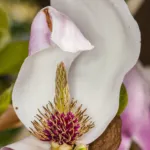 Saucer Magnolia (Magnolia soulangeana) care guideMagnolia soulangeana
 Magnolia × loebneri ‘Merrill’Magnolia × loebneri 'Merrill'
 Magnolia loebneri care guideMagnolia loebneri
 Sweetbay magnolia (Magnolia virginiana) care guideMagnolia virginiana
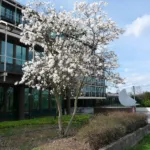 Star magnolia (Magnolia stellata) care guideMagnolia stellata
 Magnolia sprengeri care guideMagnolia sprengeri