
 Source:
 Castanea ‘Sativa’ short overview
Castanea 'Sativa' is an editor-supplied name associated with Castanea sativa, the European chestnut. It describes a large, long-lived deciduous tree with serrated leaves, summer catkins, spiny husks, and edible nuts. The identity is not established as a separately documented cultivar in the authoritative sources consulted, so cultivar-specific size, flavor, productivity, disease resistance, and hardiness should not be assumed beyond the species profile.
Taxonomic classification
Castanea ‘Sativa’ care guide
Light and placement
Choose full sun for strongest growth, flowering, and nut production; light partial shade is tolerated but may reduce vigor and yield. An open south- or east-facing position with good air movement is preferable. Sparse growth and weak flowering can indicate insufficient light, while scorched foliage may signal drought, root damage, or excessive reflected heat.
Watering and humidity
Water deeply and slowly when the upper several inches of soil begin to dry, especially during the first two to three growing seasons. Maintain even moisture during establishment and nut development, then reduce frequency once the tree is well rooted. Avoid constant saturation, which increases root and collar disease risk.
Soil and growing medium
Use deep, well-drained soil with good aeration. Sandy loam or loam is suitable, and clay can work if drainage is improved. The species generally prefers mildly acidic to neutral soil; avoid persistently wet, highly alkaline sites.
Feeding
Apply a thin layer of finished compost in spring, or use a balanced slow-release fertilizer only when growth is weak or soil tests indicate need. Avoid high-nitrogen feeding late in the season, which can encourage soft growth and delay hardening. Do not fertilize drought-stressed or newly transplanted trees heavily.
Growth and habit
A vigorous, long-lived tree that develops a broad crown and a strong trunk when given space. Young plants establish best with consistent moisture, while older trees can tolerate seasonal dryness. Mature size and heavy fruit husks make siting and cleanup important maintenance considerations.
Planting and repotting
Plant bare-root or container trees during dormancy, preferably in fall or early spring. Set the root flare level with the surrounding soil, water deeply, mulch broadly without touching the trunk, and protect young trees from drought and animal browsing. Allow ample room for a large canopy.
Young container plants should be shifted into progressively larger, deep containers before roots circle densely. Plant permanently while dormant, since mature trees develop substantial root systems and are not ideal long-term container subjects.
Propagation and pruning
Propagation
Seed propagation is practical but seedlings vary and may take many years to fruit. Named chestnut selections are commonly propagated by grafting onto compatible rootstocks. Sow fresh, stratified seed promptly or protect it from drying; grafting is best done by experienced propagators.
Pruning
Prune during dormancy to establish a strong central structure, remove crossing or damaged branches, and maintain clearance. Avoid unnecessary large wounds because chestnut wood and bark can be vulnerable to disease entry. Do not top the tree.
Overwintering
Established trees are cold hardy across much of USDA Zones 5–8, but young trees benefit from trunk protection and a thick, loose mulch layer over the root zone. Avoid wrapping wet mulch against the bark. Protect newly planted trees from winter desiccation and animal damage.
Uses
Useful as a large ornamental, edible-nut tree, timber tree, coppice subject, and wildlife-supporting planting. Nuts may be roasted, boiled, dried, or milled when correctly identified and sound. Large mature size, spiny burs, litter, and chestnut diseases should be considered before planting near paths or small yards.
Appearance
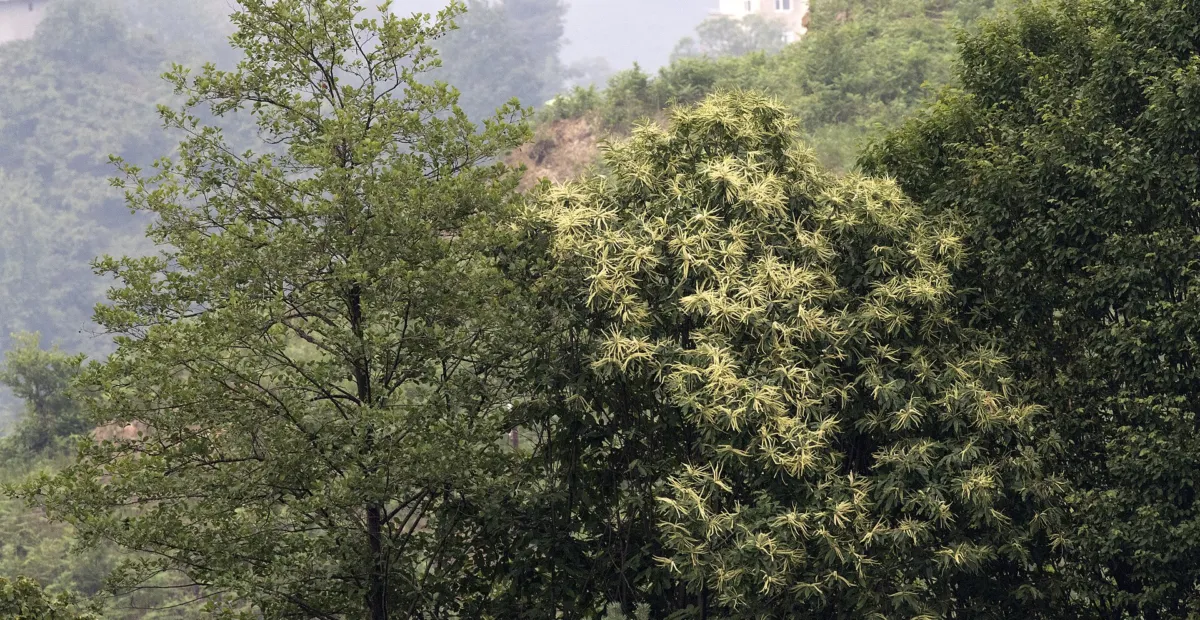
The tree has long, glossy, lance-shaped leaves with prominent veins and sharply toothed margins. Mature bark becomes gray-brown and deeply furrowed. Upright cream-yellow catkins appear in summer, followed by green spiny burs that turn brown as they mature and release chestnuts.
Flowering
Monoecious trees produce conspicuous upright catkins containing male flowers and less conspicuous female flowers near the catkin bases. Flowering is typically in early to midsummer in the United States, followed by spiny husks that mature in fall. The exact timing varies by climate.
Pollination and visitors
The catkins provide pollen and nectar resources for insects, including bees and other flower visitors. The flowers have a noticeable odor and are insect-visited, although fruit production can be limited by compatibility and pollination conditions.
Castanea 'Sativa' photos
Click any photo for a larger view. Source, author and license are shown separately.
Diseases and pests
Diseases
Chestnut blight is a serious disease risk where the pathogen occurs. Leaf spot, powdery mildew, ink disease, and root or collar problems may also occur. Use healthy planting stock, avoid trunk wounds and waterlogged soil, improve airflow, and remove severely affected material according to local extension guidance.
Pests
Chestnut weevil larvae can infest developing nuts, while chestnut gall wasp can damage shoots and foliage where established. Monitor for distorted shoots, galls, premature nut drop, and boring damage. Use clean nursery stock, remove infested material where appropriate, and follow state extension or quarantine guidance.
Related diseases and pests
Only Plant Doctor profiles whose host data indicate this plant may be affected are shown here.
 DiseaseChestnut blightCryphonectria parasitica (Murrill) M.E. Barr
 PestLeopard mothZeuzera pyrina
 PestEuropean shot-hole borerXyleborus dispar (Fabricius)
 DiseaseWhite Root Rot (Rosellinia Root Rot)Rosellinia necatrix Berl. ex Prill. (synonym: Dematophora necatrix)
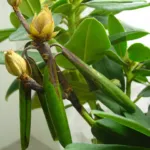 DiseasePhytophthora plurivora Root and Collar RotPhytophthora plurivora
 DiseasePhytophthora cambivora root and crown rotPhytophthora cambivora (often written Phytophthora × cambivora in modern taxonomic treatments)
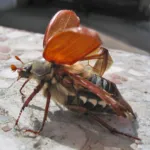 PestCommon cockchafer (European cockchafer)Melolontha melolontha
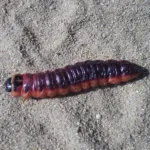 PestGoat MothCossus cossus
Toxicity and pollen
The nuts of Castanea sativa are widely eaten when properly prepared, but raw or spoiled nuts can cause digestive problems and any nut may trigger serious allergy in susceptible people. Spiny husks can puncture skin. Do not confuse edible chestnuts with toxic horse chestnuts.
- Typical season
- May–July, varying by region
- Pollination / pollen
- Exposed catkin pollen, dispersed locally by air and insect activity
The species releases abundant pollen from exposed catkins during its flowering period. Chestnut pollen is not generally among the most dominant spring tree pollens in the United States, but sensitive individuals may still react. The distinctive odor of the flowers is not itself evidence of allergy risk.
Native habitat
Native populations occur from southeastern Europe through Anatolia, the Caucasus, and northern Iran. It is associated with temperate woodlands, forest margins, slopes, and well-drained acidic to neutral soils, generally in regions with warm growing seasons and adequate winter chill.
Interesting fact
The species has long been cultivated for both nuts and durable coppice timber. Its flowers are monoecious, with male and female flowers on the same tree. Chestnut burs open in autumn to release one or more edible nuts. The exact quoted cultivar identity is not confirmed in major taxonomic sources.
Frequently asked questions (FAQ)
The most relevant questions about this plant, with short and direct answers.
🌱Quick care
What is Castanea 'Sativa'?⌄
Castanea 'Sativa' is the supplied horticultural identity for a deciduous chestnut tree in the beech family, Fagaceae. It is associated with the edible European or sweet chestnut species, Castanea sativa, but the cultivar or group identity should be confirmed before labeling fruit for consumption.
How much sun does Castanea 'Sativa' need?⌄
Castanea 'Sativa' grows best in full sun, although it can tolerate partial shade. Aim for at least 6 hours of direct sunlight daily for stronger growth, flowering, and nut production.
How often should I water Castanea 'Sativa'?⌄
Water Castanea 'Sativa' moderately, keeping the root zone evenly moist while the tree is establishing. Once mature, it is reasonably drought-tolerant, but deep watering during prolonged summer drought can improve vigor and nut development.
Is Castanea 'Sativa' evergreen or deciduous?⌄
Castanea 'Sativa' is deciduous and loses its leaves in fall. Its new leaves emerge in spring, followed by summer flowering and autumn burs containing chestnuts.
🌤️Environment and placement
What soil is best for Castanea 'Sativa'?⌄
Use well-drained sandy loam or loam, or improve heavy clay with organic matter and better drainage. The tree generally performs best in acidic to neutral soil and does not tolerate persistently waterlogged roots.
Can Castanea 'Sativa' grow in clay soil?⌄
Castanea 'Sativa' can grow in improved clay soil if excess water drains freely. Amend compacted ground with organic matter, avoid planting in low wet spots, and do not bury the root flare.
What USDA hardiness zone is Castanea 'Sativa' suited to?⌄
Castanea 'Sativa' is cold-hardy with regional limits, but exact performance varies by source, cultivar, elevation, and winter exposure. In the United States, verify the nursery’s hardiness rating against your local USDA zone and protect young trees from severe cold.
How much space does Castanea 'Sativa' need?⌄
Give Castanea 'Sativa' substantial room because it can become a large, spreading tree more than 40 feet tall and wide under favorable conditions. Keep it well away from buildings, overhead wires, septic systems, and pavement.
Can Castanea 'Sativa' tolerate drought?⌄
Established Castanea 'Sativa' is moderately drought-tolerant. Young trees and trees growing in sandy soil still need supplemental deep watering during extended dry periods.
Can Castanea 'Sativa' grow in partial shade?⌄
Castanea 'Sativa' can tolerate partial shade, especially when young, but full sun is preferable for compact growth, abundant catkins, and reliable nut production. Dense shade may reduce flowering and fruiting.
💧Care and problems
Why are the leaves of Castanea 'Sativa' turning brown?⌄
Brown leaves on Castanea 'Sativa' may result from drought, root stress, scorch, leaf-spot diseases, or chestnut blight. Check soil moisture and drainage first, then inspect branches and trunks for cankers, dieback, or abnormal lesions.
What diseases affect Castanea 'Sativa'?⌄
Castanea 'Sativa' can be affected by chestnut blight, Phytophthora root or crown problems, leaf spot, and honey fungus. Good drainage, clean planting material, adequate spacing, and removal of infected wood can reduce disease pressure.
Is Castanea 'Sativa' susceptible to chestnut blight?⌄
Yes, Castanea 'Sativa' is susceptible to chestnut blight, although susceptibility can vary among trees and sources. Look for sunken or swollen bark cankers, orange-yellow fungal structures, and dieback, and seek local extension guidance before pruning or moving infected material.
Does Castanea 'Sativa' need fertilizer?⌄
Castanea 'Sativa' usually needs fertilizer only when growth is weak or a soil test identifies a deficiency. Avoid routine high-nitrogen feeding, which can produce soft, excessive shoots and increase stress or disease problems.
How do I protect Castanea 'Sativa' from animals?⌄
Protect young Castanea 'Sativa' trees with a sturdy trunk guard or wire cage against deer, rabbits, and rodents. Keep mulch several inches away from the trunk and remove fallen diseased nuts or leaves where sanitation is important.
🪴Planting and repotting
When is the best time to plant Castanea 'Sativa' in the United States?⌄
Plant Castanea 'Sativa' in early spring or fall when the soil is workable and heat or drought stress is limited. In colder regions, early spring often gives young trees more time to establish before winter.
How do I plant Castanea 'Sativa'?⌄
Plant Castanea 'Sativa' at the same depth as it grew in its container, with the root flare level with or slightly above the surrounding soil. Backfill with native soil, water deeply, and apply a thin mulch layer without touching the trunk.
Can Castanea 'Sativa' be grown in a container?⌄
Castanea 'Sativa' is not a good long-term container tree because it develops a large root system and ultimately becomes very large. A container may be used temporarily for a young plant, but it should be moved into the landscape before roots become crowded.
How far apart should Castanea 'Sativa' trees be planted?⌄
For nut production, space Castanea 'Sativa' trees generously so mature crowns have room to develop, commonly about 30 to 40 feet apart in a home orchard. Use the mature size of the specific planting stock and local orchard recommendations as the final guide.
✂️Propagation and pruning
How is Castanea 'Sativa' propagated?⌄
Castanea 'Sativa' can be propagated from seed or by grafting. Seed-grown trees may differ in nut quality and may take longer to fruit, while grafted trees preserve the selected parent’s characteristics more reliably.
Can I grow Castanea 'Sativa' from a chestnut?⌄
You can grow Castanea 'Sativa' from a fresh, viable chestnut, but the resulting seedling will not necessarily reproduce the parent tree exactly. Plant fresh nuts promptly or keep them moist and cold until sowing because they lose viability when allowed to dry out.
Can Castanea 'Sativa' be grown from cuttings?⌄
Castanea 'Sativa' is generally difficult to propagate reliably from ordinary cuttings. Seed propagation and grafting are more practical methods, especially when a particular cultivar or nut quality must be preserved.
Does Castanea 'Sativa' need another tree to produce nuts?⌄
Planting at least two genetically compatible Castanea trees improves cross-pollination and nut set. A single tree may flower but often produces a smaller or less reliable crop, depending on local pollinators and nearby chestnut trees.
When should Castanea 'Sativa' be pruned?⌄
Prune Castanea 'Sativa' during dormancy, removing dead, damaged, crossing, or poorly attached branches while preserving a strong central structure. Avoid unnecessary heavy pruning, and disinfect tools when cutting potentially diseased wood.
How do I prune a young Castanea 'Sativa' tree?⌄
Train a young Castanea 'Sativa' by selecting one strong leader or a well-spaced permanent framework of branches. Remove competing leaders, low problem branches, and narrow or crossing growth gradually rather than making many large cuts at once.
⚠️Toxicity and safety
Are Castanea 'Sativa' chestnuts edible?⌄
Chestnuts from correctly identified Castanea 'Sativa' are generally edible when properly handled and prepared. Never eat a chestnut based on appearance alone because horse chestnuts from Aesculus are different plants and are poisonous.
How can I tell Castanea 'Sativa' chestnuts from horse chestnuts?⌄
True Castanea chestnuts usually develop in very densely spined burs that contain several nuts, while horse chestnuts usually have smoother or sparsely spined husks with one large seed. If identification is uncertain, do not eat the seeds and consult a reliable local botanical or extension source.
Can you eat Castanea 'Sativa' chestnuts raw?⌄
Fresh sweet chestnuts may be eaten raw by some people, but cooking generally improves texture, flavor, digestibility, and safety of preparation. Discard moldy, rancid, damaged, or uncertainly identified nuts, and use extra caution if you have a chestnut allergy or digestive condition.
Are the leaves, bark, and burs of Castanea 'Sativa' edible?⌄
The edible part normally refers to the properly identified nut, not the leaves, bark, or spiny burs. Do not ingest other plant parts or use them medicinally without qualified professional guidance.
Can Castanea 'Sativa' cause allergies?⌄
Yes, Castanea 'Sativa' nuts can trigger allergic reactions, including in some people with tree-nut allergies or related pollen or latex sensitivities. Anyone with a known allergy should avoid eating them unless cleared by a qualified clinician.
🌸Flowering and special interest
When does Castanea 'Sativa' flower?⌄
Castanea 'Sativa' typically flowers in late spring or early summer, producing conspicuous yellowish male catkins and less noticeable female flowers. Flowering time varies with climate, spring temperatures, tree age, and local growing conditions.
When does Castanea 'Sativa' produce chestnuts?⌄
Castanea 'Sativa' generally produces mature chestnuts in early to mid-fall. The nuts develop inside sharply spiny burs and fall as the burs open, although young trees may need several years before producing a substantial crop.
Why is my Castanea 'Sativa' flowering but not producing nuts?⌄
Flowering without nuts commonly results from inadequate cross-pollination, incompatible flowering times, frost, drought, or a tree that is still too young. Planting a compatible second tree and maintaining consistent moisture during flowering and nut development can help.
Similar plants
 Saucer Magnolia (Magnolia soulangeana) care guideMagnolia soulangeana
 Magnolia × loebneri ‘Merrill’Magnolia × loebneri 'Merrill'
 Magnolia loebneri care guideMagnolia loebneri
 Sweetbay magnolia (Magnolia virginiana) care guideMagnolia virginiana
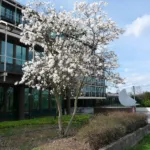 Star magnolia (Magnolia stellata) care guideMagnolia stellata
 Magnolia sprengeri care guideMagnolia sprengeri