
 Source:
 Japanese barberry (Berberis thunbergii ‘Concorde’) short overview
Berberis thunbergii 'Concorde' is a compact, deciduous Japanese barberry selected for dense growth and velvety red-purple foliage. Its small yellow flowers appear in spring, followed by bright red berries, while the foliage often develops scarlet tones in autumn. This thorny shrub suits sunny borders, low informal hedges, containers, and wildlife-oriented plantings, although its berries should be treated as ornamental rather than edible.
Taxonomic classification
Japanese barberry (Berberis thunbergii ‘Concorde’) care guide
Light and placement
Plant in full sun for the deepest purple foliage, strongest flowering and best berry display; morning or afternoon sun with light shade is also suitable in hot climates. East-, south- or west-facing exposures generally work well. Too little light can produce greener, looser growth, while intense reflected heat and drought may scorch foliage or fade the color.
Watering and humidity
Water deeply when the upper 2 inches of soil become dry during the first growing season, then allow the plant to moderate its own moisture once established. Reduce irrigation in cool weather and avoid constantly wet soil. Container plants need more frequent checks, especially during summer. Average outdoor humidity is sufficient; extra misting is unnecessary.
Soil and growing medium
Use ordinary garden soil that drains freely after rain. Loam, sandy soil, clay improved with organic matter, and moderately chalky soils are suitable. Avoid planting in persistently waterlogged ground. A slightly acidic through slightly alkaline reaction is tolerated, so routine pH correction is usually unnecessary unless the soil is extreme.
Feeding
Apply a thin layer of compost or a balanced slow-release shrub fertilizer in early spring as growth begins. Use only the label rate; excessive nitrogen can encourage soft, overly leafy growth and reduce the compact habit. Do not fertilize drought-stressed, freshly transplanted, or dormant plants, and stop routine feeding by late summer.
Growth and habit
This cultivar forms a dense, low, rounded to dome-shaped shrub with relatively slow to moderate establishment. Its compact branching makes it useful where a small, structured accent is wanted. The thorny stems can make maintenance unpleasant, so place it where its mature spread will not obstruct paths and prune with protective gloves.
Planting and repotting
Set the shrub with the root flare level with the surrounding soil and backfill with the excavated soil rather than burying the stem. Water thoroughly after planting and apply a shallow mulch layer, keeping mulch away from the crown. Maintain regular moisture during the first season while roots establish, then taper irrigation as growth becomes established.
Grow in a container only slightly larger than the root ball, using a free-draining shrub or multipurpose mix with added drainage material if needed. Repot in early spring before strong growth or refresh the upper layer of mix. Move up a pot size only when roots have substantially filled the existing container.
Propagation and pruning
Propagation
Propagate selected plants by softwood or semi-hardwood cuttings, generally taken in summer. Use clean, healthy shoots and a sterile, well-drained rooting medium. Seed will not reliably reproduce the named cultivar, so vegetative propagation is preferred when maintaining its foliage color and compact habit.
Pruning
Prune in late winter or immediately after flowering to remove damaged, crossing or wayward stems and preserve the compact outline. For hedges, trim after flowering rather than cutting heavily into old wood. Wear thick gloves and long sleeves because the branches are thorny. Avoid unnecessary severe pruning, which can reduce the next season's flowers and berries.
Overwintering
The cultivar is outdoor-hardy in cold temperate regions, but container roots are more exposed to freezing than roots in the ground. In colder areas, place containers in a sheltered location, insulate the pot, and water lightly when the mix is dry but not frozen. Do not bring an established outdoor shrub into a warm indoor room for winter.
Uses
Useful as a low specimen, foliage accent, informal edging, container shrub, or small informal hedge. Its thorny branches can provide cover for small wildlife, and its flowers may receive insect visits. Treat the bright berries as ornamental; do not use this cultivar for culinary purposes without authoritative identification and preparation guidance. Check local restrictions before planting Japanese barberry, which is invasive in parts of the United States.
Appearance
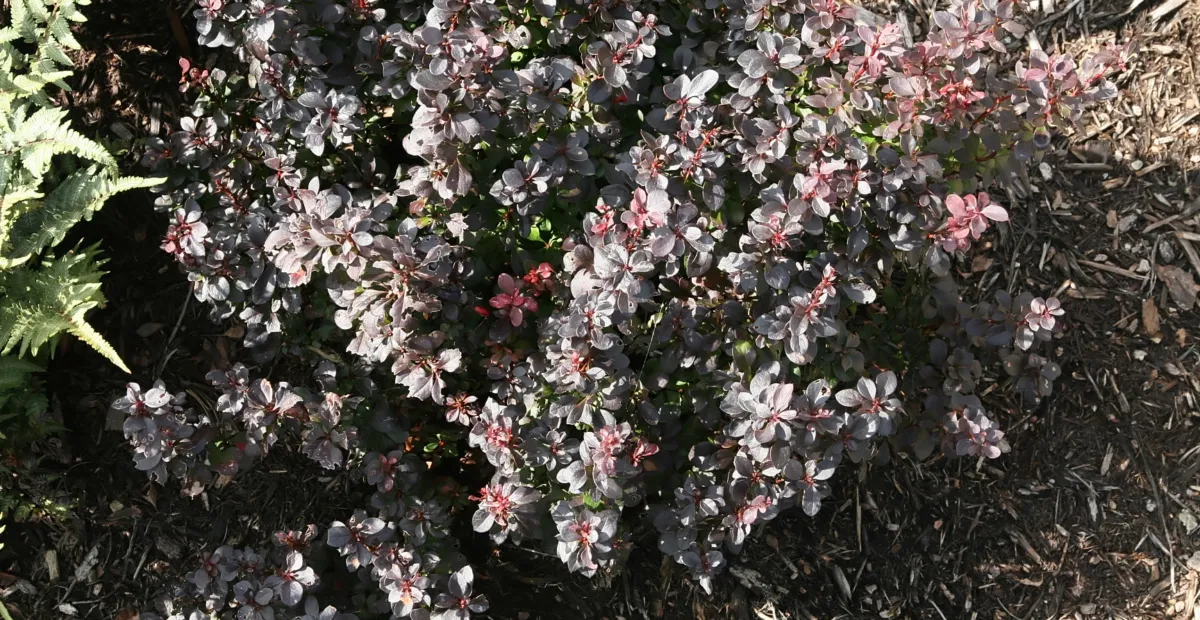
Leaves are small, alternate and grouped in short clusters along grooved brown stems. The upper surfaces are notably velvety red-purple, with grayish-green undersides. Single needle-like thorns occur at the nodes, occasionally with small side spines. Yellow flowers and bright red ellipsoid berries provide seasonal contrast against the dark foliage.
Flowering
Small yellow flowers develop in spring, commonly during April and May in temperate US gardens. They are produced in axillary clusters along the stems and may show reddish coloration in the buds or outer parts. Flowering and subsequent fruiting are generally strongest in full sun.
Pollination and visitors
The yellow flowers are insect-pollinated and can be visited by small bees and bumblebees. Available evidence supports a general visitor-group description rather than a confidently assigned single pollinator species for this cultivar. Pollinator value is limited by the small flowers and short spring bloom period.
Berberis thunbergii 'Concorde' photos
Click any photo for a larger view. Source, author and license are shown separately.
Diseases and pests
Diseases
Provide good air circulation, avoid prolonged leaf wetness and remove heavily infected debris. Powdery mildew may appear as a pale coating on leaves, particularly in crowded or humid conditions. Honey fungus is an occasional concern in susceptible sites. Improve drainage and avoid repeated stress before considering a labeled fungicide.
Pests
Aphids may distort young growth, while berberis sawfly larvae can chew leaves. Inspect new shoots and leaf undersides regularly. Remove small infestations by hand or with a strong water spray; conserve beneficial insects and use a labeled treatment only when damage is substantial. Thorny stems make close inspection difficult, so wear gloves.
Toxicity and pollen
Reliable horticultural references advise treating the berries as ornamental and not eating them. Berberis species also contain alkaloids, and plant material may cause adverse effects if ingested, although the severity depends on the part, amount and preparation. Keep children and pets from chewing the plant, and seek medical or veterinary advice after significant ingestion.
- Typical season
- April–May in much of the United States
- Pollination / pollen
- Insect-released pollen from spring flowers
This is an insect-pollinated shrub with small spring flowers, so pollen is not typically released in large airborne quantities like wind-pollinated tree or grass pollen. Sensitive individuals may still react to plant contact or unusual exposure, and low airborne relevance does not mean zero allergy risk.
Native habitat
The parent species comes from temperate parts of Japan and tolerates a broad range of soils, exposures and moisture conditions. In cultivation, the shrub performs best in open, well-drained sites. Japanese barberry can naturalize in northeastern and central parts of the United States, where dense populations may alter understory vegetation and provide habitat favorable to ticks.
Interesting fact
The cultivar was developed by Wavecrest Nursery. Its foliage is described as velvety red-purple, a useful identification feature. 'Concorde' is notably smaller and denser than the species. The stems carry mostly single thorns. Bright red berries can remain visible after leaf fall. The cultivar has received high hardiness recognition in horticultural trials.
Frequently asked questions (FAQ)
The most relevant questions about this plant, with short and direct answers.
🌱Quick care
What is Berberis thunbergii 'Concorde'?⌄
Berberis thunbergii 'Concorde' is a compact, deciduous Japanese barberry cultivar grown for its dense, rounded habit and deep purple foliage. It is typically used as a low accent shrub, border plant, or mass planting.
How big does Berberis thunbergii 'Concorde' get?⌄
Berberis thunbergii 'Concorde' usually grows about 18 to 24 inches tall and 24 to 30 inches wide. Size varies with growing conditions and nursery strain.
Is Berberis thunbergii 'Concorde' evergreen?⌄
No, Berberis thunbergii 'Concorde' is deciduous and drops its leaves in fall. Its foliage commonly develops scarlet or crimson tones before leaf fall.
What color are the leaves of Berberis thunbergii 'Concorde'?⌄
The leaves are deep burgundy to purple, with the darkest and most consistent color in full sun. New growth may appear redder before maturing to purple.
🌤️Environment and placement
What USDA zones can grow Berberis thunbergii 'Concorde'?⌄
Berberis thunbergii 'Concorde' is generally listed as hardy in USDA Zones 4 through 8. Local exposure, winter wind, snow cover, and nursery provenance can affect performance at the margins.
Does Berberis thunbergii 'Concorde' need full sun?⌄
It grows in full sun to partial shade, but full sun produces the strongest purple foliage and usually the best flowering and fall color. Provide at least several hours of direct sunlight when possible.
Can Berberis thunbergii 'Concorde' grow in partial shade?⌄
Yes, it can grow in partial shade, although the foliage may become greener and the plant may flower less heavily. Morning sun or bright filtered light is preferable to deep shade.
What type of soil is best for Berberis thunbergii 'Concorde'?⌄
Use well-drained soil; it can tolerate loam, sand, clay, or chalk if excess water drains away. Avoid persistently soggy sites, especially heavy clay that stays saturated.
💧Care and problems
How much water does Berberis thunbergii 'Concorde' need?⌄
Provide average moisture, watering when the top few inches of soil begin to dry. Once established, it can tolerate short periods of drought, but consistent moisture is helpful during its first growing season.
Is Berberis thunbergii 'Concorde' drought tolerant?⌄
Yes, established plants have useful drought tolerance, particularly in well-drained soil. Water during prolonged hot, dry weather to reduce stress and preserve foliage quality.
How often should I fertilize Berberis thunbergii 'Concorde'?⌄
Usually, little fertilizer is needed if the plant is growing in reasonably fertile soil. If growth is weak, apply a balanced slow-release fertilizer in spring according to the product label rather than overfeeding.
Why is my Berberis thunbergii 'Concorde' losing its purple color?⌄
Reduced sunlight is the most common reason the foliage becomes greener, although excessive nitrogen, shade from nearby plants, or normal seasonal change can also contribute. Move or thin surrounding growth only if the plant is receiving insufficient light.
What pests affect Berberis thunbergii 'Concorde'?⌄
Aphids and berberis sawfly can occasionally damage Berberis thunbergii 'Concorde'. Inspect new growth and the undersides of leaves, and use the least-toxic control appropriate for the severity of the infestation.
What diseases affect Berberis thunbergii 'Concorde'?⌄
Powdery mildew, leaf spots, and occasional root problems can occur, especially where air circulation is poor or soil remains wet. Improve spacing, avoid overhead watering, and remove badly affected foliage.
🪴Planting and repotting
How should I plant Berberis thunbergii 'Concorde'?⌄
Plant it at the same depth as it grew in its nursery container, in a hole about twice as wide as the root ball. Backfill with the native soil, water thoroughly, and add a thin layer of mulch without covering the stems.
How far apart should I plant Berberis thunbergii 'Concorde'?⌄
Space plants about 24 to 30 inches apart on center for a mass planting, depending on the desired fullness. Allow more room if you want each naturally rounded mound to remain visually distinct.
Can Berberis thunbergii 'Concorde' grow in a container?⌄
Yes, its compact size makes it suitable for a large container with drainage holes. Use a well-drained potting mix, protect the root system from severe winter cold, and do not allow the container to remain waterlogged.
When is the best time to plant Berberis thunbergii 'Concorde'?⌄
Spring or fall is generally the best planting time in the United States. Plant in spring where winters are severe or the ground freezes early, and water well until the roots are established.
✂️Propagation and pruning
Does Berberis thunbergii 'Concorde' need pruning?⌄
Usually, no; it naturally forms a compact mound and requires minimal pruning. Remove dead, damaged, or crossing branches, or lightly shape it after flowering if needed.
When should I prune Berberis thunbergii 'Concorde'?⌄
Prune after spring flowering if you want to shape the plant while minimizing the loss of future blooms. Renewal pruning can be done during dormancy, but wear protective gloves because the stems have sharp spines.
How do I prune an overgrown Berberis thunbergii 'Concorde'?⌄
Thin out the oldest stems at their base and shorten excessively long branches rather than shearing the entire shrub repeatedly. Severe renewal pruning is tolerated, but it may temporarily reduce flowering and foliage display.
How can I propagate Berberis thunbergii 'Concorde'?⌄
The cultivar can be propagated from softwood or semi-hardwood cuttings taken during the growing season. Seed is less dependable for preserving the exact 'Concorde' characteristics because seedlings may not come true to the cultivar.
Does Berberis thunbergii 'Concorde' spread by seed?⌄
It may produce red berries and viable seed, although fruiting can vary by plant and location. Do not assume this cultivar is sterile; remove unwanted seedlings and check local invasive-plant rules before planting.
⚠️Toxicity and safety
Does Berberis thunbergii 'Concorde' have thorns?⌄
Yes, its branches bear sharp spines. Wear sturdy gloves and long sleeves when planting, pruning, or handling the shrub, and avoid placing it beside frequently used walkways.
Is Berberis thunbergii 'Concorde' poisonous to dogs or cats?⌄
The fruits are ornamental and should not be eaten by pets. If a pet consumes berries or other plant material and shows concerning symptoms, contact a veterinarian or a pet poison service promptly.
Are the berries of Berberis thunbergii 'Concorde' edible?⌄
No, do not treat the berries as an edible crop. They are ornamental, and the plant is considered potentially harmful if eaten, so keep berries away from children and pets.
Is Berberis thunbergii 'Concorde' deer resistant?⌄
It is generally avoided by deer because of its spiny branches and unpalatable foliage. Deer resistance is not absolute, particularly when food is scarce.
🌸Flowering and special interest
When does Berberis thunbergii 'Concorde' bloom?⌄
It usually flowers in mid- to late spring, often around April or May in much of the United States. The small yellow to reddish-tinged flowers are ornamental but not the plant's main feature.
What do the flowers of Berberis thunbergii 'Concorde' look like?⌄
The flowers are small, pale yellow to yellow blooms that may have reddish tones and appear along the stems. They are followed by ornamental red berries in favorable conditions.
Does Berberis thunbergii 'Concorde' produce berries?⌄
It can produce small red berries in fall, although berry production varies and some plants may fruit lightly or not at all. The berries are ornamental rather than edible.
Does Berberis thunbergii 'Concorde' have good fall color?⌄
Yes, its purple foliage commonly shifts toward scarlet, crimson, or reddish tones in fall. Strong sunlight generally improves both the summer foliage color and the autumn display.
Similar plants
 Darwin’s Barberry (Berberis darwinii) care guideBerberis darwinii
 Hedge Barberry (Berberis stenophylla) care guideBerberis stenophylla
 Thunberg’s Barberry (Berberis thunbergii) care guideBerberis thunbergii
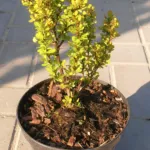 Golden Rocket (Berberis thunbergii ‘Golden Rocket’)Berberis thunbergii 'Golden Rocket'
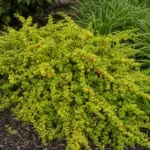 Green Carpet (Berberis thunbergii ‘Green Carpet’)Berberis thunbergii 'Green Carpet'
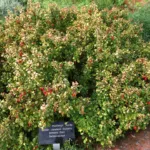 Golden Japanese barberry (Berberis thunbergii ‘Aurea’)Berberis thunbergii 'Aurea'