 Source:
 Penstemon ‘Stapleford Gem’ short overview
Penstemon 'Stapleford Gem' is a floriferous, bushy beardtongue valued for its semi-evergreen foliage and elegant purple-blue tubular flowers with pale lower lobes and dark throat markings. The award-winning cultivar forms an upright clump for sunny borders, gravel gardens, containers, and pollinator plantings. Give it fertile, well-drained soil, avoid winter wet, and provide light protection in colder parts of the United States.
Taxonomic classification
Penstemon ‘Stapleford Gem’ care guide
Light and placement
Grow in full sun for the strongest flowering, ideally with a south-, east-, or west-facing exposure and good air movement. Light partial shade is tolerated, especially in hot climates, but deep shade leads to weak, floppy growth and fewer flowers. Bleached foliage or scorched margins can indicate excessive reflected heat or drought.
Watering and humidity
Water deeply when the upper few inches of soil become dry, especially during the first growing season. Once established, allow the soil to dry moderately between waterings, but do not let container plants remain bone-dry during flowering. Reduce watering in cool fall weather and keep winter rain from saturating the crown.
Soil and growing medium
Use fertile, well-drained loam, sandy loam, or amended chalky soil. Drainage is more important than a narrowly defined pH because this cultivar tolerates acidic, neutral, and alkaline conditions. Avoid heavy, waterlogged clay; raised beds, gravel mulch, or coarse mineral amendment can reduce crown and root problems.
Feeding
Incorporate compost or well-rotted organic matter before planting, then feed lightly in spring if growth is weak. Avoid high-nitrogen fertilizer and repeated heavy feeding, which can produce soft growth and worsen winter dieback. Stop routine feeding by midsummer so stems can mature before cold weather.
Growth and habit
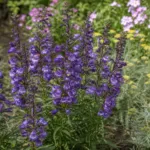
This cultivar forms a vigorous, upright, bushy clump with semi-evergreen foliage. Regular deadheading can extend the display and maintain vigor. In colder or wetter gardens, maintaining an open crown and avoiding lush late-season growth improves overwintering.
Planting and repotting
Plant in spring after the soil is workable, or in early fall where winters are moderate. Set the crown at soil level rather than burying it. Space plants about 18–24 inches apart, allowing airflow around the clump. Water consistently during the first growing season while keeping the crown well drained.
Repot container plants in spring when roots fill the pot. Move into only a slightly larger container with a free-draining perennial mix, and keep the crown at the same level. Refresh the upper layer of mix annually if the plant is not root-bound.
Propagation and pruning
Propagation
Take softwood cuttings in early summer or semi-hardwood cuttings in midsummer. Division can be attempted in spring, although rooted cuttings generally preserve the cultivar more reliably. Seed will not come true to the named cultivar.
Pruning
Deadhead after flowering to encourage continued bloom and prevent unnecessary seed production. Leave some basal foliage through winter in colder regions, then cut old stems back to the base in early spring once new growth begins.
Overwintering
In colder areas, apply a dry winter mulch around—but not over—the crown after the ground cools. Avoid wet, compacted mulch. In exposed containers, move pots beside a protected wall or into an unheated garage during severe freezes. Take late-season cuttings if winter survival is uncertain.
Uses
Use in sunny perennial borders, cottage-style plantings, gravel gardens, wall-side beds, wildlife gardens, and containers. Its upright flower spikes provide mid-border color and nectar resources. It is ornamental only; no culinary or medicinal use is established for this cultivar.
Appearance
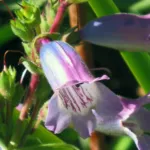
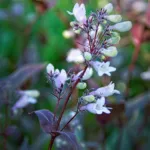
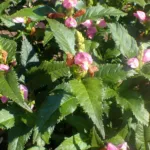
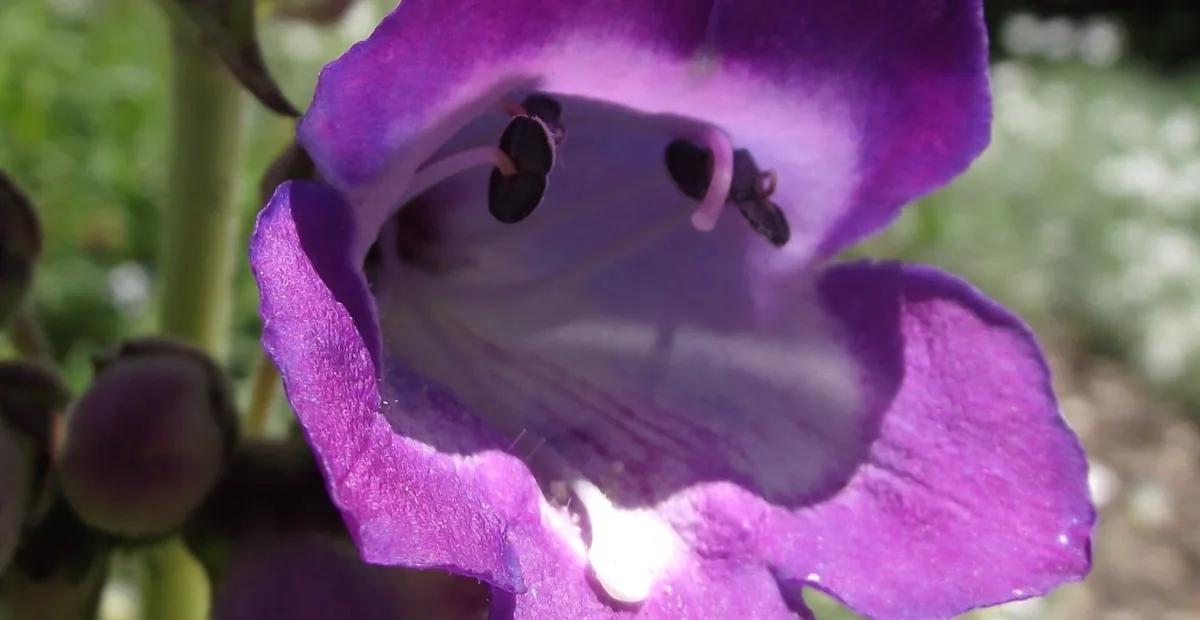
Strong, light-green, hairy stems rise from a compact base and carry opposite ovate to lance-shaped deep-green leaves. The semi-evergreen foliage remains useful outside the flowering period in mild climates. Narrow flower panicles and the pale lower lobes with purple throat lines are useful identification features.
Flowering
Narrow upright panicles carry tubular, bell-shaped blooms about 1.4 inches long. Flowering is concentrated from midsummer into fall and can continue toward the first frost when spent flowers are removed. The cultivar is sometimes confused in trade with 'Sour Grapes', but the names should not be treated as interchangeable without verification.
Pollination and visitors
Purple-blue, tubular Penstemon flowers fit the bee-oriented pollination pattern commonly documented for the genus. Bees and bumblebees are the most defensible visitor groups for this cultivar type, but a species-level pollinator has not been documented for 'Stapleford Gem'.
Diseases and pests
Diseases
Prevent crown and root disease by avoiding saturated soil, improving drainage, and keeping mulch away from the crown. Watch for gray mold or leaf spotting during persistently wet weather; remove affected tissue and improve airflow rather than routinely spraying.
Pests
Slugs and snails may damage young growth. Glasshouse red spider mite can occur in hot, dry protected conditions, while eelworms may distort leaves and buds. Use sanitation, airflow, hand removal, and targeted control only when damage is significant.
Related diseases and pests
Only Plant Doctor profiles whose host data indicate this plant may be affected are shown here.

Toxicity and pollen
No authoritative source located in this review identifies Penstemon 'Stapleford Gem' as poisonous to people or pets. Avoid deliberate ingestion because cultivar-specific safety testing is limited, and supervise children and animals around any ornamental plant material.
- Typical season
- Usually midsummer through fall in the United States
- Pollination / pollen
- Insect-presented pollen
Penstemon flowers are primarily insect-pollinated, so pollen is generally presented to visiting insects rather than released in large quantities into the air. Individual sensitivity is still possible, especially during handling or close contact with flowers; garden pollen exposure is expected to be low compared with wind-pollinated trees and grasses.
Native habitat
This is a cultivated garden hybrid rather than a wild species with a single native habitat. Its Penstemon ancestry derives from North American beardtongues, many of which occupy open, sunny sites with mineral, sharply drained soils. In cultivation, it performs best where winter moisture drains quickly.
Interesting fact
The cultivar received the RHS Award of Garden Merit in 1993 and was reconfirmed in 2016. Its flowers have a metallic purple-blue appearance and pale lower lobes. It is often incorrectly sold as 'Sour Grapes'. The genus name refers to the characteristic fifth, hairy stamen-like staminode.
Frequently asked questions (FAQ)
The most relevant questions about this plant, with short and direct answers.
🌱Quick care
What is Penstemon 'Stapleford Gem'?⌄
Penstemon 'Stapleford Gem' is a bushy, semi-evergreen perennial beardtongue with upright spikes of purple, blue, and whitish tubular flowers. It typically grows about 2 to 3 feet tall and blooms from summer into early fall.
How much sunlight does Penstemon 'Stapleford Gem' need?⌄
Penstemon 'Stapleford Gem' grows best in full sun but tolerates partial shade. Give it at least 6 hours of direct sunlight for the strongest stems and heaviest flowering.
How often should I water Penstemon 'Stapleford Gem'?⌄
Water Penstemon 'Stapleford Gem' deeply while it is establishing, then water during prolonged dry periods. Allow the soil to drain and dry somewhat between waterings because consistently wet roots can cause decline.
Is Penstemon 'Stapleford Gem' easy to grow?⌄
Yes, Penstemon 'Stapleford Gem' is generally easy to grow when planted in bright light and well-drained soil. Its main requirement is protection from prolonged winter wet and severe cold.
🌤️Environment and placement
What type of soil is best for Penstemon 'Stapleford Gem'?⌄
Use fertile, well-drained loam, sandy soil, or chalky soil for Penstemon 'Stapleford Gem'. Improve heavy clay with drainage-enhancing organic matter or grit rather than allowing the crown to remain waterlogged.
Can Penstemon 'Stapleford Gem' grow in clay soil?⌄
Penstemon 'Stapleford Gem' can grow in clay only if drainage is improved substantially. Plant it slightly high, amend the planting area, and avoid sites where water collects in winter.
Can Penstemon 'Stapleford Gem' grow in partial shade?⌄
Yes, Penstemon 'Stapleford Gem' tolerates partial shade, especially light afternoon shade in hot climates. Too much shade may produce weaker, leggier growth and fewer flowers.
Is Penstemon 'Stapleford Gem' hardy in the United States?⌄
Penstemon 'Stapleford Gem' is frost hardy but may need winter protection in colder parts of the United States. A dry mulch over the crown is useful where severe freezes, wet winters, or rapid temperature changes are common.
Can Penstemon 'Stapleford Gem' tolerate drought?⌄
Established Penstemon 'Stapleford Gem' tolerates short dry periods but is not reliably drought tolerant. Water deeply during extended heat or drought, while keeping the soil well drained.
Is Penstemon 'Stapleford Gem' good for pollinators?⌄
Yes, the tubular flowers of Penstemon 'Stapleford Gem' can provide nectar for bees and other flower-visiting pollinators. Plant it in a sunny border alongside other long-blooming perennials for a more continuous food source.
💧Care and problems
Why is my Penstemon 'Stapleford Gem' turning yellow?⌄
Yellow leaves on Penstemon 'Stapleford Gem' are most often associated with overly wet soil, poor drainage, natural aging, or watering stress. Check the roots and soil moisture before adding fertilizer.
Why is Penstemon 'Stapleford Gem' wilting?⌄
Penstemon 'Stapleford Gem' may wilt from drought, root damage, excessive moisture, or heat stress. Check whether the soil is dry several inches down and make sure water can drain freely from the root zone.
How do I prevent root rot in Penstemon 'Stapleford Gem'?⌄
Prevent root rot by planting Penstemon 'Stapleford Gem' in sharply draining soil and watering only when the soil has begun to dry. Avoid burying the crown or using a heavy, moisture-retentive mulch directly against it.
What pests affect Penstemon 'Stapleford Gem'?⌄
Penstemon 'Stapleford Gem' may be affected by slugs, snails, spider mites, and leaf or bud eelworms. Inspect foliage regularly and improve airflow and drainage if growth appears distorted or diseased.
Does Penstemon 'Stapleford Gem' need fertilizer?⌄
Penstemon 'Stapleford Gem' usually needs only modest feeding in fertile soil. If growth is weak, apply a light balanced fertilizer in spring, but avoid excessive nitrogen because it can encourage soft growth and winter damage.
🪴Planting and repotting
When should I plant Penstemon 'Stapleford Gem' in the United States?⌄
Plant Penstemon 'Stapleford Gem' in spring after the soil is workable or in early fall where plants have time to root before hard freezes. Spring planting is safer in colder regions with severe winters.
How far apart should Penstemon 'Stapleford Gem' be planted?⌄
Space Penstemon 'Stapleford Gem' about 18 to 24 inches apart, allowing room for its mature clump and airflow. Use the wider spacing in humid climates or rich soils where growth is especially vigorous.
Can Penstemon 'Stapleford Gem' be grown in a container?⌄
Yes, Penstemon 'Stapleford Gem' can be grown in a container with drainage holes and a gritty, well-drained potting mix. Choose a container large enough for the root system and protect it from severe winter freezing.
How do I plant Penstemon 'Stapleford Gem' in the ground?⌄
Plant Penstemon 'Stapleford Gem' with the top of the root ball level with the surrounding soil, then water deeply to settle the roots. Do not bury the crown, and choose a site that drains quickly after rain.
✂️Propagation and pruning
How do I propagate Penstemon 'Stapleford Gem'?⌄
Propagate Penstemon 'Stapleford Gem' by softwood cuttings in early summer, semi-hardwood cuttings in midsummer, or division in spring. Cuttings are preferable when you want plants that retain the parent cultivar's flower characteristics.
Can Penstemon 'Stapleford Gem' be grown from seed?⌄
Seed is not the most dependable way to reproduce Penstemon 'Stapleford Gem' true to type because cultivated hybrids may vary in their offspring. Use cuttings or division when preserving the named cultivar is important.
When should I divide Penstemon 'Stapleford Gem'?⌄
Divide Penstemon 'Stapleford Gem' in spring as new growth begins. Replant vigorous outer sections promptly in well-drained soil and water them carefully while they reestablish.
Should I deadhead Penstemon 'Stapleford Gem'?⌄
Deadhead Penstemon 'Stapleford Gem' after flowers fade to maintain a tidy appearance and encourage continued blooming. Leave some spent stems if you want to provide winter structure or allow limited seed formation.
How should I prune Penstemon 'Stapleford Gem' for winter?⌄
After flowering, remove spent flower stems and leave some healthy growth to protect the crown through winter. Cut old stems back to the base in late spring once new shoots clearly emerge, especially in colder regions.
⚠️Toxicity and safety
Is Penstemon 'Stapleford Gem' toxic to dogs or cats?⌄
No documented toxicity was found for Penstemon 'Stapleford Gem', but ingestion is not recommended. Keep pets and children from chewing the plant, and contact a veterinarian or poison-control service if a large amount is eaten or symptoms occur.
🌸Flowering and special interest
When does Penstemon 'Stapleford Gem' bloom?⌄
Penstemon 'Stapleford Gem' generally blooms from summer into early fall, often from July through October in suitable conditions. Regular deadheading can help extend the display until frost.
What color are the flowers of Penstemon 'Stapleford Gem'?⌄
The flowers of Penstemon 'Stapleford Gem' are tubular and range from reddish purple or magenta-blue to violet, with paler whitish areas toward the lower lobes or throat. Color intensity can vary with light and growing conditions.
Why is my Penstemon 'Stapleford Gem' not flowering?⌄
Poor flowering in Penstemon 'Stapleford Gem' is commonly caused by insufficient sunlight, excessive nitrogen, drought stress, or overly wet soil. Move or improve the plant's conditions before applying additional fertilizer.
Does Penstemon 'Stapleford Gem' rebloom after deadheading?⌄
Penstemon 'Stapleford Gem' may continue producing flowers when spent blooms are removed regularly. Reblooming is strongest when the plant receives ample sunlight, steady moisture during active growth, and good drainage.