 Source:
 Husker Red penstemon (Penstemon digitalis ‘Husker Red’) short overview
Penstemon digitalis 'Husker Red' is a hardy North American perennial valued for its burgundy spring foliage and upright stems of white, tubular flowers in late spring and early summer. This clump-forming cultivar performs best in full sun and well-drained soil, tolerates clay and occasional drought once established, and suits borders, prairie-style plantings, rain gardens, and pollinator-focused landscapes. Its foliage usually greens as summer progresses.
Taxonomic classification
Husker Red penstemon (Penstemon digitalis ‘Husker Red’) care guide
Light and placement
Give 'Husker Red' full sun for the strongest burgundy foliage and sturdy flowering stems; light afternoon shade is acceptable in hot climates. An east-, south-, or west-facing border works well. Excessive shade can produce greener leaves, weaker stems, and fewer flowers, while intense reflected heat may scorch foliage if soil becomes very dry.
Watering and humidity
Water deeply after planting, then allow the upper soil to dry slightly between waterings. Provide regular moisture during the first growing season and during prolonged summer drought, but avoid constantly saturated soil. Once established, the plant tolerates dry to medium conditions and occasional inundation better than many penstemons. Humidity generally requires no special management.
Soil and growing medium
Use average garden soil with dependable drainage. Loam or improved clay is suitable if water does not remain around the crown; raised beds or compost-amended planting pockets help in heavy soils. The species tolerates a broad pH range from acidic through alkaline. Avoid poorly drained winter sites, where root rot is more likely.
Feeding
Apply a thin layer of compost or a balanced, slow-release perennial fertilizer in early spring as growth resumes. Heavy feeding is unnecessary and can encourage soft, floppy stems at the expense of a compact habit. Do not fertilize drought-stressed, newly divided, or waterlogged plants until they are actively recovering.
Growth and habit
This cultivar forms a sturdy clump from basal rosettes and sends up erect flower stems. Flowering can be heavy enough that stems may need support in rich soil or exposed sites. It is generally shorter than the species and may spread gradually in favorable garden conditions. Leaving some seedheads standing adds late-season structure and food value.
Planting and repotting
Plant after the soil can be worked in spring, or in early fall with enough time for root establishment before hard freezing. Dig a hole no deeper than the root ball and twice as wide, position the crown at soil level, backfill without burying the basal rosette, and water thoroughly. Mulch lightly while keeping mulch away from the crown.
For container plants, repot in spring when roots fill the container or growth becomes weak. Move to a slightly larger pot with a porous, well-drained perennial mix and drainage holes. Replant the crown at its original depth and water carefully until re-established. Divide crowded container clumps during the same season.
Propagation and pruning
Propagation
Divide established clumps in spring or take summer cuttings. Seed is possible, but seedlings vary and may not retain the cultivar's burgundy foliage. Fresh seed generally benefits from cold-moist stratification and light for best germination. Vegetative propagation is preferred when preserving cultivar traits.
Pruning
Cut back winter-damaged stems in early spring as new basal growth becomes visible. Deadhead after flowering for a tidier appearance and to reduce unwanted seedlings, or leave selected seedheads standing for winter structure and wildlife value. Avoid cutting into the crown or removing healthy basal rosettes.
Overwintering
This cultivar is hardy in much of the United States, including cold Zone 3 conditions when established. In very cold or exposed sites, apply a loose, dry winter mulch after the ground freezes, keeping the crown uncovered or only lightly protected. Avoid wet winter mulch and do not overwinter indoors unless growing it as a container specimen.
Uses
Useful in sunny perennial borders, prairie-style plantings, rain gardens, cottage gardens, gravel gardens, and wildlife landscapes. It works well in masses or as a vertical accent and can be grown in large containers with excellent drainage. It is generally avoided by deer and tolerated by rabbits. Cut flowers and dried seedheads may be used ornamentally.
Appearance
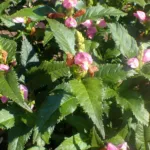
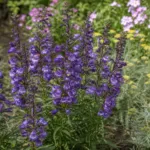
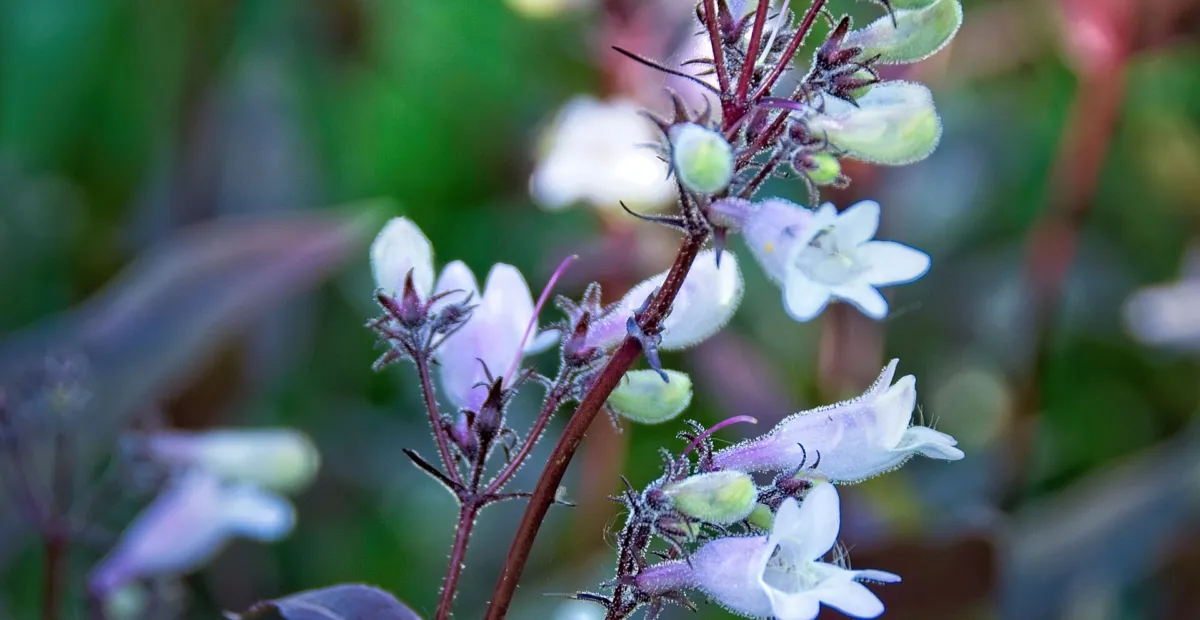
The defining feature is glossy burgundy to maroon basal foliage, especially vivid in spring and usually greener by summer. Leaves are opposite, with smooth-edged elliptic basal leaves and narrower, sometimes toothed stem leaves. Upright dark stems carry branched panicles of white, two-lipped tubular flowers, giving the plant a vertical, architectural profile.
Flowering
Flowering begins in mid- to late spring and can continue into early summer. The white tubular corollas are arranged in branched panicles above the foliage, with a two-lipped form characteristic of the genus. Removing spent flowers can improve tidiness, while retaining them preserves ornamental seedheads and supports natural reseeding.
Pollination and visitors
The tubular flowers provide nectar and pollen for bees, including bumblebees, and are visited by butterflies and hummingbirds. The cultivar remains useful to flower visitors, although cultivar-specific value may differ from the straight species. Retaining seedheads can also provide food and structure for garden wildlife.
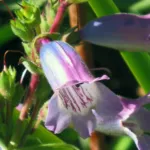
Penstemon digitalis 'Husker Red' photos
Click any photo for a larger view. Source, author and license are shown separately.
Diseases and pests
Diseases
Root rot is the main risk in saturated or poorly drained soil. Improve drainage, avoid chronic overwatering, and space plants for air movement. Occasional leaf spot, powdery mildew, or gray mold can occur during stressful or persistently humid conditions; remove affected debris and water at the soil surface rather than over the foliage.
Pests
Aphids, slugs, snails, and occasionally leaf or bud eelworms may occur. Inspect new growth and flower stems, remove slugs and snails by hand or use proportionate controls, and avoid broad-spectrum insecticides while flowers are open. Good drainage, sanitation, and avoiding unnecessary lush growth reduce problems.
Related diseases and pests
Only Plant Doctor profiles whose host data indicate this plant may be affected are shown here.

Toxicity and pollen
Authoritative cultivar-specific toxicity information was not located in the reviewed sources. Do not treat the plant as edible, and avoid deliberate ingestion. Wear gloves when handling unfamiliar plant material, keep trimmings away from children and pets, and contact Poison Control or a veterinarian if ingestion causes symptoms.
- Typical season
- Late spring to early summer
- Pollination / pollen
- Pollen presented within tubular, insect-visited flowers
Flowers are primarily insect-pollinated, so pollen is generally presented within the floral tube rather than released in large airborne clouds. This suggests lower airborne exposure than wind-pollinated plants, but it does not prove zero allergy risk. People with known pollen or plant allergies should avoid rubbing the flowers and monitor personal sensitivity.
Native habitat
The parent species is native to eastern and central North America, where it occurs in prairies, fields, woodland margins, open woods, and disturbed open habitats. It handles a range of soils, including clay, provided drainage is adequate. Its natural ecology combines sun exposure, seasonal moisture, and periodic summer drying.
Interesting fact
The cultivar was selected for unusually dark foliage rather than dark flowers. 'Husker Red' received the Perennial Plant Association Plant of the Year award in 1996. Seed-grown offspring do not reliably preserve the cultivar's burgundy foliage. The species name digitalis refers to the superficial resemblance of its flowers to foxgloves.
Frequently asked questions (FAQ)
The most relevant questions about this plant, with short and direct answers.
🌱Quick care
What is Penstemon digitalis 'Husker Red' commonly called?⌄
Penstemon digitalis 'Husker Red' is commonly called Husker Red penstemon or foxglove beardtongue 'Husker Red.' It is a clump-forming perennial beardtongue in the Plantaginaceae family.
Is Husker Red penstemon perennial?⌄
Yes, Husker Red penstemon is a herbaceous perennial that returns each year in suitable climates. It is generally hardy in USDA Zones 3–8.
How big does Husker Red penstemon get?⌄
Husker Red penstemon typically grows about 2 to 3 feet tall and 1 to 2 feet wide. Flowering stems may make the plant appear taller than its foliage mound.
How much sun does Husker Red penstemon need?⌄
Grow Husker Red penstemon in full sun to light shade, with full sun preferred for the strongest burgundy foliage color. Aim for at least 6 hours of direct sun when possible.
How often should I water Husker Red penstemon?⌄
Water Husker Red penstemon when the soil becomes somewhat dry, then allow excess water to drain. Once established, it tolerates drought, but it performs best with dry to medium moisture rather than prolonged dryness or soggy soil.
🌤️Environment and placement
What USDA zones can grow Husker Red penstemon?⌄
Husker Red penstemon is generally hardy in USDA Zones 3–8. Winter survival still depends on drainage, snow cover, exposure, and local growing conditions.
Can Husker Red penstemon grow in clay soil?⌄
Yes, Husker Red penstemon can tolerate clay soil if drainage is adequate. Avoid planting it where heavy clay stays wet, especially during winter.
What is the best soil for Husker Red penstemon?⌄
The best soil is average, well-drained garden soil with dry to medium moisture. It does not need especially rich soil, and overly fertile or wet conditions can produce weaker growth.
Can Husker Red penstemon grow in partial shade?⌄
Yes, it can grow in light or partial shade, but the foliage may become less intensely red and the stems may be less sturdy. Full sun is preferable for compact growth and color.
Is Husker Red penstemon drought tolerant?⌄
Yes, established Husker Red penstemon is drought tolerant and suits low-water perennial borders. Provide regular water during its first growing season and during unusually long, severe droughts.
Is Husker Red penstemon good for a rain garden?⌄
Husker Red penstemon can work in a rain garden that drains between rain events. It tolerates occasional wet and dry conditions but should not be planted in permanently saturated soil.
Does Husker Red penstemon attract hummingbirds and butterflies?⌄
Yes, its tubular flowers can attract hummingbirds and butterflies. Planting it with other nectar-producing perennials can increase its value to pollinators.
💧Care and problems
Is Husker Red penstemon easy to grow?⌄
Yes, Husker Red penstemon is considered a relatively low-maintenance perennial. Good drainage, adequate sunlight, and restrained watering are more important than frequent feeding.
Why is my Husker Red penstemon losing its red leaf color?⌄
Reduced sunlight is a common reason Husker Red penstemon develops greener foliage. The leaves may also become greener during summer, with stronger burgundy tones often returning in cooler seasons.
Why is my Husker Red penstemon falling over?⌄
Husker Red penstemon may flop in excessive shade, overly rich soil, excessive moisture, or after heavy rain. Move it toward more sun, avoid overfertilizing, and use a discreet support if needed.
Should I fertilize Husker Red penstemon?⌄
Usually, Husker Red penstemon does not need heavy fertilization in average garden soil. A thin layer of compost in spring is generally sufficient; avoid high-nitrogen feeding that encourages weak, leafy growth.
What problems commonly affect Husker Red penstemon?⌄
The main cultural problems are root or crown damage from poorly drained soil, weak stems in low light, and decline from excessive moisture. Inspect plants for pests if growth is distorted, but the cultivar is generally regarded as easy care.
Can Husker Red penstemon tolerate deer?⌄
Husker Red penstemon is often considered deer tolerant, although no plant is completely deer-proof. Hungry deer may still browse it, especially when other food is scarce.
🪴Planting and repotting
When should I plant Husker Red penstemon?⌄
Plant Husker Red penstemon in spring or early fall while temperatures are moderate. Spring planting is especially useful in colder areas, while fall planting allows roots to establish before winter.
How far apart should I plant Husker Red penstemon?⌄
Space Husker Red penstemon about 12 to 24 inches apart, depending on the desired density and cultivar conditions. Allow enough room for airflow around the clump and flowering stems.
Can Husker Red penstemon grow in a container?⌄
Yes, Husker Red penstemon can grow in a container with drainage holes and a well-drained potting mix. Choose a substantial container, avoid waterlogged soil, and protect the roots from extreme winter cold.
How do I plant Husker Red penstemon?⌄
Plant it at the same depth it was growing in its nursery pot, firm the soil gently, and water thoroughly once. Keep the soil lightly moist while the roots establish, then reduce watering as growth becomes established.
Does Husker Red penstemon spread aggressively?⌄
Husker Red penstemon usually forms an upright clump rather than spreading aggressively by runners. It may self-sow or produce nearby seedlings if flower heads are allowed to mature.
✂️Propagation and pruning
How do I propagate Husker Red penstemon?⌄
Propagate Husker Red penstemon by dividing established clumps in spring or fall. Each division should retain healthy roots and several growing points.
Can Husker Red penstemon be grown from seed?⌄
It can be grown from seed, but seedlings may not retain the distinctive traits of the named cultivar. Division is the more reliable method when you want plants that match 'Husker Red.'
When should I divide Husker Red penstemon?⌄
Divide Husker Red penstemon in early spring as new growth begins or in early fall after flowering. Avoid dividing during hot, dry weather or when the plant is actively stressed.
Should I cut back Husker Red penstemon after flowering?⌄
Cut back the flowering stems after bloom if you want a tidier appearance or to limit self-sowing. Leaving some seed capsules provides fall and winter interest and may support natural reseeding.
Should I deadhead Husker Red penstemon?⌄
Deadheading is optional for Husker Red penstemon. Remove spent flower stems to encourage a neat appearance, or leave them in place for ornamental seed capsules and wildlife interest.
⚠️Toxicity and safety
Is Husker Red penstemon toxic to dogs, cats, or people?⌄
The toxicity of Penstemon digitalis 'Husker Red' is not established. Keep pets and children from chewing the plant, and contact a veterinarian or poison-control service if ingestion causes symptoms.
Can I plant Husker Red penstemon near pets?⌄
You can grow Husker Red penstemon near pets, but its safety profile has not been established. Use a barrier or choose a confirmed nontoxic plant if your animals regularly chew garden plants.
🌸Flowering and special interest
When does Husker Red penstemon bloom?⌄
Husker Red penstemon usually blooms from late spring into early summer, commonly around May through July depending on local climate. Flowering may occur earlier in warm regions and later in cold regions.
What color flowers does Husker Red penstemon have?⌄
Husker Red penstemon produces upright spikes of white to very pale pink, sometimes lavender-tinted, tubular flowers. The dark foliage creates strong contrast with the pale blooms.
Why is my Husker Red penstemon not blooming?⌄
Insufficient sun, excessive nitrogen, transplant stress, drought during bud formation, or overly wet soil can reduce flowering. Give the plant good drainage and full sun when possible, and allow time for newly planted divisions to establish.
Does Husker Red penstemon bloom the first year?⌄
It may bloom the first year if planted as a sizable nursery plant, but smaller starts may focus on root establishment instead. Flowering is usually stronger after the plant has settled into the garden.
What does Husker Red penstemon look like after flowering?⌄
After flowering, the plant develops dry seed capsules on upright stems and may retain attractive burgundy foliage. The seed heads can provide structure through fall and winter if they are not cut back.