
 Source:
 Thunberg’s Barberry (Berberis thunbergii) short overview
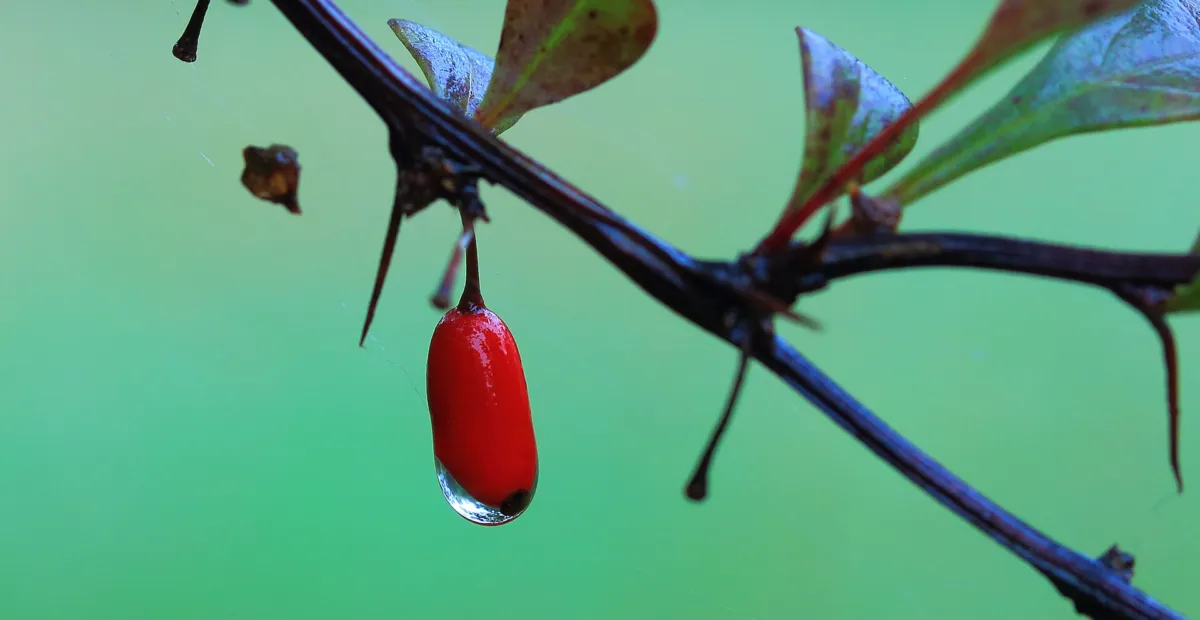
Thunberg's Barberry is a compact, thorny deciduous shrub native to Japan. It produces small, pale yellow flowers in spring, followed by bright red berries that may persist through winter. Green-leaved plants often develop orange, red, or burgundy fall color, while cultivars vary widely in size and foliage. It adapts to sun or partial shade and many well-drained soils, but can escape cultivation and become invasive in parts of the United States.
Taxonomic classification
Thunberg’s Barberry (Berberis thunbergii) care guide
Light and placement
Best color, flowering, and fruiting occur in full sun, though the shrub tolerates partial shade. Morning sun with afternoon protection suits hot climates, while open eastern or southern exposure improves density and fall color. Too little light can cause looser growth and weaker color; excessive reflected heat may scorch foliage.
Watering and humidity
Water deeply when the upper few inches of soil begin to dry during the first growing season. Established shrubs usually manage with moderate rainfall but benefit from irrigation during prolonged heat or drought. Water at the soil line and avoid constantly saturated ground; extra humidity is generally unnecessary.
Soil and growing medium
Use moderately fertile, well-drained soil that does not remain waterlogged. The species tolerates acidic, neutral, and mildly alkaline conditions and can persist in relatively poor or shallow soils, but growth and color are usually best in soil amended with organic matter without creating excessive wetness.
Feeding
Apply a balanced, slow-release fertilizer in early spring only if growth is weak or soil fertility is poor. A thin compost mulch can provide gentle nutrient support. Avoid heavy nitrogen feeding, which can produce overly lush growth, and do not fertilize drought-stressed or newly transplanted shrubs until they establish.
Growth and habit
This species forms a dense, multi-stemmed shrub with arching to spreading branches. It can remain compact in cultivation but may form persistent thickets when seedling recruitment and vegetative spread go unchecked. Its spines make handling and close-access maintenance more difficult.
Planting and repotting
Plant in spring or fall when the soil is workable. Set the root ball level with the surrounding soil, water deeply, and mulch lightly without touching the stems. Allow enough space for mature spread and check state or local restrictions before planting.
Container-grown plants can be shifted into a pot one size larger in early spring before strong new growth. Refresh part of the potting mix rather than repeatedly increasing container size, and ensure the pot has generous drainage holes.
Propagation and pruning
Propagation
Sow cleaned seed after a period of cold, moist stratification, or take softwood to semi-ripe cuttings in summer. Layering can also work. Seed-grown plants may vary from selected cultivars, while named cultivars are generally maintained by vegetative propagation.
Pruning
Prune after flowering or during dormancy to remove dead, damaged, crossing, or crowded stems. Wear thick gloves because of the spines. Renewal-prune older stems at ground level rather than shearing repeatedly if an open structure is desired. Remove unwanted seedlings before they mature and fruit.
Overwintering
Plants established in the ground generally need no winter protection within their hardiness range. In colder exposed sites, apply a light mulch over the root zone after the ground cools. Container plants have less root insulation and should be placed in a sheltered location or protected with insulating material.
Uses
Historically and horticulturally used as an ornamental shrub, foundation plant, informal hedge, barrier planting, and container specimen. Cultivars are grown for colorful foliage and compact forms. Because the species can naturalize and become invasive, avoid planting near forests or unmanaged habitats and follow local regulations. Do not treat it as a food or medicinal plant without authoritative guidance.
Appearance
Identify it by small simple entire leaves, short sharp spines, dense branching, and yellow inner wood. Leaves are often arranged in clusters on short spur shoots. The mature shrub is commonly compact and broader than tall, with bright red ellipsoid berries that can persist after leaf fall.
Flowering
Small, pale yellow flowers hang singly or in small clusters from the stems in spring. Flowers are often partly concealed beneath the foliage and are followed by bright red, ellipsoid berries. Flowering is generally strongest with good light.
Pollination and visitors
Flowers are visited and pollinated by small and large bees, including bumblebees. Touch-sensitive stamens spring toward the stigma when contacted, improving pollen placement during visits. Birds consume the red fruits and can disperse seeds, contributing to naturalization.
Berberis thunbergii photos
Click any photo for a larger view. Source, author and license are shown separately.
Diseases and pests
Diseases
Potential problems include anthracnose, powdery mildew, rusts, and root or crown rots in poorly drained sites. Improve air circulation, avoid overhead irrigation, remove affected debris, and correct drainage before considering a labeled fungicide.
Pests
Common pests may include aphids, scale insects, and sawfly larvae. Inspect new growth and leaf undersides, encourage natural enemies, prune lightly for access, and use targeted insecticidal soap or another labeled treatment only when damage is significant.
Related diseases and pests
Only Plant Doctor profiles whose host data indicate this plant may be affected are shown here.
 DiseaseStem Rust (Black Rust)Puccinia graminis
 DiseaseCoral Spot CankerNectria cinnabarina
 DiseaseEuropean brown rotMonilinia fructigena
 DiseaseAnthracnoseColletotrichum gloeosporioides
 DiseaseMaple powdery mildewSawadaea bicornis
 DiseaseCucurbit Powdery MildewPodosphaera xanthii (Castagne) U. Braun & Shishkoff
 DiseaseRose powdery mildewPodosphaera pannosa
 DiseaseApple Powdery MildewPodosphaera leucotricha
Toxicity and pollen
Barberries contain berberine and other compounds, and ingestion of plant material may cause gastrointestinal upset. Evidence for severe poisoning from this exact species is limited, but berries, leaves, bark, and roots should not be eaten casually. Avoid medicinal use without qualified medical advice, especially during pregnancy, lactation, or with prescription medicines.
- Typical season
- April–May in much of the United States
- Pollination / pollen
- Insect-dispersed spring pollen
The species produces pollen in spring, but its flowers are primarily insect-pollinated rather than adapted for broad wind dispersal. Airborne exposure is therefore expected to be lower than for wind-pollinated trees and grasses, although sensitive individuals may still react to pollen or plant contact.
Native habitat
Native to Japan, where it occurs in temperate environments. In the United States it is introduced and has naturalized especially in the Northeast and other eastern regions, occupying forests, woodland edges, wetlands, pastures, roadsides, and disturbed ground. It tolerates shade and a broad range of soil conditions.
Interesting fact
The stamens respond to touch by snapping toward the stigma, helping transfer pollen from visiting bees. Plants can spread by seed, root-crown shoots, rhizomes, and stems that root after contacting soil. Red berries often remain visible into winter. Dense stands can alter understory vegetation and soil conditions.
Frequently asked questions (FAQ)
The most relevant questions about this plant, with short and direct answers.
🌱Quick care
What is Thunberg's Barberry?⌄
Thunberg's Barberry, or Berberis thunbergii, is a cold-hardy, deciduous shrub in the Berberidaceae family. It is valued for colorful foliage, yellow spring flowers, red berries, and thorny branches.
How much sun does Thunberg's Barberry need?⌄
Thunberg's Barberry grows best in full sun but tolerates partial shade. Purple- and red-leaved cultivars usually develop their strongest color with at least 6 hours of direct sunlight daily.
How often should I water Thunberg's Barberry?⌄
Water Thunberg's Barberry moderately, allowing the soil to dry slightly between waterings. Provide extra water during the first growing season, prolonged drought, and periods of extreme heat.
Is Thunberg's Barberry evergreen or deciduous?⌄
Thunberg's Barberry is deciduous, so it drops its leaves in fall. Its red berries may persist into winter after the foliage has fallen.
How large does Thunberg's Barberry get?⌄
The species typically grows about 3 to 6 feet tall and 4 to 7 feet wide, although cultivars range from compact dwarf forms to taller upright selections. Check the mature size of the specific cultivar before planting.
🌤️Environment and placement
What USDA hardiness zones are suitable for Thunberg's Barberry?⌄
Thunberg's Barberry is generally hardy in USDA Zones 4 through 8. Exact performance can vary by cultivar, winter exposure, and local growing conditions.
What type of soil is best for Thunberg's Barberry?⌄
Plant Thunberg's Barberry in well-drained loam with moderate fertility. It tolerates a range of soil conditions, but consistently wet or poorly drained soil can promote root problems.
Can Thunberg's Barberry grow in shade?⌄
Thunberg's Barberry can grow in partial shade, but it may become less dense and show weaker foliage color. Full sun is preferable for compact growth and vivid purple, red, or golden leaves.
Is Thunberg's Barberry drought tolerant?⌄
Established Thunberg's Barberry has good drought tolerance once its root system is developed. Water new plantings regularly until established, then irrigate during extended dry periods.
Is Thunberg's Barberry deer resistant?⌄
Thunberg's Barberry is generally resistant to deer browsing because of its thorny stems and unpalatable foliage. Deer may still browse it occasionally when food is scarce.
Can Thunberg's Barberry be used as a privacy hedge?⌄
Thunberg's Barberry can form a dense, thorny hedge and has been used for screening. However, its invasive potential and legal restrictions in some U.S. states make native or confirmed sterile alternatives a safer choice.
💧Care and problems
How do I care for Thunberg's Barberry?⌄
Give Thunberg's Barberry full sun to partial shade, moderate water, well-drained soil, and occasional renewal pruning. Remove dead or crowded branches and avoid keeping the soil constantly wet.
Why is my Thunberg's Barberry losing leaves?⌄
Leaf loss may be normal in fall because Thunberg's Barberry is deciduous. Premature or excessive loss can result from drought, root rot, leaf spot, wilt, insect damage, or severe environmental stress.
What diseases affect Thunberg's Barberry?⌄
Thunberg's Barberry can be affected by anthracnose, bacterial leaf spot, wilt, and root rot. Improve air circulation, avoid overhead watering, remove damaged foliage, and correct poorly drained soil.
What pests commonly attack Thunberg's Barberry?⌄
Reported pests include aphids, scale, barberry webworm, and Japanese weevils. Inspect new growth and leaf undersides regularly, and use the least-toxic control appropriate for the identified pest.
Why are the leaves on my Thunberg's Barberry turning green?⌄
Purple or red cultivars may turn greener when grown in too much shade or under excessive nitrogen fertilization. Move or prune surrounding plants to increase light, and avoid unnecessary high-nitrogen feeding.
🪴Planting and repotting
When is the best time to plant Thunberg's Barberry?⌄
Plant Thunberg's Barberry in spring or fall when temperatures are moderate and the soil is workable. Fall planting is especially useful in many U.S. regions because cooler weather reduces transplant stress.
How far apart should Thunberg's Barberry be planted?⌄
Space Thunberg's Barberry according to its mature width, usually about 4 to 7 feet apart for species-sized plants. Compact cultivars require less space, so use the label's mature dimensions rather than the nursery pot size.
Can Thunberg's Barberry grow in a container?⌄
Compact Thunberg's Barberry cultivars can grow in large containers with drainage holes and well-drained potting mix. Containers dry and freeze faster than garden soil, so monitor moisture and protect the root ball in severe winter weather.
Does Thunberg's Barberry spread by roots?⌄
Thunberg's Barberry can spread through root suckers, especially when plants are stressed or disturbed. Remove suckers promptly and inspect the surrounding soil for new shoots.
✂️Propagation and pruning
How do you propagate Thunberg's Barberry?⌄
Thunberg's Barberry can be propagated from seed, cuttings, or rooted branches, depending on the cultivar and desired uniformity. Seed-grown plants may not reproduce named-cultivar traits and can contribute to unwanted spread.
Can Thunberg's Barberry be propagated from cuttings?⌄
Yes, Thunberg's Barberry can be propagated from stem cuttings, although success varies with timing and cultivar. Semi-hardwood cuttings taken during the growing season are commonly attempted under consistently moist, well-drained conditions.
When should Thunberg's Barberry be pruned?⌄
Prune Thunberg's Barberry after flowering or during dormancy, depending on whether preserving flowers and berries is important. Remove dead, damaged, crossing, or overly crowded branches first.
How do you prune an overgrown Thunberg's Barberry?⌄
Renew an overgrown Thunberg's Barberry by removing up to one-third of the oldest stems at ground level over several seasons. Wear thick gloves and eye protection because the branches have sharp spines.
Can Thunberg's Barberry be cut back hard?⌄
Thunberg's Barberry tolerates substantial rejuvenation pruning when necessary, but removing all top growth at once can cause stress and reduce the season's ornamental display. Staged removal is usually safer and produces a more natural recovery.
⚠️Toxicity and safety
Is Thunberg's Barberry toxic to people or pets?⌄
Thunberg's Barberry has low toxicity, but eating the berries, leaves, or other plant parts may cause gastrointestinal upset. Keep children and pets from chewing the plant, and contact a medical or veterinary professional if significant material is swallowed.
Does Thunberg's Barberry have thorns?⌄
Yes, Thunberg's Barberry has sharp, usually single spines at the nodes along its stems. Plant it away from walkways and wear protective gloves when pruning or removing it.
Is Thunberg's Barberry invasive in the United States?⌄
Thunberg's Barberry is invasive in parts of the eastern and Midwestern United States and can form dense stands that displace native vegetation. Check your state and local regulations before planting, because restrictions vary by jurisdiction.
Should I plant Thunberg's Barberry in my yard?⌄
Plant Thunberg's Barberry only after checking local invasive-plant rules and confirming that the specific cultivar is permitted. Where it is restricted or invasive, choose a native or documented sterile alternative instead.
Are sterile Thunberg's Barberry cultivars safer to plant?⌄
Documented sterile cultivars can reduce seed-based spread, but they may still present concerns where the species is regulated or can spread by vegetative growth. Verify sterility, legality, and local recommendations before purchasing.
🌸Flowering and special interest
When does Thunberg's Barberry bloom?⌄
Thunberg's Barberry usually blooms in spring, often from April through May in much of the United States. Its small pale-yellow flowers may hang beneath the foliage and can be partly hidden.
Does Thunberg's Barberry produce berries?⌄
Yes, Thunberg's Barberry commonly produces small, bright-red berries in fall that may persist into winter. Birds can eat and disperse the seeds, which contributes to the plant's invasive behavior in some regions.
Why is my Thunberg's Barberry not flowering?⌄
Insufficient sunlight, excessive pruning before bloom, plant stress, or young age can reduce flowering. Provide adequate light and avoid removing the previous season's flowering wood before spring bloom.
What color do Thunberg's Barberry leaves turn in fall?⌄
Thunberg's Barberry often develops yellow, orange, red, or burgundy fall color before leaf drop. The exact display depends on the cultivar, sunlight, temperature, and growing conditions.
Similar plants
 Azure Monkshood (Aconitum carmichaelii) care guideAconitum carmichaelii
 Monkshood (Aconitum ‘Stainless Steel’)Aconitum 'Stainless Steel'
 Monkshood (Aconitum ‘Bressingham Spire’)Aconitum 'Bressingham Spire'
 Golden full moon maple (Acer shirasawanum ‘Aureum’)Acer shirasawanum 'Aureum'
 Globosum (Acer platanoides ‘Globosum’)Acer platanoides 'Globosum'
 Striped maple (Acer pensylvanicum) care guideAcer pensylvanicum