
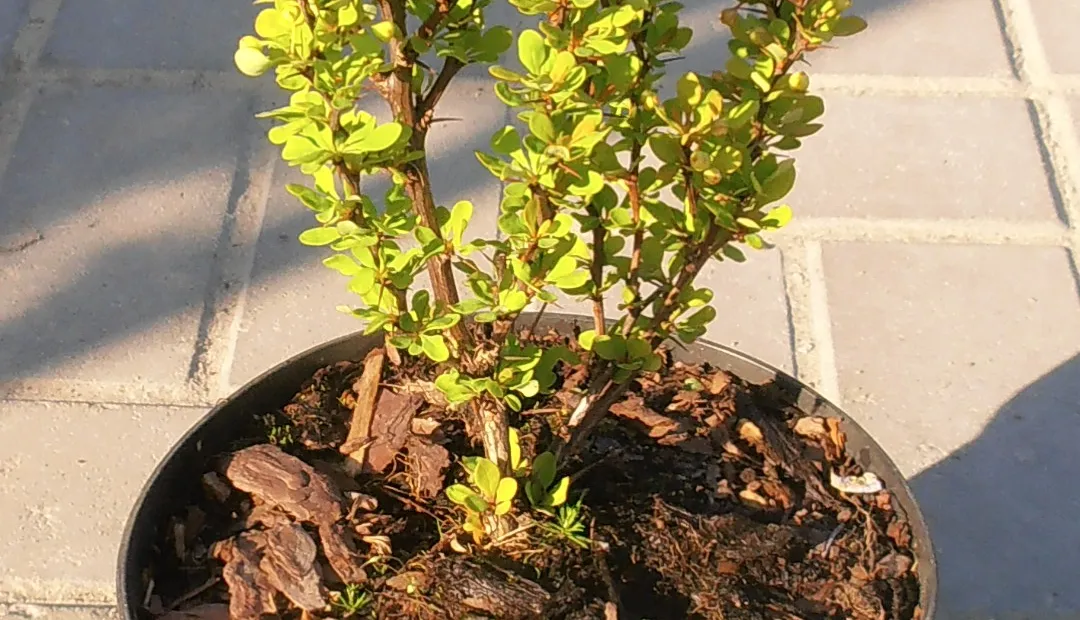
 Source:
 Golden Rocket (Berberis thunbergii ‘Golden Rocket’) short overview
Berberis thunbergii 'Golden Rocket' is a narrow, upright deciduous shrub selected for its vivid yellow-green foliage and tidy columnar habit. New growth may show reddish tones before becoming brighter yellow, while autumn color shifts toward orange and red. Small pale yellow flowers appear in spring and may be followed by ornamental red berries. Its thorny stems make it useful for formal accents, borders, screens, and hedging, but local restrictions and invasive-plant concerns should be checked before planting.
Taxonomic classification
Golden Rocket (Berberis thunbergii ‘Golden Rocket’) care guide
Light and placement
Plant in full sun for the strongest yellow foliage, best flowering, and most reliable fruiting. Morning sun with some protection from intense late-afternoon heat can help reduce leaf scorch in very hot climates, although the cultivar is generally sun tolerant. Sparse, greener growth may indicate too much shade; bleached or scorched leaf margins suggest excessive heat, reflected light, drought, or root stress.
Watering and humidity
Water deeply when the upper several inches of soil begin to dry during the first growing season, then allow the plant to experience moderate drying between waterings. Established shrubs are usually manageable with average landscape moisture, but drought during active growth can reduce vigor and cause leaf scorch. Avoid frequent shallow irrigation and saturated soil; extra water is most useful during prolonged summer heat.
Soil and growing medium
Use ordinary garden soil amended only when structure or drainage is poor. Sandy, loamy, clay, and chalky soils are tolerated, but roots should not remain waterlogged. Incorporate organic matter into compact soil without creating a rich isolated pocket. A slightly acidic through alkaline reaction is acceptable, so pH correction is usually unnecessary unless a soil test identifies a specific problem.
Feeding
Apply a thin layer of compost or a balanced slow-release shrub fertilizer in early spring as growth begins. Feed lightly rather than pushing soft, elongated shoots, which can weaken the columnar outline and increase maintenance. Do not fertilize drought-stressed, newly transplanted, or late-season plants; water the root zone first if fertilizer is needed.
Growth and habit
This cultivar develops a strongly upright, columnar outline with relatively narrow spread and reaches mature size in several years. Its dense branching and sharp spines can create a useful visual and physical barrier. The vertical habit suits narrow beds and entrances, but inspect planting positions for pedestrian clearance and allow enough room for air circulation.
Planting and repotting
Plant during mild spring or fall weather while soil can be worked. Dig a broad hole, loosen circling roots, and position the root flare at soil level. Backfill with native soil, water thoroughly, and apply a modest mulch layer without touching the stems. Maintain consistent moisture through the first growing season while roots establish.
For container culture, transplant into a slightly larger pot when roots fill the current container, preferably in spring. Use a well-drained, ordinary shrub or potting mix and keep the root flare at the same level. Container-grown plants need more frequent summer watering than in-ground specimens, but the pot must drain freely. Repot before the root mass becomes severely congested.
Propagation and pruning
Propagation
Softwood or semi-hardwood cuttings are the documented practical methods for maintaining the cultivar. Take cuttings during the appropriate active-growth period, use a clean, free-draining rooting medium, and maintain steady moisture and humidity until roots form. Seed is not a reliable way to reproduce the named cultivar because seedlings may not retain its selected foliage and habit.
Pruning
Prune after flowering or in late winter before new growth begins, removing dead, damaged, crossing, or poorly placed stems first. Use bypass tools and wear thick gloves because the branches are thorny. Light shaping preserves the narrow outline; severe shearing can produce dense outer growth and reduce natural structure. Remove unwanted basal shoots promptly.
Overwintering
The cultivar is cold hardy when established outdoors, but protect newly planted shrubs from drying winter winds and abrupt temperature swings with a mulch layer over the root zone. Do not pile mulch against the stems. Container plants experience colder roots than in-ground plants; place them in a sheltered location or insulate the container where severe winter conditions occur.
Uses
Useful as a specimen, vertical accent, foundation planting, border shrub, narrow screen, or thorny hedge. The yellow foliage provides contrast in mixed plantings and containers. Red berries can provide wildlife value, but fruits are ornamental rather than recommended food. Because Japanese barberry is invasive in parts of the United States, consult state and local guidance before planting and avoid spreading it beyond cultivated areas.
Appearance
Leaves are small and simple, with bright yellow-green to golden coloring that may deepen toward orange-red in fall. Young shoots can carry reddish tones. The shrub has reddish-brown, thorn-bearing stems and a distinctly narrow upright silhouette. Small yellow flowers occur along the branches, followed by glossy red berries that contrast with the foliage.
Flowering
The flowers are small, pale yellow, and borne in axillary clusters or short racemes along the thorny shoots. Flowering is normally concentrated in mid- to late spring in much of the United States, with timing shifting earlier in warmer regions. The display is modest but provides a useful seasonal contrast against the bright foliage.
Pollination and visitors
Japanese barberry flowers are visited for nectar and pollen by bees and other small insect visitors, including records involving small bees and flies. The flowers are insect-pollinated rather than wind-pollinated. Visitor activity is concentrated during the spring bloom period; cultivar-specific visitor data for 'Golden Rocket' are limited.
Diseases and pests
Diseases
Possible problems include powdery mildew, leaf spot, anthracnose, root rot, wilt, and honey fungus. Improve air circulation, avoid wetting foliage late in the day, remove infected debris, and prevent prolonged saturation around roots. Correct drainage before using fungicides. Monitor stressed plants more closely, especially in dense hedges or humid sites.
Pests
Aphids, scale, barberry webworm, and berberis sawfly may occur. Inspect new shoots and leaf undersides regularly, prune out heavily infested tips where practical, and encourage natural enemies. Use a strong water spray for light aphid infestations; reserve targeted treatments for confirmed, damaging outbreaks and follow the product label.
Related diseases and pests
Only Plant Doctor profiles whose host data indicate this plant may be affected are shown here.
 DiseaseStem Rust (Black Rust)Puccinia graminis
 DiseaseCoral Spot CankerNectria cinnabarina
 DiseaseEuropean brown rotMonilinia fructigena
 DiseaseAnthracnoseColletotrichum gloeosporioides
 Environmental stressSalt stress
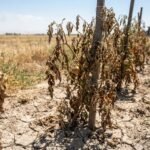 Environmental stressHeat stress
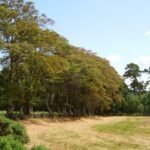 Environmental stressDrought stress
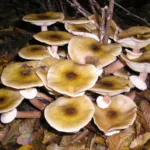 DiseaseArmillaria Root Rot (Honey Fungus)Armillaria mellea
Toxicity and pollen
The plant has sharp spines, and the berries are treated by horticultural sources as ornamental rather than edible for routine landscape use. Ingestion can cause gastrointestinal upset, and handling may cause puncture injuries. Keep prunings and fruit away from children and animals, wear gloves during pruning, and seek medical or veterinary advice after significant ingestion or injury.
- Typical season
- Spring, typically April–May in much of the United States
- Pollination / pollen
- Insect-dispersed pollen from spring flowers
The flowers release pollen during spring, but pollen is primarily moved by insect visitors rather than carried efficiently through the air. Airborne exposure is therefore expected to be lower than for wind-pollinated trees and grasses, not necessarily zero. People with known plant allergies should still avoid handling flowers closely if symptoms occur.
Native habitat
The species is native to Japan and parts of eastern Asia, where it occurs in temperate woodland margins, thickets, disturbed sites, and other open habitats. It tolerates a broad range of soil textures and pH conditions but performs best in well-drained ground. In the United States, Japanese barberry can persist in forests and disturbed landscapes and is invasive in numerous regions.
Interesting fact
The cultivar name reflects its upright golden appearance. Young foliage may emerge reddish before becoming yellow-green. The narrow form was selected for use where a conventional rounded barberry would occupy too much space. Berberis thunbergii has spines modified from leaves or leaf structures, a characteristic feature of the genus. The species is also associated with invasive-plant management concerns in the United States.
Frequently asked questions (FAQ)
The most relevant questions about this plant, with short and direct answers.
🌱Quick care
How much sun does Berberis thunbergii 'Golden Rocket' need?⌄
Berberis thunbergii 'Golden Rocket' grows best in full sun, although it tolerates partial shade. More sunlight generally produces stronger golden foliage color and denser, more upright growth.
How often should I water Berberis thunbergii 'Golden Rocket'?⌄
Water it moderately, keeping the soil evenly moist while it establishes and allowing the surface to dry slightly between waterings afterward. Once established, it usually tolerates short periods of drought, but prolonged dryness can cause leaf scorch.
Is Berberis thunbergii 'Golden Rocket' evergreen?⌄
No, it is a deciduous shrub that loses its leaves in fall. Its narrow upright form, colorful foliage, and red berries provide seasonal interest, but it is bare during winter.
How big does Berberis thunbergii 'Golden Rocket' get?⌄
It typically develops a narrow, columnar habit about 3 to 5 feet tall and up to roughly 2 feet wide. Final size varies with climate, soil, pruning, and the specific nursery stock.
🌤️Environment and placement
What USDA hardiness zones are suitable for Berberis thunbergii 'Golden Rocket'?⌄
It is generally suited to cold climates in approximately USDA Zones 3 through 8. Because published hardiness information can vary by nursery and source, local winter exposure and cultivar availability should also be considered.
What soil is best for Berberis thunbergii 'Golden Rocket'?⌄
Use well-drained sandy, loamy, clay, or chalky soil; the most important requirement is that excess water drains away. It adapts to a broad range of soil types but performs poorly in persistently waterlogged ground.
Can Berberis thunbergii 'Golden Rocket' grow in partial shade?⌄
Yes, it can grow in partial shade, but its golden foliage may become less vivid and the plant may be less dense. Morning sun or several hours of direct light is preferable in partially shaded locations.
Is Berberis thunbergii 'Golden Rocket' drought tolerant?⌄
It becomes moderately drought tolerant after establishment, especially in well-drained soil. Water it during extended hot, dry weather, particularly when it is young or growing in a container.
Where should I plant Berberis thunbergii 'Golden Rocket' in a landscape?⌄
Plant it as a narrow specimen, vertical accent, foundation planting, shrub-border element, or informal low hedge. Keep it away from paths, play areas, and other high-contact locations because its branches have sharp thorns.
💧Care and problems
Does Berberis thunbergii 'Golden Rocket' need fertilizer?⌄
Usually, it needs little fertilizer when planted in reasonably fertile soil. If growth is weak, apply a balanced slow-release fertilizer in spring according to the product label rather than routinely overfertilizing.
How do I prune Berberis thunbergii 'Golden Rocket'?⌄
Prune selectively to remove dead, damaged, crossing, or poorly positioned branches and to preserve its narrow shape. Wear thick gloves and eye protection because the stems are thorny, and avoid removing more than about one-third of the plant in a single year.
When is the best time to prune Berberis thunbergii 'Golden Rocket'?⌄
Prune in late winter or early spring for structural shaping, before vigorous new growth begins. If preserving as many flowers as possible is important, wait until after spring flowering because heavy pruning can remove flower-bearing wood.
Why is my Berberis thunbergii 'Golden Rocket' losing its golden color?⌄
Reduced sunlight, excessive nitrogen, drought stress, or normal seasonal aging can make the foliage less golden. Moveable plants should receive more direct light, while planted shrubs should be watered consistently and not heavily fertilized.
What problems commonly affect Berberis thunbergii 'Golden Rocket'?⌄
Potential problems include aphids, scale, spider mites, leaf spot, powdery mildew, rust, and leaf scorch. Good air circulation, well-drained soil, appropriate watering, and removal of badly affected leaves usually reduce problem severity.
Why are the leaves on my Berberis thunbergii 'Golden Rocket' turning brown?⌄
Brown leaves are commonly caused by drought, hot reflected heat, wind exposure, root damage, or leaf disease. Check soil moisture and drainage first, then inspect the foliage for spots, mildew, or insect activity before treating.
🪴Planting and repotting
How do I plant Berberis thunbergii 'Golden Rocket'?⌄
Plant it at the same depth as it grew in its nursery container, backfill with the excavated soil, water thoroughly, and apply a light mulch layer without touching the stems. Choose a site with full sun to partial shade and reliable drainage.
How far apart should I plant Berberis thunbergii 'Golden Rocket'?⌄
Space plants about 18 to 24 inches apart for a narrow, continuous row, or leave approximately 2 to 3 feet between plants for more distinct specimens. Adjust spacing if your local nursery lists a substantially different mature width.
Can Berberis thunbergii 'Golden Rocket' be grown in a container?⌄
Yes, it can be grown in a large container with drainage holes and a well-drained potting mix. Container plants need more frequent watering than plants in the ground and have less winter-root protection, so use a pot rated for outdoor freezing conditions.
When should I plant Berberis thunbergii 'Golden Rocket'?⌄
Plant it in spring or fall when temperatures are moderate and the soil is workable. Fall planting is useful in many parts of the United States, but allow several weeks for root establishment before the ground freezes.
✂️Propagation and pruning
How can I propagate Berberis thunbergii 'Golden Rocket'?⌄
Semi-hardwood cuttings are the most practical way to preserve the cultivar’s characteristics. Take healthy 4- to 6-inch cuttings in late summer, remove the lower leaves, use a rooting medium, and maintain consistent moisture and humidity.
Can Berberis thunbergii 'Golden Rocket' be grown from seed?⌄
It can produce seed, but seedlings may not come true to 'Golden Rocket' and may differ in foliage, habit, or other traits. Use cuttings when an exact copy of the parent plant is desired.
⚠️Toxicity and safety
Does Berberis thunbergii 'Golden Rocket' have thorns?⌄
Yes, it has sharp thorns along its stems. Wear durable gloves and long sleeves when planting or pruning, and avoid placing it beside walkways, patios, or areas used by children and pets.
Is Berberis thunbergii 'Golden Rocket' poisonous to people or pets?⌄
It should be treated as potentially harmful if eaten or mishandled. Do not eat the plant or its berries, keep pruned material away from children and pets, and contact a poison-control or veterinary professional if ingestion occurs.
Is Berberis thunbergii 'Golden Rocket' invasive in the United States?⌄
Japanese barberry cultivars can contribute to unwanted spread in some parts of the United States, and regulatory status varies by state or locality. Before planting, check your state invasive-plant list and consider sterile, noninvasive alternatives where recommended.
Does Berberis thunbergii 'Golden Rocket' produce berries?⌄
It may produce small red berries after flowering, although fruiting can vary with growing conditions and the individual plant. Birds may disperse barberry seeds, so remove unwanted seedlings and monitor the area around the shrub.
🌸Flowering and special interest
When does Berberis thunbergii 'Golden Rocket' bloom?⌄
It generally flowers in spring, producing small yellow flowers along the stems. The flowers are ornamental but relatively subtle compared with the shrub’s golden foliage and upright form.
Are the flowers of Berberis thunbergii 'Golden Rocket' attractive to pollinators?⌄
The small yellow flowers may provide nectar and pollen for some early-season insects. Their wildlife value is modest, and the shrub is usually grown primarily for its foliage, structure, and seasonal berries.
Does Berberis thunbergii 'Golden Rocket' change color in fall?⌄
Yes, the foliage may develop orange, red, or reddish tones in fall before dropping. The intensity depends on sunlight, temperature, plant health, and local growing conditions.
Similar plants
 Azure Monkshood (Aconitum carmichaelii) care guideAconitum carmichaelii
 Monkshood (Aconitum ‘Stainless Steel’)Aconitum 'Stainless Steel'
 Monkshood (Aconitum ‘Bressingham Spire’)Aconitum 'Bressingham Spire'
 Golden full moon maple (Acer shirasawanum ‘Aureum’)Acer shirasawanum 'Aureum'
 Globosum (Acer platanoides ‘Globosum’)Acer platanoides 'Globosum'
 Striped maple (Acer pensylvanicum) care guideAcer pensylvanicum