
 Source:
 Hedge Barberry (Berberis stenophylla) short overview
Hedge Barberry is an evergreen hybrid barberry valued for its arching branches, narrow glossy leaves, fragrant golden-yellow flowers, and blue-black ornamental berries. It forms a substantial thorny shrub for informal hedges, screens, banks, and low-maintenance borders. Full sun encourages the heaviest flowering and fruiting, while established plants tolerate a broad range of well-drained soils and moderate exposure. Its exact taxonomic treatment is sometimes written as Berberis × stenophylla.
Taxonomic classification
Hedge Barberry (Berberis stenophylla) care guide
Light and placement
Plant in full sun for the best flower and berry display, ideally with an east-, south-, or west-facing exposure and good air circulation. Partial shade is tolerated, especially in hot climates, but flowering may be lighter and the habit more open. Sparse growth and fewer flowers usually indicate insufficient light; scorched foliage or bleached leaves suggest excessive reflected heat or drought rather than excessive direct sun alone.
Watering and humidity
Water deeply after planting and whenever the upper few inches of soil become dry during the first growing season. Once established, water during prolonged summer droughts, preferably at the soil line rather than over the foliage. Reduce supplemental irrigation in cool or wet weather, and never leave roots in saturated soil. Average outdoor humidity is adequate; no misting is needed.
Soil and growing medium
Use ordinary garden soil that drains freely after rain. Loam, sand, clay, and chalk can all be suitable if compaction and standing water are corrected. Incorporate organic matter only where soil structure is poor, not as a permanently wet planting pocket. A slightly acidic to alkaline reaction is tolerated, so routine pH adjustment is usually unnecessary.
Feeding
Feed in early spring with a balanced, slow-release shrub fertilizer or a thin mulch of finished compost kept away from the stems. Avoid heavy nitrogen applications, which can produce lush, weak shoots and reduce flowering. Do not fertilize drought-stressed, waterlogged, or newly transplanted plants until they show active recovery.
Growth and habit
This is a substantial, arching, bushy shrub that can develop a free-flowing outline rather than a tight formal shape. Long branches may layer naturally where they touch soil, and older plants can become dense or thicket-forming. Give it room to spread, and use selective renewal pruning if a narrower silhouette or clearer access is needed.
Planting and repotting
Set plants at the same depth they occupied in the nursery container, spreading circling roots before backfilling. Water thoroughly, apply a modest organic mulch layer, and keep mulch several inches away from the stems. Maintain regular irrigation during establishment, then gradually extend the interval as roots develop.
Container plants should be moved into the next pot size when roots fill the current container, preferably in spring. Use a sturdy, free-draining shrub mix and protect hands from spines. Repot only when necessary because oversized containers remain wet longer and can encourage root problems.
Propagation and pruning
Propagation
Propagate from seed, semi-hardwood cuttings, or simple layering. Seedlings may not reproduce the desired hybrid characteristics, so named cultivars are better maintained from cuttings. Take semi-hardwood cuttings in summer under protected conditions, or layer flexible low branches during the growing season and separate them after rooting.
Pruning
Prune after flowering to shape the shrub and remove crossing, damaged, or excessively old stems. Selective thinning preserves the naturally arching habit. For renovation, established plants can tolerate hard cutting, but remove no more than necessary and protect hands and arms from spines. Clean up pruned material so it does not obstruct paths.
Overwintering
Plants in suitable outdoor zones can remain outside with a mulch layer over the root area and protection from drying winter winds. In colder marginal sites, use a sheltered location and water adequately before the ground freezes. Container plants have less root insulation than in-ground specimens and may need a protected, unheated winter position.
Uses
Useful as an informal hedge, screen, bank or slope planting, low-maintenance shrub, and specimen for its flowers and evergreen foliage. Its thorny branches can provide cover for small wildlife, but the plant is not ideal beside narrow paths or play areas. Treat the berries as ornamental rather than edible and wear gloves when handling thorny growth.
Appearance
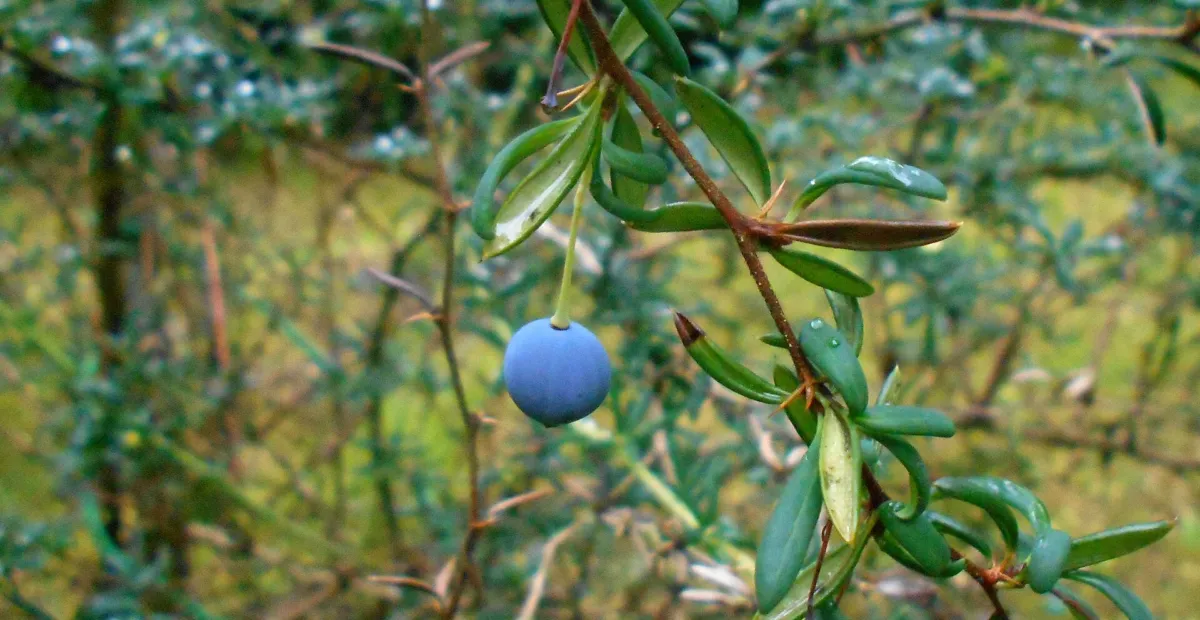
Identification features include evergreen, narrow linear-lanceolate leaves with rolled-under margins and a single spine-tipped apex. The upper leaf surface is glossy dark green, while the underside is paler. Arching branches carry sharp spines and axillary clusters of rich yellow flowers, followed by small blue-black to purple-black berries.
Flowering
The shrub produces small, rich yellow flowers in clusters along the arching branches, generally in mid- to late spring in much of the United States. Flowering is usually strongest in full sun. The flowers are described as fragrant and are followed by ornamental dark berries when pollination and seasonal conditions are favorable.
Pollination and visitors
The fragrant yellow flowers are documented as useful to bees and are consistent with insect visitation typical of flowering Berberis. A specific pollinator species is not sufficiently documented for this exact taxon in the reviewed sources, so the visitor entry remains at group level. The flowers provide seasonal nectar and pollen resources, while the berries may contribute ornamental wildlife value.
Berberis stenophylla photos
Click any photo for a larger view. Source, author and license are shown separately.
Diseases and pests
Diseases
Powdery mildew can appear in crowded or poorly ventilated conditions; thin congested growth and avoid wetting foliage late in the day. Honey fungus is an occasional concern in susceptible landscapes and is difficult to manage once established. Favor healthy stock, good drainage, and removal of severely affected material.
Pests
Aphids and berberis sawfly may attack young shoots or foliage. Inspect new growth regularly, wash off light aphid infestations with water, and hand-remove or treat sawfly larvae only when damage is significant. Avoid broad-spectrum insecticides during flowering to reduce harm to visiting insects.
Related diseases and pests
Only Plant Doctor profiles whose host data indicate this plant may be affected are shown here.
Toxicity and pollen
Horticultural guidance identifies the fruit as ornamental and not for eating, and recommends gloves or protective equipment when handling the spiny plant. The reviewed material does not establish a precise human or pet dose for this exact taxon. Keep berries and prunings away from children and animals, and seek professional advice after ingestion or significant exposure.
- Typical season
- Spring to early summer
- Pollination / pollen
- Insect-dispersed pollen; airborne exposure is likely limited compared with wind-pollinated plants.
This is an insect-pollinated flowering shrub, so its pollen is not typically released in the same abundant airborne manner as wind-pollinated trees and grasses. However, “insect-pollinated” does not prove zero allergy risk, and exact clinical allergen data for Berberis stenophylla were not located. People with strong pollen sensitivity should avoid handling flowers closely if symptoms occur.
Native habitat
Because this plant is a cultivated hybrid, it has no single native wild habitat. Its parentage combines South American barberry lineages associated with relatively cool, open shrub environments and well-drained soils. In gardens it performs best in open sun or light shade, tolerating clay, sand, chalk, and maritime exposure when drainage is adequate.
Interesting fact
Berberis stenophylla is a hybrid of B. darwinii and B. empetrifolia, combining attractive flowering with greater cold tolerance than some tender barberries. The epithet stenophylla refers to its narrow leaves. Several cultivars exist, including more compact forms, but U.S. availability is limited and variable.
Frequently asked questions (FAQ)
The most relevant questions about this plant, with short and direct answers.
🌱Quick care
What is Hedge Barberry (Berberis stenophylla)?⌄
Hedge Barberry is an evergreen or semi-evergreen, arching shrub in the barberry family, Berberidaceae. It is valued for narrow, spine-tipped leaves, yellow spring flowers, and blue-black ornamental berries.
How much sun does Berberis stenophylla need?⌄
Berberis stenophylla grows in full sun to partial shade, but full sun usually produces the best flowering and fruiting. Give it at least 6 hours of direct sunlight when possible.
How often should I water Hedge Barberry?⌄
Water Hedge Barberry moderately, allowing the soil to dry slightly between waterings. Established shrubs tolerate some drought, but they perform best with supplemental water during prolonged summer heat or drought.
Is Berberis stenophylla evergreen?⌄
Berberis stenophylla is generally evergreen or semi-evergreen in mild climates, but it may lose some or most leaves after severe winter weather. Leaf retention depends on cultivar, exposure, and local conditions.
How large does Berberis stenophylla get?⌄
A mature Hedge Barberry can reach roughly 8–10 feet tall and 12–15 feet wide, although size varies by cultivar and growing conditions. Compact selections such as ‘Corallina Compacta’ stay much smaller.
🌤️Environment and placement
What USDA hardiness zone is Berberis stenophylla?⌄
Hedge Barberry is generally hardy in USDA Zones 5–6 and warmer, depending on the site and cultivar. In colder areas, plant it in a sheltered location protected from drying winter winds.
What soil is best for Berberis stenophylla?⌄
Berberis stenophylla grows in well-drained loam, sand, clay, chalk, or mixed garden soil. Avoid waterlogged locations, because consistently wet roots can cause decline.
Can Hedge Barberry grow in clay soil?⌄
Hedge Barberry can grow in clay soil if drainage is adequate. Improve compacted clay with organic matter and plant slightly high rather than allowing the root crown to remain in standing water.
Can Berberis stenophylla grow in partial shade?⌄
Yes, Berberis stenophylla tolerates partial shade, but it may flower and fruit less heavily than a plant grown in full sun. A bright, open position is best for a dense, floriferous shrub.
Is Hedge Barberry suitable for a hedge or privacy screen?⌄
Yes, its dense, arching growth and spiny stems make Hedge Barberry useful for informal hedges, screens, and security plantings. Allow enough room for its mature width rather than planting it tightly against structures.
Is Berberis stenophylla deer resistant?⌄
Hedge Barberry is often relatively resistant to deer browsing because of its spiny stems and leaves. Deer resistance is not absolute, especially when other food is scarce.
💧Care and problems
When should I prune Berberis stenophylla?⌄
Prune Berberis stenophylla immediately after flowering to shape the shrub and remove wayward or overcrowded branches. Heavy pruning at that time can reduce the following season’s flowers and berries.
How do I prune Hedge Barberry without getting scratched?⌄
Wear thick gloves, long sleeves, and eye protection when pruning Hedge Barberry because its stems and leaf tips are spiny. Use sharp bypass pruners and remove selected older or misplaced branches rather than shearing indiscriminately.
Can I cut Berberis stenophylla back hard?⌄
Hedge Barberry generally tolerates substantial renewal pruning, but hard cuts can temporarily reduce flowering and spoil its natural arching form. Remove the oldest stems at the base over several seasons when possible.
Why is my Berberis stenophylla not flowering?⌄
Insufficient sunlight, excessive nitrogen, severe pruning, or winter damage can reduce flowering in Berberis stenophylla. Move or selectively prune nearby growth to improve light, and avoid heavy feeding that promotes leaves at the expense of flowers.
What pests affect Hedge Barberry?⌄
Berberis stenophylla may be affected by aphids and berberis sawfly larvae, which can strip foliage. Inspect leaves regularly and treat infestations early with a control method appropriate for the affected plant and local regulations.
What diseases affect Berberis stenophylla?⌄
Possible problems include powdery mildew, leaf spots, rust, and occasional honey fungus. Good air circulation, well-drained soil, and watering at the base rather than over the foliage help reduce disease pressure.
🪴Planting and repotting
When is the best time to plant Berberis stenophylla?⌄
Plant Hedge Barberry in spring or fall when temperatures are mild and the soil is workable. Water thoroughly after planting and maintain even moisture while the root system becomes established.
How far apart should I plant Hedge Barberry for a hedge?⌄
Spacing depends on the cultivar and desired density, but large Hedge Barberry plants commonly need about 5–8 feet between centers. Use closer spacing only for compact selections or a faster-closing hedge.
Can Berberis stenophylla grow in a container?⌄
Berberis stenophylla can be grown in a large, sturdy container while young or when using a compact cultivar. Choose a pot with drainage holes, use well-drained mix, and expect to water more often than plants in the ground.
How should I plant Hedge Barberry?⌄
Plant Hedge Barberry at the same depth it grew in its nursery container, in a hole about twice the root-ball width. Backfill with the excavated soil, water deeply, and keep mulch away from the stems.
✂️Propagation and pruning
How do you propagate Berberis stenophylla?⌄
Berberis stenophylla can be propagated from semi-hardwood cuttings or seed. Semi-hardwood cuttings are generally preferred for preserving the characteristics of a selected plant.
Can Hedge Barberry be grown from berries or seed?⌄
Yes, Hedge Barberry produces seed-bearing berries, but seedlings may not closely reproduce the parent plant, particularly if the plant is a hybrid or named cultivar. Germination may also require patience and appropriate pretreatment.
⚠️Toxicity and safety
Is Berberis stenophylla poisonous to people?⌄
Berberis stenophylla may be harmful if eaten, and its berries are considered ornamental rather than edible. Keep children and pets from consuming the berries or other plant parts, and contact a poison-control or veterinary professional if ingestion occurs.
Are Hedge Barberry berries edible?⌄
Do not eat Hedge Barberry berries; they are ornamental and potentially harmful. Avoid using them in cooking, preserves, or drinks unless a qualified authority has positively identified the plant and confirmed its safe use.
Is Berberis stenophylla safe for pets?⌄
Berberis stenophylla should be treated as potentially harmful to pets if eaten. Keep the plant and fallen berries away from animals, and contact a veterinarian promptly if a pet chews or swallows any part of it.
Does Hedge Barberry have thorns?⌄
Yes, Hedge Barberry has spine-tipped leaves and spiny stems that can puncture skin. Place it away from frequently used paths and wear protective clothing when planting, pruning, or moving the shrub.
🌸Flowering and special interest
When does Berberis stenophylla bloom?⌄
Hedge Barberry typically blooms in late spring, with yellow flowers arranged along the arching branches. Bloom timing can vary by climate, cultivar, and winter conditions.
What color are Hedge Barberry flowers?⌄
Hedge Barberry produces golden-yellow flowers, often in clusters along the stems. Full sun generally encourages the heaviest and most vivid display.
Does Berberis stenophylla produce berries?⌄
Yes, Hedge Barberry can produce small blue-black or purplish berries after flowering. The berries are ornamental and may attract birds, but they should not be treated as edible fruit.
Why does my Hedge Barberry have flowers but no berries?⌄
Poor pollination, insufficient sunlight, young plant age, weather during bloom, or pruning immediately after flowering can reduce berry production. Leaving the flowers undisturbed and growing the shrub in full sun may improve fruiting.
Similar plants
 Azure Monkshood (Aconitum carmichaelii) care guideAconitum carmichaelii
 Monkshood (Aconitum ‘Stainless Steel’)Aconitum 'Stainless Steel'
 Monkshood (Aconitum ‘Bressingham Spire’)Aconitum 'Bressingham Spire'
 Golden full moon maple (Acer shirasawanum ‘Aureum’)Acer shirasawanum 'Aureum'
 Globosum (Acer platanoides ‘Globosum’)Acer platanoides 'Globosum'
 Striped maple (Acer pensylvanicum) care guideAcer pensylvanicum