
 Source:
 Anemone × hybrida ‘Honorine Jobert’ short overview
Anemone × hybrida 'Honorine Jobert' is a graceful, white-flowered Japanese anemone hybrid for late-summer and fall gardens. Tall, branching stems rise above a mound of dark green, palmate foliage, carrying open, single blooms with yellow stamens. Give it consistently moist, well-drained soil and morning sun or bright partial shade, especially in hot climates. Once established, it can spread by rhizomes and create a striking naturalized colony.
Taxonomic classification
Anemone × hybrida ‘Honorine Jobert’ care guide
Light and placement
Grow in full sun where summers are moderate, or in morning sun and bright partial shade where summers are hot. A location protected from strong wind helps support the tall flower stems. Scorched, browned foliage can indicate excessive hot afternoon sun or drought; weak stems and sparse flowering usually indicate inadequate light.
Watering and humidity
Keep the root zone consistently and evenly moist, particularly while plants establish and during flowering. Water deeply when the surface begins to dry, then allow excess water to drain away. Reduce watering after dormancy, but do not let newly planted divisions dry out. Mulch helps moderate soil moisture and temperature without touching the crowns.
Soil and growing medium
Plant in fertile, humus-rich soil that holds moisture but drains freely. Loam amended with compost is suitable. Avoid winter-wet sites and heavy compacted soil, which can damage the rhizomatous root system. Slightly acidic to neutral conditions are appropriate; a thick organic mulch is generally more useful than routine pH correction.
Feeding
Incorporate compost before planting and apply a light balanced perennial fertilizer in spring as new growth begins. Avoid heavy nitrogen feeding, which can produce lush foliage and weaker stems. Do not fertilize drought-stressed, newly divided, or dormant plants; water first and resume feeding only after active growth is evident.
Growth and habit
This cultivar is slow to establish but becomes vigorous once rooted. It forms a dense mound and sends up tall, branching flower stems, then expands laterally through creeping rhizomes. Allow room for gradual colony formation, and use discreet support if stems lean in exposed sites.
Planting and repotting
Plant in spring after the soil can be worked, especially when using divisions, or in early fall where plants have time to root before freezing. Prepare a broad area with compost, set the crown at soil level, water thoroughly, and maintain even moisture through the first growing season. Space plants about 18–24 inches apart and expect gradual expansion.
For containers, transplant in spring when growth resumes, using a moisture-retentive but well-drained potting mix. Choose a heavy, stable container because mature flowering stems are tall. Repot when roots fill the container or growth declines, and keep the crown at the same depth.
Propagation and pruning
Propagation
Propagate by division in spring or by root cuttings taken in late winter. Root cuttings are made from healthy, dormant roots and kept in a suitable propagation medium until shoots develop. Division is practical but establishment can be slow, particularly from older woody crowns.
Pruning
Cut flower stems back after flowering or leave seedheads for late-season structure. Remove declining foliage after it has yellowed or after frost. In cold regions, a tidy late-winter or early-spring cleanup avoids disturbing overwintering crowns too early.
Overwintering
Plants are hardy in much of the northern United States. Apply a thin winter mulch in colder regions, especially after the ground freezes. Avoid saturated winter soil. Container-grown plants have less root insulation than those in the ground and may need a sheltered location or extra protection.
Uses
Useful in perennial borders, cottage gardens, woodland edges, naturalistic plantings, containers, and cutting gardens. Its white flowers brighten shaded or late-season borders and combine well with hostas, astilbes, ferns, and ornamental grasses. Because the plant can spread by rhizomes, place it where gradual colony formation is acceptable.
Appearance
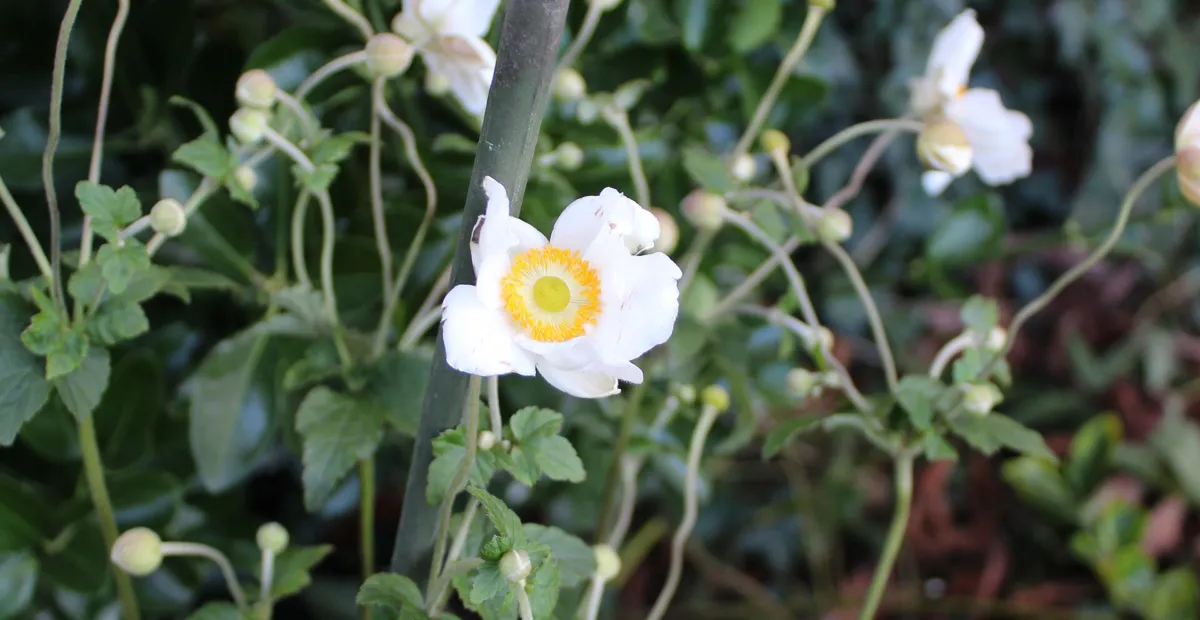
Dark green basal leaves are compound, palmate, and toothed, with a lightly textured appearance. Slender green stems branch above the foliage mound and carry open, cup-shaped blooms. The single flowers are distinctly white with a central ring of yellow stamens and a greenish center.
Flowering
Flowers are borne on long, wiry, branching stems for several weeks from late summer into fall. Each bloom has several overlapping white petal-like sepals surrounding yellow stamens and a greenish center. The cultivar is valued for extending garden color after many summer perennials decline.
Pollination and visitors
The open flowers expose yellow stamens and provide accessible pollen for generalist flower visitors. Bees, bumblebees, hoverflies, and some beetles may visit, but a specific primary pollinator species is not consistently documented for this cultivar. Visitor activity is most relevant during its late-season flowering period.
Anemone × hybrida 'Honorine Jobert' photos
Click any photo for a larger view. Source, author and license are shown separately.
Diseases and pests
Diseases
Potential problems include leaf spot, powdery mildew, downy mildew, rust, and leaf or stem smut. Improve airflow, avoid overhead watering, remove diseased foliage, and clean up debris at season’s end. Correct irrigation and spacing before resorting to labeled fungicides.
Pests
Caterpillars, slugs, nematodes, flea beetles, Japanese beetles, and black blister beetles may occur. Inspect foliage regularly, hand-pick larger pests, use barriers or appropriate slug controls, and protect beneficial insects. Plants are generally resistant to deer and rabbits.
Related diseases and pests
Only Plant Doctor profiles whose host data indicate this plant may be affected are shown here.
 DiseaseAster yellows‘Candidatus Phytoplasma asteris’
 PestStrawberry foliar nematodeAphelenchoides fragariae
 PestJapanese beetlePopillia japonica
 DiseaseMaple powdery mildewSawadaea bicornis
 PestCabbage Stem Flea BeetlePsylliodes chrysocephala
 DiseaseCucurbit Downy MildewPseudoperonospora cubensis (Berk. & M.A. Curtis) Rostovzev
 DiseaseCucurbit Powdery MildewPodosphaera xanthii (Castagne) U. Braun & Shishkoff
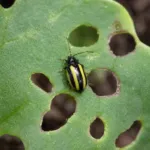 PestTurnip flea beetlePhyllotreta nemorum (Linnaeus, 1758)
Toxicity and pollen
Fresh anemone tissue contains protoanemonin-related irritants. The sap can cause contact dermatitis, while ingestion can cause intense mouth irritation and gastrointestinal symptoms. Wear gloves when dividing or cutting the plant, wash exposed skin promptly, and keep plant material away from children and pets.
- Typical season
- August–October in much of the United States
- Pollination / pollen
- Insect-released pollen from exposed stamens
This is an insect-pollinated flower with exposed stamens, but reliable evidence for substantial airborne allergy risk from this exact cultivar is limited. Pollen exposure is generally expected to be lower than for strongly wind-pollinated plants, though sensitive individuals may still react to flowers or plant contact.
Native habitat
This is a cultivated garden hybrid rather than a wild United States native. It performs best in temperate climates in fertile, moisture-retentive but well-drained soils, often at woodland edges or in partially shaded borders. Its rhizomatous habit allows established plants to form colonies in favorable garden conditions.
Interesting fact
Discovered as a sport in Verdun, France, in 1858. It is also encountered in horticulture under the older name 'Alba'. The cultivar received the 2016 Perennial Plant of the Year recognition and has a Royal Horticultural Society Award of Garden Merit.
Frequently asked questions (FAQ)
The most relevant questions about this plant, with short and direct answers.
🌱Quick care
What is Anemone × hybrida 'Honorine Jobert'?⌄
Anemone × hybrida 'Honorine Jobert' is a cold-hardy, clump-forming perennial commonly sold in the United States as a hybrid, Japanese, or windflower anemone. It produces white, yellow-centered flowers on tall stems in late summer and fall. ([missouribotanicalgarden.org](https://www.missouribotanicalgarden.org/PlantFinder/PlantFinderDetails.aspx?kempercode=b340&utm_source=openai))
How much sunlight does Anemone × hybrida 'Honorine Jobert' need?⌄
Grow it in full sun to partial shade, with partial shade especially helpful in hot, dry summer climates. Too much intense sun combined with dry soil can scorch the foliage. ([missouribotanicalgarden.org](https://www.missouribotanicalgarden.org/PlantFinder/PlantFinderDetails.aspx?kempercode=b340&utm_source=openai))
How often should I water Anemone × hybrida 'Honorine Jobert'?⌄
Water whenever the soil surface begins to dry so the soil remains evenly moist. Do not let the plant dry out during active growth, but avoid permanently wet soil, particularly in winter. ([missouribotanicalgarden.org](https://www.missouribotanicalgarden.org/PlantFinder/PlantFinderDetails.aspx?kempercode=b340&utm_source=openai))
🌤️Environment and placement
What USDA hardiness zones are suitable for Anemone × hybrida 'Honorine Jobert'?⌄
It is generally listed as hardy in USDA Zones 4 through 8. Survival and performance can still vary with winter moisture, wind exposure, snow cover, and local summer heat. ([missouribotanicalgarden.org](https://www.missouribotanicalgarden.org/PlantFinder/PlantFinderDetails.aspx?kempercode=b340&utm_source=openai))
Can Anemone × hybrida 'Honorine Jobert' grow in shade?⌄
Yes, it can grow in partial shade and is useful for brightening lightly shaded borders. It usually flowers best with several hours of direct light or bright, filtered light each day. ([missouribotanicalgarden.org](https://www.missouribotanicalgarden.org/PlantFinder/PlantFinderDetails.aspx?kempercode=b340&utm_source=openai))
Can Anemone × hybrida 'Honorine Jobert' tolerate clay soil?⌄
It can tolerate clay soil if drainage is adequate and the soil is enriched with organic matter. Avoid sites that stay waterlogged in winter, because saturated conditions can damage the roots. ([missouribotanicalgarden.org](https://www.missouribotanicalgarden.org/PlantFinder/PlantFinderDetails.aspx?kempercode=b340&utm_source=openai))
How much space does Anemone × hybrida 'Honorine Jobert' need?⌄
Allow about 18 to 24 inches of space initially, while planning for the clump to spread through creeping rhizomes. Mature plants commonly reach about 3 to 4 feet tall and may expand beyond their original planting area. ([missouribotanicalgarden.org](https://www.missouribotanicalgarden.org/PlantFinder/PlantFinderDetails.aspx?kempercode=b340&utm_source=openai))
💧Care and problems
Why is my Anemone × hybrida 'Honorine Jobert' wilting?⌄
Wilting is commonly caused by dry soil, excessive heat, transplant shock, or root problems from poor drainage. Check soil moisture first, then water deeply if needed while ensuring excess water can drain away. ([missouribotanicalgarden.org](https://www.missouribotanicalgarden.org/PlantFinder/PlantFinderDetails.aspx?kempercode=b340&utm_source=openai))
Why is Anemone × hybrida 'Honorine Jobert' not blooming?⌄
The most common causes are insufficient light, drought, recent planting, or a young plant that has not established. This cultivar can be slow to settle in, so consistent moisture and patience may be necessary. ([missouribotanicalgarden.org](https://www.missouribotanicalgarden.org/PlantFinder/PlantFinderDetails.aspx?kempercode=b340&utm_source=openai))
Does Anemone × hybrida 'Honorine Jobert' need fertilizer?⌄
It usually does not need heavy fertilizing when grown in humus-rich soil. A spring application of compost or a balanced slow-release perennial fertilizer is generally sufficient; excessive nitrogen can encourage foliage over flowers.
Does Anemone × hybrida 'Honorine Jobert' need staking?⌄
Staking is sometimes helpful because the flower stems can reach 3 to 4 feet and may lean in wind or heavy rain. Place discreet supports early in the season before the stems become difficult to manage. ([missouribotanicalgarden.org](https://www.missouribotanicalgarden.org/PlantFinder/PlantFinderDetails.aspx?kempercode=b340&utm_source=openai))
What pests attack Anemone × hybrida 'Honorine Jobert'?⌄
Slugs, caterpillars, nematodes, and Japanese beetles or blister beetles may cause problems, depending on the region. Inspect foliage regularly and use the least-toxic control appropriate for the pest identified. ([missouribotanicalgarden.org](https://www.missouribotanicalgarden.org/PlantFinder/PlantFinderDetails.aspx?kempercode=b340&utm_source=openai))
What diseases affect Anemone × hybrida 'Honorine Jobert'?⌄
Possible problems include leaf spot, powdery mildew, downy mildew, rust, and stem or leaf smut. Improve air circulation, water at the soil line, remove diseased foliage, and avoid keeping the plant in poorly drained soil. ([missouribotanicalgarden.org](https://www.missouribotanicalgarden.org/PlantFinder/PlantFinderDetails.aspx?kempercode=b340&utm_source=openai))
🪴Planting and repotting
When should I plant Anemone × hybrida 'Honorine Jobert' in the United States?⌄
Plant it in spring or fall while temperatures are moderate and soil moisture is reliable. Spring planting is often preferable in colder regions, while fall planting can work where the ground remains workable and winter drainage is good.
How do I plant Anemone × hybrida 'Honorine Jobert'?⌄
Plant it at the same depth as it was growing in its container, then water thoroughly and mulch lightly. Choose humus-rich, well-drained soil and keep the root zone evenly moist while the plant establishes. ([missouribotanicalgarden.org](https://www.missouribotanicalgarden.org/PlantFinder/PlantFinderDetails.aspx?kempercode=b340&utm_source=openai))
Can Anemone × hybrida 'Honorine Jobert' be grown in a container?⌄
It can be grown in a large container with drainage holes, but it is usually easier to maintain in the ground because the plant spreads by rhizomes and becomes tall. Use a moisture-retentive but well-drained potting mix and protect the container from severe winter exposure.
Can I move Anemone × hybrida 'Honorine Jobert' after planting?⌄
It is best not to move an established plant unless necessary because hybrid anemones dislike disturbance. If relocation is unavoidable, move it in early spring or fall and keep the divided or transplanted roots consistently moist afterward. ([rhs.org.uk](https://www.rhs.org.uk/plants/95098/anemone-x-hybrida-honorine-jobert/details?utm_source=openai))
✂️Propagation and pruning
How do I propagate Anemone × hybrida 'Honorine Jobert'?⌄
Propagate it by root cuttings or by dividing established plants. Root cuttings are commonly taken in winter, while division is generally done in early spring or fall. ([missouribotanicalgarden.org](https://www.missouribotanicalgarden.org/PlantFinder/PlantFinderDetails.aspx?kempercode=b340&utm_source=openai))
Does Anemone × hybrida 'Honorine Jobert' spread aggressively?⌄
It can spread steadily and may become overvigorous in favorable conditions, especially through creeping rhizomes. Monitor the edges of the clump and remove unwanted rhizomes or divisions before the plant overwhelms nearby perennials. ([missouribotanicalgarden.org](https://www.missouribotanicalgarden.org/PlantFinder/PlantFinderDetails.aspx?kempercode=b340&utm_source=openai))
When should I cut back Anemone × hybrida 'Honorine Jobert'?⌄
Cut back the flowered stems and declining foliage in late fall or after the plant has gone dormant. Leaving stems longer into winter is also reasonable if you want seasonal structure or habitat, provided diseased material is removed. ([rhs.org.uk](https://www.rhs.org.uk/plants/95098/anemone-x-hybrida-honorine-jobert/details?utm_source=openai))
⚠️Toxicity and safety
Is Anemone × hybrida 'Honorine Jobert' toxic?⌄
Yes, it is toxic if eaten and can irritate the skin when handled carelessly. Wear gloves when working with the plant, keep children and pets from chewing it, and contact a medical or veterinary professional if ingestion occurs.
Can Anemone × hybrida 'Honorine Jobert' cause skin irritation?⌄
Yes, contact with the plant may irritate sensitive skin, especially when the sap is exposed. Wear gloves and long sleeves when dividing, pruning, or handling damaged stems, and wash exposed skin afterward.
🌸Flowering and special interest
When does Anemone × hybrida 'Honorine Jobert' bloom?⌄
It generally blooms from August into September or October, depending on climate and growing conditions. The single white flowers appear on branching, wiry stems above the foliage. ([missouribotanicalgarden.org](https://www.missouribotanicalgarden.org/PlantFinder/PlantFinderDetails.aspx?kempercode=b340&utm_source=openai))
What do Anemone × hybrida 'Honorine Jobert' flowers look like?⌄
The flowers are pure white with overlapping petals or petal-like sepals and a prominent ring of yellow stamens. They are typically about 2 to 3 inches across and are carried on tall, graceful stems. ([missouribotanicalgarden.org](https://www.missouribotanicalgarden.org/PlantFinder/PlantFinderDetails.aspx?kempercode=b340&utm_source=openai))
Is Anemone × hybrida 'Honorine Jobert' good for fall color?⌄
Yes, it is especially valuable for extending the perennial display from late summer into fall. Its white flowers stand out well in partially shaded borders and against darker foliage. ([missouribotanicalgarden.org](https://www.missouribotanicalgarden.org/PlantFinder/PlantFinderDetails.aspx?kempercode=b340&utm_source=openai))
Is Anemone × hybrida 'Honorine Jobert' good as a cut flower?⌄
Yes, its long stems and showy white flowers make it suitable for cutting. Harvest stems when the flowers are opening and place them in clean water immediately to maximize vase life. ([missouribotanicalgarden.org](https://www.missouribotanicalgarden.org/PlantFinder/PlantFinderDetails.aspx?kempercode=b340&utm_source=openai))
Similar plants
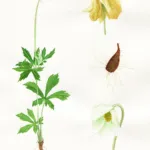 Snowdrop Anemone (Anemone sylvestris) care guideAnemone sylvestris
 Anemone alba Goaty & Pons (Anemone coronaria) care guideAnemone coronaria
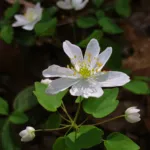 Rue anemone (Thalictrum thalictroides) care guideThalictrum thalictroides
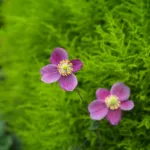 Hubei Anemone (Eriocapitella hupehensis) care guideEriocapitella hupehensis
 Anemone pamina care guideAnemone pamina
 Pasque flower (or pasqueflower) (Pulsatilla) care guidePulsatilla