
 Source:
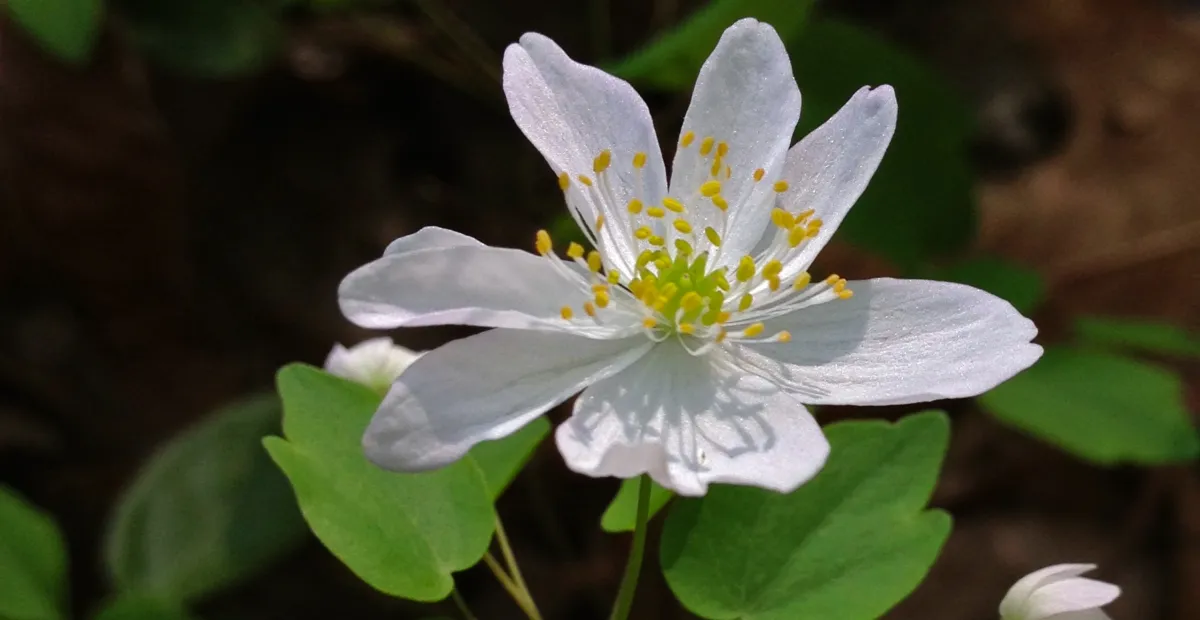
 Rue anemone (Thalictrum thalictroides) short overview
Rue anemone is a delicate native spring ephemeral from the eastern and central United States. This low-growing woodland perennial forms small clumps of finely divided, columbine-like foliage and produces white to pinkish, petal-like sepals around prominent yellow-tipped stamens. It thrives in partial to full shade, humus-rich woodland soil, and naturalized garden settings, then often retreats underground during summer dormancy.
Taxonomic classification
Rue anemone (Thalictrum thalictroides) care guide
Light and placement
Plant rue anemone beneath deciduous trees, on a north- or east-facing woodland edge, or in bright dappled shade. It can tolerate deeper shade, but flowering may be reduced. Harsh afternoon sun can scorch foliage and dry the root zone, while very dark conditions may produce sparse, weak growth. Spring sunlight before tree leaf-out is beneficial.
Watering and humidity
Water when the upper inch of soil begins to dry during active spring growth, moistening the root zone deeply rather than sprinkling lightly. Maintain more even moisture during establishment and in unusually dry spring weather. After the foliage dies back in summer, reduce irrigation; avoid keeping dormant tubers constantly wet, since excessive moisture can encourage rot.
Soil and growing medium
Use loose, organic soil with good drainage and a crumbly woodland structure. Incorporate leaf mold or mature compost into sandy or depleted ground, but avoid dense, poorly drained clay unless it is amended substantially. The species commonly performs in slightly acidic to neutral soils and should not be planted where water remains stagnant around the tubers.
Feeding
Rue anemone generally needs little fertilizer. Apply a thin layer of compost or leaf mold in late winter or very early spring as growth begins. If using a balanced granular fertilizer, use it sparingly and at label strength. Do not feed heavily after flowering or during summer dormancy; excess fertility can produce soft growth without improving long-term performance.
Growth and habit
This spring ephemeral emerges early, flowers in spring, and often disappears from view during summer as its underground tuberous system enters dormancy. It forms gradually expanding clumps rather than a persistent summer groundcover. Mark the planting location so dormant crowns are not disturbed or overwatered.
Planting and repotting
Plant dormant divisions or nursery-grown specimens in fall or early spring in a prepared woodland bed. Set the crown shallowly and firm the soil without compacting it. Water thoroughly after planting and keep the bed evenly moist through the first spring. Mulch lightly with leaf mold, leaving the crown uncovered.
Container-grown plants should be moved only when dormant or before vigorous spring growth. Use a shallow, humus-rich but sharply draining woodland mix and a pot with drainage holes. Repot infrequently, since disturbance of the small tuberous root system can delay establishment.
Propagation and pruning
Propagation
Propagate by fresh seed or division. Sow seed as soon as it ripens in containers or a prepared outdoor bed; germination can be slow and benefits from natural winter chilling. Divide young established plants in early spring while dormant or just as growth begins, handling the tubers carefully.
Pruning
No routine pruning is needed. After the foliage has yellowed and collapsed naturally, remove only untidy material if desired. In naturalized settings, leave some dead hollow stems standing nearby until they break down, because native stem-nesting bees may use them.
Overwintering
The plant is hardy outdoors in much of the United States and normally needs no special winter protection. A light layer of leaf mold can moderate temperature swings, but avoid burying the crown deeply or keeping winter soil saturated. Container plants are more exposed and should be overwintered in a sheltered, cold location rather than a warm indoor room.
Uses
Best used in native woodland gardens, shaded perennial beds, rock gardens, naturalized plantings, and under deciduous shrubs. It is valuable for early-season pollen in shady habitats and combines well with other spring ephemerals. Do not use it as an edible or medicinal plant; foliage is reported as toxic and should not be consumed.
Appearance
The plant has slender green stems and finely divided leaves resembling miniature columbine or meadow-rue foliage. Flowers are held above the foliage and have conspicuous white to pinkish petal-like sepals with numerous yellow-tipped stamens. The combination of a low stature, divided leaflets, and early woodland bloom helps distinguish it from taller meadow-rues.
Flowering
Rue anemone flowers before or as the spring foliage develops, with blooming commonly extending from March through June across its U.S. range. The showy parts are sepals rather than true petals. Individual plants may bear a single central flower or a small branched cluster, and flowering can overlap with seed development.
Pollination and visitors
The flowers provide pollen but no nectar. Native bees and hover flies are documented visitors, using the exposed stamens as a pollen resource during the early spring woodland bloom period. Retaining some dead stems nearby can also provide nesting habitat for stem-nesting native bees.
Thalictrum thalictroides photos
Click any photo for a larger view. Source, author and license are shown separately.
Diseases and pests
Diseases
Generally disease-free when grown in well-drained soil. Tubers may rot in persistently wet conditions. Improve drainage, avoid excessive irrigation during dormancy, provide adequate air movement, and remove badly affected material rather than repeatedly watering a declining crown.
Pests
Slugs and snails may damage emerging foliage, especially in cool, wet gardens. Reduce hiding places, water in the morning, hand-pick where practical, and use an appropriate labeled control if damage is significant. Deer and rabbits generally find the foliage unpalatable, but browsing pressure can vary locally.
Related diseases and pests
Only Plant Doctor profiles whose host data indicate this plant may be affected are shown here.

Toxicity and pollen
Rue anemone belongs to the buttercup family, and reputable horticultural sources report its foliage as toxic and unpalatable. Treat the plant as ornamental only: do not eat it, keep plant material away from children and pets, and wear gloves if handling causes skin irritation. Seek professional medical or veterinary advice after ingestion.
- Typical season
- March–June in much of the United States
- Pollination / pollen
- Heavy, insect-carried pollen; flowers produce pollen but no nectar
The flowers produce pollen, but it is released from insect-pollinated flowers that do not offer nectar. Available horticultural sources describe bee and hover-fly visitation rather than widespread wind dispersal. This supports a low airborne-allergy concern, not a guarantee of zero risk for sensitive individuals.
Native habitat
Rue anemone grows in open deciduous woods, rich upland forests, wooded slopes, ravines, forest edges, and other partly shaded habitats. It favors loose, organic soils that range from moist to somewhat dry, often under deciduous trees where spring light is followed by summer shade. Its dormant summer period helps it avoid the driest part of the growing season.
Interesting fact
The showy floral parts are sepals, not petals. Its species name refers to foliage resembling meadow-rue. It is a spring ephemeral that can vanish almost completely by summer. The fruit consists of small achenes rather than elongated pods. Flowers may appear before the leaves are fully expanded.
Frequently asked questions (FAQ)
The most relevant questions about this plant, with short and direct answers.
🌱Quick care
What is rue anemone?⌄
Rue anemone is a small, cold-hardy woodland perennial, scientifically known as Thalictrum thalictroides, in the buttercup family (Ranunculaceae). It is a spring ephemeral native to eastern and central North America.
Is rue anemone a perennial?⌄
Yes, rue anemone is a herbaceous perennial. Its foliage and flowers emerge in spring, then the plant commonly goes dormant during summer.
What is the accepted scientific name for rue anemone?⌄
The accepted scientific name used here is Thalictrum thalictroides. An older name still found in nursery catalogs and references is Anemonella thalictroides.
🌤️Environment and placement
How much light does rue anemone need?⌄
Rue anemone grows best in partial shade to shade. It can tolerate fairly deep shade, especially in woodland conditions, but harsh afternoon sun may stress it.
Can rue anemone grow under trees?⌄
Yes, rue anemone is well suited to planting beneath deciduous trees. It prefers the loose, humus-rich soil and seasonal light conditions typical of a woodland understory.
What soil is best for rue anemone?⌄
Use loose, well-drained, humus-rich woodland soil. It tolerates acidic soil and some dryness, but compacted or constantly waterlogged soil can cause problems.
💧Care and problems
How often should I water rue anemone?⌄
Water rue anemone moderately while it is actively growing, keeping the soil lightly moist but not saturated. Once established, it can tolerate some dry shade, particularly after it begins summer dormancy.
Does rue anemone tolerate drought?⌄
Yes, established rue anemone tolerates some drought and dry shade. Water new plantings during prolonged dry periods, especially during their first growing season.
Why is my rue anemone dying back in summer?⌄
Summer dieback is normal for rue anemone because it is a spring ephemeral. Mark its location and avoid disturbing the dormant crown after the foliage disappears.
Does rue anemone need fertilizer?⌄
Usually, rue anemone does not need regular fertilizer when grown in naturally fertile woodland soil. A light top-dressing of compost is generally more appropriate than heavy feeding.
What problems affect rue anemone?⌄
Rue anemone is generally low-maintenance and has few serious pest or disease problems. Excess moisture, poor drainage, and slugs in wet conditions are more likely concerns than major diseases.
🪴Planting and repotting
Can rue anemone grow in a container?⌄
Yes, rue anemone can be grown in a container if the pot has drainage and the mix is loose, humus-rich, and moisture-retentive without staying wet. Protect the container from extreme temperature swings in winter.
When should I plant rue anemone?⌄
Plant nursery-grown rue anemone in spring or fall when temperatures are mild. Handle the roots and crown carefully because established woodland perennials can be slow to recover from disturbance.
How deep should rue anemone be planted?⌄
Plant rue anemone at the same depth it was growing in its nursery container, with the crown at or just below the soil surface. Avoid burying the crown under a thick layer of soil or mulch.
How far apart should rue anemone plants be spaced?⌄
Space rue anemone plants about 6 to 12 inches apart, depending on the desired effect. Closer grouping creates a fuller woodland display, while wider spacing allows room for gradual clump development.
✂️Propagation and pruning
How do you propagate rue anemone?⌄
Rue anemone is most commonly propagated by seed, and division is also possible for established plants. Seed propagation is slow because the seeds have dormancy requirements.
Do rue anemone seeds need cold stratification?⌄
Yes, rue anemone seeds generally need a warm, moist period followed by a cool, moist period before they germinate. Germination can be slow and uneven, so fall sowing or careful stratification is often used.
Can rue anemone be divided?⌄
Yes, established rue anemone can be divided, preferably during early spring while growth is beginning. Divide carefully and replant the sections promptly so the delicate roots do not dry out.
Does rue anemone spread quickly?⌄
No, rue anemone is generally a slow-spreading plant rather than an aggressive ground cover. It may form small colonies over time, but it usually remains well behaved in a shade garden.
Should I cut back rue anemone after flowering?⌄
You do not need to cut back rue anemone immediately after flowering. Allow the foliage to replenish the underground storage structures, and remove only fully collapsed growth if desired.
⚠️Toxicity and safety
Is rue anemone toxic to people or pets?⌄
Yes, rue anemone is considered toxic if consumed. Keep it away from children and pets, do not ingest any plant part, and seek medical or veterinary advice if consumption occurs.
Can you eat rue anemone?⌄
No, rue anemone should not be eaten. Its plant tissues are considered toxic, so use gloves when handling it if you have sensitive skin and wash your hands afterward.
Is rue anemone the same as false rue-anemone?⌄
No, rue anemone and false rue-anemone are different plants that can look similar. Rue anemone is Thalictrum thalictroides, while false rue-anemone is commonly associated with Enemion biternatum.
🌸Flowering and special interest
When does rue anemone bloom?⌄
Rue anemone typically blooms in early to mid-spring, often from April into May in much of the United States. Flowering time varies with latitude, elevation, and seasonal temperatures.
What color are rue anemone flowers?⌄
Rue anemone flowers are usually white but may have a pale pink or pink-tinged appearance. The flowers are held above delicate, divided foliage and can vary somewhat among plants.
Is rue anemone a spring ephemeral?⌄
Yes, rue anemone is a spring ephemeral. It takes advantage of sunlight reaching the woodland floor before tree canopies fully leaf out, then retreats underground for much of summer.
Do pollinators visit rue anemone?⌄
Yes, bees visit rue anemone flowers primarily for pollen. The flowers are useful to early-season native bees, although they are not considered a major nectar source.
Similar plants
 Azure Monkshood (Aconitum carmichaelii) care guideAconitum carmichaelii
 Monkshood (Aconitum ‘Stainless Steel’)Aconitum 'Stainless Steel'
 Monkshood (Aconitum ‘Bressingham Spire’)Aconitum 'Bressingham Spire'
 Golden full moon maple (Acer shirasawanum ‘Aureum’)Acer shirasawanum 'Aureum'
 Globosum (Acer platanoides ‘Globosum’)Acer platanoides 'Globosum'
 Striped maple (Acer pensylvanicum) care guideAcer pensylvanicum