
 Source:
 Anemone pamina short overview
Anemone pamina is a compact, late-season herbaceous perennial cultivar grown for its semi-double, deep pink flowers carried on slender branching stems above dark green, deeply divided foliage. It performs in full sun or partial shade and prefers soil that stays evenly moist without becoming waterlogged. Once established, it can spread by suckers, making it useful for borders, woodland edges, and naturalistic plantings. Sap and plant tissues may irritate skin or cause stomach upset if eaten.
Taxonomic classification
Anemone pamina care guide
Light and placement
Grow in full sun to partial shade. In hot US climates, morning sun with afternoon shade helps prevent wilting; in cooler regions, more sun encourages heavier flowering. Too little light produces fewer flowers and weaker stems, while excessive sun combined with dry soil causes leaf scorch and midday collapse.
Watering and humidity
Water deeply when the upper inch of soil begins to dry, keeping the root zone evenly moist during establishment and flowering. Reduce frequency in cool weather but do not allow prolonged drought. Improve drainage rather than watering more often if soil remains saturated; high humidity is not required.
Soil and growing medium
Use fertile, humus-rich loam or another moisture-retentive soil that still drains freely. Sandy or clay soils can work if amended with organic matter and drainage is improved. A slightly acidic to slightly alkaline reaction is tolerated; avoid sites that remain saturated through winter.
Feeding
Apply a thin layer of compost or a balanced slow-release perennial fertilizer in spring as growth resumes. Avoid heavy nitrogen feeding, which can produce lush foliage with weaker stems. Do not fertilize drought-stressed, newly divided, or waterlogged plants until they recover.
Growth and habit
The plant forms a compact upright clump and gradually expands through suckers. It may establish slowly after planting, then occupy more ground than expected if conditions are favorable. Mark the planting area and divide or remove offsets when the colony becomes crowded.
Planting and repotting
Plant nursery divisions or container plants in spring or early fall. Set them at the same depth as in the pot, firm the soil gently, water thoroughly, and mulch lightly. Allow about 18–24 inches between plants for a colony-forming clump while retaining good air circulation.
Container-grown plants can be moved in early spring before vigorous growth begins. Use a stable, well-drained container mix with added compost, and disturb the roots as little as practical because established Japanese anemones dislike repeated moving.
Propagation and pruning
Propagation
Division is the most practical method, preferably in early spring or early fall. Root cuttings are also documented for Japanese anemones, but they require careful timing and consistent moisture. Seed is unreliable for maintaining cultivar traits because named hybrids may not come true.
Pruning
Cut flower stems and declining foliage back in late fall after flowering has finished. Remove spent stems earlier if seed formation or self-spread is unwanted. Avoid cutting healthy foliage prematurely in late summer because it supports root recovery and winter preparation.
Overwintering
Leave a light mulch over the root zone in cold areas after the ground begins to freeze, but keep mulch away from the crown. Avoid winter-wet sites. Established plants are generally hardy in Zones 5–8; colder-zone reports exist but are less consistent.
Uses
Use in perennial borders, cottage gardens, woodland margins, informal plantings, and cut-flower arrangements. Its late-season flowers add color when many summer plants decline. It is ornamental only; do not use it as a food or medicinal plant.
Appearance
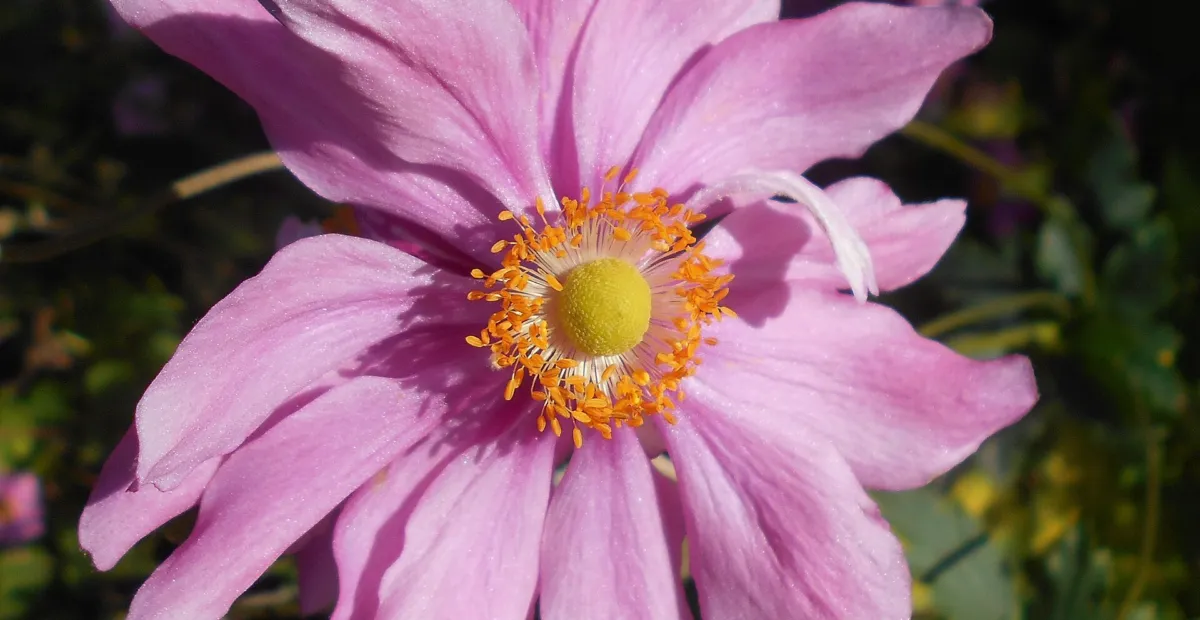
Leaves are dark green, deeply divided, and arranged in a dense basal mound. Upright, relatively slender stems rise above the foliage and branch near the top. The cultivar is recognized by its compact habit and deep pink semi-double flowers with prominent yellow stamens.
Flowering
Flowers are semi-double, deep carmine-pink, and borne in loose, branched clusters on upright stems. Blooming is late-season, generally beginning in late summer and continuing into fall. The numerous narrow tepals surround a central area with conspicuous yellow stamens.
Pollination and visitors
The open central floral structures and pollen-bearing stamens are documented as attractive to bumblebees and other flower visitors. Evidence for a particular pollinator species is insufficient here, so no species-level Latin name is supplied.
Anemone pamina photos
Click any photo for a larger view. Source, author and license are shown separately.
Diseases and pests
Diseases
Powdery mildew may occur, especially where foliage is crowded or air circulation is poor. Water at the soil line, avoid overhead irrigation, remove heavily affected leaves, and divide congested clumps when necessary. Good drainage also helps prevent root problems.
Pests
Leaf and bud eelworms are reported potential pests. Inspect new growth for distortion, remove badly affected plants, avoid propagating from suspect material, and maintain clean tools. Slugs and snails may also nibble young foliage in damp gardens.
Related diseases and pests
Only Plant Doctor profiles whose host data indicate this plant may be affected are shown here.

Toxicity and pollen
RHS describes the plant as potentially harmful: ingestion may cause mild stomach upset and contact may irritate skin. Handle with gloves if sensitive, keep plant material away from children and pets, and seek medical or veterinary advice after significant ingestion.
- Typical season
- Late summer to fall
- Pollination / pollen
- Primarily insect-carried pollen
This is an insect-pollinated flowering perennial, so its pollen is not typically released as a major wind-borne cloud. However, airborne exposure cannot be assumed to be zero: handling flowers or working closely around blooming plants may cause localized exposure, especially for highly sensitive people.
Native habitat
The cultivar derives from Japanese anemone horticultural lines associated with moist woodland edges, streamside settings, and open hillsides in China and Japan. In cultivation it prefers fertile, moisture-retentive but well-drained soils and dappled or partial shade, though it flowers more heavily with adequate sun.
Interesting fact
‘Pamina’ was introduced by German hybridizer Hans Simon in the 1980s. The cultivar is compact compared with many Japanese anemones but still spreads by suckers. Its flowers can remain useful late in the garden season when many summer perennials are fading.
Frequently asked questions (FAQ)
The most relevant questions about this plant, with short and direct answers.
🌱Quick care
What is Anemone pamina?⌄
Anemone pamina is a hardy, late-season perennial anemone grown for its deep pink, semi-double flowers. It is commonly treated as a Japanese or hybrid anemone in garden cultivation.
How much sunlight does Anemone pamina need?⌄
Grow Anemone pamina in full sun to partial shade. Morning sun with light afternoon shade is especially useful in hot climates, while too much shade can reduce flowering.
How often should I water Anemone pamina?⌄
Water Anemone pamina whenever the soil surface begins to dry, keeping the soil evenly moist but not waterlogged. Consistent moisture is most important during establishment, hot weather and flowering.
Is Anemone pamina hardy outdoors?⌄
Yes, Anemone pamina is hardy outdoors when planted in suitable conditions. In colder areas, a mulch layer can help protect the crown and roots during winter.
🌤️Environment and placement
What is the best soil for Anemone pamina?⌄
Plant Anemone pamina in fertile, humus-rich loam that retains moisture while draining freely. Improve poor soil with compost or other well-rotted organic matter, but avoid sites that stay soggy.
Can Anemone pamina grow in partial shade?⌄
Yes, Anemone pamina grows well in partial shade, especially where it receives several hours of bright light. Flowering may be weaker in dense shade.
Can Anemone pamina tolerate afternoon sun?⌄
Anemone pamina can tolerate afternoon sun if the soil remains consistently moist. In hot or dry regions, protection from intense afternoon heat can reduce stress and leaf scorch.
Is Anemone pamina suitable for containers?⌄
Anemone pamina can be grown in a large container with fertile, moisture-retentive, well-drained potting mix. Choose a pot with drainage holes and monitor moisture more often than for plants in the ground.
How much space does Anemone pamina need?⌄
Give Anemone pamina enough room for the clump to expand gradually through underground rhizomes. A spacing of about 18 to 24 inches is a practical starting point, depending on the plant’s mature size.
💧Care and problems
Does Anemone pamina need fertilizer?⌄
Anemone pamina usually needs only modest feeding when grown in fertile soil. Apply compost in spring or a balanced slow-release perennial fertilizer according to the label if growth is weak.
Why is my Anemone pamina not flowering?⌄
Poor flowering is most often linked to insufficient light, drought stress, young plants or excessive nitrogen. Move overcrowded plants toward brighter light and keep the soil evenly moist during the growing season.
Why are the leaves of Anemone pamina turning yellow?⌄
Yellow leaves can result from overwatering, poor drainage, drought or normal seasonal dieback. Check the soil before watering and make sure excess water can drain away freely.
What pests and diseases affect Anemone pamina?⌄
Anemone pamina may be affected by slugs, snails, powdery mildew and other fungal leaf problems, particularly in damp, crowded conditions. Improve air circulation, water at the soil line and remove badly damaged foliage.
Should I mulch Anemone pamina?⌄
Yes, apply a thin layer of organic mulch around Anemone pamina to conserve moisture and moderate soil temperatures. Keep mulch away from the crown to reduce the risk of rot.
🪴Planting and repotting
When should I plant Anemone pamina in the United States?⌄
Plant Anemone pamina in spring or fall, with fall planting best completed several weeks before the ground freezes. Container-grown plants can generally be planted during the growing season if watered carefully.
How do I plant Anemone pamina?⌄
Plant Anemone pamina at the same depth as it was growing in its nursery container, then water thoroughly. Firm the soil gently around the roots and add mulch without covering the crown.
Can I transplant Anemone pamina?⌄
Yes, Anemone pamina can be transplanted, preferably in early spring or fall when temperatures are mild. Lift as much of the root system as possible and keep the plant well watered until it reestablishes.
Can Anemone pamina be grown from bare roots or rhizomes?⌄
Anemone pamina is most reliably established from a healthy container plant or dormant division rather than from dried spring-flowering corms. If dormant roots or rhizomes are supplied, plant them promptly in well-drained, moisture-retentive soil.
✂️Propagation and pruning
How do I propagate Anemone pamina?⌄
Propagate Anemone pamina by dividing established clumps or by taking suitable root cuttings during dormancy. Seed is less reliable for preserving the parent plant’s characteristics, particularly when the plant is a named hybrid.
When should I divide Anemone pamina?⌄
Divide Anemone pamina in early spring or fall, avoiding hot, dry weather and the main flowering period. Replant divisions immediately and keep them evenly moist while new roots form.
Does Anemone pamina spread?⌄
Anemone pamina can slowly spread by underground rhizomes and may form a wider clump over time. It is usually manageable, but install a root barrier or divide the plant if it moves beyond its allotted space.
Should I cut back Anemone pamina after flowering?⌄
Cut back Anemone pamina after flowering and once the foliage begins to decline naturally. Removing spent stems earlier improves appearance, but leave healthy leaves in place until they have finished supplying energy to the roots.
⚠️Toxicity and safety
Is Anemone pamina poisonous to people or pets?⌄
Anemone pamina has low toxicity but may be harmful if eaten and irritating on contact. Wear gloves when handling it, keep plant material away from children and pets, and seek medical or veterinary advice if it is ingested.
Can Anemone pamina cause skin irritation?⌄
Yes, contact with Anemone pamina may irritate sensitive skin. Wear gloves and long sleeves when planting, dividing or cutting back the plant, and wash exposed skin afterward.
🌸Flowering and special interest
When does Anemone pamina bloom?⌄
Anemone pamina typically blooms from late summer into fall. The exact timing depends on local climate, light, plant age and growing conditions.
What color are Anemone pamina flowers?⌄
Anemone pamina produces deep rose-pink to bright pink flowers with contrasting yellow stamens. The blooms are semi-double and are held above the foliage on slender stems.
How long do Anemone pamina flowers last?⌄
Anemone pamina can provide several weeks of flowers in late summer and fall when soil moisture is steady. Removing faded blooms can keep the display tidy and may encourage additional flowering.
Is Anemone pamina good for pollinators?⌄
Anemone pamina can provide a useful late-season nectar and pollen source, particularly because it flowers after many summer perennials have faded. Its open flower centers allow insects to reach the stamens.
Similar plants
 Azure Monkshood (Aconitum carmichaelii) care guideAconitum carmichaelii
 Monkshood (Aconitum ‘Stainless Steel’)Aconitum 'Stainless Steel'
 Monkshood (Aconitum ‘Bressingham Spire’)Aconitum 'Bressingham Spire'
 Golden full moon maple (Acer shirasawanum ‘Aureum’)Acer shirasawanum 'Aureum'
 Globosum (Acer platanoides ‘Globosum’)Acer platanoides 'Globosum'
 Striped maple (Acer pensylvanicum) care guideAcer pensylvanicum