
 Source:
 Hubei Anemone (Eriocapitella hupehensis) short overview
Hubei Anemone is a herbaceous perennial in the buttercup family, valued for its graceful late-season display of pink, mauve, or white cup-shaped flowers. It forms a slowly establishing clump of deeply divided green leaves, then sends up slender, branching stems that sway in the breeze. Give it fertile, consistently moist but well-drained soil and full sun to partial shade. Plants can spread gradually by suckering roots and may need room to naturalize.
Taxonomic classification
Hubei Anemone (Eriocapitella hupehensis) care guide
Light and placement
Grow in full sun where summers are not excessively hot, or in partial shade with bright morning or filtered afternoon light. A site receiving roughly 4–6 or more hours of sun usually supports sturdy flowering. Too much shade can produce weak, floppy stems; hot, dry exposure may scorch the foliage. In warm regions, afternoon shade helps retain leaf quality.
Watering and humidity
Keep the root zone evenly and consistently moist while the plant establishes and during active growth, but do not leave it in stagnant water. Water deeply when the surface begins to dry, especially during summer heat. Mulch helps moderate soil temperature and moisture. Reduce watering after the foliage dies back, while still preventing prolonged winter saturation.
Soil and growing medium
Use fertile loam or clay improved with compost or other organic matter. The plant tolerates a broad reported pH range, from acidic through alkaline, but performs best in soil with stable moisture, good aeration, and reliable drainage. Heavy ground should be amended or planted slightly high so rhizome-like roots do not remain waterlogged in winter.
Feeding
In spring, top-dress the planting with a thin layer of finished compost or a balanced slow-release perennial fertilizer. Avoid heavy nitrogen applications, which can encourage soft foliage and weak flower stems. Do not feed dry, heat-stressed, or dormant plants; water first when soil moisture is low.
Growth and habit
Growth is medium and initially can be slow to establish. Over time, fibrous suckering roots allow the plant to form spreading colonies. The habit is clumping to spreading, so allow space for gradual expansion and use neighboring plants or discreet supports if stems lean in deep shade or exposed wind.
Planting and repotting
Plant after the soil can be worked in spring, or in early fall far enough ahead of hard frost for roots to settle. Set the crown at soil level and water thoroughly. Space plants about 12–18 inches apart for a continuous group, while leaving additional room if gradual colony formation is welcome. Mulch lightly without covering the crown.
Container plants should be shifted into a slightly larger pot in spring when roots have filled the container. Use a fertile, moisture-retentive but freely draining perennial mix, keep the crown at soil level, and water thoroughly after transplanting. Divide congested plants rather than repeatedly upsizing a very large container.
Propagation and pruning
Propagation
Division is the most practical garden method and is best done in spring as new growth begins. Root cuttings are also reported. Work carefully because handling the foliage and stems may irritate skin; keep divisions evenly moist while they establish.
Pruning
Cut back old flowering stems after bloom or in late winter before new growth begins. Remove damaged or diseased foliage promptly. Avoid aggressive cutting during the active growing season, since the plant needs its leaves to replenish underground reserves.
Overwintering
Plants are hardy in much of USDA Zones 4–8, but winter performance depends on drainage, exposure, and establishment. Apply a light mulch after the ground cools in cold regions, keeping it away from the crown. Avoid saturated winter soil. Leave or remove dead stems according to preference, then cut back before spring growth.
Uses
Useful in perennial borders, cottage gardens, Asian-inspired plantings, walkways, and massed late-season displays. Tall stems provide vertical interest among lower plants, and the flowers can be used as seasonal cut flowers. Because the plant can irritate skin and is not established here as an edible garden crop, wear gloves when handling and do not consume it.
Appearance
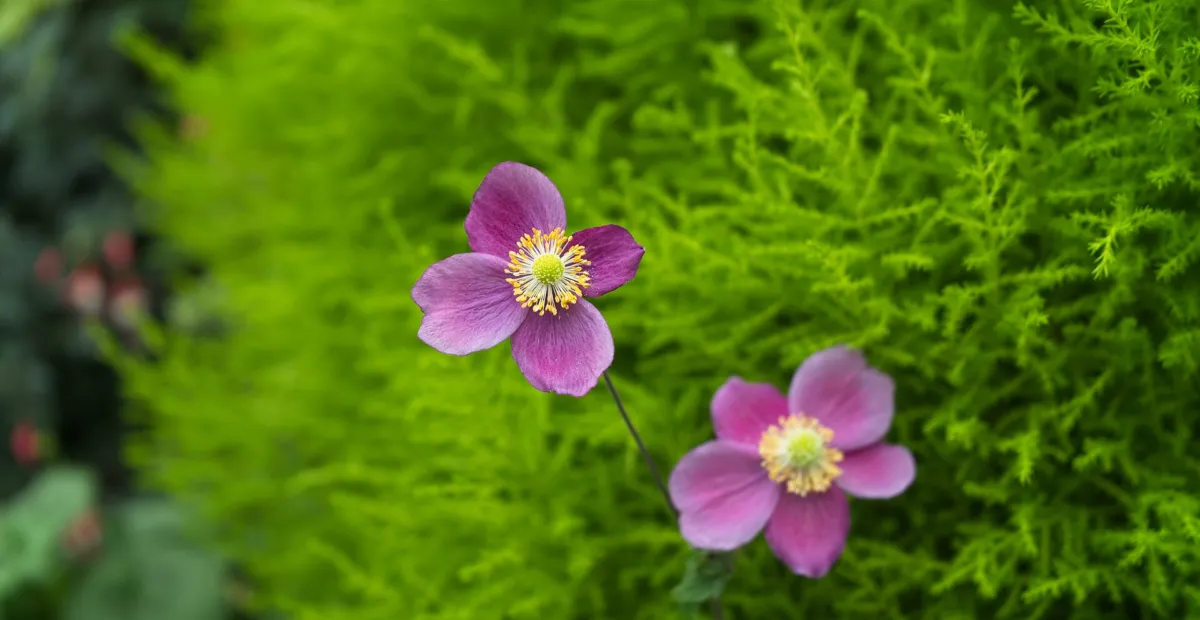
The basal clump has dark green, three-parted leaves on long petioles, with large toothed margins and softly hairy undersides. Late-summer stems are upright, slender, wiry, branching, and graceful. The simple blooms have rounded tepals, a green button-like center, and a ring of yellow stamens.
Flowering
Flowers are borne singly on long, branching stems in cymose clusters. The showy structures are tepals rather than true petals, with a contrasting green center and yellow stamens. In United States gardens, flowering is generally a late-summer to fall event, with blooms commonly extending toward first frost.
Pollination and visitors
The open flower structure and exposed yellow stamens are compatible with insect visitation, but a reliable, species-specific documentation record for the principal pollinators of Eriocapitella hupehensis was not located. Do not treat general anemone or cultivar observations as confirmed records for this exact taxon.
Eriocapitella hupehensis photos
Click any photo for a larger view. Source, author and license are shown separately.
Diseases and pests
Diseases
Leaf spot, downy mildew, powdery mildew, and rust may occur, especially with crowded growth or poor air circulation. Water at the soil surface, space plants adequately, remove affected leaves, and clear debris in fall. Improve drainage and avoid overhead irrigation during extended wet weather.
Pests
Caterpillars, flea beetles, weevils, slugs, and foliar nematodes may damage leaves. Inspect foliage regularly, hand-pick larger pests, use barriers for slugs, and reserve labeled treatments for persistent damage. Remove badly affected leaves and avoid unnecessary broad-spectrum insecticides.
Toxicity and pollen
The plant contains protoanemonin, and reported exposure concerns include mild stomach upset if ingested and skin irritation or contact dermatitis from handling, especially with leaves and stems. Wear gloves when planting, cutting back, or dividing, wash exposed skin, and keep plant material away from children and pets.
- Typical season
- Late summer to fall flowering period
- Pollination / pollen
- Insect-dispersed pollen; airborne allergy relevance is not well documented for this exact species.
This is an insect-pollinated flowering perennial, but dependable measurements or clinical allergy evidence specific to Eriocapitella hupehensis were not located. Its pollen is not documented here as a major airborne allergen. People with strong plant-contact sensitivities should still avoid handling flowers and foliage with bare skin.
Native habitat
The species is native across a broad Asian range from Nepal to Taiwan and is associated with temperate environments. In cultivation it prefers fertile, moisture-retentive yet well-drained soil and can tolerate full sun to partial shade. Its gradual root-based spread reflects a perennial habit suited to woodland edges, borders, and naturalistic plantings.
Interesting fact
The species was formerly widely known as Anemone hupehensis. The epithet hupehensis refers to Hubei, China. Its showy floral parts are tepals, not petals. Long stems can sway noticeably in breezy sites, contributing to the common windflower association. Established plants may form colonies through suckering roots.
Frequently asked questions (FAQ)
The most relevant questions about this plant, with short and direct answers.
🌱Quick care
What is Hubei Anemone?⌄
Hubei Anemone is the accepted common name for the herbaceous perennial Eriocapitella hupehensis in the buttercup family, Ranunculaceae. It was formerly classified as Anemone hupehensis and is part of the fall-blooming anemone group.
Is Hubei Anemone easy to grow?⌄
Yes, Hubei Anemone is generally low-maintenance once established. It may spread gradually by suckering roots and can be slow to settle in after planting or transplanting.
🌤️Environment and placement
How much sun does Hubei Anemone need?⌄
Grow Hubei Anemone in full sun to partial shade, with at least several hours of direct light for the best flowering. In deep shade, stems may become weak or floppy and blooms may be reduced.
Can Hubei Anemone grow in shade?⌄
Hubei Anemone can grow in partial shade, especially where soil remains evenly moist. Avoid deep shade because it can reduce flowering and encourage taller, weaker stems.
What is the best soil for Hubei Anemone?⌄
Use fertile loam or clay improved with organic matter, keeping the soil moisture-retentive but well drained. The plant tolerates a broad pH range, provided the root zone does not remain waterlogged.
Is Hubei Anemone cold hardy?⌄
Yes, Hubei Anemone is a cold-hardy perennial when planted in well-drained soil and protected from severe winter exposure. Apply a light mulch in colder USDA climates, but avoid trapping excessive moisture around the crown.
💧Care and problems
How often should I water Hubei Anemone?⌄
Water Hubei Anemone regularly so the soil stays consistently moist, particularly during hot or dry weather and while plants are establishing. Do not let the roots sit in stagnant or poorly drained water.
Why are my Hubei Anemone leaves turning brown?⌄
Brown leaf edges are commonly caused by hot, dry conditions or inconsistent watering. Mulch the root zone and water deeply when the soil begins to dry, while correcting drainage problems if the soil stays saturated.
Why is my Hubei Anemone flopping over?⌄
Hubei Anemone may flop when grown in too much shade, exposed to wind, or grown in overly rich conditions that produce soft growth. Move or support plants as needed, and provide brighter light and evenly moist—not soggy—soil.
What pests affect Hubei Anemone?⌄
Hubei Anemone may be bothered by slugs, caterpillars, flea beetles, weevils, and leaf or bud nematodes. Inspect foliage regularly and remove damaged leaves while improving airflow and garden sanitation.
What diseases affect Hubei Anemone?⌄
Possible problems include leaf spot, downy mildew, powdery mildew, rust, and anemone smut. Reduce overhead watering, avoid overcrowding, remove diseased foliage, and provide good air circulation.
🪴Planting and repotting
When should I plant Hubei Anemone?⌄
Plant Hubei Anemone in spring or early fall when the soil is workable and moisture can be maintained. Spring planting is especially useful in colder USDA climates because it gives roots more time to establish before winter.
How far apart should I plant Hubei Anemone?⌄
Space Hubei Anemone about 18 to 24 inches apart to allow for its clumping and spreading habit. Give extra room if you want the colony to naturalize without crowding neighboring perennials.
Can Hubei Anemone grow in clay soil?⌄
Yes, Hubei Anemone can grow in clay soil if it is amended with organic matter and drains adequately. Avoid planting in compacted clay that remains saturated through winter.
Can Hubei Anemone be grown in containers?⌄
Hubei Anemone can be grown in a large container with drainage holes, fertile potting mix, and consistent moisture. Container plants need more frequent watering and greater winter protection than plants grown in the ground.
✂️Propagation and pruning
Does Hubei Anemone spread aggressively?⌄
Hubei Anemone can spread over time through fibrous, suckering roots and may form a colony. Its spread is usually manageable by removing unwanted shoots or dividing crowded clumps.
How do you propagate Hubei Anemone?⌄
Propagate Hubei Anemone primarily by division or root cuttings. Division is usually performed in early spring or fall, although newly divided plants may take time to reestablish.
Can Hubei Anemone be grown from seed?⌄
Hubei Anemone can produce seed, but division and root cuttings are the more practical propagation methods for maintaining desirable plants. Seed-grown plants may vary and can take longer to reach flowering size.
When should I divide Hubei Anemone?⌄
Divide Hubei Anemone in early spring or fall when temperatures are moderate and soil moisture is reliable. Because the plant can be slow to recover from disturbance, divide only when clumps are crowded or new plants are needed.
When should I cut back Hubei Anemone?⌄
Cut back old Hubei Anemone stems after flowering has finished, usually in late fall or after the foliage declines. In colder areas, leaving some stems until late winter can provide modest winter habitat and help mark the plant’s location.
⚠️Toxicity and safety
Is Hubei Anemone poisonous?⌄
Yes, Hubei Anemone has low-severity poisonous characteristics and may cause stomach upset if ingested. Its sap can also irritate skin, so wear gloves when pruning, dividing, or handling damaged plant tissue.
Is Hubei Anemone toxic to dogs and cats?⌄
Hubei Anemone should be treated as unsafe for dogs, cats, horses, and people if eaten. Keep pets away from the plant and contact a veterinarian or poison-control resource if ingestion occurs.
Can Hubei Anemone cause a skin reaction?⌄
Yes, handling Hubei Anemone may irritate the skin, especially when plant tissue is crushed or cut. Wear gloves and wash exposed skin after gardening with the plant.
🌸Flowering and special interest
When does Hubei Anemone bloom?⌄
Hubei Anemone typically blooms from late summer into fall and may continue toward the first frost. Exact timing depends on the local climate, light exposure, and the plant’s establishment.
What color are Hubei Anemone flowers?⌄
Hubei Anemone flowers are commonly pinkish-white to pale rose or mauve, with yellow stamens surrounding a rounded green center. Flower form and color can vary among horticultural selections and closely related plants sold under similar names.
How tall does Hubei Anemone grow?⌄
Hubei Anemone commonly reaches about 1.5 to 2.5 feet tall, with flower stems that rise above the foliage. Height can vary with light, soil fertility, moisture, and the particular plant source.
Why is my Hubei Anemone not blooming?⌄
Insufficient light, dry soil, transplant stress, or a young plant can all delay flowering. Provide full sun to partial shade, maintain consistent moisture, and allow newly planted divisions time to establish.
Similar plants
 Azure Monkshood (Aconitum carmichaelii) care guideAconitum carmichaelii
 Monkshood (Aconitum ‘Stainless Steel’)Aconitum 'Stainless Steel'
 Monkshood (Aconitum ‘Bressingham Spire’)Aconitum 'Bressingham Spire'
 Golden full moon maple (Acer shirasawanum ‘Aureum’)Acer shirasawanum 'Aureum'
 Globosum (Acer platanoides ‘Globosum’)Acer platanoides 'Globosum'
 Striped maple (Acer pensylvanicum) care guideAcer pensylvanicum