
 Source:
 Admiration (Berberis thunbergii ‘Admiration’) short overview
Berberis thunbergii 'Admiration' is a compact deciduous barberry prized for vivid red-orange foliage edged in yellow. This thorny dwarf shrub suits sunny borders, containers, rock gardens and low-maintenance landscapes, with excellent cold tolerance and good performance in well-drained soil. Flowering and fruiting may be sparse or absent in this cultivar, so its primary value is colorful foliage and dense form.
Taxonomic classification
Admiration (Berberis thunbergii ‘Admiration’) care guide
Light and placement
Grow in full sun for the strongest red-orange color and clearest yellow margins; morning or afternoon sun is preferable to deep shade. Light partial shade is tolerated, especially in hot climates, but foliage may become greener and less vivid. Sparse growth or dull coloration suggests insufficient light, while bleached or scorched leaf margins may indicate excessive reflected heat or drought.
Watering and humidity
Water deeply when the upper few inches of soil become dry, then allow excess water to drain. Keep newly planted specimens evenly moist during their first growing season; established plants tolerate short dry periods. Water less often in cool or rainy weather and more often in containers or during prolonged summer heat. Avoid constant saturation.
Soil and growing medium
Use average, well-drained garden soil. Sandy, loamy or clay soils are acceptable if drainage is reliable; avoid persistently waterlogged ground. The species tolerates a broad pH range from acidic to alkaline, with slightly acidic to neutral soil generally convenient for landscape growth.
Feeding
Feed in early spring with a balanced slow-release shrub fertilizer at the label rate, or top-dress with a modest layer of compost. Avoid heavy nitrogen applications, which can produce weak, overly lush growth and reduce the cultivar's compact appearance. Do not fertilize drought-stressed, newly transplanted or dormant plants.
Growth and habit
This cultivar forms a dense, compact, broad-upright shrub with naturally tidy branching. It generally maintains its rounded outline without frequent shearing. The stems are thorny, so maintenance and placement should prioritize safe access; avoid crowding neighboring plants if a clear foliage display is desired.
Planting and repotting
Plant in spring or fall, setting the root ball level with the surrounding soil. Water deeply after planting and maintain even moisture during the first growing season. Allow roughly 18–24 inches between plants for a compact mass, or more space where a looser outline is desired.
Repot container plants in early spring when roots fill the container. Move into a pot only one size larger, refresh the drainage-friendly mix, and avoid burying the crown deeper than it was previously planted.
Propagation and pruning
Propagation
Propagate true to type with semi-hardwood or hardwood cuttings, using clean material from healthy plants. Take semi-hardwood cuttings in summer or hardwood cuttings after dormancy. Seed does not reliably preserve the cultivar's foliage characteristics.
Pruning
Prune in late winter or early spring while the plant is dormant. Remove dead, damaged or crossing stems and selectively thin older woody growth to preserve density and airflow. Light shaping is usually enough; wear thick gloves and eye protection because of the sharp spines.
Overwintering
Plants in Zones 5 and colder benefit from a sheltered site and a 2–3 inch mulch layer kept away from the stems. Container specimens are more vulnerable than plants in the ground; move them to a protected location or insulate the pot before severe freezes. Do not overwinter indoors unless necessary, because the shrub requires a dormant period.
Uses
Use as a foliage accent in mixed borders, low foundation plantings, rock gardens, edging and containers. Its compact form and vivid leaf margins provide season-long color. Spines can discourage passage, but they also make it unsuitable beside paths, play areas or places where children and pets frequently brush against plants. Check local invasive-plant rules before planting Japanese barberry.
Appearance
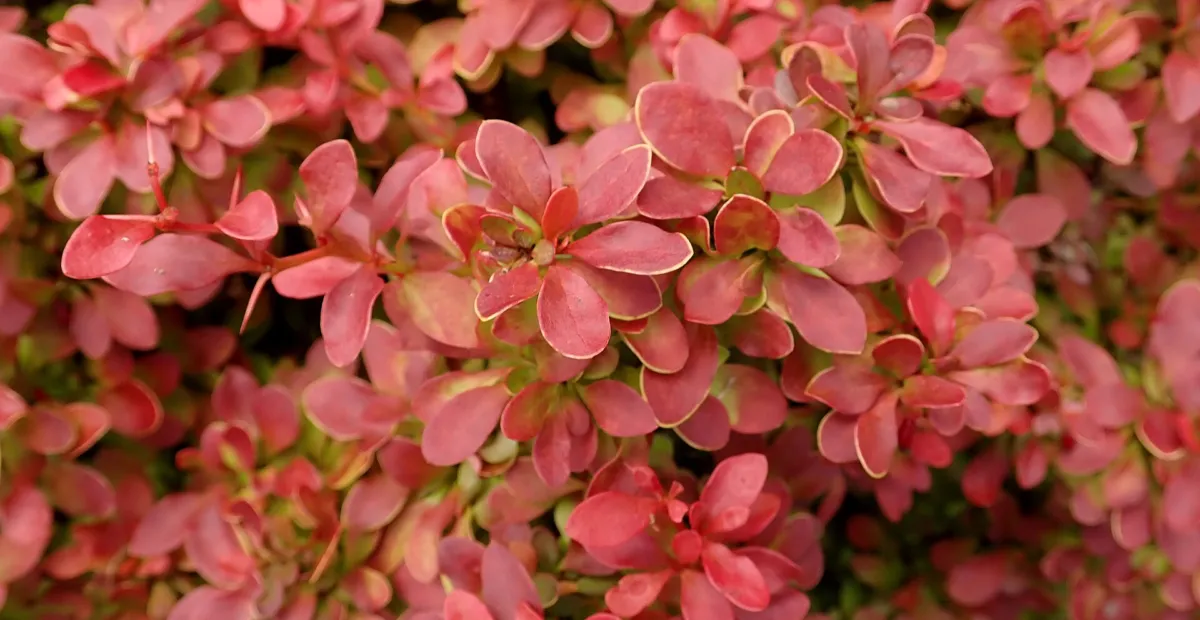
The plant is recognized by small rounded leaves carried in clusters along thorny branches. New and mature foliage shows a saturated red-orange or coral-red center with a narrow yellow margin, creating a strong two-tone effect. Branches are fine and densely arranged, and the shrub is deciduous rather than evergreen.
Flowering
This is an angiosperm capable of producing the small yellow flowers typical of Berberis thunbergii in late spring, but the original cultivar description reported no flowers observed on 'Admiration'. Flowering should therefore be treated as variable, sparse or potentially absent rather than guaranteed.
Pollination and visitors
Species-level research documents visits by medium-sized bees, including honey bees and bumblebees, to Berberis thunbergii flowers. Because 'Admiration' may flower sparsely or not at all, its actual pollinator value is likely limited and site-dependent.
Berberis thunbergii 'Admiration' photos
Click any photo for a larger view. Source, author and license are shown separately.
Diseases and pests
Diseases
Prevent problems by avoiding saturated soil and improving air circulation. Watch for leaf spots, rusts and occasional branch dieback; remove affected tissue, sanitize tools and water at the soil line. Severe or recurring disease may require local extension-based diagnosis before treatment.
Pests
Inspect for aphids, scale, spider mites and occasional caterpillars. Encourage beneficial insects, prune out badly infested shoots and use horticultural soap or oil only according to the product label. Avoid unnecessary broad-spectrum insecticides, especially during flowering.
Related diseases and pests
Only Plant Doctor profiles whose host data indicate this plant may be affected are shown here.
Toxicity and pollen
Berberis contains berberine and related alkaloids, especially in roots, bark and other tissues. The exact toxicity profile of this cultivar is not well characterized. Do not use it medicinally or ingest plant parts without qualified medical guidance; keep pruned material away from children and pets and seek poison-control or veterinary advice after ingestion.
- Typical season
- May to June when flowering occurs
- Pollination / pollen
- Insect-dispersed, sticky pollen
The plant produces pollen only when it flowers. Berberis thunbergii pollen is released through insect-triggered stamens rather than by a strongly wind-dispersed system, so widespread airborne exposure is expected to be low. Sensitive individuals can still react to direct flower or plant exposure, and this should not be treated as a zero-allergy plant.
Native habitat
The species is native to Japan and occurs in temperate woodland margins, thickets and disturbed habitats. It tolerates varied soils, drought after establishment, urban conditions and some shade, but performs best in open light with drainage. In parts of the United States, Japanese barberry can escape cultivation and alter forest understories.
Interesting fact
The cultivar originated from a directed cross between 'Goldalita' and 'Atropurpurea'. Its distinctive red-orange leaves with yellow margins remain colorful through summer. The original patent notes that it was selected for foliage color and that flowers had not been observed at the time of description.
Frequently asked questions (FAQ)
The most relevant questions about this plant, with short and direct answers.
🌱Quick care
How do you care for Berberis thunbergii 'Admiration'?⌄
Grow Berberis thunbergii 'Admiration' in full sun to partial shade, well-drained soil, and water when the soil begins to dry. It is a compact, low-maintenance shrub once established.
How big does Berberis thunbergii 'Admiration' get?⌄
Berberis thunbergii 'Admiration' typically remains a dwarf, rounded shrub about 12 to 18 inches tall and approximately 18 to 24 inches wide. Mature size varies with climate, soil, and pruning.
How fast does Berberis thunbergii 'Admiration' grow?⌄
It is a slow- to moderate-growing dwarf shrub rather than a rapidly spreading barberry. Good light, drainage, and consistent establishment watering support its normal growth rate.
Can Berberis thunbergii 'Admiration' be used as a low border plant?⌄
Yes, its compact rounded habit and colorful foliage make it suitable for low borders, rock gardens, edging, and foundation plantings. Keep its spines in mind when placing it beside paths.
🌤️Environment and placement
How much sun does Berberis thunbergii 'Admiration' need?⌄
Full sun produces the strongest orange-red foliage and yellow margins, while partial shade is tolerated. Too much shade can make the plant less colorful and more open.
Can Berberis thunbergii 'Admiration' grow in shade?⌄
Yes, Berberis thunbergii 'Admiration' can grow in partial shade, but it usually colors best with several hours of direct sunlight. Avoid dense, deep shade for the best foliage display.
What USDA hardiness zones are suitable for Berberis thunbergii 'Admiration'?⌄
Berberis thunbergii 'Admiration' is generally suitable for USDA Hardiness Zones 4 through 8. Local exposure, winter wind, and snow cover can affect performance near the limits of that range.
Is Berberis thunbergii 'Admiration' deer resistant?⌄
It is generally resistant to deer browsing because of its spiny stems and unpalatable foliage. Deer resistance is not absolute, especially when food is scarce.
💧Care and problems
Is Berberis thunbergii 'Admiration' drought tolerant?⌄
Yes, established plants have moderate drought tolerance, but they still benefit from watering during prolonged heat or dry spells. Newly planted shrubs need more regular irrigation until their roots establish.
How often should you water Berberis thunbergii 'Admiration'?⌄
Water deeply when the top few inches of soil dry, then allow excess water to drain away. Newly planted specimens may need weekly watering during dry weather, while established plants generally need less.
Does Berberis thunbergii 'Admiration' need fertilizer?⌄
Usually not, if it is planted in reasonably fertile soil. Apply a light, balanced fertilizer in spring only when growth is weak or a soil test indicates a nutrient deficiency.
What are common problems with Berberis thunbergii 'Admiration'?⌄
Common issues include aphids, scale, leaf spots, anthracnose, powdery mildew, and root rot in poorly drained soil. Good air circulation, proper watering, and removal of affected foliage usually help limit problems.
Why are the leaves of Berberis thunbergii 'Admiration' turning green?⌄
Reduced sunlight, vigorous shade growth, or seasonal foliage changes can make the leaves appear less intensely colored. Move or thin surrounding vegetation only if the plant is receiving insufficient light.
Why is Berberis thunbergii 'Admiration' losing leaves?⌄
It is a deciduous shrub, so leaf drop in fall is normal. Premature or heavy leaf loss can result from drought, root stress, severe heat, or fungal leaf disease.
🪴Planting and repotting
What type of soil does Berberis thunbergii 'Admiration' prefer?⌄
It grows in well-drained loam, sand, or clay and tolerates a broad soil range. Avoid persistently wet, poorly drained locations because saturated soil can encourage root problems.
Can Berberis thunbergii 'Admiration' grow in clay soil?⌄
Yes, it can grow in clay soil if drainage is adequate. Improve compacted sites with organic matter and plant slightly high rather than leaving the crown in a wet depression.
When should you plant Berberis thunbergii 'Admiration'?⌄
Plant it in spring or fall when temperatures are moderate and the soil is workable. Water thoroughly after planting and maintain a light mulch layer without covering the stems.
How far apart should Berberis thunbergii 'Admiration' plants be spaced?⌄
Space plants about 18 to 24 inches apart for a continuous low border, or farther apart for individually rounded specimens. Base spacing on the mature width desired rather than the nursery-container size.
Can Berberis thunbergii 'Admiration' be grown in a container?⌄
Yes, it can be grown in a container using a quality, sharply draining potting mix and a pot with drainage holes. Choose a container large enough for the root system and protect it from extreme winter exposure.
✂️Propagation and pruning
When should Berberis thunbergii 'Admiration' be pruned?⌄
Prune it in late winter or early spring while the plant is dormant, removing dead, damaged, or congested wood. Light shaping can also be done after flowering, but avoid unnecessary heavy pruning.
How do you prune Berberis thunbergii 'Admiration'?⌄
Wear thick gloves and long sleeves, then remove dead or crossing branches and selectively cut back older stems to maintain the rounded form. Do not shear deeply unless a formal border is specifically desired.
How do you propagate Berberis thunbergii 'Admiration'?⌄
The cultivar is propagated vegetatively, especially from stem cuttings, to preserve its distinctive foliage. Seed is unreliable for reproducing the exact cultivar and may produce variable offspring.
⚠️Toxicity and safety
Does Berberis thunbergii 'Admiration' have thorns?⌄
Yes, it has sharp spines along its stems. Place it away from children’s play areas, narrow walkways, and locations where people or pets may brush against it.
Is Berberis thunbergii 'Admiration' invasive in the United States?⌄
The cultivar belongs to Berberis thunbergii, a species considered invasive in parts of the United States, and cultivar-specific invasiveness evidence is limited. Check state and local restrictions before planting, particularly in the Northeast and Mid-Atlantic.
Does Berberis thunbergii 'Admiration' spread by seed?⌄
Its ability to produce viable seed is not as well documented as that of some other Japanese barberry cultivars, so it should not be assumed sterile. Remove unwanted seedlings and check local regulations before planting.
Is Berberis thunbergii 'Admiration' poisonous to dogs or cats?⌄
Potential harm from ingestion is possible, but cultivar-specific toxicity evidence is limited. Keep pets from chewing the plant, and contact a veterinarian or animal poison service if a substantial amount is eaten.
Is Berberis thunbergii 'Admiration' toxic to people?⌄
Ingestion may be harmful, and the sharp spines can cause puncture injuries. Keep plant material away from young children and seek medical or poison-control advice after suspected ingestion.
🌸Flowering and special interest
Does Berberis thunbergii 'Admiration' flower?⌄
Yes, it produces small flowers in late spring or early summer, although the foliage is usually its main ornamental feature. Flowering may be lighter in heavy shade or after severe pruning.
What color are the flowers of Berberis thunbergii 'Admiration'?⌄
The flowers are small and typically yellow to yellow-orange, appearing along the stems. They may be partly hidden by the dense, colorful foliage.
Does Berberis thunbergii 'Admiration' produce berries?⌄
It may produce small red berries after flowering, but fruiting can vary by plant and growing conditions. Do not assume that every specimen will produce a heavy berry crop.
Similar plants
 Azure Monkshood (Aconitum carmichaelii) care guideAconitum carmichaelii
 Monkshood (Aconitum ‘Stainless Steel’)Aconitum 'Stainless Steel'
 Monkshood (Aconitum ‘Bressingham Spire’)Aconitum 'Bressingham Spire'
 Golden full moon maple (Acer shirasawanum ‘Aureum’)Acer shirasawanum 'Aureum'
 Globosum (Acer platanoides ‘Globosum’)Acer platanoides 'Globosum'
 Striped maple (Acer pensylvanicum) care guideAcer pensylvanicum