
American Serpentine Leafminer
Liriomyza trifoliiAmerican Serpentine Leafminer overview
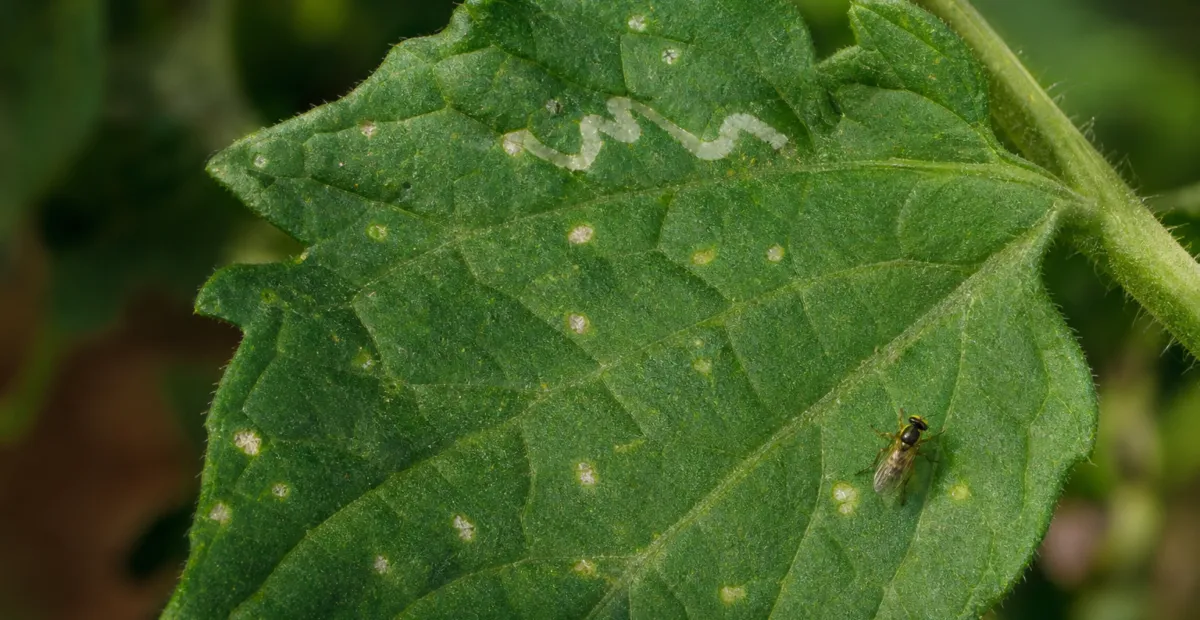
The American serpentine leafminer, Liriomyza trifolii, is a small fly whose larvae tunnel between the upper and lower surfaces of leaves. The winding, whitish mines and pale puncture spots are most damaging on beans, celery, cucurbits, peppers, tomatoes, and ornamentals. Natural parasitic wasps often suppress this pest, but outbreaks can follow broad-spectrum insecticide use, infested transplants, or heavy weed growth.
Typical conditions
Overview
Liriomyza trifolii is a small black-and-yellow fly in the family Agromyzidae. The damaging stage is the legless larva, which feeds between leaf surfaces and creates a progressively widening, winding mine. Beans, celery, cucurbits, peppers, tomatoes, and many ornamental plants can be affected.
In home gardens, light infestations are often cosmetic and are frequently suppressed by naturally occurring parasitoid wasps. Heavy infestations can reduce photosynthetic leaf area, cause premature leaf drop, slow growth, and make leafy crops or ornamentals unmarketable. Similar mines may be caused by Liriomyza sativae, Liriomyza huidobrensis, Phytomyza species, or leaf-mining moths, so species-level identification should not rely on the mine alone.
Symptoms and identification
- Long, winding, whitish or translucent tunnels between the upper and lower leaf surfaces.
- Mines begin narrow and widen as the larva grows; dark frass may be visible inside some mines.
- Numerous small, pale circular punctures from adult feeding or egg-laying, often concentrated on young foliage.
- Severe injury causes browning, premature leaf drop, reduced vigor, and sometimes defoliation.
- Yellowish to orange, legless larvae may be visible inside a mine; brownish or orange pupae may occur in soil or growing media.
Open a mine or hold the leaf toward the light to distinguish active mining from an old, dried tunnel. A live larva moves within the mine; a fixed dark spot or empty tunnel may indicate completed development or parasitism.
Causes and spread
Adult females insert eggs just below the leaf surface. Larvae then consume mesophyll tissue while protected inside the leaf. Mature larvae commonly leave the mine and drop to the soil or growing medium to pupate. Adults spread by flight and are also moved long distances in infested transplants, cuttings, plant debris, and other plant material.
Weeds around gardens, greenhouses, and field margins can maintain populations and allow movement into successive crops. Outbreaks are particularly likely when broad-spectrum, persistent insecticides kill parasitoids and other natural enemies, or when repeated applications select for insecticide resistance.
Life cycle and persistence
Females puncture leaves for feeding and oviposition, and eggs hatch inside the leaf. The yellowish larva passes through three feeding stages while enlarging its serpentine mine. At maturity it exits the leaf and pupates in soil, potting media, or occasionally on the leaf. The adult fly emerges, mates, feeds on plant exudates, and begins another generation.
Development is temperature dependent. Under warm conditions, a generation may be completed in about two weeks; under common greenhouse temperatures it may take about one month, while cool conditions greatly prolong development. Multiple generations can occur during a growing season, and development may continue year-round in warm US regions or protected structures.
Treatment and control
Begin with confirmation and monitoring. In gardens, remove badly infested leaves and improve sanitation; many low infestations do not justify insecticide treatment. Protect the plant's remaining foliage and avoid unnecessary pruning of lightly mined leaves.
In greenhouses or commercial crops, combine exclusion, removal of infested material, weed control, and conservation or release of parasitoids. Treat only when fresh mines or larval activity exceed a crop-specific action threshold, because sprays directed at adults often have limited value and applications against larvae must reach a stage and tissue where the product is effective. Rotate effective modes of action according to a locally appropriate resistance-management plan.
Low-impact and biological control
Conserve naturally occurring parasitoid wasps by avoiding unnecessary broad-spectrum insecticides, reducing dust, and controlling ants that interfere with beneficial insects. In adequately screened greenhouses and shade structures, commercially available parasitoids such as Diglyphus species and Dacnusa sibirica may provide useful biological control when released and monitored according to supplier and extension guidance.
Remove and destroy heavily infested leaves, keep crop surroundings weed-free, inspect incoming plants, and use fine screening to reduce adult immigration. Organic production may have fewer effective options because larvae are protected inside leaves; any product used must be certified or permitted for the applicable production system and crop.
Prevention
- Inspect purchased seedlings, cuttings, and transplants before they enter the garden or greenhouse; reject or isolate plants with fresh mines.
- Remove heavily mined leaves when practical and place them in a sealed bag or covered waste container rather than composting them.
- Remove weeds inside and around production areas because they can serve as alternate hosts.
- Screen greenhouse doors, vents, and openings with fine insect screening; screens around 0.6 mm or smaller are used for exclusion where ventilation permits.
- Clean up crop debris promptly after harvest. Where appropriate in greenhouse production, sanitize or pasteurize growing media after an infested crop.
- Monitor leaves weekly, concentrating on young plants and the newest crop growth. Record fresh mines, not just old brown damage, before deciding whether intervention is justified.
Interesting facts
- The larva is protected inside the leaf, which makes contact insecticides less reliable than approaches aimed at exclusion, sanitation, biological control, or properly timed selective products.
- Liriomyza trifolii has a broad host range, with particular importance in the Cucurbitaceae, Fabaceae, and Solanaceae.
- High populations usually do not kill established plants outright, but they can substantially reduce leaf area and crop marketability.
- The mine pattern alone is not a dependable species-level character; confirmation may require adults, rearing, or specialist identification.
Use chemical control only when monitoring shows that damage is economically or horticulturally significant. Products, active ingredients, crops, application sites, rates, preharvest intervals, and greenhouse uses vary by state and label. Use only a pesticide legally authorized for Liriomyza or leafminer control on the specific crop in the United States, follow the current label exactly, protect pollinators and beneficial parasitoids, and rotate IRAC modes of action to reduce resistance risk. Do not infer legality or crop safety from a product marketed for another crop or another leafminer species.