
 Source:
Attalea butyracea short overview
Attalea butyracea is a very large tropical feather palm native from southern Mexico through Central and South America and Trinidad and Tobago. It forms a solitary trunk topped by upright, pinnate fronds and produces strongly scented flower clusters followed by orange, yellow or brown fruits. In the United States, it is mainly a frost-free landscape, conservatory or large-container palm requiring warmth, bright light, ample space and sharply drained soil.
Taxonomic classification
Attalea butyracea care guide
Light and placement
Provide full sun for mature plants, with partial afternoon shade useful in very hot, dry inland settings or for container specimens. A bright east-, south- or west-facing position is appropriate indoors. Too little light produces weak, stretched growth and poorer flowering; harsh reflected heat combined with drought can scorch leaflets.
Watering and humidity
Water deeply when the upper few inches of soil begin to dry, then allow excess water to drain completely. Keep young palms and container plants more evenly moist during hot growth, but reduce frequency in cool weather. Do not let containers stand in saucers of water. Humidity is helpful but cannot compensate for poor drainage.
Soil and growing medium
Use a deep, fertile, well-drained soil that remains moderately moist but never stagnant. Loamy or alluvial soils are suitable, with added coarse material or drainage amendments in containers. A slightly acidic to neutral reaction is a practical target; avoid dense, persistently waterlogged media.
Feeding
Feed during active warm-season growth with a complete palm fertilizer containing nitrogen, potassium and magnesium, following the label rate. A slow-release formulation is practical for containers and landscapes. Do not fertilize drought-stressed, recently transplanted or cold-damaged palms; water normally before feeding and reduce or stop applications during cool, inactive periods.
Growth and habit
This is a large, solitary palm rather than a clustering species. Seedlings may tolerate some shade, but mature plants generally need strong light to flower and fruit well. Its eventual scale makes early site selection important; routine maintenance mainly involves removing dead fronds and keeping the crown clear of obstructions.
Planting and repotting
Plant outdoors only after the soil and air are reliably warm, in a frost-free site. Set the palm at the same depth at which it was growing; do not bury the trunk base. Water deeply during establishment and mulch widely without touching the trunk. Allow substantial clearance for the mature crown and falling leaves.
Repot only when the container is clearly root-bound, preferably during warm active growth. Use a heavy, stable container and a fast-draining palm mix. Because this species becomes very large and dislikes root disturbance, move it into progressively larger containers rather than repeatedly disturbing established roots.
Propagation and pruning
Propagation
Propagate from fresh seed. Remove fruit pulp, sow seed in a warm, consistently moist, freely draining medium and provide bottom heat if possible. Germination can be slow and irregular, and seed viability declines with storage. Transplant seedlings carefully after they develop a stable root system.
Pruning
Remove only fully dead, broken or hazardous fronds using clean tools. Do not cut green fronds for cosmetic shaping, strip the crown or damage the trunk. Remove spent inflorescences or fruit clusters only when necessary for access or safety, and use proper equipment for tall specimens.
Overwintering
Protect from temperatures near freezing, cold winds and wet winter soil. Move container plants indoors or into a heated conservatory before frost, place them in the brightest available light and water less often while growth slows. Large established specimens in marginal climates need substantial frost protection, but hard freezes may still be fatal.
Uses
Used as a large ornamental palm, a source of thatching leaves and a food or animal-feed resource in parts of its native range. Fruits and seeds have documented traditional uses, but preparation and identification vary regionally; do not consume garden material without authoritative local guidance.
Appearance
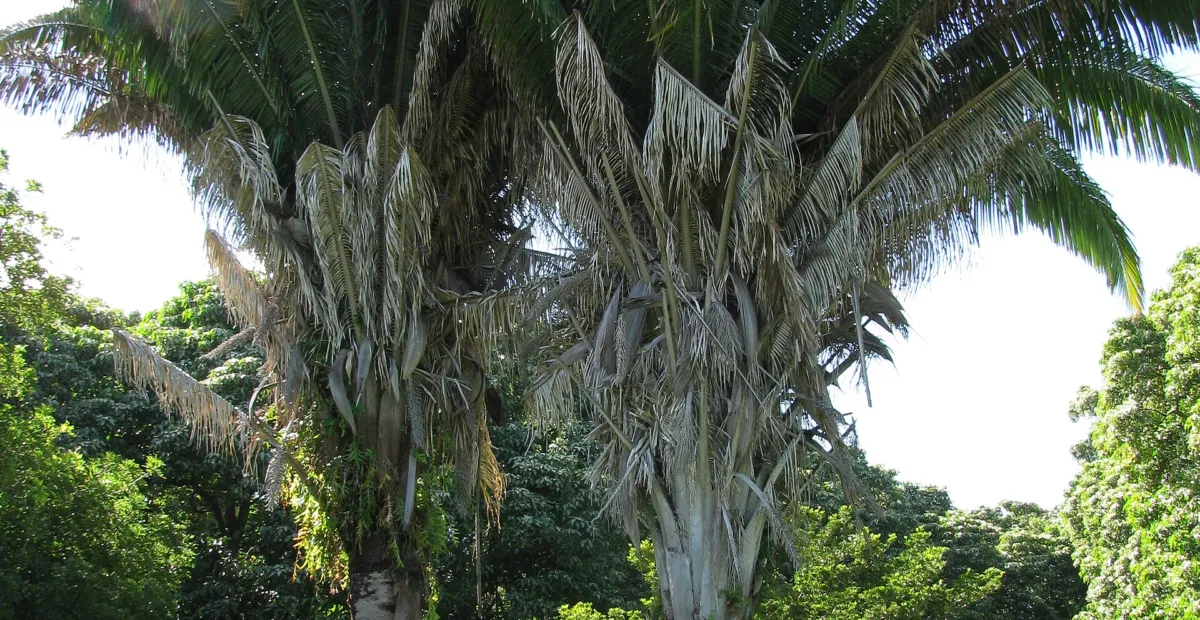
The palm has a solitary gray trunk and a crown of long, pinnate fronds that can appear upright and shuttlecock-like. Leaflets are arranged broadly in one plane. Persistent, stiff, coarse fibers along the petiole margins are distinctive, while old leaf bases and fibers may remain conspicuous on the trunk and crown.
Flowering
The palm bears separate male and female flowers on branched inflorescences, sometimes on the same inflorescence. The small flowers are carried in large, woody-bracted clusters and are noted for a strong, penetrating odor. Flowering is seasonal in many tropical regions, commonly during the rainy season, but the exact months vary by location.
Pollination and visitors
Field accounts report strong-smelling flowers visited by small stingless bees, while ecological accounts identify small beetles such as Mystrops and weevils among the principal pollinators. Visitor records vary by region, so no single pollinator species is assigned here.
Attalea butyracea photos
Click any photo for a larger view. Source, author and license are shown separately.
Diseases and pests
Diseases
Prevent problems by providing strong drainage, good air movement and avoiding trunk or root injury. Watch for palm leaf-spot diseases, bud or spear decline and basal rots, especially under chronically wet conditions. Remove badly affected tissue only with sterilized tools and correct irrigation or drainage before considering treatment.
Pests
Inspect for scale insects, mealybugs, spider mites and palm-feeding caterpillars, especially on stressed container plants. Check leaf bases and the crown regularly. Improve light, airflow and watering practices first; use targeted horticultural oil or insecticidal soap only according to the product label and when plants are not heat-stressed.
Toxicity and pollen
No authoritative species-specific human, dog or cat toxicity profile was located in the reviewed sources. The fruits and other traditionally used parts are documented in ethnobotanical sources, but this should not be treated as a recommendation for home consumption. Prevent children and pets from chewing unfamiliar plant material, and seek medical or veterinary advice after ingestion.
- Typical season
- No reliable United States exposure season documented
- Pollination / pollen
- Sticky pollen associated with insect pollination
This is a flowering palm that produces pollen, but reliable species-specific airborne-allergy data were not located. Its insect-associated, sticky pollen is not evidence of zero allergy risk. People with pollen sensitivity should observe their own response around flowering palms and avoid handling inflorescences if symptoms occur.
Native habitat
Native from southern Mexico through Central America and northern South America to Bolivia, including Trinidad and Tobago. It occurs in wet or seasonally wet tropical forest, forest margins, riverine settings, pastures and disturbed sites, often at low elevations. Mature palms perform best in warm climates with adequate moisture and good drainage.
Interesting fact
The species is accepted in modern taxonomic databases and has a broad tropical American range. Its flower clusters can produce a powerful odor. Persistent coarse fibers along the petiole margins are a useful identification feature. Fruits may contain one to three seeds, and the leaves have long been used for thatching and other practical purposes.
Frequently asked questions (FAQ)
The most relevant questions about this plant, with short and direct answers.
🌱Quick care
What is Attalea butyracea?⌄
Attalea butyracea is a large, solitary, evergreen palm in the Arecaceae family. It is native from southern Mexico through tropical South America and Trinidad and Tobago.
How much sunlight does Attalea butyracea need?⌄
Give Attalea butyracea full sun to partial shade. Young palms may appreciate some protection from intense afternoon sun, while established plants generally grow best with abundant light.
How often should I water Attalea butyracea?⌄
Water Attalea butyracea whenever the soil surface begins to dry, keeping the root zone evenly moist. Do not leave the palm standing in permanently waterlogged soil.
Is Attalea butyracea frost hardy?⌄
No, Attalea butyracea is frost tender and is best suited to frost-free tropical or subtropical conditions. Protect it from freezing temperatures or grow it in a container that can be moved indoors.
🌤️Environment and placement
What USDA zone is suitable for Attalea butyracea?⌄
Attalea butyracea is generally best for warm USDA zones 10 through 12. In cooler zones, it usually requires container culture and protection from cold weather.
Can Attalea butyracea grow in Florida?⌄
Attalea butyracea can grow outdoors in the warmest parts of Florida when planted in a spacious, well-drained site. Cold snaps can still damage or kill it, especially when the palm is young.
How large does Attalea butyracea get?⌄
Attalea butyracea can become a very large palm, commonly reaching about 30 to 50 feet in cultivation and potentially taller in favorable tropical conditions. Its long, pinnate leaves create a broad crown, so allow substantial clearance.
Can Attalea butyracea grow in a container?⌄
Attalea butyracea can be grown in a container while young, but it is not a practical long-term houseplant because it eventually develops a large trunk, extensive roots, and very long fronds. Move it outdoors during warm weather and provide strong light.
What soil is best for Attalea butyracea?⌄
Use fertile, well-drained loam that stays moderately moist. The palm can tolerate sandy or clay-containing soils when drainage and moisture are managed, but avoid compacted, stagnant soil.
💧Care and problems
Why are the leaves of my Attalea butyracea turning yellow?⌄
Yellow leaves can result from overwatering, poor drainage, cold stress, nutrient deficiency, or naturally aging fronds. If newer leaves are yellow, check the roots, drainage, and availability of balanced palm nutrients and micronutrients.
Does Attalea butyracea need fertilizer?⌄
Yes, feed Attalea butyracea during active growth with a controlled-release palm fertilizer that supplies potassium, magnesium, manganese, iron, and other micronutrients. Follow the product label and avoid heavy applications to dry soil.
What pests affect Attalea butyracea?⌄
Attalea butyracea can be affected by general palm pests such as scale insects, mites, and caterpillars, although a species-specific pest profile is not well documented. Inspect new growth and undersides of leaflets regularly and treat confirmed infestations according to the product label.
Does Attalea butyracea tolerate wet soil?⌄
Attalea butyracea prefers consistently moist soil and may tolerate periodically wet conditions, but it should not remain in stagnant, oxygen-poor water. Improve drainage if the planting site stays saturated after rain.
🪴Planting and repotting
When is the best time to plant Attalea butyracea?⌄
Plant Attalea butyracea during the warmest part of the growing season, after the danger of cold weather has passed. Warm soil and regular moisture help newly planted palms establish more reliably.
How do I plant Attalea butyracea in the ground?⌄
Plant it at the same depth at which it was growing in its container, in a wide hole amended only as needed to improve drainage and soil structure. Water thoroughly after planting and maintain even moisture while the root system establishes.
✂️Propagation and pruning
How is Attalea butyracea propagated?⌄
Attalea butyracea is primarily propagated from fresh seeds. Clean the fruit, sow the seed in a warm, moist, well-drained medium, and expect germination to be slow or irregular.
Can Attalea butyracea be propagated from cuttings?⌄
No, Attalea butyracea is not normally propagated from stem or leaf cuttings. Because it is a solitary palm with one main growing point, seed propagation is the practical method.
Can I prune Attalea butyracea?⌄
Prune only dead, damaged, or hazardous fronds and remove them with clean tools. Do not cut the central spear or remove healthy green fronds unnecessarily, because this can weaken or kill the palm.
⚠️Toxicity and safety
Are Attalea butyracea fruits edible or toxic?⌄
Attalea butyracea fruits are used as food by wildlife and have traditional human uses in parts of their native range, but a species-specific human safety profile is not established here. Do not eat the fruits or use plant parts medicinally without reliable local identification and expert guidance.
🌸Flowering and special interest
Does Attalea butyracea produce flowers and fruit?⌄
Yes, Attalea butyracea produces branched flower clusters enclosed at first by a large, woody protective spathe, followed by yellow, orange, or brown fruits. The species is monoecious, so male and female flowers occur on the same plant.
Similar plants
 Northern bangalow palm (Archontophoenix alexandrae) care guideArchontophoenix alexandrae
 Aiphanes horrida care guideAiphanes horrida
 Pinang yaki (Areca vestiaria) care guideAreca vestiaria
 Angalow palm (Archontophoenix cunninghamiana) care guideArchontophoenix cunninghamiana
 Sugar Palm (Arenga pinnata) care guideArenga pinnata
 El palm (Acanthophoenix rubra) care guideAcanthophoenix rubra