
 Source:
Aiphanes horrida short overview
Aiphanes horrida is a rare, highly distinctive tropical palm with a slender ringed trunk, pinnate evergreen leaves, cream flowers, and colorful orange-red fruits. Its trunk, leaf bases, petioles, and sometimes leaf surfaces carry formidable spines, so placement requires care. Native to Trinidad and the northern Andes, it is best grown in warm, humid conditions with bright filtered light, steady moisture, excellent drainage, and protection from frost.
Taxonomic classification
Aiphanes horrida care guide
Light and placement
Provide bright filtered light or partial shade, especially for young plants. A sheltered east- or bright north-facing greenhouse position works well; mature specimens may tolerate more sun if gradually acclimated and moisture is consistent. Too much abrupt sun can scorch foliage, while too little light produces weak, stretched growth and reduced vigor.
Watering and humidity
Water thoroughly when the upper inch of the mix begins to dry, then allow excess water to drain fully. Keep the root zone evenly moist during warm active growth, but never leave the pot standing in water. Reduce frequency in cool or dim weather while maintaining moderate humidity and good air circulation.
Soil and growing medium
Use a loose, humus-rich palm mix that drains freely but does not dry excessively fast. A combination of peat or coco coir, fine bark, and perlite or pumice is suitable for containers. Slightly acidic to neutral conditions are appropriate; avoid dense, waterlogged soil and stagnant containers.
Feeding
Feed during active growth with a complete palm fertilizer containing nitrogen, potassium, magnesium, and micronutrients. Apply at label strength or slightly below for container plants, and water the soil first if it is dry. Reduce or stop feeding during cool, dim winter conditions and after repotting until new growth resumes.
Growth and habit
Aiphanes horrida forms a solitary, upright palm with a sparse crown of pinnate leaves. It is slow to moderate in growth and becomes increasingly difficult to handle as its spines develop. Give it a stable container, avoid unnecessary relocation, and remove only genuinely dead material.
Planting and repotting
Plant outdoors only in frost-free, warm climates after the soil has warmed. Set the palm at the same depth at which it was growing, never burying the stem base. Allow generous clearance from paths, seating, and working areas because the trunk, leaves, and leaf bases are sharply armed. Water regularly during establishment.
Repot only when roots have substantially filled the container, preferably in spring or early summer. Use a stable, heavy pot and protect hands and arms from the numerous spines. Disturb the root ball as little as practical, and keep the plant evenly moist while it re-establishes.
Propagation and pruning
Propagation
Propagate from fresh seed. Clean the fruit pulp, sow promptly in a warm, sterile, freely draining medium, and maintain steady moisture and high humidity. Germination can be slow and irregular, so use fresh seed and provide bottom heat when possible. Spines make handling seedlings progressively more difficult.
Pruning
Prune only dead, damaged, or fully senescent leaves using long-handled tools and protective clothing. Do not cut healthy green fronds for appearance, and never work around the plant casually because the spines can penetrate gloves and footwear.
Overwintering
Move container plants indoors or into a heated greenhouse before temperatures approach 40°F. Keep them in bright filtered light, away from cold drafts and heating vents, and water less often during the cool season. Do not expose the plant to frost; protect people from the spines during relocation.
Uses
Primarily a specialty ornamental for tropical landscapes, conservatories, botanical collections, and large containers. Its colorful fruits and architectural foliage are attractive, but severe spines limit use near paths and public contact areas. Regional sources report seeds used in sweets or pralines; do not consume cultivated material unless identity and preparation are professionally verified.
Appearance
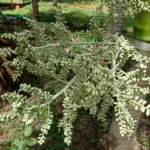
The palm has a slender, ringed trunk with conspicuous long spines and no crownshaft. Its pinnate leaves form a relatively open crown, with broad, dark-green leaflets whose tips can appear jagged or bluntly truncated. Interfoliar flower clusters and bright rounded fruits add seasonal color, but the plant is defined most strongly by its dense armature.
Flowering
This monoecious palm produces small unisexual cream flowers on interfoliar, branched inflorescences. Flowering may be followed by clusters of rounded fruits that mature orange to red. Exact flowering months vary with tropical growing conditions and are not reliably established for the United States.
Pollination and visitors
Specific animal pollinators or consistently documented visitor groups were not located for this species. Its small unisexual flowers may be visited by insects, but assigning a pollinator code would be speculative.
Aiphanes horrida photos
Click any photo for a larger view. Source, author and license are shown separately.
Diseases and pests
Diseases
Avoid chronically wet roots, poor air circulation, and contaminated potting media, which can encourage root and crown rots. Remove severely affected tissue, improve drainage, and reduce irrigation frequency without allowing prolonged drought. No species-specific disease profile is well documented in accessible horticultural sources.
Pests
Inspect periodically for scale insects, mealybugs, spider mites, and mites on stressed container plants. Isolate affected specimens, wash foliage where practical, and use horticultural oil or another labeled treatment according to the product directions. Avoid spraying when leaves are heat-stressed or in strong sun.
Toxicity and pollen
Reliable authoritative evidence establishing toxic effects in humans, dogs, cats, or children was not located. The primary documented hazard is mechanical injury from the formidable spines on the trunk, leaf bases, petioles, and foliage. Handle with heavy protective clothing and keep fallen plant material away from play areas.
- Pollination / pollen
- Pollen from small palm flowers; airborne relevance undocumented
No reliable species-specific airborne-pollen or allergy studies were located. As a flowering palm, it produces pollen, but the amount released into household or garden air and its clinical allergy relevance are not established. Avoid treating the absence of evidence as proof of zero allergy risk.
Native habitat
Native populations occur in Trinidad and northern and central South America, including Andean regions. It is associated with humid tropical forest and understory conditions, sometimes across a broad elevation range. Natural sites provide warm temperatures, high atmospheric moisture, filtered light, organic soils, and protection from severe exposure.
Interesting fact
The species is accepted under the name Aiphanes horrida; Aiphanes aculeata is a recorded synonym.
Its trunk and leaf structures are densely armed with conspicuous spines.
The genus is monoecious, with separate male and female flowers on one plant.
Some documented regional uses include seeds in sweets and pralines.
Bright fruits help explain the genus name, associated with being always visible.
Frequently asked questions (FAQ)
The most relevant questions about this plant, with short and direct answers.
🌱Quick care
What is Aiphanes horrida?⌄
Aiphanes horrida is a solitary, evergreen tropical palm in the Arecaceae family, valued for its featherlike foliage and unusual spiny trunk, leaf bases, and leaves. It is also known as ruffle palm or spine palm in some English-language references.
How much light does Aiphanes horrida need?⌄
Give Aiphanes horrida bright filtered light to partial shade. Young plants are especially prone to leaf scorch in intense afternoon sun, while established plants may tolerate brighter conditions if gradually acclimated and adequately watered.
How often should I water Aiphanes horrida?⌄
Water Aiphanes horrida whenever the surface begins to dry, keeping the root zone evenly moist but never waterlogged. Reduce watering somewhat during cool, low-light periods, but do not allow the plant to remain bone dry for long.
Is Aiphanes horrida suitable as an indoor plant?⌄
Aiphanes horrida can be grown indoors while young if it receives strong filtered light, warm temperatures, humidity, and excellent drainage. Its numerous sharp spines make it a poor choice for homes with children, pets, or narrow walkways.
🌤️Environment and placement
What USDA hardiness zone is Aiphanes horrida?⌄
Aiphanes horrida is generally suited to USDA Zones 10a and warmer, with protection needed in colder areas. It is frost tender and should be protected when temperatures approach about 30°F.
Can Aiphanes horrida grow outdoors in the United States?⌄
Aiphanes horrida can grow outdoors year-round in frost-free parts of the United States, especially warm areas of South Florida, Hawaii, and other tropical locations. In cooler regions, grow it in a container that can be moved indoors or protected during cold weather.
Can Aiphanes horrida tolerate full sun?⌄
Mature Aiphanes horrida may tolerate some full sun when gradually acclimated, but bright filtered light or partial shade is safer for most plants. Strong, sudden sunlight can scorch the foliage, particularly after greenhouse or indoor cultivation.
What temperature is too cold for Aiphanes horrida?⌄
Temperatures near 30°F are too cold for Aiphanes horrida and may cause serious injury or death. Move container plants indoors before a freeze and protect outdoor specimens from frost, cold wind, and prolonged temperatures below the low 40s.
Does Aiphanes horrida need high humidity?⌄
Aiphanes horrida grows best with moderate to high humidity, especially indoors or in dry climates. Improve humidity with a humidifier, a sheltered placement, or grouping plants, while still maintaining airflow around the leaves.
💧Care and problems
What soil is best for Aiphanes horrida?⌄
Use humus-rich, moisture-retentive palm soil that drains sharply. A mixture containing organic matter, coarse bark, and perlite or pumice helps retain moisture without leaving the roots saturated.
Why are the leaves of my Aiphanes horrida turning brown?⌄
Brown leaf tips or margins usually result from dry soil, low humidity, salt buildup, cold damage, or excessive direct sun. Check moisture and drainage first, flush accumulated salts with clean water, and move the palm away from harsh afternoon exposure.
Why is my Aiphanes horrida losing leaves?⌄
Leaf loss can follow cold exposure, severe underwatering, root stress from soggy soil, transplant shock, or insufficient light. Remove only fully dead leaves and correct the environmental problem before pruning healthy or partly green foliage.
Does Aiphanes horrida have common pest problems?⌄
Aiphanes horrida can be affected by typical palm pests such as scale, mealybugs, and spider mites, especially indoors or under dry conditions. Inspect leaf undersides and stems regularly, then treat small infestations with hand removal or an appropriate horticultural soap or oil.
How fast does Aiphanes horrida grow?⌄
Aiphanes horrida usually grows slowly to moderately, with growth strongly affected by warmth, light, moisture, and root space. It grows faster in consistently warm tropical conditions than in a cool indoor environment.
🪴Planting and repotting
How do I plant Aiphanes horrida outdoors?⌄
Plant Aiphanes horrida in a warm, sheltered site with bright filtered light, humus-rich soil, and excellent drainage. Leave generous clearance from paths and work areas because the trunk, petioles, and leaf surfaces can carry extremely sharp spines.
Can Aiphanes horrida grow in a container?⌄
Aiphanes horrida can be grown in a container while young, provided the pot has drainage holes and the mix remains evenly moist but not saturated. Choose a stable, heavy container and allow room for the palm’s spiny foliage and eventual size.
When should I repot Aiphanes horrida?⌄
Repot Aiphanes horrida in spring or early summer when roots have filled the container or drainage has become poor. Handle the root ball and plant carefully because the spines can injure hands, arms, and clothing during routine potting.
Does Aiphanes horrida transplant well?⌄
Aiphanes horrida may suffer transplant shock, particularly when large or root-disturbed. Transplant only when necessary, preserve as much of the root ball as possible, provide filtered light afterward, and keep the soil evenly moist while recovery begins.
✂️Propagation and pruning
How do you propagate Aiphanes horrida?⌄
Propagate Aiphanes horrida primarily from fresh seed. Clean the seed, sow it in a warm, sterile, well-drained medium, keep it consistently moist, and provide patience because germination may be slow or uneven.
Can Aiphanes horrida be propagated from cuttings?⌄
Aiphanes horrida is not normally propagated from stem or leaf cuttings because palms generally lack the growth structure needed to root from those pieces. Seed propagation is the practical method for producing new plants.
Can Aiphanes horrida be divided?⌄
Aiphanes horrida is a solitary palm and is not normally divided into separate plants. If a specimen produces no basal offsets, propagation should be done from seed rather than by splitting the trunk or root ball.
How long does Aiphanes horrida take to germinate from seed?⌄
Aiphanes horrida seed may take several weeks or longer to germinate, and results vary with seed freshness and temperature. Warm conditions, steady moisture, and a well-drained medium generally improve the chances of successful germination.
Should I prune Aiphanes horrida?⌄
Prune Aiphanes horrida only to remove completely dead, damaged, or hazardous leaves. Do not remove green fronds unnecessarily, and wear substantial protective clothing because the plant’s spines can penetrate ordinary gloves.
⚠️Toxicity and safety
Is Aiphanes horrida poisonous to people or pets?⌄
There is no established species-specific toxicity classification confirming that Aiphanes horrida is poisonous to people or pets. Its severe spine hazard is well documented, so prevent contact and do not place it where children or animals can reach it.
Are Aiphanes horrida spines dangerous?⌄
Yes, Aiphanes horrida has exceptionally sharp spines on the trunk, leaf bases, petioles, and sometimes leaf surfaces. Plant it away from paths and use heavy protective clothing, eye protection, and tools with long handles when maintenance is unavoidable.
Is Aiphanes horrida safe to plant near a walkway?⌄
Aiphanes horrida is not a good choice beside walkways, patios, play areas, or entrances because its spines can cause serious puncture injuries. Give the palm a secluded location with ample clearance from routine foot traffic.
🌸Flowering and special interest
Does Aiphanes horrida flower?⌄
Yes, Aiphanes horrida produces branched inflorescences among the leaves, with separate male and female flowers on the same plant. Flowering is more likely when the palm is mature and receives consistent warmth, moisture, and suitable light.
What do Aiphanes horrida flowers and fruits look like?⌄
The flowers are generally cream to whitish, and successful pollination can produce rounded fruits that mature bright red or orange-red. Fruit production depends on plant maturity, growing conditions, and effective pollination.
Does Aiphanes horrida need another palm to produce fruit?⌄
Aiphanes horrida is monoecious, meaning one plant bears both male and female flowers, so a second palm is not strictly required. Fruit set may still be inconsistent in cultivation because natural pollinators and suitable flowering conditions may be absent.
How long does Aiphanes horrida take to flower?⌄
Aiphanes horrida typically needs several years to reach flowering size, especially when grown in a container or indoors. No dependable universal age applies because warmth, light, nutrition, root space, and overall plant maturity strongly affect flowering.
Similar plants
 Ruby Glow (Peperomia graveolens) care guidePeperomia graveolens
 Peperomia serpens care guidePeperomia serpens
 Silver Ripple (Peperomia caperata ‘Silver Ripple’)Peperomia caperata 'Silver Ripple'
 El palm (Acanthophoenix rubra) care guideAcanthophoenix rubra
 He (Adonidia merrillii) care guideAdonidia merrillii
 Peperomia ferreyrae care guidePeperomia ferreyrae