
 Source:
Normanbya normanbyi short overview
Normanbya normanbyi is a solitary rainforest palm endemic to northeastern Queensland, where it grows from near sea level to about 700 m. Its smooth, closely ringed trunk darkens with age, supporting an arching crown of long pinnate leaves. Cream to pale pink flowers develop within the crown, followed by distinctive pink to scarlet fruits. In the United States, it requires frost-free warmth, humidity, steady moisture, and sharply drained soil.
Taxonomic classification
Normanbya normanbyi care guide
Light and placement
Provide full sun where humidity and water are ample; bright filtered light is safer in hot, dry exposures or containers. Morning or gently filtered afternoon light is suitable for acclimating plants. Too little light produces weak, stretched growth and reduced vigor; excessive sun combined with dry air can bleach or scorch leaflets. Protect from cold winds and reflected heat.
Watering and humidity
Keep the root zone evenly moist during active growth, watering deeply when the surface begins to dry rather than giving frequent shallow sips. Reduce frequency in cool weather, but do not allow a container to become bone-dry. Excellent drainage is essential because constant saturation can cause root decline. High humidity helps prevent leaflet browning, especially indoors.
Soil and growing medium
Use a fertile, airy medium that retains moisture without becoming stagnant. A loam-based mix amended with coarse bark, perlite, or other drainage material is suitable for containers. In the ground, rich alluvial or humus-bearing soil is preferred. Slightly acidic to neutral conditions are appropriate; avoid compacted, persistently waterlogged soil.
Feeding
Feed during active warm-season growth with a complete palm fertilizer containing micronutrients, applied at label strength or slightly conservatively. Container plants benefit from regular light feeding rather than heavy doses. Do not fertilize dry, chilled, recently repotted, or visibly stressed plants; water first if the medium is dry.
Growth and habit
This is a solitary, evergreen palm with a single upright trunk and a crown of arching feather leaves. It is a rainforest species rather than a drought-adapted palm, so growth and appearance decline when exposed to persistent dry air, cold, or irregular watering. Give it substantial headroom and avoid frequent root disturbance once established.
Planting and repotting
Plant outdoors only where freezing weather is not expected. Set the root ball at the same depth as in its container and water thoroughly after planting. Allow generous clearance for the solitary trunk and broad crown. Establishment is faster in warm weather with regular irrigation and protection from drying winds.
Repot only when roots have substantially filled the container, preferably during warm active growth. Move up one pot size, disturb the root ball as little as practical, and use a fast-draining but moisture-retentive palm mix. Large specimens are best left undisturbed unless drainage has declined.
Propagation and pruning
Propagation
Propagation is by seed. Fresh seed is preferable because palm seed can lose viability during storage, and available conservation information indicates sensitivity to desiccation. Sow in a warm, humid, sterile, well-drained medium; germination may be slow and irregular. Do not allow the seed to dry completely.
Pruning
Remove only fully dead, damaged, or diseased fronds, cutting the whole leaf base cleanly when practical. Do not strip green fronds to expose the trunk, and avoid cutting the crownshaft. Sterilize tools between plants to reduce disease transmission.
Overwintering
Move container plants into a warm greenhouse, conservatory, or bright indoor space before temperatures approach freezing. Maintain warmth, humidity, and reduced but regular watering through winter. Keep the plant away from heaters and cold glass, and expect slower growth in low winter light. Outdoor specimens need a genuinely frost-free climate rather than temporary frost cloth alone.
Uses
Primarily an ornamental specimen for tropical landscapes, conservatories, greenhouse collections, and large containers. Its distinctive trunk, foliage, and colorful fruit provide strong display value. In its native range, the fruit contributes to rainforest food webs, and the durable colorful wood has been reported in traditional and craft uses. No medicinal or edible-use recommendation is made.
Appearance
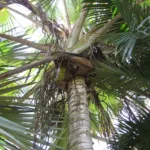
The palm has a solitary, smooth, closely ringed trunk that becomes nearly black with age. Its arching leaves can reach about 8 ft long and carry numerous grouped pinnae, creating a layered, feathery crown. Leaflets are dark green above, paler beneath, and often have jagged tips. A green crownshaft and pink to scarlet ovoid fruits are useful identification features.
Flowering
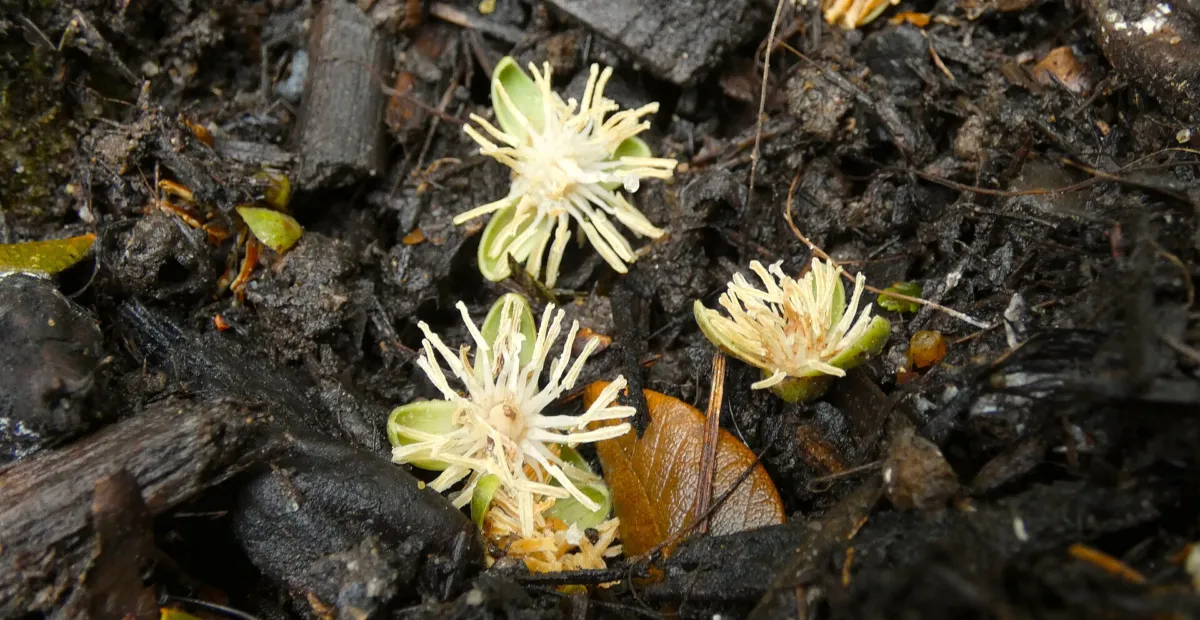
The inflorescence develops within the crown and may reach about 3 ft long. Flowers are sessile and arranged in groups of three, typically consisting of one male and two female flowers. Reported floral colors range from yellowish-green or cream in male flowers to light green in female flowers, with some horticultural descriptions noting white to pink overall coloration. A reliable United States flowering calendar is unavailable.
Pollination and visitors
Reliable sources document the flowers but do not provide sufficiently specific evidence to assign a principal animal pollinator or visitor group. Fruit is documented as being eaten by cassowaries and sulphur-crested cockatoos, which are seed-dispersal or seed-consumption interactions rather than confirmed flower-pollination records.
Normanbya normanbyi photos
Click any photo for a larger view. Source, author and license are shown separately.
Diseases and pests
Diseases
Species-specific disease guidance is limited. Prevent problems by using clean tools, avoiding chronically saturated media, providing air movement, and removing severely damaged tissue. Watch for general palm disorders such as root or crown rots when drainage is poor; isolate affected container plants and correct the cultural cause before considering treatment.
Pests
Inspect for scale insects, mealybugs, spider mites, and thrips, especially in dry indoor air. Wash foliage, improve humidity, and avoid excessive nitrogen. Treat persistent infestations with an appropriately labeled horticultural oil or insecticide, following United States product directions and avoiding application during heat stress.
Toxicity and pollen
No authoritative species-specific toxicology record was located in the reviewed sources. A regional plant database reports no known toxicity, but that is not equivalent to demonstrated safety. Do not consume the fruit or other parts, and prevent children and pets from chewing unfamiliar plant material.
- Pollination / pollen
- Species-specific pollen dispersal not documented
Species-specific airborne pollen and allergy studies were not located. As a flowering palm, it produces pollen, but the amount released into the air, dispersal pattern, and clinical allergy relevance for this species are not established. People with known palm-pollen sensitivity should use ordinary precautions during flowering.
Native habitat
Native to northeastern Queensland, Australia, from south of Cooktown to near Mossman and from near sea level to about 700 m. It occurs in tropical rainforest and vine forest, including rich alluvial situations associated with the Daintree region. The climate is warm, humid, and seasonally wet, with little tolerance for frost or prolonged dryness.
Interesting fact
The genus Normanbya contains only this accepted species. The trunk becomes almost black with age, inspiring the common name used in Australian references. Its fruits are reported as food for cassowaries and sulphur-crested cockatoos. The species is endemic to a relatively small region of northeastern Queensland.
Frequently asked questions (FAQ)
The most relevant questions about this plant, with short and direct answers.
🌱Quick care
What is Normanbya normanbyi?⌄
Normanbya normanbyi is a solitary, pinnate-leaved palm native to wet tropical forests of northeastern Queensland, Australia. It is the only species in the genus Normanbya and is also known by the documented English common name Black Palm, although no verified local common name was supplied for this profile.
How much light does Normanbya normanbyi need?⌄
Give Normanbya normanbyi full sun to bright filtered light. Young palms may need protection from intense afternoon sun, while established plants can tolerate brighter exposure when their soil remains consistently moist.
How often should I water Normanbya normanbyi?⌄
Water Normanbya normanbyi whenever the surface begins to dry, keeping the root zone consistently moist but never stagnant. Plants in hot weather, containers, or full sun may need more frequent watering than those in humid filtered light.
Is Normanbya normanbyi frost hardy?⌄
No, Normanbya normanbyi is frost-tender and should be protected from freezing temperatures. Grow it outdoors year-round only in warm, frost-free locations, or move container plants into shelter before cold weather.
What soil is best for Normanbya normanbyi?⌄
Use rich, well-drained loam amended with organic matter. The soil should retain steady moisture without becoming waterlogged, because this rainforest palm needs moisture but does not tolerate stagnant conditions.
🌤️Environment and placement
Can Normanbya normanbyi grow indoors?⌄
Normanbya normanbyi can be grown indoors temporarily when given very bright light, warmth, humidity, and careful watering. It is ultimately a large outdoor palm, so indoor culture is best suited to young container specimens.
Can Normanbya normanbyi grow in full sun?⌄
Yes, established Normanbya normanbyi can grow in full sun if it is gradually acclimated and watered consistently. Young plants are less tolerant of intense sun and may develop leaf scorch without filtered light or afternoon protection.
Where should I plant Normanbya normanbyi outdoors?⌄
Plant Normanbya normanbyi in a warm, sheltered site with rich soil, reliable moisture, and full sun to bright filtered light. A location protected from freezing winds and extreme drying is especially important in the United States.
What USDA hardiness zone is suitable for Normanbya normanbyi?⌄
Normanbya normanbyi is best suited to frost-free tropical and subtropical climates, broadly comparable to USDA Zones 10b–11 where winter freezes are uncommon. In cooler zones, grow it in a container that can be protected during cold weather.
How large does Normanbya normanbyi get?⌄
In favorable conditions, Normanbya normanbyi can become a tall solitary palm reaching roughly 60–65 feet outdoors. Container plants and specimens grown outside the tropics usually remain much smaller.
💧Care and problems
Why are the leaves of my Normanbya normanbyi turning brown?⌄
Brown leaves on Normanbya normanbyi commonly indicate underwatering, dry air, root damage, cold exposure, or sudden intense sunlight. Check soil moisture and drainage first, then protect the palm from freezing temperatures and abrupt environmental changes.
Why is my Normanbya normanbyi not growing?⌄
Slow growth can result from cool temperatures, insufficient light, dry soil, poor drainage, root restriction, or inadequate nutrition. Keep the palm warm and evenly moist, provide bright light, and fertilize only during active growth with a palm-appropriate fertilizer.
Does Normanbya normanbyi need fertilizer?⌄
Yes, Normanbya normanbyi benefits from a balanced palm fertilizer during active growth. Follow the product label and avoid heavy applications, because excess fertilizer can damage roots and cause nutrient imbalances.
How do I prevent root rot in Normanbya normanbyi?⌄
Prevent root rot by using a well-drained soil mix, a container with drainage holes, and consistent but not stagnant moisture. Do not leave the pot sitting in water, and reduce watering during cool periods when the soil dries more slowly.
What pests affect Normanbya normanbyi?⌄
Normanbya normanbyi may be affected by common palm pests such as scale insects, mealybugs, mites, or caterpillars, especially when stressed. Inspect leaf undersides and the crown regularly, and treat infestations promptly with an appropriate labeled product.
🪴Planting and repotting
When is the best time to plant Normanbya normanbyi?⌄
Plant Normanbya normanbyi during the warmest part of the growing season, after the risk of freezing has passed. Warm soil and consistent moisture help the palm establish roots before cooler weather arrives.
Can Normanbya normanbyi grow in a container?⌄
Yes, young Normanbya normanbyi can grow in a large container with rich, well-drained potting mix and regular moisture. Repot only when roots have filled the container, because excessive pot size can keep soil wet for too long.
How do I repot Normanbya normanbyi?⌄
Repot Normanbya normanbyi into a container only one or two sizes larger, using a fertile, free-draining mix. Handle the root ball gently, keep the palm at its original planting depth, and water thoroughly after repotting.
✂️Propagation and pruning
How is Normanbya normanbyi propagated?⌄
Normanbya normanbyi is propagated primarily from fresh seed. Clean the seed, sow it in a warm, moist, well-drained medium, and maintain stable warmth because older seed and cool conditions can reduce germination.
How long do Normanbya normanbyi seeds take to germinate?⌄
Normanbya normanbyi seeds may germinate slowly and unevenly, particularly if they are old or stored improperly. Fresh seed, steady warmth, moisture, and patience are more reliable than allowing the seed medium to dry out.
Can Normanbya normanbyi be propagated from cuttings?⌄
No, Normanbya normanbyi is not normally propagated from stem or leaf cuttings. Because it is a solitary palm with one growing point, seed propagation is the practical method.
Should I prune Normanbya normanbyi?⌄
Prune Normanbya normanbyi only to remove completely dead, damaged, or diseased fronds and spent flower structures. Do not cut healthy green fronds or damage the growing point, because palms cannot replace a destroyed crown.
⚠️Toxicity and safety
Is Normanbya normanbyi toxic to people or pets?⌄
The toxicity of Normanbya normanbyi is unconfirmed because no authoritative species-specific toxicity assessment was located. Do not allow children or pets to chew the leaves, fruits, or seeds, and seek professional medical or veterinary advice after ingestion.
Are Normanbya normanbyi seeds edible?⌄
Do not eat Normanbya normanbyi seeds or fruits because safe culinary use has not been established. Species-specific toxicity information is insufficient, so treat all plant parts as ornamental rather than edible.
🌸Flowering and special interest
Does Normanbya normanbyi flower?⌄
Yes, Normanbya normanbyi produces branched inflorescences beneath the crownshaft, with male and female flowers on the same plant. Flowering is more likely when the palm is mature and growing in warm, well-watered conditions.
Does Normanbya normanbyi produce fruit?⌄
Yes, a mature Normanbya normanbyi can produce ovoid fruits that develop pink to reddish-brown coloration as they ripen. Fruits contain a single seed that can be used for propagation when fully mature and fresh.
Is Normanbya normanbyi a solitary or clustering palm?⌄
Normanbya normanbyi is a solitary palm that normally develops one main trunk rather than forming a clump of stems. This makes it suitable as a single specimen where there is enough room for its mature height and fronds.
Is Normanbya normanbyi related to the foxtail palm?⌄
Normanbya normanbyi is not a foxtail palm, but its plumose fronds can create a similar appearance. The two palms belong to different genera, and Normanbya normanbyi generally has a more moisture-dependent rainforest habit.
Similar plants
 Latanier de l’Ile Ronde and latanier de Maurice (Latania loddigesii) care guideLatania loddigesii
 Date Palm (Phoenix dactylifera) care guidePhoenix dactylifera
 Pelagodoxa henryana care guidePelagodoxa henryana
 Yellow latan palm (Latania verschaffeltii) care guideLatania verschaffeltii
 Carnarvon Fan Palm (Livistona nitida) care guideLivistona nitida
 Palm (Oenocarpus bataua) care guideOenocarpus bataua