
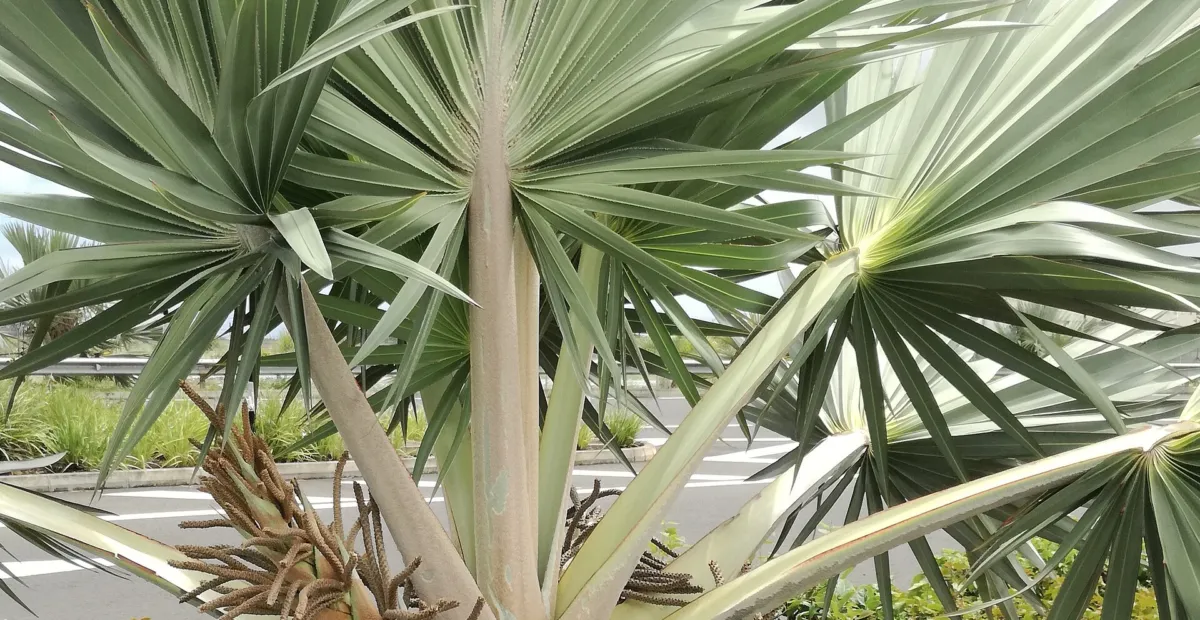
 Source:
Latanier de l’Ile Ronde and latanier de Maurice (Latania loddigesii) short overview
Latania loddigesii is a rare, slow-growing fan palm endemic to Mauritius. It forms a solitary trunk topped by large, deeply divided leaves that mature from blue-green to a striking silvery gray. Cream to yellow flowers appear on branched inflorescences, followed by fleshy green-brown fruits. In the United States, this frost-tender palm is mainly grown as a specimen in warm coastal landscapes, containers, conservatories, or bright indoor collections.
Taxonomic classification
Latanier de l’Ile Ronde and latanier de Maurice (Latania loddigesii) care guide
Light and placement
Provide full sun for the strongest growth and best blue-gray coloration, with partial shade acceptable in very hot climates or for young container plants. A south- or west-facing exposure is suitable indoors, but acclimate plants gradually to intense direct sun. Pale, stretched growth suggests insufficient light; scorch or bleached patches can indicate abrupt exposure or extreme heat.
Watering and humidity
Water deeply when the upper soil has begun to dry, then allow excess water to drain completely. Keep newly planted palms more consistently watered while establishing, reducing frequency after the root system is established because the species tolerates seasonal dryness. Containers need closer monitoring in hot weather, but saucers should not hold standing water.
Soil and growing medium
Use a fertile but sharply draining soil containing sand, loam, or other coarse mineral material. The species tolerates acidic through slightly alkaline conditions, but persistent waterlogging should be avoided. In containers, use a porous palm mix with ample drainage openings rather than dense garden soil.
Feeding
Feed during active growth with a slow-release palm fertilizer containing micronutrients, applied at label rates. A light spring and summer feeding program is generally preferable to heavy fertilization. Do not fertilize stressed, newly transplanted, cold-damaged, or waterlogged plants until active growth resumes.
Growth and habit
Latania loddigesii is a solitary, slow-growing palm that eventually develops a substantial trunk and a broad crown of stiff fan leaves. Its slow pace makes it useful as a long-term specimen rather than a quick screening plant. Keep the crown clear of structures and avoid damaging the growing point.
Planting and repotting
Plant after the threat of frost has passed in the warmest part of the growing season. Set the palm at the same depth at which it was growing, keeping the trunk base clear of mulch. Give young plants regular deep irrigation while roots establish, and allow generous clearance for the mature crown.
Repot container plants only when roots have substantially filled the pot, preferably during active growth. Handle the root ball carefully and avoid unnecessary root disturbance. Move up only one pot size and use a fast-draining palm mix.
Propagation and pruning
Propagation
Propagate from fresh seed. Germination produces a long white primary root before the first leaf; root damage can kill the seedling, so sow seed in a deep container and avoid transplant disturbance. Seed production requires both male and female plants because the species is dioecious.
Pruning
Remove only dead, badly damaged, or hazardous fronds using clean tools. Do not cut the central spear or routinely remove green leaves, since excessive pruning stresses palms and reduces stored energy. Leave persistent leaf bases unless removal is necessary and safe.
Overwintering
Move containers indoors or into a heated conservatory before temperatures approach freezing. Use the brightest available light, reduce watering during cool, low-light periods, and keep the plant away from cold drafts. Outdoor specimens in marginal climates need frost cloth, trunk protection, and a warm, sheltered microclimate, but prolonged freezes may still be fatal.
Uses
Primarily an ornamental specimen for tropical and subtropical landscapes, patios, conservatories, and containers. Its large silvery fan leaves provide architectural contrast in silver or drought-conscious garden designs. Leaves have been reported as useful for thatching, but edible-seed reports are not sufficient to recommend consumption.
Appearance
The palm has a single trunk, often with a swollen base, and a crown of large fan-shaped, costapalmate leaves. Mature foliage is blue-green to silvery gray with a waxy or pale surface effect. Young leaves are especially useful for distinguishing this species from red- and yellow-latan palms, while petioles may be armed when young.
Flowering
This dioecious palm produces separate male and female plants. Small cream to yellow flowers are borne on branched axillary inflorescences and are not considered showy. Flowering is associated with warm-season growth, but timing varies with climate and cultivation.
Pollination and visitors
Available references describe biotic pollination but do not establish a consistently documented visitor species or animal group for this exact palm. Do not assume that common garden bees or butterflies are reliable visitors without local observation.
Latania loddigesii photos
Click any photo for a larger view. Source, author and license are shown separately.
Diseases and pests
Diseases
Lethal yellowing is a significant reported disease concern for latan palms. Avoid planting in areas with known disease pressure where practical, buy clean nursery stock, and remove severely affected plants according to local extension guidance. General root problems are more likely when drainage is poor.
Pests
Inspect periodically for scale insects, mealybugs, mites, and other palm pests, especially on container or indoor plants. Improve light and air movement, isolate affected specimens, and use horticultural oil or another labeled treatment only as directed. Avoid chronic overwatering, which weakens roots and encourages secondary problems.
Toxicity and pollen
No authoritative source located in this review establishes a species-specific toxic effect for Latania loddigesii in humans or pets. Avoid consuming seeds or plant parts because reported traditional or ethnobotanical use is not equivalent to demonstrated food safety, and ornamental palms may be treated with pesticides.
- Typical season
- Warm-season flowering; local exposure timing is not well documented
- Pollination / pollen
- Pollen from small palm flowers; dispersal relevance uncertain
This is a flowering, seed-producing palm, so it produces pollen, but reliable species-specific airborne pollen and allergy data were not located. Because pollination is described as biotic, airborne exposure may be less prominent than in strongly wind-pollinated plants, but it should not be treated as zero-risk.
Native habitat
The species is endemic to Mauritius, where it occurs in exposed terrestrial settings associated with coastal and palm-forest habitats. It tolerates sun, wind, salt spray, and seasonal dryness but performs best in fertile, well-drained ground with regular water during establishment.
Interesting fact
The species is endemic to Mauritius and is one of three Latania species, each native to a different Mascarene island. Its seeds have a distinctive sculpted form, and the specific epithet honors nursery founder Conrad Loddiges. Young leaves help distinguish it from related latan palms by their blue-gray coloration.
Frequently asked questions (FAQ)
The most relevant questions about this plant, with short and direct answers.
🌱Quick care
What is Latania loddigesii commonly called?⌄
Latania loddigesii is documented as latanier de l'Ile Ronde and latanier de Maurice. It is also commonly described in horticultural sources as the blue latan palm or Loddiges’ latania.
How much light does Latania loddigesii need?⌄
Give Latania loddigesii full sun for the best growth and strongest blue-gray foliage, although it tolerates partial shade. Indoor plants need the brightest available window or supplemental grow lighting.
How often should I water Latania loddigesii?⌄
Water when the upper layer of soil has begun to dry, then let excess water drain completely. It prefers moderate moisture while establishing but becomes drought tolerant once well rooted.
Is Latania loddigesii easy to grow?⌄
Latania loddigesii is manageable in warm climates but is not a carefree palm because it grows slowly, needs excellent drainage, and is frost tender. Container culture is often the practical choice outside tropical regions.
🌤️Environment and placement
Where is Latania loddigesii native to?⌄
Latania loddigesii is endemic to Mauritius, including offshore island habitats such as Round Island. It naturally occurs in coastal and palm-forest environments.
Can Latania loddigesii grow outdoors in the United States?⌄
It can grow outdoors year-round only in warm, frost-free parts of the United States, such as suitable areas of southern Florida and Hawaii. In cooler regions, grow it in a container and move it under protection before cold weather.
What USDA zone is suitable for Latania loddigesii?⌄
Latania loddigesii is best treated as a tropical, frost-tender palm rather than assigned a rigid hardiness limit. Protect it whenever temperatures approach freezing, and use a heated or sheltered winter location in colder USDA zones.
Can Latania loddigesii tolerate coastal conditions?⌄
Yes, Latania loddigesii can tolerate wind and salt spray better than many ornamental palms. Even so, provide good anchorage, adequate irrigation during establishment, and shelter from damaging extreme winds.
Does Latania loddigesii grow well indoors?⌄
Latania loddigesii can be grown indoors while young if it receives very bright light and has fast-draining soil. It eventually becomes a large solitary palm, so indoor space and winter temperature management can become limiting.
How large does Latania loddigesii get?⌄
Latania loddigesii can become a tall solitary palm, with cultivated and wild references reporting heights up to roughly 50 feet. Its mature size makes it more suitable for spacious landscapes, conservatories, or large containers.
💧Care and problems
What soil is best for Latania loddigesii?⌄
Use fertile, well-drained sandy, loamy, or clay soil that does not remain waterlogged. For containers, combine a quality potting mix with coarse drainage material and always use a pot with drainage holes.
Why are the leaves of Latania loddigesii turning green?⌄
Young leaves may appear blue-gray or green before developing their mature silvery coloration. Lower light, nutritional stress, or simple leaf age can also affect color, so assess the newest fully expanded leaves rather than one older frond.
Why are the leaves of Latania loddigesii turning brown?⌄
Brown leaf tips or margins usually indicate drought stress, low humidity, salt buildup, root damage, or excessive sun after a sudden change in exposure. Check drainage and watering consistency before increasing irrigation.
What pests affect Latania loddigesii?⌄
Latania loddigesii can be affected by common palm pests, including scale insects and mites, especially when grown indoors or under stress. Inspect leaf undersides and treat confirmed infestations with an appropriate labeled horticultural product.
Is Latania loddigesii susceptible to lethal yellowing disease?⌄
Yes, Latania palms are reported to be susceptible to lethal yellowing disease. Avoid planting valuable specimens where the disease is known to be active and seek local extension guidance if rapid yellowing and decline occur.
🪴Planting and repotting
When is the best time to plant Latania loddigesii outdoors?⌄
Plant Latania loddigesii during the warmest part of the growing season after cold weather has passed. Warm soil helps root establishment, while planting before a freeze can cause severe or fatal damage.
How should I plant Latania loddigesii in the ground?⌄
Choose a sunny, spacious site with fertile, well-drained soil and set the palm at the same depth at which it was growing. Water thoroughly after planting, mulch lightly without touching the trunk, and protect it from cold.
Can Latania loddigesii be grown in a pot?⌄
Yes, Latania loddigesii grows in containers when the potting mix drains freely and the container is large enough for its developing root system. Repot only when necessary because unnecessary root disturbance can slow this palm.
When should I repot Latania loddigesii?⌄
Repot when roots are tightly crowded, drainage has declined, or the plant is drying unusually quickly. Move it into only the next container size and disturb the root ball as little as possible.
✂️Propagation and pruning
How is Latania loddigesii propagated?⌄
Latania loddigesii is propagated by seed. It is a solitary palm, so division or removal of offsets is not a normal propagation method.
How do I germinate Latania loddigesii seeds?⌄
Sow fresh, clean seeds in a warm, evenly moist, well-drained medium and keep them out of direct drying conditions. The seed produces a long white root before its first leaf, and damaging that root can kill the seedling.
How long do Latania loddigesii seeds take to germinate?⌄
Germination time is variable and depends on seed freshness, warmth, and moisture, so a precise schedule is not reliably established. Keep the medium warm and lightly moist rather than repeatedly wet or dry while waiting.
Does Latania loddigesii need another palm to produce seed?⌄
Usually, yes: Latania palms are dioecious, meaning male and female flowers occur on separate plants. A female generally needs pollen from a compatible male plant nearby for viable seed production.
Can I prune Latania loddigesii?⌄
Prune only dead, damaged, or completely brown fronds, using clean tools and avoiding injury to the trunk or growing point. Do not remove healthy green fronds for cosmetic reasons because palms reuse nutrients from older leaves.
⚠️Toxicity and safety
Is Latania loddigesii toxic to dogs or cats?⌄
Species-specific toxicity information for Latania loddigesii is not well established, so it should be treated as an unknown-toxicity plant around pets and children. Do not allow chewing, and contact a veterinarian or poison-control service if plant material is eaten.
Are Latania loddigesii seeds edible?⌄
Reliable horticultural safety guidance does not establish the seeds as safe to eat. Although some sources mention reported use of young seeds, avoid consumption because the claim is not sufficient to confirm food safety.
🌸Flowering and special interest
Does Latania loddigesii flower?⌄
Yes, Latania loddigesii produces small yellow flowers in branched inflorescences. Flowering is more likely when the palm is mature, growing strongly, and receiving adequate warmth and light.
Does Latania loddigesii produce fruit?⌄
Yes, female plants can produce large fruits that become brown when ripe if pollinated. Fruit production requires a female plant and access to compatible pollen, since the species is dioecious.
How can I tell Latania loddigesii from other Latania palms?⌄
Latania loddigesii is distinguished primarily by blue-gray or silvery young foliage. Latania lontaroides tends to show reddish young leaf features, while Latania verschaffeltii has yellow-orange margins, veins, and petioles.
Similar plants
 Ribbon Fan Palm (Livistona decora) care guideLivistona decora
 Normanbya normanbyi care guideNormanbya normanbyi
 Date Palm (Phoenix dactylifera) care guidePhoenix dactylifera
 Carnarvon Fan Palm (Livistona nitida) care guideLivistona nitida
 White Elephant Palm (Kerriodoxa elegans) care guideKerriodoxa elegans
 Nipa Palm (Nypa fruticans) care guideNypa fruticans