
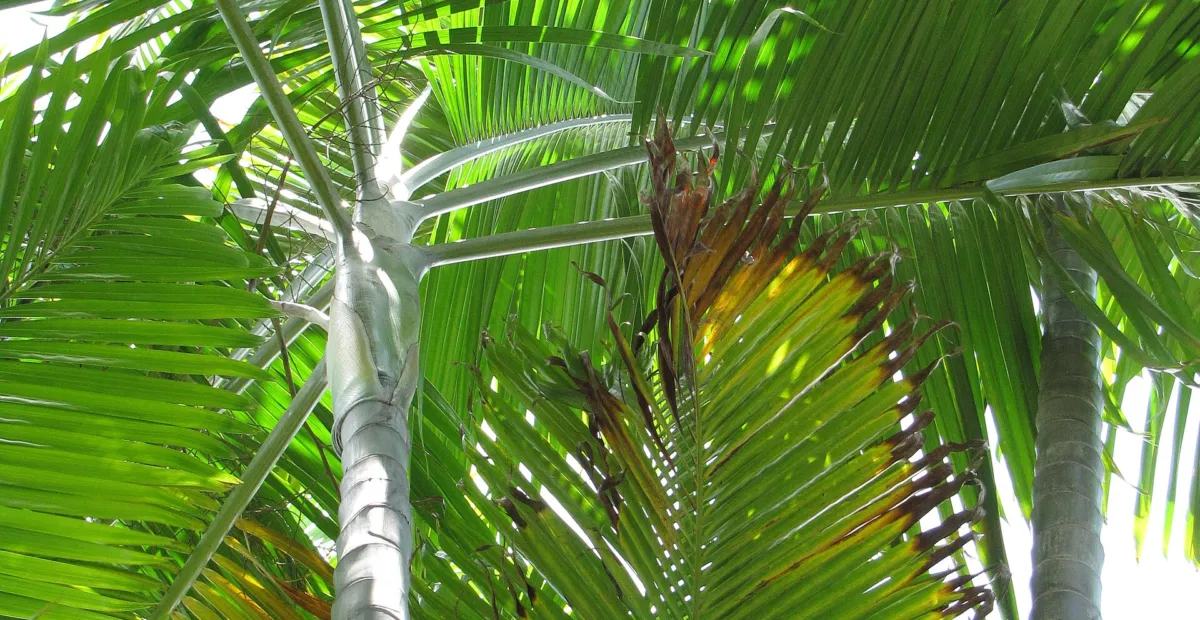
 Source:
Category:Dypsis cabadae (Dypsis cabadae) short overview
Category:Dypsis cabadae is a rare, clumping palm valued for its smooth, bamboo-like green stems and long, arching feather fronds. Native to the western Indian Ocean region and associated with seasonally dry tropical habitats, it grows best in warm, bright conditions and sharply drained soil. In the United States it is mainly a South Florida landscape palm or a large container specimen that must be protected from freezes.
Taxonomic classification
Category:Dypsis cabadae (Dypsis cabadae) care guide
Light and placement
Provide full sun to bright filtered light. Outdoors, morning sun or an open east or south-facing site is suitable if heat and moisture are managed; acclimate indoor-grown plants gradually. Too little light causes stretched growth and weak fronds, while abrupt intense sun can scorch leaves. Bright filtered light is safest for indoor specimens.
Watering and humidity
Water deeply when the upper few inches of soil begin to dry, then let excess drain completely. Keep newly planted palms evenly moist while roots establish, but reduce irrigation during cool weather and rainy periods. Mature landscape plants can tolerate short dry spells; containers usually need more frequent watering. Never leave the pot standing in water.
Soil and growing medium
Use a loose, sharply draining soil with organic matter but no prolonged saturation. A sandy loam or amended loam is suitable in the ground; containers need a porous palm mix with drainage holes. Slightly acidic to neutral conditions are appropriate. Avoid compacted clay and waterlogged sites.
Feeding
Feed established outdoor palms during active growth with a controlled-release palm fertilizer containing magnesium and micronutrients. Apply according to the product label, usually in spring and again during the warm season. Do not fertilize drought-stressed, newly transplanted, cold-damaged, or dormant plants.
Growth and habit
This is a multi-stemmed, evergreen palm that gradually forms a substantial clump. New stems arise from the base, while older stems retain smooth, ringed surfaces. Give it room for long fronds and avoid removing healthy green leaves, since excessive cutting weakens the plant and reduces its tropical appearance.
Planting and repotting
Plant after the danger of frost has passed, when soil is warm. Set the root ball level with the surrounding soil, water deeply during establishment, and mulch without touching the stems. Allow enough room for the clump and canopy; use approximately 15 feet between landscape specimens where a full mature spread is expected.
Repot container plants only when roots have substantially filled the pot, preferably in spring or early summer. Move up one pot size rather than oversizing, preserve the root ball, and avoid burying the stem bases. Large specimens may be top-dressed instead of frequently repotted.
Propagation and pruning
Propagation
Fresh seed is the primary documented method; germination may take roughly two to four months under warm, evenly moist conditions. Established clumps can eventually produce suckers or offsets, but division is disruptive and best attempted only when a rooted offshoot can be separated cleanly.
Pruning
Remove only fully brown, dead, or broken fronds with clean tools. Do not cut green leaves for cosmetic shaping, and do not damage the growing point. Remove spent inflorescences or fruit clusters if they become untidy, using care around the clump and avoiding trunk wounds.
Overwintering
Move container plants indoors before temperatures approach 40°F. Place them in the brightest available light, keep them away from cold drafts and heating vents, reduce watering as growth slows, and check regularly for mites and scale. Outdoor specimens in marginal climates need frost cloth, trunk protection, and a warm microclimate, but prolonged freezes can be fatal.
Uses
Primarily an ornamental palm for warm-climate landscapes, screening, specimen planting, courtyards, and large containers. It can be used indoors while young if given bright light and adequate space. It is not presented here as a food, medicinal, or forage plant.
Appearance
The palm forms multiple slender, smooth green stems marked by prominent leaf scars or rings. Long pinnate fronds arch from each stem, creating a fuller crown than a solitary palm. Mature plants may carry hanging fruit clusters that turn red. The ringed stems and clumping habit help distinguish it from many single-trunk palms.
Flowering
Mature clumps produce branched inflorescences bearing small yellowish flowers, followed by pendulous clusters of fleshy fruits that mature red. Flowering is most likely on established outdoor specimens in warm climates and is uncommon on stressed or young container plants.
Pollination and visitors
The small flowers may be visited by generalist insects, but reliable species-specific pollinator records are limited. This palm should not be promoted as a major pollinator plant.
Dypsis cabadae photos
Click any photo for a larger view. Source, author and license are shown separately.
Diseases and pests
Diseases
Avoid chronic wetness and poor airflow, which favor root and leaf problems. Monitor outdoor plantings for lethal-yellowing-type symptoms in susceptible regions, including premature yellowing and decline. Remove severely affected material and consult local extension guidance; sanitation, drainage, and correct nutrition are the main preventive measures.
Pests
Inspect fronds and leaf bases for scale, mealybugs, spider mites, and mites, especially indoors or under drought stress. Isolate infested containers, wash foliage, improve airflow, and use horticultural oil or insecticidal soap according to the label. Avoid unnecessary broad-spectrum insecticides.
Toxicity and pollen
No species-specific evidence of significant human or companion-animal toxicity was located. Do not treat that absence as proof of edibility; prevent chewing of leaves, stems, flowers, or fruit and seek professional advice after unusual exposure.
- Typical season
- Late spring through summer in warm US climates
- Pollination / pollen
- Flower pollen released mainly around insect visits
As an insect-pollinated palm, its pollen is not generally considered a major airborne allergen, but species-specific clinical allergy data are lacking. Flowering plants can still release pollen locally; people with severe allergies should limit direct handling during bloom.
Native habitat
Kew records the species from Mayotte in the western Indian Ocean and places it in a seasonally dry tropical biome. Cultivated material is associated with warm, well-drained sites rather than cold or permanently saturated soils. Its precise wild distribution and abundance have historically been poorly documented.
Interesting fact
The species was historically confused with other ornamental Dypsis palms and has the synonym Chrysalidocarpus cabadae. Its stems are smooth and conspicuously ringed, giving the clump a bamboo-like appearance. Established plants can tolerate short dry periods better than constantly wet soil.
Frequently asked questions (FAQ)
The most relevant questions about this plant, with short and direct answers.
🌱Quick care
What is Category:Dypsis cabadae?⌄
Category:Dypsis cabadae is the documented local common-name label for Dypsis cabadae, a clumping feather palm in the Arecaceae family. It is grown for its ringed green stems, crownshaft, and arching pinnate fronds.
How much light does Dypsis cabadae need?⌄
Dypsis cabadae grows best in full sun to bright filtered light. Acclimate container-grown palms gradually before placing them in strong direct sun to reduce leaf scorch.
How often should I water Dypsis cabadae?⌄
Water Dypsis cabadae moderately, allowing some surface drying before watering again. Avoid keeping the soil constantly saturated because poor drainage can damage the roots.
What soil is best for Dypsis cabadae?⌄
Use a well-drained loam or porous palm mix for Dypsis cabadae. The container or planting site should drain freely rather than holding stagnant water around the roots.
🌤️Environment and placement
Can Dypsis cabadae grow outdoors in the United States?⌄
Dypsis cabadae can grow outdoors year-round only in warm, frost-free parts of the United States, especially suitable areas of southern Florida, Hawaii, and protected coastal microclimates. In colder regions, grow it in a container and move it under protection.
What USDA hardiness zone is suitable for Dypsis cabadae?⌄
Dypsis cabadae is generally suited to USDA Zones 10a through 11b, although local exposure and winter conditions matter. It is frost tender and should be protected below 35°F.
Can Dypsis cabadae tolerate frost?⌄
No, Dypsis cabadae is frost tender and should not be treated as a cold-hardy palm. Protect it whenever temperatures may fall below 35°F, particularly if the plant is young or container-grown.
Can Dypsis cabadae grow indoors?⌄
Dypsis cabadae can be kept indoors while young if it receives very bright light and has excellent drainage. Its eventual size and need for strong light make it better suited to a greenhouse, sunroom, patio, or warm outdoor site.
How much space does a Dypsis cabadae need?⌄
Allow generous space because Dypsis cabadae forms a clump of multiple slender stems and can become a substantial landscape palm. Keep it away from structures and paths where the expanding clump and arching fronds could become crowded.
💧Care and problems
Why are the leaves of my Dypsis cabadae turning brown?⌄
Brown leaves on Dypsis cabadae commonly indicate dry soil, low humidity, root stress, sun scorch, or cold exposure. Check moisture and drainage first, then protect the palm from frost and abrupt changes in light.
Why is my Dypsis cabadae turning yellow?⌄
Yellowing foliage can result from overwatering, poor drainage, inadequate light, nutrient stress, or normal aging of older fronds. Correct the growing conditions before applying fertilizer, since excess fertilizer can worsen root problems.
Does Dypsis cabadae need fertilizer?⌄
Dypsis cabadae benefits from a balanced palm fertilizer during active growth. Apply it according to the product label and avoid fertilizing stressed, recently transplanted, or cold-damaged plants until they recover.
Is Dypsis cabadae drought tolerant?⌄
Dypsis cabadae has moderate water needs and is not a strongly drought-tolerant palm. Allowing slight surface drying is appropriate, but prolonged dryness can cause browning and reduced growth.
Is Dypsis cabadae sensitive to wind?⌄
Yes, Dypsis cabadae can suffer frond damage in strong or persistent wind. Plant it in a sheltered position, especially in exposed coastal locations or areas subject to storms.
🪴Planting and repotting
When should I plant Dypsis cabadae?⌄
Plant Dypsis cabadae during the warm growing season, after the danger of cold weather has passed. Warm soil helps the palm establish more quickly and reduces transplant stress.
Can Dypsis cabadae grow in a container?⌄
Yes, Dypsis cabadae can be grown in a container while young or where outdoor winters are too cold. Use a porous palm mix, a pot with drainage holes, and repot when roots become crowded.
How do I repot Dypsis cabadae?⌄
Repot Dypsis cabadae into a slightly larger container using fresh, well-drained palm mix. Handle the root ball gently, keep the planting depth unchanged, and water thoroughly once before allowing the surface to dry slightly.
✂️Propagation and pruning
How is Dypsis cabadae propagated?⌄
Dypsis cabadae is propagated primarily by fresh seed, while established clumps may sometimes be divided with care. Seed germination and division success depend on freshness, warmth, moisture control, and the condition of the offsets.
Can I divide a Dypsis cabadae clump?⌄
A mature Dypsis cabadae clump may be divided if it contains well-rooted stems, but division can be stressful and is not always successful. Use clean tools, preserve as many roots as possible, and keep the divisions warm and evenly moist while they reestablish.
Should I prune Dypsis cabadae?⌄
Prune Dypsis cabadae only to remove completely dead, damaged, or diseased fronds. Do not cut green fronds unnecessarily or remove the growing point, because palms cannot regrow from a destroyed central bud.
⚠️Toxicity and safety
Is Dypsis cabadae toxic to cats or dogs?⌄
No significant species-specific toxicity is documented for Dypsis cabadae, but ingestion should still be avoided. Keep plant material and seeds away from pets and children, and contact a veterinarian or poison service if a large amount is eaten or symptoms develop.
🌸Flowering and special interest
Does Dypsis cabadae flower?⌄
Yes, mature Dypsis cabadae can produce branched inflorescences beneath the crown, followed by small fruits. Flowering is more likely when the palm is grown outdoors in a warm, bright climate and has reached sufficient maturity.
How tall does Dypsis cabadae get?⌄
Dypsis cabadae can reach roughly 20 to 30 feet outdoors in favorable climates, with a broad clumping habit. Container culture and cooler conditions usually keep it smaller and slow its growth.
Similar plants
 Christ’s thorn (Copernicia prunifera) care guideCopernicia prunifera
 Old man palm (Coccothrinax crinita) care guideCoccothrinax crinita
 Coccothrinax readii care guideCoccothrinax readii
 Dictyosperma (Dictyosperma album) care guideDictyosperma album
 Millionaire’s salad (Deckenia nobilis) care guideDeckenia nobilis
 Caranday Palm (Copernicia alba) care guideCopernicia alba