
 Source:
Juçara (Euterpe edulis) short overview
Juçara palm is a graceful, solitary-stemmed evergreen native to Brazil’s Atlantic Forest and nearby regions of Paraguay and Argentina. Its finely divided fronds, branched flower clusters and dark purple fruits give it strong ornamental appeal, while its edible fruits support wildlife and regional food traditions. In the United States, it is generally a warm-climate landscape or conservatory plant requiring bright filtered light, acidic soil, steady moisture and protection from frost.
Taxonomic classification
Juçara (Euterpe edulis) care guide
Light and placement
Give bright filtered light or partial shade, such as morning sun with afternoon protection, a greenhouse position under shade cloth, or a bright conservatory. Harsh reflected heat and intense dry sun can scorch fronds, while too little light produces stretched growth, pale foliage and weak stems. Acclimate gradually when moving a container outdoors.
Watering and humidity
Water deeply whenever the upper inch of the medium begins to dry, then allow excess water to drain fully. Keep the root zone evenly moist during warm growth and reduce frequency modestly in cool, low-light conditions without allowing the plant to dry hard. High humidity helps prevent leaf-edge browning, particularly indoors.
Soil and growing medium
Use a deep, organic, moisture-retentive but well-drained medium. In containers, combine quality potting mix with fine bark, compost and coarse drainage material. Naturally acidic soils are preferred; avoid alkaline, saline or chronically compacted conditions. Do not allow the root zone to become stagnant, even though the species appreciates regular moisture.
Feeding
Feed during active growth with a complete palm fertilizer containing micronutrients, applied at label strength or slightly diluted for containers. A spring and summer schedule is generally suitable in warm climates. Water before fertilizing, and do not feed cold-stressed, newly transplanted or dormant plants. A compost-rich medium can supplement but not replace balanced nutrition.
Growth and habit
A solitary, upright palm that develops one unbranched stem and a crown of long pinnate fronds. It is naturally a forest palm and young plants benefit from shelter and filtered light rather than harsh exposure. Growth can be slow after transplanting, so stable moisture, warmth and undisturbed roots are important.
Planting and repotting
Plant outdoors only where freezes are essentially absent, in spring or early summer after the soil has warmed. Set the palm at the same depth as in its container, never burying the crownshaft or trunk base. Allow generous vertical and lateral room, mulch the root zone without touching the stem, and irrigate consistently during establishment.
Repot container plants only when roots have substantially filled the pot, preferably during warm active growth. Move up one pot size, preserve the root ball, and use a deep container with generous drainage. Avoid severe root disturbance because young palms establish slowly after transplanting.
Propagation and pruning
Propagation
Propagate from fresh seed. Remove fruit pulp, sow promptly in a warm, airy, consistently moist medium, and avoid letting seeds dry out. Germination may be uneven and seedlings are sensitive to root disturbance. Division is not appropriate for this solitary, non-stoloniferous palm.
Pruning
Remove only dead, badly damaged or completely yellow fronds, cutting close to the petiole base without injuring the trunk or crown. Do not cut the growing point or remove healthy green leaves for appearance. Sterilize tools between plants, especially where fungal or bacterial disease is suspected.
Overwintering
Move containers indoors or into a heated greenhouse before temperatures approach the low 40s °F. Keep wintered plants in bright light, away from heating vents, and water less often while growth slows. Outdoor plants require a genuinely frost-free site; fleece or brief emergency covering is not a dependable long-term strategy.
Uses
Used as an ornamental palm in frost-free landscapes, tropical gardens, conservatories and large containers. Its dark fruits are regionally important for food and support wildlife. The edible heart of palm has been harvested historically, but destructive extraction has contributed to population decline, so cultivation and conservation-minded fruit use are preferable.
Appearance
The species forms one smooth, slender gray trunk topped by a graceful crown of arching, pinnate fronds. New growth emerges from a green to greenish crownshaft, while mature leaves create a fine-textured, elegant silhouette. Clustering purple-black fruits may hang beneath the crown after flowering.
Flowering
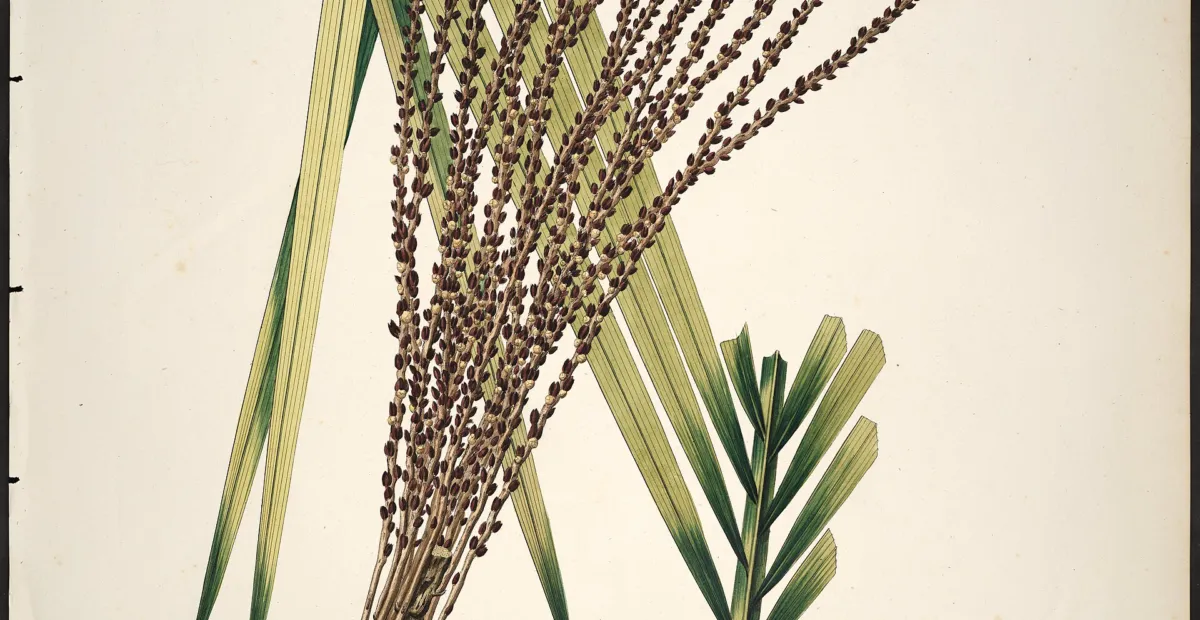
This monoecious palm produces branched inflorescences bearing separate male and female flowers on the same plant. Flowering can extend from late winter into early autumn in parts of its native range, with timing varying by climate. Flower clusters emerge among the leaves and are followed by rounded dark purple fruits when pollination and growing conditions are favorable.
Pollination and visitors
Flowers provide nectar and pollen for diverse small insects. Bees, including stingless bees and orchid bees, are repeatedly reported among important visitors; bumblebees and other insects may also visit. Research from Argentina indicates an ambophilous system in which wind can contribute substantially alongside insects.
Euterpe edulis photos
Click any photo for a larger view. Source, author and license are shown separately.
Diseases and pests
Diseases
Prevent problems by providing air movement, clean tools, excellent drainage and steady—not excessive—moisture. Watch for leaf-spot symptoms, root or crown rots in poorly drained media, and trunk or spear damage after cold exposure. Remove badly affected tissue and correct the underlying moisture, sanitation or temperature problem before using a fungicide.
Pests
Inspect regularly for scale insects, mealybugs, mites and caterpillars, especially on stressed container plants. Quarantine new specimens, wash foliage, improve air circulation and avoid excess nitrogen. Treat early infestations with hand removal or horticultural soap or oil when suitable; follow the product label and test sensitive foliage first.
Toxicity and pollen
No authoritative source reviewed here establishes Euterpe edulis as poisonous to people or pets. The ripe fruit is a documented food, but unverified plant material, concentrated extracts and large quantities of unfamiliar fruit should not be consumed. The sharp or fibrous plant parts can cause minor mechanical irritation.
- Typical season
- Primarily during flowering, often September–March in the native range
- Pollination / pollen
- Flower pollen, mainly moved by insects with some wind contribution documented
The species produces pollen during flowering, but it is primarily associated with insect visitation and is not widely characterized as a major airborne allergen in the United States. Sensitive individuals should still avoid direct exposure to abundant flowering clusters and use ordinary pollen precautions during bloom.
Native habitat
Native to the Atlantic Forest region of Brazil, extending into Paraguay and northeastern Argentina, with occurrence in humid and seasonally dry tropical or subtropical forest settings. It favors warm climates, deep soils, high rainfall and acidic conditions, often growing beneath or among taller forest vegetation.
Interesting fact
Juçara is a single-stemmed palm, so harvesting its apical heart of palm kills the individual. Its fruits are important food for many birds and mammals. The species is predominantly outcrossing but can self-fertilize. Research indicates that both insects and wind may contribute to pollination depending on location and conditions.
Frequently asked questions (FAQ)
The most relevant questions about this plant, with short and direct answers.
🌱Quick care
What is juçara (Euterpe edulis)?⌄
Juçara is a single-stemmed palm from the Atlantic Forest of Brazil, Paraguay, and northern Argentina. It belongs to the Arecaceae family and is valued for its ornamental form, edible fruit pulp, and ecological importance.
Is juçara easy to grow?⌄
Juçara is moderately demanding because it needs warmth, consistent moisture, humidity, and protection from frost. It is easiest to grow in a sheltered subtropical or tropical setting or in a greenhouse.
How much light does juçara need?⌄
Provide bright filtered light to partial shade, especially for young plants. Mature palms may tolerate more sun when gradually acclimated, but intense, dry heat can scorch foliage.
How often should I water juçara?⌄
Water juçara whenever the surface of the soil begins to dry, keeping the root zone evenly moist. Do not leave the container or planting site waterlogged, because stagnant conditions can damage the roots.
What soil is best for juçara?⌄
Use acidic, organic, moisture-retentive soil that still drains adequately. A mix containing compost or leaf mold with fine bark and a well-draining mineral component is suitable for containers.
Is juçara cold hardy?⌄
No, juçara is frost-tender and should be protected from freezing temperatures. In the United States, it is generally best suited to warm, frost-free areas or container culture with winter protection.
🌤️Environment and placement
Can juçara grow indoors?⌄
Juçara can be grown indoors temporarily when placed in very bright filtered light with high humidity and evenly moist soil. Long-term indoor growth may be limited by insufficient light, dry air, and restricted root space.
Can juçara grow in full sun?⌄
Young juçara palms should not be moved directly into full sun because their leaves can scorch. An established plant may accept more sun if exposure is increased gradually and the soil remains consistently moist.
Where should I plant juçara outdoors?⌄
Plant juçara in a sheltered location with filtered light or partial shade, rich organic soil, and reliable moisture. Avoid exposed sites with freezing winds, reflected heat, prolonged drought, or poor drainage.
What USDA hardiness zone is suitable for juçara?⌄
Juçara is best treated as a frost-sensitive palm rather than a reliably hardy landscape palm. In the United States, it is most practical in warm coastal and subtropical areas, while colder zones require container culture or winter protection.
How large does juçara become?⌄
Juçara can eventually become a tall, single-trunked palm reaching roughly 30 to 50 feet outdoors in favorable conditions. Its mature size makes it unsuitable for small indoor spaces or locations near structures and utility lines.
💧Care and problems
Why are juçara leaves turning brown?⌄
Brown leaf tips usually indicate dry soil, low humidity, excessive sun, cold exposure, or salt buildup. Correct the underlying stress and remove only fully dead tissue rather than cutting healthy green fronds.
Why is my juçara not growing?⌄
Slow growth commonly results from cool temperatures, inadequate light, dry soil, low humidity, root restriction, or poor nutrition. Keep the plant warm and evenly moist, and check the roots before increasing fertilizer.
How do I fertilize juçara?⌄
Feed juçara lightly during active growth with a balanced palm fertilizer or a dilute, complete fertilizer. Avoid heavy applications, especially in containers, because fertilizer salts can injure the roots.
Does juçara need high humidity?⌄
Yes, juçara grows best in humid conditions similar to a moist forest understory. Increase humidity indoors with a humidifier, grouping plants, or a protected greenhouse environment, while maintaining air movement to reduce disease risk.
What pests attack juçara palms?⌄
Indoor juçara may be affected by spider mites, scale, or mealybugs, particularly when air is dry. Inspect leaf bases and undersides regularly and treat infestations promptly with an appropriate labeled control.
Should I cut off damaged juçara leaves?⌄
Remove completely dead or severely damaged leaves with clean tools, but keep partially green fronds because they still support the palm. Do not cut the central spear or growing point, since damage there can kill the plant.
🪴Planting and repotting
Can juçara be grown in a container?⌄
Yes, juçara can be grown in a container while young if the pot has drainage holes and the soil stays evenly moist. Repot only when roots are crowded, using a container just one size larger.
When should I transplant juçara?⌄
Transplant juçara during warm, active growth when recovery will be fastest. Handle the root ball carefully, avoid exposing or drying the roots, and provide shade and consistent moisture until new growth resumes.
Can I plant juçara near a house?⌄
Plant juçara only where its eventual height and single-trunk form will have adequate clearance from buildings, pavement, and utility lines. Its large mature size makes a spacious landscape position preferable.
✂️Propagation and pruning
How do you propagate juçara?⌄
Juçara is primarily propagated from fresh seed. Remove the fruit pulp, sow the seed in a moist, well-drained medium, and keep it warm and lightly shaded until germination.
How long do juçara seeds take to germinate?⌄
Juçara seeds may germinate in about 30 to 170 days, depending on freshness, pulp removal, temperature, moisture, and pretreatment. Freshly cleaned seed generally performs better than dried or old seed.
Can juçara be propagated from cuttings?⌄
No, ordinary stem cuttings are not a practical propagation method for juçara. Because it is a single-stemmed palm without useful side shoots, seed propagation is the normal approach.
How should I collect juçara seeds?⌄
Collect fully ripe, dark purple to black fruits and remove the pulp soon after harvest. Juçara seeds lose viability relatively quickly, so sow them fresh rather than storing them dry for long periods.
⚠️Toxicity and safety
Is juçara poisonous to dogs, cats, or people?⌄
A specific poisoning risk for juçara has not been established in the evidence reviewed. Because toxicity data are limited, prevent children and pets from eating unidentified plant parts and contact a poison-control service if ingestion causes symptoms.
Can harvesting the juçara palm heart kill the plant?⌄
Yes, removing the apical growing point usually kills juçara because it is a single-stemmed palm and does not normally replace the harvested trunk with side shoots. Harvesting wild plants can also contribute to population decline.
Is juçara endangered or important for conservation?⌄
Juçara has major conservation importance because wild populations have been reduced by palm-heart harvesting and habitat loss. Growing plants from responsibly sourced seed and protecting existing palms supports conservation without removing the growing point.
🌸Flowering and special interest
When does juçara bloom?⌄
Juçara commonly flowers during the warmer part of the year, although timing varies by region and growing conditions. Flowers are produced on branched inflorescences below the crown and are pollinated mainly by insects.
Does juçara produce fruit?⌄
Yes, mature juçara palms can produce clusters of small dark purple to nearly black fruits after flowering. Fruit production requires suitable warmth, moisture, maturity, and successful pollination.
Are juçara fruits edible?⌄
Juçara fruit pulp is traditionally used as a food similar to açaí, but the fruit should come from correctly identified, clean, properly processed plants. The available evidence reviewed here does not establish a specific poisoning record for the species.
Similar plants
 Nannorrhops ritchiana care guideNannorrhops ritchiana
 Carnarvon Fan Palm (Livistona nitida) care guideLivistona nitida
 Jubaea chilensis care guideJubaea chilensis
 Cabbage Tree Palm (Livistona australis) care guideLivistona australis
 Nipa Palm (Nypa fruticans) care guideNypa fruticans
 Coco-de-mer (Lodoicea maldivica) care guideLodoicea maldivica