
 Source:
Jubaea chilensis short overview
Jubaea chilensis is a monumental, slow-growing palm native to central Chile, where it occupies Mediterranean-climate valleys, slopes, and sheltered hollows. Its thick gray trunk and dense crown of pinnate leaves make it an exceptional architectural specimen for large landscapes. In the United States it performs best in full sun, sharply drained soil, and mild climates, with young plants needing protection from hard freezes and winter wet.
Taxonomic classification
Jubaea chilensis care guide
Light and placement
Give full sun, ideally in an open south- or west-facing position with strong light throughout the day. A sheltered site helps young palms withstand cold and wind. Too little light produces weak, stretched growth and a less dense crown; excessive reflected heat is usually tolerated if roots are watered during establishment, but severe drought can scorch leaflets.
Watering and humidity
Water deeply and infrequently once established, allowing the soil to dry somewhat between irrigations. During the first two to three growing seasons, irrigate regularly enough to keep the root zone evenly established, then reduce frequency as the palm develops drought tolerance. Increase watering during prolonged summer heat, but avoid chronic winter wetness.
Soil and growing medium
Use a deep, sharply drained soil with sandy or sandy-loam structure. Jubaea chilensis tolerates rocky ground and a range of mineral soils, but persistent winter saturation can damage roots. A slightly acidic to neutral reaction is suitable; avoid heavy, poorly drained clay or improve it substantially before planting.
Feeding
Feed established landscape palms in spring with a controlled-release fertilizer formulated for palms and containing appropriate micronutrients, especially magnesium and manganese. Apply according to the label and water it in. Do not fertilize drought-stressed, newly transplanted, or cold-damaged plants until active growth resumes.
Growth and habit
This is a solitary, evergreen palm with a slow juvenile phase and a long-lived trunk. It eventually develops a dense, rounded crown and a very substantial stem, so maintenance is mainly about choosing a permanent site, protecting the growing point, and allowing ample clearance. Young plants need reliable establishment care and protection from severe exposure.
Planting and repotting
Plant in spring after the risk of severe freezes has passed, setting the palm at the same depth it occupied in its container. Choose a full-sun site with excellent drainage and generous long-term clearance. Water deeply during establishment, mulch without touching the trunk, and protect young palms from severe cold and competing vegetation.
Container plants should be shifted only when roots have filled the pot, preferably in spring. Use a deep, stable container and a very free-draining palm mix. Avoid repeated disturbance of the large root system, and move toward permanent planting as soon as the plant is practical to handle.
Propagation and pruning
Propagation
Propagate from fresh seed. Remove the fruit pulp, clean the seed, soak it, and sow in a warm, well-drained medium. Germination can be slow and irregular; maintain steady moisture without waterlogging. Seedlings benefit from protection during their early years because establishment is the vulnerable stage.
Pruning
Remove only fully dead or hazardous fronds, cutting cleanly without damaging the trunk or crownshaft area. Do not cut green fronds for appearance, and never injure the central spear. Old leaf bases may persist or shed naturally; avoid aggressive trunk cleaning that creates wounds.
Overwintering
Young palms benefit from deep root-zone mulch kept away from the trunk, wind protection, and temporary frost cloth during severe freezes. Protect the crown and growing point rather than wrapping the trunk tightly. Container specimens should be moved to a bright, cool, frost-free location before hard freezes and watered sparingly through winter.
Uses
Primarily used as a monumental ornamental specimen in parks, estates, large gardens, and botanical collections. In Chile, the fruit and seed have documented food uses, while leaves have been used for crafts and practical materials. Traditional sap extraction for palm honey or wine is destructive because harvesting may require killing the tree and is inappropriate for conservation-minded cultivation.
Appearance
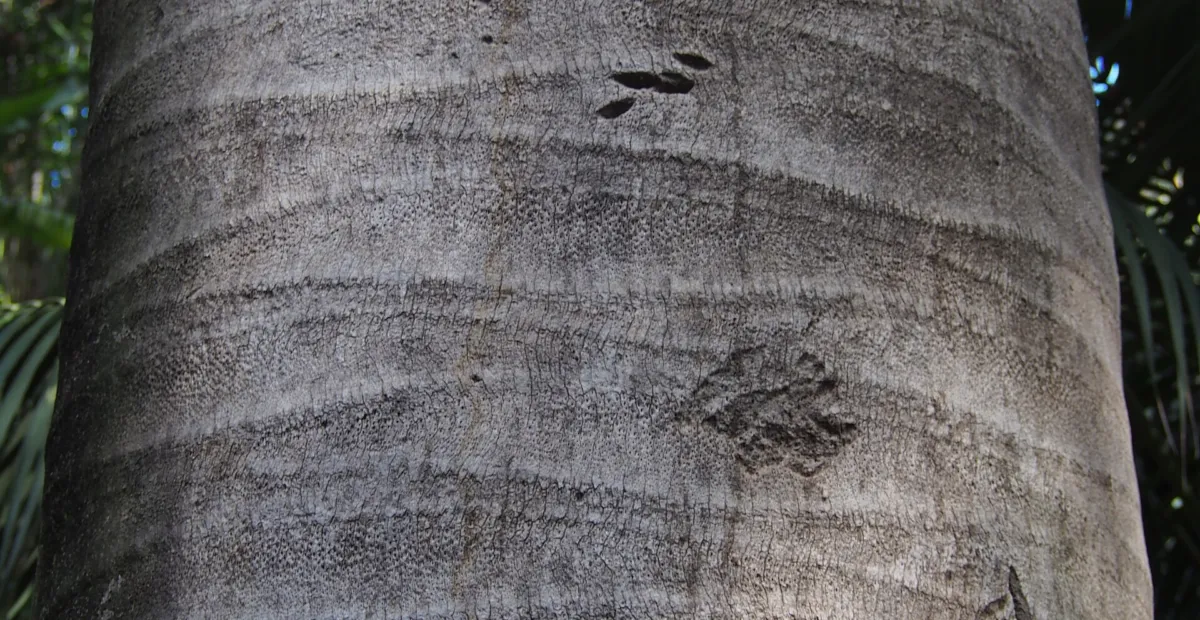
The species has a solitary, exceptionally thick gray trunk that may be swollen at the base and marked by narrow diamond-shaped leaf scars. Its crown is dense and rounded, with long pinnate fronds composed of linear, dark green leaflets. Mature leaves may show a bluish or waxy underside, helping distinguish the plant from many softer-leaved palms.
Flowering
This monoecious palm bears separate male and female flowers on the same plant in branched inflorescences among the leaves. The flowers are small and dark reddish to purple-brown. In the Northern Hemisphere, flowering is generally reported in late spring to early summer, with orange-yellow fruits developing afterward.
Pollination and visitors
The species produces separate male and female flowers on the same palm, but the reviewed authoritative sources did not establish a specific animal pollinator or visitor group. Do not assume bee or butterfly attraction without species-level evidence.
Jubaea chilensis photos
Click any photo for a larger view. Source, author and license are shown separately.
Diseases and pests
Diseases
The main protection is cultural: provide drainage, avoid trunk injury, remove dead material carefully, and do not irrigate persistently wet soil. Watch for declining spear growth, basal rot, or trunk lesions, especially after cold or waterlogging. Obtain palms from reputable nurseries and isolate symptomatic container plants before planting.
Pests
Inspect for scale insects, mealybugs, mites, and palm-feeding larvae, especially on stressed container plants. Improve light, airflow, drainage, and irrigation rather than treating automatically. Remove heavily infested material where practical and use a labeled horticultural oil or other treatment according to the product label and local regulations.
Toxicity and pollen
No authoritative species-specific evidence establishing toxicity to people or pets was identified in the reviewed sources. The fruit, seed, and sap have documented traditional or food-related uses, but this does not establish safety for every preparation or quantity. Avoid ingestion of unverified plant material, and prevent children or pets from chewing unfamiliar fruits or seeds.
- Typical season
- Spring to early summer where flowering occurs
- Pollination / pollen
- Pollen from small palm flowers; airborne relevance not established
Jubaea chilensis is a flowering palm and therefore produces pollen, but reliable species-specific measurements of airborne pollen levels and clinical allergy relevance were not located. Flowering occurs in late spring to early summer in the Northern Hemisphere. People with known palm-pollen sensitivity should limit exposure during flowering and avoid handling shed inflorescences unnecessarily.
Native habitat
Native to central Chile, especially Mediterranean-climate valleys, slopes, and sheltered hollows associated with sclerophyllous forest and thorny shrubland. It occurs from near sea level into upland sites and is commonly associated with well-drained sandy or sandy-loam soils. Natural populations have been reduced by habitat loss, overharvesting, and poor regeneration.
Interesting fact
Jubaea chilensis is the only accepted species in its genus.
Its trunk can become exceptionally thick, among the most massive of palms.
The species is native to Mediterranean-climate central Chile.
Traditional sap harvesting can kill the entire palm.
Young plants are especially vulnerable during establishment.
Frequently asked questions (FAQ)
The most relevant questions about this plant, with short and direct answers.
🌱Quick care
How do you care for Jubaea chilensis?⌄
Grow Jubaea chilensis in full sun, sharply drained soil, and water it regularly while young. After establishment, it tolerates drought, but prolonged wet soil can damage the roots.
Is Jubaea chilensis easy to grow?⌄
Jubaea chilensis is relatively easy to grow when planted in a sunny, well-drained site, but it grows extremely slowly and needs protection during its early years. Its eventual size also makes site selection important.
How fast does Jubaea chilensis grow?⌄
Jubaea chilensis grows very slowly, especially during its juvenile years. Growth may accelerate after roughly 12–15 years, but it remains a long-term landscape specimen.
🌤️Environment and placement
What USDA hardiness zones can grow Jubaea chilensis?⌄
Jubaea chilensis is generally suited to USDA Zones 8–10, with established specimens tolerating brief freezes in protected locations. Young palms are less hardy and should be protected from hard frost.
Can Jubaea chilensis grow in cold climates?⌄
Jubaea chilensis can tolerate more cold than many palms, but cold tolerance depends on age, exposure, duration, and soil drainage. In colder areas, grow young plants in containers or use winter protection.
Does Jubaea chilensis need full sun?⌄
Yes, Jubaea chilensis performs best in full sun. Provide an open location with several hours of direct sunlight and enough room for its broad crown and massive mature trunk.
What type of soil is best for Jubaea chilensis?⌄
Use sandy or sandy-loam soil that drains sharply. It can tolerate a range of soil pH, but heavy, poorly drained soil should be amended or avoided.
Can Jubaea chilensis tolerate drought?⌄
Established Jubaea chilensis tolerates drought well because of its adaptation to dry Mediterranean-type conditions. Water deeply during extended drought, particularly if the palm is young or recently transplanted.
Can Jubaea chilensis grow in humid climates?⌄
Jubaea chilensis generally prefers warm, relatively dry or Mediterranean-type conditions rather than persistently hot, humid climates. In humid regions, excellent drainage and good air circulation are especially important.
Is Jubaea chilensis native to the United States?⌄
No, Jubaea chilensis is native to central Chile. In the United States it is grown as an ornamental palm mainly in suitable warm-temperate and Mediterranean-style regions.
💧Care and problems
How often should you water Jubaea chilensis?⌄
Water deeply when the soil has begun to dry during the establishment period, then reduce irrigation once the palm is well rooted. Avoid frequent shallow watering and never allow the root zone to remain waterlogged.
Does Jubaea chilensis need fertilizer?⌄
Jubaea chilensis can grow without heavy feeding, but a balanced palm fertilizer during active growth may support healthier foliage and establishment. Follow the product label and avoid overfertilizing drought-stressed or newly transplanted palms.
Why is my Jubaea chilensis not growing?⌄
Slow growth is normal for Jubaea chilensis, particularly in young plants. Poor drainage, inadequate sunlight, root disturbance, cold damage, or insufficient moisture during establishment can slow it further.
What problems affect Jubaea chilensis?⌄
Jubaea chilensis is generally trouble-free outdoors when properly sited. Young plants are most vulnerable to frost, transplant stress, drought, and poorly drained soil, while container-grown plants may develop glasshouse pests such as spider mites.
Should I remove brown leaves from Jubaea chilensis?⌄
Remove only completely dead or badly damaged leaves, cutting close to the leaf base with clean tools. Do not remove green fronds unnecessarily because they continue supplying energy to the slow-growing palm.
🪴Planting and repotting
When is the best time to plant Jubaea chilensis?⌄
Plant Jubaea chilensis in spring or early summer after severe frost has passed. This gives the roots a long warm season to establish before winter.
Can Jubaea chilensis be grown in a container?⌄
Yes, Jubaea chilensis can be grown in a container for many years because of its extremely slow growth. Use a deep, sturdy pot with drainage holes and move young plants to shelter during severe winter weather.
How do you transplant Jubaea chilensis?⌄
Transplant Jubaea chilensis during warm weather, preserving as much of the root ball as possible and avoiding unnecessary root disturbance. Water it consistently while it reestablishes, but keep the surrounding soil well drained.
How large does Jubaea chilensis get?⌄
Jubaea chilensis can eventually become a very large palm, reaching roughly 50–80 feet in favorable cultivation and developing a massive trunk. Allow substantial clearance from buildings, utilities, pavement, and overhead structures.
✂️Propagation and pruning
How do you propagate Jubaea chilensis?⌄
Propagate Jubaea chilensis from seed, preferably fresh seed. Sow it in a warm, well-drained medium and expect germination to be slow and irregular, often taking several months.
How long do Jubaea chilensis seeds take to germinate?⌄
Jubaea chilensis seeds may germinate in several months, although some batches can take considerably longer. Warm conditions, fresh seed, consistent moisture, and excellent drainage improve the chances of success.
Can Jubaea chilensis be propagated from cuttings?⌄
No practical cutting method is commonly used for Jubaea chilensis. Because it is a solitary palm without normal basal offsets, propagation is normally done from seed.
⚠️Toxicity and safety
Is Jubaea chilensis toxic to dogs or cats?⌄
No confirmed species-specific toxicity classification is established for Jubaea chilensis. Because plant parts and seeds can still cause choking or digestive problems, prevent pets from chewing or swallowing them.
Is Jubaea chilensis safe to plant around children?⌄
Jubaea chilensis is not known to have confirmed species-specific poisonous properties, but its large, stiff fronds, heavy fruit, and eventual trunk size can create physical hazards. Plant it away from play areas and remove fallen material promptly.
Is it legal to collect Jubaea chilensis seeds?⌄
Wild collection may be restricted because Jubaea chilensis is a threatened native palm in Chile and is protected there. Obtain seed from reputable cultivated sources and check local regulations before collecting or importing it.
🌸Flowering and special interest
When does Jubaea chilensis flower?⌄
Jubaea chilensis usually flowers only after reaching substantial maturity, commonly around 40–60 years old. The exact timing varies with climate, cultivation, and the individual palm.
Does Jubaea chilensis produce fruit?⌄
Yes, mature Jubaea chilensis produces yellow to brown, rounded fruits commonly called coquito nuts. Fruit production requires a mature, flowering palm and suitable pollination conditions.
Are Jubaea chilensis fruits edible?⌄
The mature fruits and seeds are traditionally eaten, but home gardeners should use only correctly identified, clean, undamaged material. The species is also conservation-sensitive in its native range, so do not collect wild seed without authorization.
Similar plants
 Pelagodoxa henryana care guidePelagodoxa henryana
 Livistona chinensis care guideLivistona chinensis
 Date Palm (Phoenix dactylifera) care guidePhoenix dactylifera
 Carnarvon Fan Palm (Livistona nitida) care guideLivistona nitida
 Baleares Island date palm (Phoenix canariensis) care guidePhoenix canariensis
 He Queensland fan palm or Australian fan palm (Licuala ramsayi) care guideLicuala ramsayi