
 Source:
Old man palm (Coccothrinax crinita) short overview
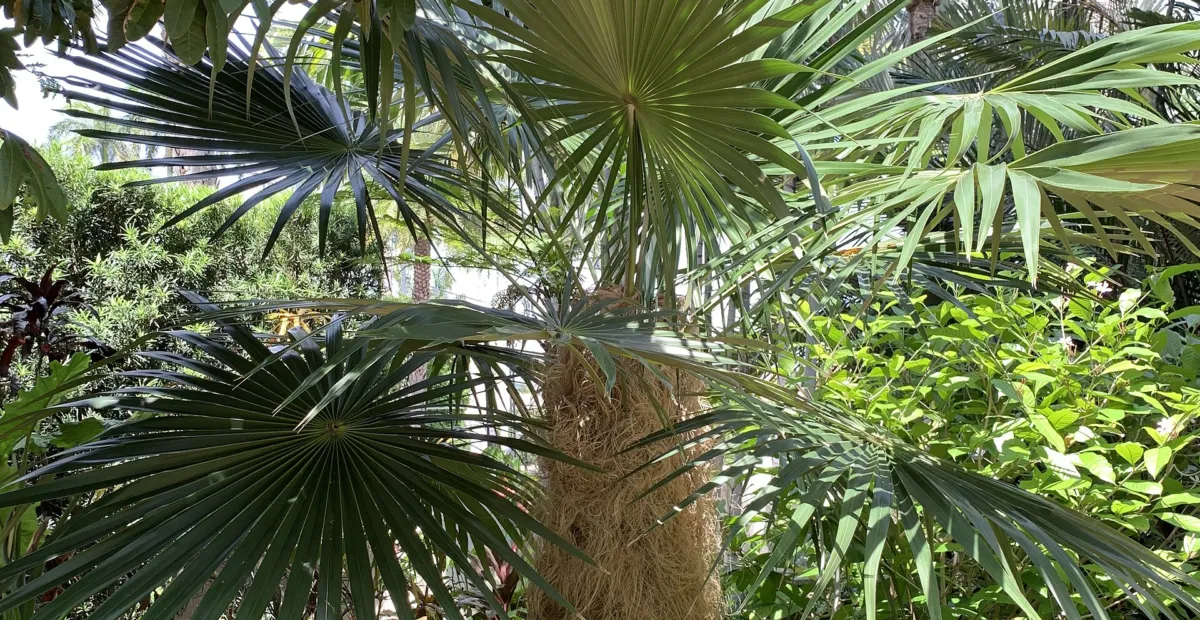
Coccothrinax crinita, commonly called old man palm, is a distinctive Cuban fan palm with a solitary trunk wrapped in long, shaggy tan fibers. Its stiff, palmate leaves are green above and silvery beneath, creating strong architectural interest. Slow-growing and suited to warm, frost-free climates, it performs best in sharply drained soil with sun to partial shade and makes an exceptional specimen for tropical and subtropical landscapes.
Taxonomic classification
Old man palm (Coccothrinax crinita) care guide
Light and placement
Grow in full sun to partial shade, with morning or open overhead light preferred in hot inland sites and brighter exposure acceptable near the coast. Inadequate light can produce weak, stretched growth and a sparse crown; harsh reflected heat combined with drought can scorch leaf segments. Avoid permanently dark indoor positions.
Watering and humidity
Water deeply during establishment whenever the upper soil begins to dry, then allow the root zone to dry moderately between irrigations. Once established, the palm has relatively low water needs and moderate drought tolerance. Increase watering during prolonged summer heat or container culture, but never leave the roots saturated.
Soil and growing medium
Use a sharply drained sandy, loamy, or gritty soil. The species tolerates acidic through mildly alkaline conditions, but persistent saturation and heavy, poorly drained clay can damage roots. A slightly acidic to neutral mix is a practical target; improve drainage rather than relying on frequent amendments.
Feeding
Feed during warm active growth with a balanced palm fertilizer containing micronutrients, following the product label and using a conservative rate. A light spring application and, where the growing season is long, a second summer application are generally sufficient. Do not fertilize drought-stressed, cold-damaged, or waterlogged plants.
Growth and habit
This is a solitary, very slow-growing palm that develops a narrow trunk and a compact crown over time. Its slow pace makes established specimens valuable and means that transplanting or major root disturbance should be minimized. The persistent trunk fibers are naturally retained for many years, though older lower fibers may shed.
Planting and repotting
Plant in spring or early summer once the soil is warm and the danger of cold snaps has passed. Set the palm at the same depth it was growing; do not bury the trunk base. Allow generous clearance for the mature crown and establish with regular deep watering before reducing irrigation.
Repot container plants only when roots have substantially filled the pot, preferably during warm active growth. Use a deep, fast-draining palm mix and disturb the root ball as little as possible. Move gradually into larger containers because overly large pots retain excess moisture around the roots.
Propagation and pruning
Propagation
Propagate from fresh seed; germination can be slow and irregular. Clean the seed, sow it in a sterile, sharply drained medium, keep it warm and evenly—not constantly—moist, and protect seedlings from cold. Seed-grown plants require patience because the species is naturally slow-growing.
Pruning
Remove only dead, broken, or diseased fronds with clean tools. Do not strip the characteristic trunk fibers or cut green fronds for cosmetic reasons. Avoid climbing damage and never cut into the trunk, because palms cannot replace a damaged growing point.
Overwintering
Protect from freezes and prolonged cold. Container specimens should be moved to a bright, sheltered location before temperatures approach the upper 20s °F. Outdoor plants in marginal areas benefit from a warm microclimate, frost cloth during brief cold events, and dry winter conditions around the crown.
Uses
Primarily an ornamental specimen for tropical and subtropical landscapes, courtyards, coastal gardens, and collections. Its distinctive fiber-covered trunk provides year-round architectural interest. Fronds and trunk fibers have traditional thatching uses in Cuba, but wild collection is inappropriate where populations are threatened.
Appearance
The species forms a single slender trunk densely wrapped in long, curly to pendulous tan fibers, giving it a beard-like appearance. Its leaves are stiff, palmate fans with green upper surfaces and distinctly paler, silvery undersides. The crown lacks a crownshaft and provides a strong sculptural silhouette.
Flowering
Small cream to yellow flowers are produced in branched inflorescences that are shorter than the leaves. In warm U.S. landscapes, flowering is most often reported from summer into early fall, although timing varies with climate and maturity.
Pollination and visitors
The small flowers may be visited by insects, but a reliable species-specific pollinator record was not found in the sources reviewed. Pollinator attraction is therefore left unclassified rather than inferred from flower presence alone.
Coccothrinax crinita photos
Click any photo for a larger view. Source, author and license are shown separately.
Diseases and pests
Diseases
No major disease problems are consistently reported for this species. Prevent decline by using well-drained soil, avoiding chronic overwatering, and removing only clearly dead material. Watch stressed plants for general palm root or leaf diseases and seek local diagnosis before applying fungicides.
Pests
Serious pest problems are not usually reported. Monitor stressed or container-grown plants for scale insects, mealybugs, mites, and chewing damage. Improve light, airflow, drainage, and watering consistency before resorting to labeled treatments.
Toxicity and pollen
Authoritative species references reviewed did not identify a documented human or pet toxicity profile. Do not treat the absence of reports as proof of safety; prevent children and pets from chewing plant material, and handle the fibrous trunk carefully because fibers can irritate skin or eyes.
- Pollination / pollen
- Pollen from small palm flowers; airborne-allergy behavior undocumented
The species produces pollen as a flowering palm, but reliable information on airborne dispersal, seasonal allergenicity, and documented human sensitization was not located. People with known palm-pollen allergies should limit exposure during flowering and avoid handling inflorescences closely.
Native habitat
Coccothrinax crinita is endemic to Cuba, especially western Cuban habitats, where it occurs in warm tropical conditions and well-drained soils. It is associated with open or disturbed sites in parts of its range and is reported to be rare in the wild, with habitat loss and harvesting pressure contributing to concern.
Interesting fact
The shaggy trunk fibers are the feature behind the common name old man palm. The species is native only to Cuba and is considered rare in parts of its natural range. Its fibers and fronds have traditionally been used for thatching and other practical materials.
Frequently asked questions (FAQ)
The most relevant questions about this plant, with short and direct answers.
🌱Quick care
What is Coccothrinax crinita commonly called?⌄
Coccothrinax crinita is commonly called old man palm. It is a Cuban fan palm named for the shaggy, fiber-covered trunk that resembles a beard.
How much sunlight does an old man palm need?⌄
Old man palm grows best in full sun, although it can tolerate partial shade. Strong light helps maintain compact growth and a healthy crown.
How often should I water Coccothrinax crinita?⌄
Water an old man palm regularly while it is establishing, then reduce watering once the root system is established. Allow the soil to dry somewhat between waterings, because constantly wet soil can damage the roots.
Is old man palm drought tolerant?⌄
Yes, Coccothrinax crinita has moderate drought tolerance once established. It still performs best with occasional deep watering during prolonged hot, dry weather.
How fast does an old man palm grow?⌄
Old man palm is slow-growing, especially as a young plant. It can remain small for years before developing a noticeable trunk and mature ornamental form.
🌤️Environment and placement
Where is Coccothrinax crinita native to?⌄
Coccothrinax crinita is native to western Cuba. In the United States, it is most suited to warm, frost-free or nearly frost-free regions.
What USDA hardiness zone is best for old man palm?⌄
Old man palm is best treated as a warm-climate palm and should be protected from freezing temperatures. Exact hardiness limits vary with plant size, exposure, duration of cold, and local growing conditions.
Can old man palm grow outdoors in Florida?⌄
Yes, old man palm is well suited to warm parts of Florida, especially South Florida. Provide full sun, sharply drained soil, and protection from occasional freezes.
Can Coccothrinax crinita grow in a container?⌄
Yes, Coccothrinax crinita can be grown in a large container while young. Use a fast-draining palm or cactus-style mix and move the container to shelter before freezing weather.
How large does an old man palm get?⌄
Old man palm commonly reaches about 15 to 20 feet in cultivation, although exceptional plants may become taller. It develops a solitary trunk and a broad crown of fan-shaped leaves.
💧Care and problems
What type of soil does Coccothrinax crinita need?⌄
Old man palm needs sharply drained sandy, loamy, gritty, rocky, or otherwise porous soil. Heavy wet soil should be amended or avoided, and planting on a mound can improve drainage.
Does old man palm tolerate salt or coastal conditions?⌄
Old man palm can tolerate some coastal exposure, but its salt tolerance is not well established and should not be assumed to be high. Give it good drainage and protection from direct, persistent salt spray when possible.
What problems commonly affect Coccothrinax crinita?⌄
No major pest or disease problems are consistently reported for Coccothrinax crinita. Poor drainage, overwatering, root disturbance, and cold injury are more likely concerns than routine pest damage.
Why is my old man palm turning brown?⌄
Brown fronds can result from cold injury, drought, transplant stress, excessive moisture, salt exposure, or natural aging. Check drainage and watering first, and protect the palm from freezing temperatures.
Should I fertilize an old man palm?⌄
A slow-release palm fertilizer can support growth during the active growing season. Apply it only to established plants and follow the product label to avoid salt buildup or nutrient imbalance.
🪴Planting and repotting
How do I plant Coccothrinax crinita in the ground?⌄
Plant old man palm at the same depth as it was growing in its container, in full sun and sharply drained soil. Water deeply during establishment, but do not leave the root zone saturated.
Should I plant old man palm on a mound?⌄
Planting on a raised mound can improve success where native soil drains slowly. A mound made from well-drained sandy or gravelly material is especially useful in wet or compacted sites.
When is the best time to plant an old man palm?⌄
Plant old man palm during the warm growing season, after the danger of freezing weather has passed. Warm soil encourages root establishment before the next cool season.
When should I repot Coccothrinax crinita?⌄
Repot Coccothrinax crinita when roots have filled the container or drainage has declined, preferably during warm weather. Move it into only a slightly larger pot and disturb the root ball as little as possible.
✂️Propagation and pruning
How do you propagate old man palm?⌄
Old man palm is propagated primarily from seeds. Sow fresh, cleaned seeds in a warm, well-drained medium and expect germination to be slow and irregular.
How long do old man palm seeds take to germinate?⌄
Old man palm seeds may take about six months to germinate, although timing varies with seed freshness and growing conditions. Maintain warmth and even moisture without keeping the medium waterlogged.
Can Coccothrinax crinita be propagated from cuttings?⌄
No, stem cuttings are not a practical propagation method for this solitary palm. Propagation is normally done from seed because the plant does not produce basal offsets.
Should I remove the beard-like fibers from an old man palm?⌄
No, the trunk fibers are the plant’s defining ornamental feature and can be left in place. Remove only clearly loose, hazardous material, and avoid damaging the trunk or attached leaf bases.
Should I prune old man palm fronds?⌄
Prune only dead, broken, or hazardous fronds, using clean tools. Avoid removing green fronds or cutting close to the trunk because excessive pruning can stress the palm and damage its natural form.
⚠️Toxicity and safety
Is Coccothrinax crinita toxic to dogs or cats?⌄
A species-specific toxicity profile for Coccothrinax crinita was not located, so its safety for dogs and cats is uncertain. Prevent pets from chewing the plant and contact a veterinarian or poison service if ingestion occurs.
Are old man palm trunk fibers sharp or irritating?⌄
The trunk fibers are generally ornamental rather than known toxins, but they may be rough or irritating to skin. Wear gloves when handling the trunk and avoid placing the palm beside narrow walkways.
🌸Flowering and special interest
Does old man palm produce flowers?⌄
Yes, mature old man palm produces clusters of small creamy-white to yellow flowers. Flowering is typically followed by round pink, purple, or eventually dark fruits.
When does Coccothrinax crinita bloom?⌄
In warm climates, old man palm commonly blooms in spring. The flowers may be followed by colorful fruits later in the summer when pollination is successful.
What do old man palm fruits look like?⌄
The fruits are small, round, and typically pink to purple or purplish-black as they mature. They develop after flowering on branched inflorescences that may hang near the leaves.
Similar plants
 Nipa Palm (Nypa fruticans) care guideNypa fruticans
 Livistona chinensis care guideLivistona chinensis
 Latanier de l’Ile Ronde and latanier de Maurice (Latania loddigesii) care guideLatania loddigesii
 Oenocarpus bacaba care guideOenocarpus bacaba
 Nibong palm is an Asian species of palm tree in the family Arecaceae (Oncosperma tigillarium) care guideOncosperma tigillarium
 Round-leaved licuala palm (Licuala grandis) care guideLicuala grandis