
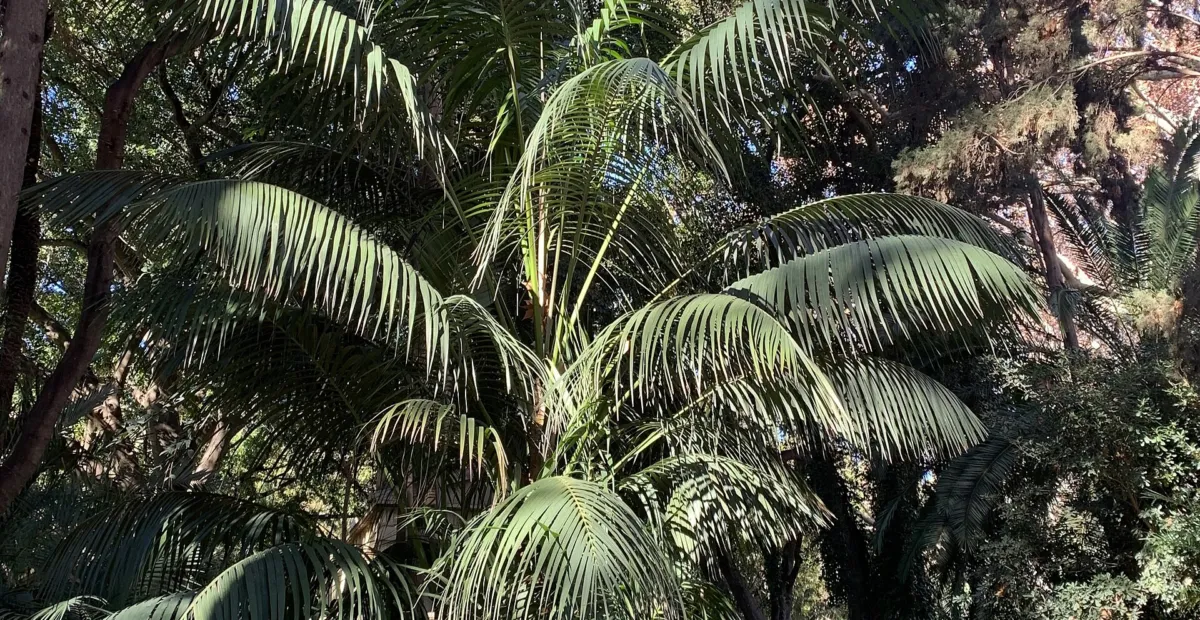
 Source:
Howea forsteriana short overview
Howea forsteriana is a graceful evergreen palm native to Lord Howe Island and widely grown in the United States as a durable houseplant or warm-climate landscape specimen. Its slender trunk supports long, arching, feather-like fronds, while mature plants may produce creamy flowers and reddish-brown fruit. Give it bright filtered light, moderate watering, excellent drainage, and protection from freezing temperatures.
Taxonomic classification
Howea forsteriana care guide
Light and placement
Place indoors in bright filtered light, such as near an east- or north-facing window or back from a brighter south- or west-facing exposure. Outdoors, provide partial shade or filtered sun, especially where afternoon light is intense. Too much direct sun can bleach or scorch leaflets; too little light produces weak, stretched growth and reduces flowering.
Watering and humidity
Water thoroughly when the upper layer of mix has begun to dry, then let excess drain completely. Keep the root zone moderately and evenly moist during active growth, but allow slightly more drying in winter or in lower light. Never leave the pot standing in water. Brown tips can reflect dry air, salt buildup, drought, or root stress.
Soil and growing medium
Use a porous, humus-rich mix that drains freely while retaining modest moisture. A quality indoor potting mix amended with bark and perlite works well. The species tolerates clay, loam, sand, acidic, neutral, and slightly alkaline soils outdoors, but saturated roots commonly cause decline.
Feeding
Feed during active growth with a balanced palm or houseplant fertilizer at the label rate, or use a controlled-release formulation. Container plants generally need less fertilizer than landscape specimens. Do not fertilize dry, chilled, recently repotted, or visibly declining plants; water first if the mix is dry.
Growth and habit
This is a slow-growing, single-stemmed palm with an upright trunk and an arching crown. It remains manageable for many years in containers but eventually becomes a substantial specimen. Grouped pots may contain several seedlings; they do not indicate true clumping growth. Minimal structural pruning is normally needed.
Planting and repotting
Plant outdoors in spring after cold weather has passed, or establish indoors whenever active growth is beginning. Set the root ball at the same depth it was previously growing. Space landscape specimens about 12–24 feet apart where a full crown can develop, with shelter from harsh afternoon sun and cold winds.
Repot only when roots have substantially filled the container, usually every several years. Move up one pot size in spring, disturb the root ball as little as possible, and ensure the new container has drainage holes. Avoid planting too deeply, since buried trunk tissue is prone to rot.
Propagation and pruning
Propagation
Propagation is primarily by fresh seed. Sow promptly in a warm, evenly moist, well-drained medium because palm seed viability declines with storage. Germination can be slow and irregular. Dividing a container grouping is risky because apparent clumps are usually multiple individual seedlings rather than a naturally suckering plant.
Pruning
Remove only fully dead or badly damaged fronds, cutting the petiole close to the trunk without injuring living tissue. Do not cut green leaf tips for cosmetic shaping; trim only brown tissue along the leaflet outline if desired. Never remove the growing point.
Overwintering
Move container plants indoors before temperatures approach freezing. Keep them in bright filtered light, away from heat vents and cold drafts, and reduce watering as growth slows without allowing the root ball to become bone dry. Outdoor plants in Zone 9b should be protected from frost and prolonged temperatures near 25°F.
Uses
Primarily used as an indoor specimen, office or lobby plant, patio container, sheltered accent, and warm-climate landscape palm. It provides durable evergreen structure and is especially useful where lower light tolerance and low pruning needs are desirable. It has no supported culinary or medicinal use in the reviewed sources.
Appearance
The palm forms a slender, mostly solitary trunk marked by old leaf scars. Long pinnate fronds arch outward and carry many linear, drooping leaflets, creating a soft feathered silhouette. Young trunks are green and mature toward brown. It lacks spines and is distinguished from the related Belmore sentry palm by its generally non-recurved fronds.
Flowering
Mature palms produce branched, drooping inflorescences below the leaves. Creamy to white male and female flowers occur on the same inflorescence, with male flowering generally preceding female flowering. Indoor plants may flower rarely or not at all; outdoor flowering is more likely with age, warmth, and some sun exposure.
Pollination and visitors
The species is primarily wind-pollinated. Insects may visit the inflorescences, but available evidence does not support classifying it as a strongly animal-pollinated garden plant.
Howea forsteriana photos
Click any photo for a larger view. Source, author and license are shown separately.
Diseases and pests
Diseases
Avoid chronically wet soil, poor drainage, and overhead watering. Fungal leaf spots may appear as brown or yellow lesions; remove badly affected foliage, improve air circulation, and keep leaves drier. Root problems are usually linked to overwatering or cold, waterlogged media.
Pests
Inspect undersides of leaflets for spider mites, mealybugs, and scale. Quarantine new plants, rinse foliage periodically, and treat confirmed infestations with a labeled horticultural oil or insecticidal soap according to product directions. Avoid stressing the palm with severe dryness or excessive fertilizer.
Toxicity and pollen
ASPCA lists Howea forsteriana as non-toxic to dogs and cats. No specific toxic principle is identified in that listing. Chewing any fibrous plant material can still cause mechanical gastrointestinal upset, and treated foliage or potting products may pose separate risks.
- Typical season
- Usually fall to winter when flowering occurs in the United States; local timing varies
- Pollination / pollen
- Light, wind-dispersed palm pollen
As a wind-pollinated palm, it releases pollen from mature flowering plants, but the reviewed sources do not establish a high airborne-allergy risk for this species. Indoor plants rarely flower, so household exposure is generally limited. People with known pollen sensitivity should avoid handling flowering material closely.
Native habitat
Howea forsteriana is endemic to Lord Howe Island in the southwest Pacific, where it occurs in wet tropical coastal and low-elevation environments. It favors warm conditions, moisture-retentive but drained soils, and filtered light, while cultivated plants show useful tolerance of indoor conditions and moderate salt exposure.
Interesting fact
The species is endemic to Lord Howe Island. It became especially popular in Victorian interiors and remains valued for tolerating lower light than many palms. It is often sold in grouped containers, although the species itself is not a naturally suckering palm. Mature plants may take about 15 years to fruit.
Frequently asked questions (FAQ)
The most relevant questions about this plant, with short and direct answers.
🌱Quick care
What is Howea forsteriana?⌄
Howea forsteriana is a slow-growing evergreen palm commonly grown as a durable indoor specimen plant. It is native to Lord Howe Island and is also known as Kentia palm in US horticulture.
How much light does Howea forsteriana need indoors?⌄
Give Howea forsteriana bright filtered or indirect light to partial shade. It tolerates lower light than many palms, but growth may slow and the fronds may become less full.
How often should I water Howea forsteriana?⌄
Water when the upper part of the potting mix begins to dry, then drain thoroughly. Keep the mix moderately and evenly moist, but never leave the roots sitting in water.
Is Howea forsteriana easy to grow indoors?⌄
Yes, Howea forsteriana is one of the more forgiving indoor palms. It handles moderate shade, average household humidity, and occasional missed watering better than many tropical palms.
🌤️Environment and placement
Where should I place Howea forsteriana in my home?⌄
Place it near an east- or north-facing window, or a brighter window several feet from direct sun. Keep it away from heating vents, air-conditioner drafts, and cold glass during winter.
Can Howea forsteriana tolerate low light?⌄
Howea forsteriana can tolerate relatively low indoor light, but it performs best in bright filtered light. Prolonged deep shade can cause sparse growth, yellowing, or weak fronds.
Can Howea forsteriana grow in direct sunlight?⌄
It can adapt to some gentle direct sun, especially outdoors, but harsh afternoon sun may scorch indoor-acclimated fronds. Increase exposure gradually and provide protection during the hottest part of the day.
What temperature is best for Howea forsteriana?⌄
Maintain normal indoor temperatures, avoiding prolonged exposure below about 50°F. Outdoors, established plants are generally suited to warm USDA Zones 9b–11 with protection from freezes.
Can Howea forsteriana stay outside in winter?⌄
Only in frost-free or very mild areas should Howea forsteriana remain outdoors year-round. Brief cold near 25°F may be tolerated, but freezing conditions and repeated cold exposure can cause serious damage.
Does Howea forsteriana need high humidity?⌄
Howea forsteriana does not require greenhouse-level humidity and usually adapts to average household conditions. Moderate humidity can reduce brown tips, especially in heated or air-conditioned rooms.
💧Care and problems
Why are the leaves of my Howea forsteriana turning brown?⌄
Brown tips commonly result from dry soil, very dry air, salt buildup, or inconsistent watering. Check the roots and drainage, water thoroughly when needed, and occasionally flush the potting mix with fresh water.
Why are Howea forsteriana leaves turning yellow?⌄
Yellow leaves are often caused by overwatering, poor drainage, or naturally aging lower fronds. Let the mix partially dry between waterings and inspect the roots for dark, soft, or decaying tissue.
Why does my Howea forsteriana have brown spots?⌄
Brown spots can follow sun scorch, cold injury, underwatering, or pest damage. Review recent changes in light and temperature, and inspect the undersides of leaves for mites, scale, or thrips.
What pests affect Howea forsteriana?⌄
Howea forsteriana may be affected by spider mites, scale insects, and thrips, particularly when conditions are hot and dry. Wash the foliage gently and treat infestations promptly with a product labeled for indoor plants.
Should I fertilize Howea forsteriana?⌄
Feed Howea forsteriana lightly during active spring and summer growth with a balanced palm or houseplant fertilizer. Avoid heavy feeding in winter and follow the product label to reduce the risk of salt injury.
Should I mist Howea forsteriana?⌄
Misting is not essential for Howea forsteriana and provides only short-lived humidity. A humidifier, grouping plants, or keeping the palm away from dry drafts is generally more effective.
🪴Planting and repotting
What soil is best for Howea forsteriana?⌄
Use a humus-rich, well-drained loam or a porous container mix formulated for palms and tropical foliage plants. The container must have drainage holes so excess water can escape.
When should I repot Howea forsteriana?⌄
Repot Howea forsteriana in spring only when it is clearly root-bound or the potting mix has broken down. It dislikes unnecessary root disturbance, so move it into a slightly larger container rather than a very large one.
Does Howea forsteriana need a deep pot?⌄
Use a stable container that is only modestly larger than the root ball and has excellent drainage. A top-heavy palm may need a heavier pot, but excessive unused soil can stay wet and damage the roots.
Can Howea forsteriana grow in the ground?⌄
Howea forsteriana can grow in the ground in warm, protected US climates, especially USDA Zones 9b–11. Plant it in well-drained soil with filtered light or partial shade and protection from severe cold.
✂️Propagation and pruning
How do you propagate Howea forsteriana?⌄
Howea forsteriana is normally propagated from seed rather than cuttings or division. Fresh, mature seed is cleaned, sown in a warm moist medium, and kept in indirect light; germination can be slow and irregular.
Can Howea forsteriana be propagated from cuttings?⌄
No, ordinary stem or leaf cuttings are not a reliable way to propagate Howea forsteriana. Unlike many houseplants, it is generally produced from seed because individual stems do not readily root as cuttings.
How long does Howea forsteriana seed take to germinate?⌄
Howea forsteriana seed may germinate in about three months, but some seeds take much longer. Warm conditions around 85–104°F, consistent moisture, and fresh mature seed improve the chances of success.
Can you divide a Howea forsteriana?⌄
A single-stemmed Howea forsteriana should not be divided because it does not naturally form separable clumps. Attempting to split the root ball can cause severe root damage and plant decline.
Should I prune Howea forsteriana?⌄
Prune only dead, badly damaged, or completely brown fronds, cutting them near the base without injuring the trunk. Do not remove green fronds merely to reshape the palm because this reduces its energy reserves.
⚠️Toxicity and safety
Is Howea forsteriana toxic to dogs?⌄
No, Howea forsteriana is listed as non-toxic to dogs. Even non-toxic plant material can cause temporary vomiting or stomach upset if eaten in quantity, so contact a veterinarian if symptoms persist.
Is Howea forsteriana toxic to cats?⌄
No, Howea forsteriana is listed as non-toxic to cats. Prevent excessive chewing because any plant material may still cause gastrointestinal upset in some animals.
🌸Flowering and special interest
Does Howea forsteriana flower indoors?⌄
Howea forsteriana can flower indoors, but it is uncommon because mature size, age, and sufficient light are usually required. Outdoor plants with some sun exposure are more likely to produce flowers.
What do Howea forsteriana flowers look like?⌄
The flowers are small and creamy to white, appearing on long branched inflorescences beneath the leaves. Male and female flowers occur on the same inflorescence.
When does Howea forsteriana bloom?⌄
Outdoor Howea forsteriana commonly flowers in late fall or winter, often around November and December in suitable climates. Indoor flowering is much less predictable.
Does Howea forsteriana produce fruit?⌄
Yes, mature Howea forsteriana can produce oval fruits that ripen reddish-brown. Fruiting generally requires a large, established plant and may not occur until the palm is roughly 15 years old.
Similar plants
 Reclining Date Palm (Phoenix reclinata) care guidePhoenix reclinata
 Date Palm (Phoenix dactylifera) care guidePhoenix dactylifera
 Baleares Island date palm (Phoenix canariensis) care guidePhoenix canariensis
 Jubaea chilensis care guideJubaea chilensis
 Ribbon Fan Palm (Livistona decora) care guideLivistona decora
 Livistona chinensis care guideLivistona chinensis