
 Source:
Dypsis decaryi short overview
Dypsis decaryi is a striking solitary palm native to southeastern Madagascar, recognized by its gray, ringed trunk and fronds arranged from a distinctly triangular crown base. In warm parts of the United States it makes a dramatic full-sun specimen for landscapes, courtyards, and large containers. It tolerates dry, poor soils once established, but needs excellent drainage and protection from hard freezes.
Taxonomic classification
Dypsis decaryi care guide
Light and placement
Give full sun, ideally with an open southern or southwestern exposure and unobstructed overhead light. Light shade is tolerated, especially when young, but insufficient light can produce weaker, more open fronds and slower growth. Intense sun is generally suitable after gradual acclimation; sudden exposure of shade-grown plants may scorch leaflets.
Watering and humidity
Water deeply when the upper several inches of soil have dried, then let excess water drain away completely. Provide more consistent irrigation during establishment and hot active growth, and reduce frequency in cool or rainy weather. Established plants tolerate some dryness, but repeated severe drought can slow growth and yellow foliage. Never keep the root zone waterlogged.
Soil and growing medium
Use a sharply draining soil or palm/cactus-style mix containing sand, grit, or other mineral material. The species tolerates poor, dry soils, but compacted clay that stays wet can cause root problems. Slightly acidic through mildly alkaline conditions are generally suitable; drainage matters more than a narrow pH target.
Feeding
Feed during active growth with a palm fertilizer that supplies nitrogen, potassium, magnesium, and trace elements. Apply at label rates in spring and summer, watering afterward if the soil is dry. Do not fertilize drought-stressed, freshly transplanted, dormant, or cold-damaged plants; yellowing may reflect nutrient shortage or poor roots rather than a need for excessive fertilizer.
Growth and habit
This is a solitary, non-suckering palm that develops one main trunk and a crown of long pinnate fronds. It can establish slowly, then grow more actively with warmth, regular irrigation, and adequate nutrition. Mature plants need room for their broad crown and benefit from keeping competing vegetation away from the trunk.
Planting and repotting
Plant after the soil has warmed and nighttime temperatures are reliably mild. Set the root ball at the same depth it occupied in its nursery container, never covering the trunk base. Give a solitary specimen ample clearance for its mature crown and stake only if wind-rock is a problem during establishment.
Repot container plants only when roots substantially fill the pot, preferably during active warm-season growth. Move up one pot size using a very free-draining palm or cactus mix. Avoid burying the trunk base, and allow the root ball to drain completely after watering.
Propagation and pruning
Propagation
Propagate from fresh seed cleaned of fruit pulp and sown in a warm, well-drained medium. Germination may be uneven and can take several weeks to months. Keep the medium lightly moist rather than wet, and transplant seedlings carefully because palms develop sensitive roots.
Pruning
Remove only fully dead, broken, or dangerously hanging fronds, cutting close to but not into the trunk. Do not strip green fronds for cosmetic reasons, and never cut the growing point. Clean tools between plants to reduce the spread of pathogens.
Overwintering
In USDA Zones 9b and warmer, protect the palm during unusual cold snaps with frost cloth and a dry, sheltered microclimate. Container plants should be moved indoors or into a bright, frost-free enclosure before temperatures approach the mid-20s°F. Keep winter watering restrained and provide strong light and airflow.
Uses
Used primarily as an architectural specimen, accent palm, courtyard plant, buffer planting, or large-container subject in warm regions. Its solitary trunk and geometric crown suit dry tropical, desert, and Mediterranean-style designs. It is not recommended as a food or medicinal plant without separate authoritative evidence.
Appearance
The species forms a solitary gray to gray-brown trunk with conspicuous rings and a distinctive triangular crown base. Long pinnate fronds emerge in three visually separated ranks, creating a geometric, somewhat sculptural silhouette. Leaflets are blue-green to gray-green, while older trunk surfaces may become fibrous.
Flowering
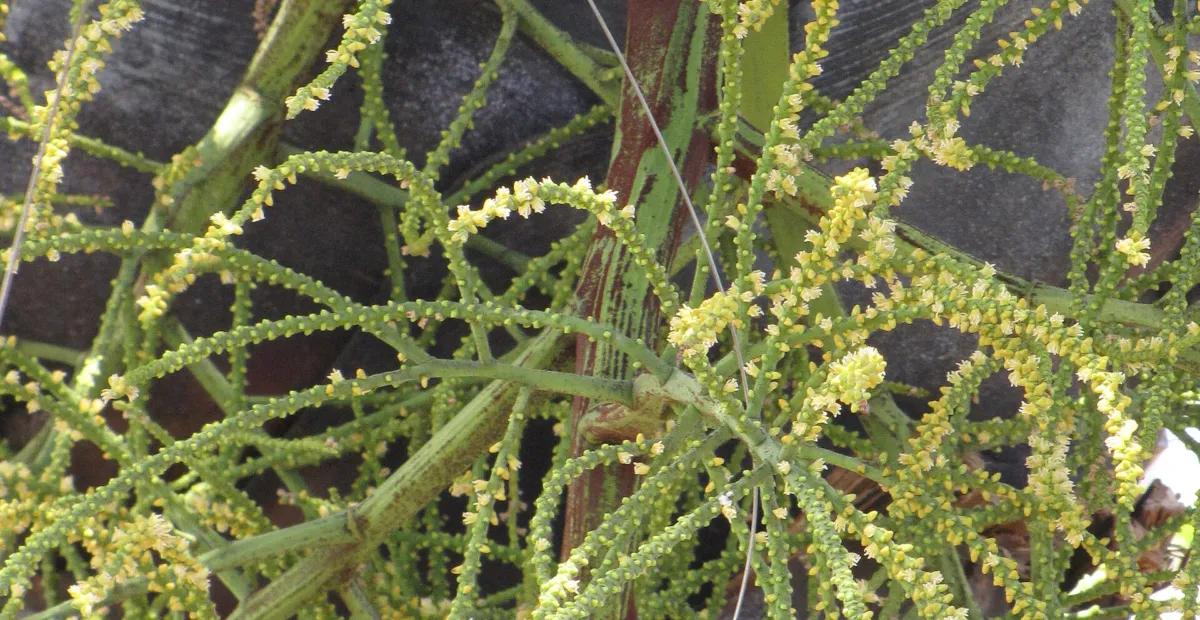
This monoecious palm produces branched inflorescences from the leaf axils. Small yellow-green flowers occur on the same plant, with flowering reported through much of the year in suitable warm climates. Flowers are followed by fleshy, initially pale glaucous blue-black drupes.
Pollination and visitors
The flowers are structurally consistent with insect pollination, and small insects are the most defensible visitor group for Dypsis based on available palm floral research. A species-specific pollinator record for Dypsis decaryi was not found, so attraction is rated low rather than assumed to be high.
Dypsis decaryi photos
Click any photo for a larger view. Source, author and license are shown separately.
Diseases and pests
Diseases
The main cultural risk is root or trunk decline from persistently wet, poorly drained soil. Plant high enough for drainage, avoid routine irrigation in saturated ground, remove severely damaged tissue with sterilized tools, and improve drainage before using chemicals. Monitor stressed plants for secondary fungal problems.
Pests
Usually relatively pest-resistant when grown outdoors, but inspect stressed or indoor plants for scale, mealybugs, mites, and leaf-chewing insects. Improve light and airflow, isolate infested containers, and use targeted horticultural oil or insecticidal soap only as label directions allow.
Toxicity and pollen
No authoritative species-specific human or companion-animal toxicity assessment was located in the sources reviewed. Do not treat the absence of evidence as proof of safety: prevent children and pets from chewing leaves, flowers, fruit, or seeds, and seek professional advice after ingestion or a suspected reaction.
- Typical season
- Year-round in warm climates; no United States allergy calendar was located
- Pollination / pollen
- Pollen from small flowers; airborne relevance undocumented
Specific airborne-pollen and allergy data for Dypsis decaryi were not located. Because it is a flowering palm, pollen is produced during flowering, but the amount released into the air and its clinical allergy importance are uncertain. People with strong pollen sensitivity should avoid handling flowers during peak bloom if symptoms occur.
Native habitat
Dypsis decaryi is endemic to southeastern Madagascar, where it occurs in warm, seasonally dry environments and can grow in poor soils. Its natural distribution is restricted, so cultivated specimens should be sourced responsibly rather than collected from the wild. Good drainage and heat are central to its ecology.
Interesting fact
The common name triangle palm refers to the three-sided crown base formed where the fronds emerge. The species is endemic to southeastern Madagascar and is valued for its unusual architectural silhouette. Its gray trunk becomes ringed and fibrous with age, while the long pinnate leaves may arch or droop.
Frequently asked questions (FAQ)
The most relevant questions about this plant, with short and direct answers.
🌱Quick care
What is Dypsis decaryi commonly called in the United States?⌄
Dypsis decaryi is commonly called the triangle palm. The name refers to the triangular arrangement formed by its leaf bases and three rows of fronds.
How much sunlight does Dypsis decaryi need?⌄
Dypsis decaryi grows best in full sun, although established plants can tolerate some partial shade. More light generally helps maintain its characteristic blue-green foliage and strong form.
How often should you water Dypsis decaryi?⌄
Water Dypsis decaryi deeply, then allow the soil to dry somewhat between waterings. It is drought tolerant once established, but regular irrigation during prolonged heat and drought can improve growth.
Is Dypsis decaryi drought tolerant?⌄
Yes, Dypsis decaryi is drought tolerant after establishment. It performs best when drought tolerance is combined with fast-draining soil rather than frequent watering in heavy, poorly drained ground.
How fast does Dypsis decaryi grow?⌄
Dypsis decaryi is generally slow to moderate growing, with faster growth possible in warm conditions with adequate water and nutrition. Growth is usually slower in containers, shade, or cool climates.
🌤️Environment and placement
What USDA hardiness zones are suitable for Dypsis decaryi?⌄
Dypsis decaryi is generally suited to warm USDA Zones 9b through 11, depending on local exposure and winter conditions. It is frost-tender and may be damaged by temperatures around 24–28°F.
Can Dypsis decaryi survive frost?⌄
Dypsis decaryi tolerates only light, brief frost and should be protected when temperatures approach 24–28°F. Freezing conditions can burn the foliage and damage or kill the growing point.
Can Dypsis decaryi grow indoors?⌄
Dypsis decaryi is primarily an outdoor landscape palm and is difficult to accommodate indoors at maturity. A young plant can be grown temporarily in a very bright space with excellent drainage and adequate room.
How large does Dypsis decaryi get?⌄
Dypsis decaryi commonly reaches about 25–35 feet tall with a crown spread near 15 feet in suitable landscapes. Size varies with climate, soil, irrigation, and growing conditions.
Is Dypsis decaryi suitable for a container?⌄
Yes, young Dypsis decaryi can grow in a large container with fast-draining potting mix and adequate drainage holes. Containers restrict mature size but eventually become limiting because this is a substantial palm.
Does Dypsis decaryi tolerate wind?⌄
Dypsis decaryi can tolerate windy conditions once established, especially in well-drained soil. Strong or persistent winds may still tear its long feather-like fronds and reduce its ornamental appearance.
💧Care and problems
Why are the leaves of my Dypsis decaryi turning yellow?⌄
Yellowing leaves can result from potassium deficiency, poor drainage, overwatering, or general nutrient stress. Correct drainage and use a palm fertilizer that supplies potassium and other micronutrients according to the label.
What is the best fertilizer for Dypsis decaryi?⌄
Use a complete palm fertilizer containing potassium and micronutrients such as magnesium, manganese, and iron. Apply it during active growth according to the product label, avoiding excessive fertilizer in dry or poorly drained soil.
Why does Dypsis decaryi have brown leaf tips?⌄
Brown tips commonly result from drought stress, low humidity, salt buildup, fertilizer injury, or cold damage. Check irrigation and drainage first, and avoid letting concentrated fertilizer or salty water accumulate around the roots.
Does Dypsis decaryi have serious pest problems?⌄
Dypsis decaryi is generally considered relatively resistant to serious pest problems. Inspect stressed plants for scale, mites, or other common palm pests, particularly when growing conditions are hot and dry.
Can Dypsis decaryi grow in clay soil?⌄
Dypsis decaryi can tolerate some clay, but heavy clay that stays wet greatly increases the risk of root problems. Improve drainage before planting, or grow the palm in a raised area or amended planting site.
🪴Planting and repotting
What type of soil does Dypsis decaryi need?⌄
Dypsis decaryi needs fast-draining sandy or loamy soil. It tolerates relatively poor soil, but growth is usually better with adequate organic matter, regular moisture during establishment, and good drainage.
When is the best time to plant Dypsis decaryi?⌄
Plant Dypsis decaryi during the warmest part of the growing season after the danger of frost has passed. Warm soil helps new roots establish before cooler weather arrives.
How should you plant Dypsis decaryi in the ground?⌄
Plant Dypsis decaryi at the same depth it was growing in its container, in a sunny site with excellent drainage. Water deeply after planting and maintain consistent moisture while the root system establishes.
How often should Dypsis decaryi be repotted?⌄
Repot Dypsis decaryi only when roots have substantially filled the container or drainage has declined. Move it into a slightly larger pot with a fast-draining palm or cactus-style mix rather than making a large jump in container size.
✂️Propagation and pruning
How do you propagate Dypsis decaryi?⌄
Dypsis decaryi is usually propagated from seed. Sow fresh, viable seed in a warm, sterile, well-drained medium and keep it lightly and consistently moist until germination.
Can Dypsis decaryi be propagated from cuttings?⌄
No, Dypsis decaryi is not normally propagated from stem or leaf cuttings. Seed propagation is the practical method because this species is a solitary, single-trunk palm.
Can you prune Dypsis decaryi?⌄
Prune Dypsis decaryi only to remove fully dead, damaged, or hazardous fronds. Do not cut healthy green fronds or heavily shorten the crown, because excessive pruning can weaken the palm.
Should you remove old leaf bases from Dypsis decaryi?⌄
Remove old leaf bases only when they detach easily or present a safety concern. Avoid aggressive trunk cleaning that cuts into living tissue or damages the palm's distinctive triangular structure.
⚠️Toxicity and safety
Is Dypsis decaryi poisonous to dogs or cats?⌄
Species-specific toxicity information for Dypsis decaryi is limited, so it should not be assumed to be safe for pets. Prevent pets from chewing the foliage, seeds, or fruit and contact a veterinarian or poison-control service if ingestion occurs.
Is Dypsis decaryi poisonous to people?⌄
Confirmed species-specific toxicity information for Dypsis decaryi is limited. Avoid eating its plant parts, keep seeds and fruit away from children, and seek medical advice after suspected ingestion.
🌸Flowering and special interest
Does Dypsis decaryi flower?⌄
Yes, Dypsis decaryi produces small yellowish flowers on branched inflorescences that emerge near the bases of the lower leaves. Flowering is more likely when the palm is mature and growing in a warm, sunny site.
When does Dypsis decaryi bloom?⌄
Dypsis decaryi commonly flowers in spring, although mature palms in warm climates may produce inflorescences at other times. Flowering depends on age, climate, light, nutrition, and overall health.
Does Dypsis decaryi produce fruit?⌄
Yes, Dypsis decaryi produces small oval fruits that change from green to pale yellowish or whitish as they mature. The fruits contain seeds that can be used for propagation when fresh and viable.
Why is Dypsis decaryi called a triangle palm?⌄
Dypsis decaryi is called a triangle palm because its leaf bases and fronds emerge in three distinct rows, creating a triangular form near the top of the trunk. This architectural shape is its defining ornamental feature.
Similar plants
 Old man palm (Coccothrinax crinita) care guideCoccothrinax crinita
 Red sealing wax palm (Cyrtostachys renda) care guideCyrtostachys renda
 Blue Mediterranean fan palm (Chamaerops humilis) care guideChamaerops humilis
 Metallic Fishtail Palm (Chamaedorea metallica) care guideChamaedorea metallica
 Chuniophoenix hainanensis care guideChuniophoenix hainanensis
 Caranday Palm (Copernicia alba) care guideCopernicia alba