
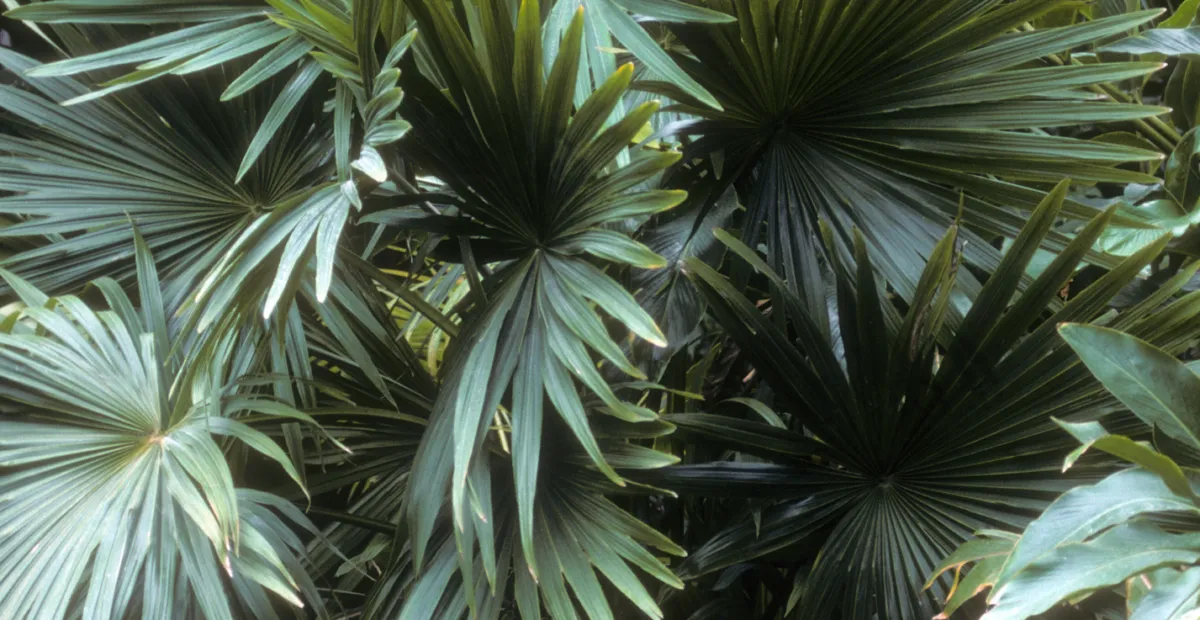
 Source:
Chuniophoenix hainanensis short overview
Chuniophoenix hainanensis is a rare, evergreen clustering palm native to wet tropical forests on Hainan, China. It forms slender stems topped with deeply divided fan leaves and produces arching inflorescences with small burgundy flowers followed by colorful fruits. This slow-growing species prefers warm temperatures, high humidity, organic well-drained soil, and bright filtered light, making it best suited to protected containers, conservatories, or frost-free landscapes in the United States.
Taxonomic classification
Chuniophoenix hainanensis care guide
Light and placement
Provide bright filtered light or partial shade, with gentle morning or late-afternoon sun possible after acclimation. A bright east-facing position, shaded greenhouse, or canopy-filtered patio is suitable. Bleached patches, crispy margins, or sudden leaf scorch suggest excessive direct sun or dry air; weak, stretched growth and dark green sparse foliage suggest insufficient light.
Watering and humidity
Water thoroughly when the upper layer begins to dry, then allow excess water to drain completely. Keep the root zone evenly moist during warm active growth, but never leave the pot standing in water. Reduce frequency in cool or dim conditions while avoiding prolonged drought. High humidity helps prevent browning, especially indoors, but does not replace good drainage.
Soil and growing medium
Use a fertile, organic, moisture-retentive but freely draining mix. A loam-based substrate amended with leaf mold, compost, or fine bark is suitable for containers. Avoid stagnant, waterlogged soil; a mildly acidic to neutral reaction is appropriate.
Feeding
Feed during active warm-season growth with a complete palm fertilizer containing micronutrients, applied at label strength or slightly reduced for containers. Water the substrate first and do not fertilize a stressed, newly repotted, cold, or droughted plant. Reduce or stop feeding during cool low-light periods.
Growth and habit
A slow-growing, evergreen palm that develops a clump of slender stems. Its long juvenile and establishment phases make stable warmth, humidity, and careful root-zone moisture more important than frequent disturbance. Remove only damaged material and avoid unnecessary division of the clump.
Planting and repotting
Plant outdoors only in frost-free locations with warm, humid conditions. Set the root ball at its original depth and avoid burying the stem bases. Allow enough room for the clump to expand, and mulch lightly without touching the stems.
Repot only when the root system has substantially filled the container, preferably during warm active growth. Handle the clustered stems and roots carefully, move up only one pot size, and keep the plant evenly moist while it re-establishes.
Propagation and pruning
Propagation
Propagation is primarily by fresh seed. Sow promptly in a sterile, well-drained medium and maintain warm, consistently humid conditions. Germination may be slow and uneven; seedlings require shade, steady moisture, and patience. Collecting wild material may be restricted because of conservation concerns.
Pruning
Remove only fully dead, damaged, or diseased leaves with clean tools. Do not cut healthy green fronds for cosmetic shaping, and avoid injuring the stem bases or emerging spear leaves.
Overwintering
Protect from frost and cold drafts; bring containers indoors or into a heated greenhouse before temperatures approach 35°F. Maintain bright light, moderate watering, and humidity away from heating vents. Avoid cold, wet soil, and do not fertilize during a cool winter rest.
Uses
A collector’s ornamental palm for tropical gardens, conservatories, greenhouses, and large containers. Its clustered stems, divided fan leaves, unusual flowers, and colorful fruits provide display value. No culinary, medicinal, or other practical use was reliably documented; obtain cultivated material legally because wild populations are conservation-sensitive.
Appearance
The species forms clustered, bare stems with persistent ring-like leaf scars after old sheaths fall. Leaves are fan-shaped and divided into roughly 36–45 narrow segments; petioles may be pale and whitish-waxy when young. Arching inflorescences emerge among the leaves, and fruits may mature red, orange, or purple.
Flowering
Inflorescences arch from among the leaves and may reach about 6 ft in length. The small flowers are described as burgundy or purple with yellow anthers and a greenish-yellow gynoecium. Plants may show hermaphroditic or mixed-sex flowering. In Miami cultivation, flowering has been reported from November through April; timing may differ under glass or in other climates.
Pollination and visitors
Reliable species-specific pollinator observations were not located. The flowers have been described morphologically and may be hermaphroditic or mixed-sex, but the principal animal visitor group remains undocumented in the reviewed sources.
Diseases and pests
Diseases
No species-specific disease profile was located. Prevent problems by providing airflow, avoiding chronically saturated media, disinfecting tools, and removing dead tissue. Watch for root decline in poorly drained soil and leaf spotting under persistently wet, stagnant conditions.
Pests
Inspect periodically for scale, mealybugs, spider mites, and thrips, especially indoors. Isolate affected plants, wash foliage, improve humidity and airflow, and use a labeled horticultural treatment when necessary. Avoid routine broad-spectrum insecticide use around flowers.
Toxicity and pollen
No authoritative species-specific human, dog, cat, or child toxicity assessment was located in the sources reviewed. Do not treat the lack of documented reports as proof of safety; prevent chewing of leaves, flowers, fruits, or seeds and seek professional advice after ingestion.
- Pollination / pollen
- Pollen from small palm flowers; dispersal relevance unknown
This is a flowering palm, so it produces pollen, but no reliable species-specific airborne pollen or clinical allergy information was found. Treat allergy relevance as unknown rather than assuming insect pollination eliminates exposure risk.
Native habitat
Native habitat is wet tropical lowland or moist montane forest on Hainan, with published records placing it around 100–200 m in lowland rainforest or disturbed forest. It is associated with warm, humid conditions and is threatened by habitat loss and over-collection.
Interesting fact
The species is endemic to Hainan according to Kew’s accepted distribution, while a taxonomic revision discusses populations in Hainan and northern Vietnam. It is listed as Endangered in the Kew-linked IUCN information. Its flowers have been described as burgundy with a slightly unpleasant aroma, unlike the sweetly scented flowers reported for Chuniophoenix nana.
Frequently asked questions (FAQ)
The most relevant questions about this plant, with short and direct answers.
🌱Quick care
What is Chuniophoenix hainanensis?⌄
Chuniophoenix hainanensis is a clumping, fan-leaved palm in the Arecaceae family, native primarily to moist lowland forests of Hainan, China. It is uncommon in cultivation and is best treated as a warm, humidity-loving specimen palm.
What light does Chuniophoenix hainanensis need?⌄
Give Chuniophoenix hainanensis bright filtered light to partial shade. Protect it from harsh afternoon sun, especially when grown in a container or moved outdoors from lower light.
How often should I water Chuniophoenix hainanensis?⌄
Water when the surface begins to dry, keeping the root zone evenly moist but never waterlogged. Do not allow the container or planting site to remain stagnant or saturated.
Is Chuniophoenix hainanensis cold hardy?⌄
No, Chuniophoenix hainanensis is frost tender and should be protected below 35°F. In most of the United States, it is best grown in a container, greenhouse, or reliably frost-free outdoor site.
What USDA zone is suitable for Chuniophoenix hainanensis?⌄
Chuniophoenix hainanensis is best suited to frost-free tropical and warm subtropical conditions rather than areas with regular freezes. A precise USDA hardiness-zone rating is not well established, so local winter temperatures should guide placement.
🌤️Environment and placement
Can Chuniophoenix hainanensis grow indoors?⌄
Yes, Chuniophoenix hainanensis can be grown indoors near a bright window with filtered light, warm temperatures, and good humidity. Keep it away from cold drafts, heating vents, and waterlogged soil.
Where should I place Chuniophoenix hainanensis outdoors?⌄
Place it outdoors in bright shade or partial shade with protection from strong wind and intense afternoon sun. A sheltered, humid location beneath high trees or a shade structure is preferable.
Does Chuniophoenix hainanensis need high humidity?⌄
Yes, high humidity is beneficial because the species comes from moist forest habitats. In dry indoor environments, use a humidifier or group plants together rather than keeping the roots constantly wet.
What temperatures does Chuniophoenix hainanensis prefer?⌄
Chuniophoenix hainanensis prefers warm conditions and should not be exposed to frost. Protect it when temperatures approach 35°F, and avoid prolonged exposure to cool, wet weather.
How large does Chuniophoenix hainanensis get?⌄
In favorable conditions, Chuniophoenix hainanensis can form several clustered stems and reach roughly 10 to 16 feet outdoors, although container-grown plants are usually smaller. Growth rate and mature size vary substantially with warmth, moisture, and root space.
💧Care and problems
What soil is best for Chuniophoenix hainanensis?⌄
Use fertile organic loam that retains moisture while draining freely. A quality potting mix amended with compost and a coarse drainage material works well for containers.
Why are the leaves of my Chuniophoenix hainanensis turning brown?⌄
Brown leaf tips usually indicate dry air, inconsistent watering, salt buildup, or excessive sun exposure. Check moisture, humidity, water quality, and light before increasing irrigation.
Why are the leaves of Chuniophoenix hainanensis turning yellow?⌄
Yellow leaves can result from overwatering, poor drainage, nutrient deficiency, cold stress, or normal aging of older foliage. Inspect the roots and soil first, because constantly wet soil can cause more serious decline.
Why is my Chuniophoenix hainanensis not growing?⌄
Slow growth is commonly caused by cool temperatures, insufficient light, low humidity, root restriction, or inconsistent moisture. Keep the plant warm and evenly moist during active growth rather than repeatedly fertilizing a stressed plant.
Should I fertilize Chuniophoenix hainanensis?⌄
Fertilize during active growth with a balanced palm fertilizer or a diluted complete fertilizer containing micronutrients. Avoid heavy feeding when the plant is cold, recently repotted, or showing root stress.
Does Chuniophoenix hainanensis have pests?⌄
It can be affected by common indoor and greenhouse pests such as spider mites, scale, and mealybugs, especially under dry conditions. Inspect leaf bases and undersides regularly and improve humidity and air circulation.
🪴Planting and repotting
Can Chuniophoenix hainanensis be planted in the ground?⌄
Yes, it can be planted in the ground in a warm, frost-free location with fertile, moist, well-drained soil. Choose a sheltered site where the clumping habit has room to develop.
Can Chuniophoenix hainanensis be grown in a pot?⌄
Yes, Chuniophoenix hainanensis grows well in a container provided the pot has drainage holes and the mix remains evenly moist without becoming saturated. Repot only when the roots have substantially filled the existing container.
When should I repot Chuniophoenix hainanensis?⌄
Repot Chuniophoenix hainanensis during warm active growth, preferably in spring or early summer. Move it into only one container size larger to reduce the risk of prolonged wet soil.
Does Chuniophoenix hainanensis need excellent drainage?⌄
Yes, it needs reliable drainage even though it prefers consistently moist soil. The goal is moisture retention with rapid excess-water release, not either dry soil or standing water.
✂️Propagation and pruning
How is Chuniophoenix hainanensis propagated?⌄
Chuniophoenix hainanensis is primarily propagated from seed, and fresh seed is likely to give the best results. Because detailed, species-specific germination guidance is limited, use warm, clean, lightly moist conditions and expect variable timing.
Can Chuniophoenix hainanensis be propagated from cuttings?⌄
Stem cuttings are not a dependable standard method for Chuniophoenix hainanensis because palms generally do not root from ordinary stem sections. Seed propagation is the safer method unless a rooted basal division is already available.
Can the clumps of Chuniophoenix hainanensis be divided?⌄
Division may be possible only when a basal offset has its own roots, but separating clumps can seriously stress the plant. It should be attempted cautiously during warm weather and is less reliable than growing from seed.
How long does Chuniophoenix hainanensis take to grow from seed?⌄
The germination time of Chuniophoenix hainanensis is not well documented in widely available sources, so a firm timetable cannot be given. Warm temperatures, fresh seed, consistent moisture, and patience are essential.
Should I prune Chuniophoenix hainanensis?⌄
Prune only dead, badly damaged, or completely declining leaves from Chuniophoenix hainanensis. Do not remove green fronds for appearance, and avoid cutting into the central growing point.
⚠️Toxicity and safety
Is Chuniophoenix hainanensis toxic to pets?⌄
No species-specific toxicity assessment was located for Chuniophoenix hainanensis. Prevent pets and children from chewing ornamental plants anyway, and contact a veterinarian or poison-control service if ingestion occurs.
Does Chuniophoenix hainanensis have thorns or sharp parts?⌄
The species is generally described as an unarmed palm, but leaf bases, dry fibers, or stiff plant parts may still cause minor scratches. Handle mature plants carefully when pruning or repotting.
Is Chuniophoenix hainanensis endangered?⌄
Chuniophoenix hainanensis is considered threatened in its native range, where habitat loss and collection pressure have been concerns. Obtain cultivated plants from reputable sources rather than collecting from the wild.
🌸Flowering and special interest
Does Chuniophoenix hainanensis flower?⌄
Yes, mature Chuniophoenix hainanensis produces branched inflorescences from the leaf axils, with small flowers that may be followed by orange, red, or purple fruit. Flowering is most likely under warm, humid, well-established growing conditions.
When does Chuniophoenix hainanensis bloom?⌄
Reports from cultivation and Chinese botanical references place flowering around spring, particularly April in suitable climates. Indoor and container plants may flower later or not at all if they lack sufficient warmth and maturity.
Does Chuniophoenix hainanensis produce fruit?⌄
Yes, pollinated flowers can develop small rounded fruits that may become orange, red, or purple as they mature. Fruit production is uncommon on young or indoor plants and may require compatible flowering conditions.
Similar plants
 Quindio Wax Palm (Ceroxylon quindiuense) care guideCeroxylon quindiuense
 Bamboo palm (Chamaedorea seifrizii) care guideChamaedorea seifrizii
 Metallic Fishtail Palm (Chamaedorea metallica) care guideChamaedorea metallica
 Borassodendron (Borassodendron machadonis) care guideBorassodendron machadonis
 Coccothrinax argentata care guideCoccothrinax argentata
 Jelly palm (Butia capitata) care guideButia capitata