
 Source:
Christ’s thorn (Copernicia prunifera) short overview
Christ's thorn, Copernicia prunifera, is a distinctive evergreen palm native to seasonally dry northeastern Brazil. Its fan-shaped, often silvery leaves form a compact architectural crown above a slender trunk, while the species is famous for wax harvested from its foliage. In the United States it is primarily a specialist tropical or subtropical landscape palm, requiring full sun, excellent drainage, warmth, and protection from freezing temperatures.
Taxonomic classification
Christ’s thorn (Copernicia prunifera) care guide
Light and placement
Provide full sun, ideally with unobstructed southern or western exposure. Plants moved from shade into intense sun should be acclimated gradually to reduce leaf scorch. Insufficient light produces weaker growth and a less compact crown; persistent shade is unsuitable. In containers, place the palm outdoors in the brightest warm location available during the growing season.
Watering and humidity
Water deeply when the upper portion of the root zone has begun to dry, then allow excess water to drain completely. Keep newly planted palms more evenly moist while roots establish, but avoid constant saturation. Reduce watering in cool weather, especially indoors, because low light and cold roots increase the risk of rot. Humidity is less important than warmth, airflow, and drainage.
Soil and growing medium
Use a sharply drained sandy or loamy substrate with good air space and no persistent winter saturation. Slightly acidic to slightly alkaline conditions are acceptable. In containers, combine high-quality potting medium with coarse mineral material and ensure generous drainage holes. Avoid heavy, compacted clay unless it is amended substantially.
Feeding
Feed during active warm-season growth with a slow-release palm fertilizer that supplies potassium, magnesium, and micronutrients. Follow the product label and avoid heavy applications to dry roots or during cold, inactive weather. Container plants may need lighter, more frequent feeding than established landscape specimens.
Growth and habit
This is an evergreen, single-trunk fan palm with a persistent crown and a generally deliberate growth rate in cultivation. Warmth, strong light, and good drainage are important for steady development. Remove only dead or dangerous leaves; excessive cutting can reduce vigor and spoil the natural crown.
Planting and repotting
Plant outdoors after the danger of frost has passed and soil has warmed. Set the palm at the same depth at which it was growing; do not bury the trunk base. Water consistently during establishment, then allow the root zone to become moderately dry between irrigations. Give mature plants ample clearance from structures and overhead utilities.
Repot container plants only when roots have filled the pot or drainage has declined. Move up one pot size in warm weather, disturb the root ball as little as practical, and provide a very free-draining mix. Large specimens are best transplanted only during active growth in consistently warm conditions.
Propagation and pruning
Propagation
Propagate from fresh seed. Clean away fruit tissue, sow in a warm, well-drained medium, and maintain even moisture without saturation. Germination may be irregular and can take several weeks or longer. Seed-grown palms require patience before reaching landscape size.
Pruning
Remove fully dead, broken, or hazardous fronds with clean tools. Do not routinely remove green fronds or cut the crown into a tight ball. Retain the healthy central growing point; damage to the bud can be fatal. Wear eye and hand protection when working around stiff leaf bases.
Overwintering
Protect from temperatures near freezing. In marginal climates, use a sheltered south-facing position, frost cloth during brief cold events, and dry winter conditions around the crown. Container plants should be moved indoors or into a bright heated conservatory before hard frost; reduce watering while growth slows and avoid placing the pot beside a cold draft.
Uses
Used in tropical and subtropical landscaping as an architectural specimen, avenue palm, or public-space planting where winters are mild. Its leaves support production of carnauba wax and other traditional materials in Brazil. Do not present the plant or its products as medicinal without qualified, product-specific evidence.
Appearance
The palm forms a solitary gray trunk topped by a rounded crown of stiff, fan-shaped leaves. Mature foliage can appear blue-green or silvery, especially in strong light and dry conditions. Persistent leaf bases may remain on the trunk for a time, while old fronds eventually separate. The combination of a slender trunk and reflective fan leaves is strongly identifying.
Flowering
The species produces branched inflorescences among the leaves, bearing numerous small, bisexual flowers. Flowering is associated with mature palms and warm growing conditions. Exact flowering dates vary by Brazilian region and are not reliably documented for the United States.
Pollination and visitors
Research on Brazilian populations identifies bee and wasp visitors, including the irapuá bee and a Polistes wasp, while genetic studies describe bisexual flowers and predominantly outcrossing reproduction. Visitor records are geographically specific and should not be assumed for every cultivated plant.
Copernicia prunifera photos
Click any photo for a larger view. Source, author and license are shown separately.
Diseases and pests
Diseases
Avoid chronic wetness, poor airflow, and trunk injury. Watch for general palm problems such as leaf-spot diseases and trunk or bud decline, but species-specific disease data are limited. Remove severely damaged tissue with sterilized tools and improve drainage and irrigation practices rather than relying on routine fungicide use.
Pests
Inspect for scale insects, mealybugs, mites, and borers, especially on stressed or container-grown plants. Quarantine new specimens, keep foliage and trunk surfaces reasonably clean, and correct drought or overwatering stress. Use horticultural oil or an appropriately labeled treatment only when pests are confirmed and conditions allow.
Toxicity and pollen
No authoritative evidence was located establishing Copernicia prunifera as poisonous to people, dogs, cats, or children. That absence is not proof of edibility or complete safety. Prevent ingestion of unfamiliar plant material, and handle leaf bases and old leaf stalks carefully because palms can cause mechanical injury.
- Typical season
- Not documented for United States exposure
- Pollination / pollen
- Flower pollen; airborne exposure not well documented
This is a flowering palm that produces pollen, but reliable U.S.-specific airborne pollen counts or clinical allergy data for this species were not located. Its flowers are associated with animal visitation, so airborne exposure may be lower than for strongly wind-pollinated plants, but it should not be treated as allergen-free.
Native habitat
Native populations occur in northeastern and parts of southeastern Brazil, especially in seasonally dry tropical landscapes. The palm is associated with warm climates, pronounced dry seasons, and soils that can support rapid drainage while retaining enough moisture for establishment.
Interesting fact
Its foliage is the source of carnauba wax, a commercially important plant wax.
The species is native mainly to seasonally dry northeastern Brazil.
It has a mixed mating system that favors outcrossing.
Its fan leaves give mature plants a strongly architectural silhouette.
Frequently asked questions (FAQ)
The most relevant questions about this plant, with short and direct answers.
🌱Quick care
What is Copernicia prunifera commonly called?⌄
Copernicia prunifera is documented here as Christ's thorn, although it is also widely known as the carnauba or carnauba wax palm. It is a fan-leaved palm in the Arecaceae family.
Is Copernicia prunifera easy to grow?⌄
Copernicia prunifera is generally manageable when grown in full sun, sharply drained soil, and a warm frost-free location. It is less forgiving of cold, waterlogged soil, and persistently low light.
How much sunlight does Copernicia prunifera need?⌄
Copernicia prunifera needs full sun for strong growth and a compact, healthy crown. Give it the brightest outdoor location available, with gradual acclimation if it was previously grown under cover.
How often should I water Copernicia prunifera?⌄
Water Copernicia prunifera moderately, then allow the upper part of the soil to dry before watering again. Reduce watering during cool weather or whenever growth slows, and never leave the roots standing in water.
Is Copernicia prunifera frost hardy?⌄
No, Copernicia prunifera is frost tender and should be protected from freezing temperatures. In the United States, it is best suited to warm regions or to container culture where it can be sheltered during cold spells.
🌤️Environment and placement
Where is Copernicia prunifera native?⌄
Copernicia prunifera is native to northeastern and southeastern Brazil, where it grows in seasonally dry tropical conditions. Its natural habitat helps explain its preference for strong sun, warmth, and well-drained soil.
Can Copernicia prunifera grow outdoors in the United States?⌄
Copernicia prunifera can grow outdoors year-round only in warm, nearly frost-free parts of the United States. Elsewhere, grow it in a container or provide reliable winter protection before freezing weather arrives.
Can Copernicia prunifera grow in a container?⌄
Yes, Copernicia prunifera can be grown in a container while young or where outdoor winters are too cold. Use a pot with drainage holes, a sharply draining mix, and a container that is only modestly larger than the root ball.
How large does Copernicia prunifera get?⌄
Copernicia prunifera is a medium-sized palm that can eventually become a substantial landscape tree in a suitable warm climate. Allow room for a broad fan-leaf crown and account for its spiny petioles when selecting a planting site.
Is Copernicia prunifera drought tolerant?⌄
Established Copernicia prunifera tolerates periods of dryness, but it should not be treated as completely water-independent. Provide regular moderate irrigation during establishment, then let the soil partially dry between waterings.
💧Care and problems
What type of soil does Copernicia prunifera need?⌄
Copernicia prunifera grows best in sandy or loamy soil that drains sharply. Avoid dense, poorly drained sites; if necessary, improve drainage with a raised planting area rather than relying on frequent soil amendments.
Why are the leaves of my Copernicia prunifera turning brown?⌄
Brown leaves can result from cold exposure, drought, salt buildup, root stress, or naturally aging fronds. Check drainage and watering first, then protect the palm from frost and avoid cutting green tissue unnecessarily.
Why is Copernicia prunifera growing slowly?⌄
Slow growth is common when Copernicia prunifera is young or grown in cool conditions. Full sun, warm temperatures, adequate root space, moderate feeding during active growth, and excellent drainage support better performance.
Does Copernicia prunifera need fertilizer?⌄
Copernicia prunifera benefits from a balanced palm fertilizer during warm, active growth if the soil is nutrient-poor. Do not fertilize drought-stressed, recently transplanted, or cold-damaged plants until they resume healthy growth.
Does Copernicia prunifera have spines?⌄
Yes, the leaf stalks of Copernicia prunifera can be spiny or sharply edged. Wear gloves and eye protection when handling it, and keep the palm away from narrow walkways and areas used by children or pets.
🪴Planting and repotting
When should I plant Copernicia prunifera?⌄
Plant Copernicia prunifera during the warm growing season after the danger of frost has passed. Warm soil helps new roots establish, while planting in cold or wet conditions increases transplant stress.
How do I plant Copernicia prunifera in the ground?⌄
Plant Copernicia prunifera at the same depth it was growing in its container, using sharply drained soil and a full-sun site. Water thoroughly after planting, then maintain moderate moisture while the root system establishes.
Can Copernicia prunifera be repotted?⌄
Yes, young Copernicia prunifera can be repotted when the roots fill the container or drainage becomes poor. Move it into a slightly larger pot with fresh, fast-draining mix and avoid excessive root disturbance.
✂️Propagation and pruning
How is Copernicia prunifera propagated?⌄
Copernicia prunifera is primarily propagated from seed. Fresh, viable seed and warm conditions are generally more useful than attempting to root cuttings, since palms do not normally regenerate from ordinary stem cuttings.
How long does Copernicia prunifera seed take to germinate?⌄
Germination time can vary substantially with seed freshness, temperature, and treatment, so no single schedule is dependable. Keep the sowing medium warm and lightly moist but well drained, and discard seed that rots.
Can I prune Copernicia prunifera?⌄
Prune Copernicia prunifera only to remove dead, damaged, or hazardous fronds. Do not remove healthy green fronds merely for appearance, because excessive pruning can weaken the palm and reduce its ability to recover from stress.
⚠️Toxicity and safety
Is Copernicia prunifera toxic to dogs or cats?⌄
No documented toxicity for Copernicia prunifera was located, but this should not be interpreted as proof that it is safe to eat. Its sharp leaf stalks are a more established practical hazard than poisoning.
Is Copernicia prunifera edible?⌄
Copernicia prunifera should not be considered an edible plant for home use because edibility of the ornamental plant and its parts is not established here. Keep fallen material away from children and animals and avoid deliberate consumption.
Is Copernicia prunifera safe to plant near a walkway?⌄
Copernicia prunifera is not ideal beside a narrow walkway because its leaf stalks may be spiny or sharp. Give it adequate clearance so people do not brush against the crown or lower foliage.
🌸Flowering and special interest
Does Copernicia prunifera flower?⌄
Yes, mature Copernicia prunifera produces branched flower structures among the leaves, followed by small fruits. Young container-grown palms may not flower until they are well established and large enough to reach reproductive maturity.
Does Copernicia prunifera produce carnauba wax?⌄
Yes, Copernicia prunifera is the principal carnauba wax palm, and a natural wax coating on its leaves is commercially important. The palm’s wax production is a special botanical and economic feature rather than a normal home-gardening harvest.
What does Copernicia prunifera look like?⌄
Copernicia prunifera is a solitary palm with fan-shaped foliage that may range from green to blue-green. Its stiff leaves, prominent crown, and potentially spiny petioles give it a strongly architectural appearance.
Similar plants
 Nibong palm is an Asian species of palm tree in the family Arecaceae (Oncosperma tigillarium) care guideOncosperma tigillarium
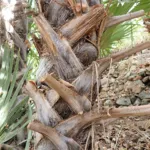 Doum palm (Hyphaene thebaica) care guideHyphaene thebaica
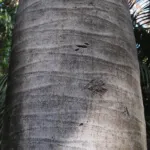 Jubaea chilensis care guideJubaea chilensis
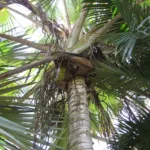 Yellow latan palm (Latania verschaffeltii) care guideLatania verschaffeltii
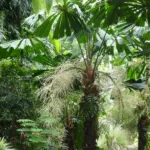 He Queensland fan palm or Australian fan palm (Licuala ramsayi) care guideLicuala ramsayi
 Coco-de-mer (Lodoicea maldivica) care guideLodoicea maldivica