
 Source:
Millionaire’s salad (Deckenia nobilis) short overview
Millionaire's salad (Deckenia nobilis) is a rare, endemic Seychelles palm valued for its elegant solitary trunk, pinnate crown, and distinctive yellow spines on young stems. It grows naturally in hot, wet tropical forests and on well-drained rocky sites from sea level to about 600 m. The edible palm heart gave the species its common name, but harvesting kills the entire palm, so it is best treated as a conservation-sensitive ornamental for warm, frost-free collections.
Taxonomic classification
Millionaire’s salad (Deckenia nobilis) care guide
Light and placement
Provide full sun to bright partial shade, ideally with morning-to-afternoon light and shelter from damaging cold winds. Young plants can take filtered light while establishing, but weak, stretched growth suggests insufficient light. Bleached foliage, scorch, or rapidly drying leaflets can indicate excessive exposure combined with heat or water stress. Maintain airflow without exposing tender plants to cold.
Watering and humidity
Water deeply when the upper layer begins to dry, then allow excess water to drain completely. Keep young plants evenly moist during establishment and reduce frequency during cooler or darker periods, while never allowing the root zone to remain stagnant. High humidity is useful, but do not compensate for poor drainage by keeping the substrate constantly wet.
Soil and growing medium
Use a deep, structurally stable, sharply draining medium rich in organic matter, with some mineral or rocky content. Natural populations occur on well-drained soils, including exposed rocky sites. Avoid stagnant wetness around the roots. A slightly acidic to neutral tropical-palm mix is a reasonable cultivation target, but a species-specific pH optimum is not well documented.
Feeding
Feed only during active warm growth with a complete palm fertilizer containing micronutrients, applied at label strength or slightly diluted for container plants. Incorporate compost or organic matter before planting, but do not place concentrated fertilizer against the stem or fertilize drought-stressed, recently transplanted, or cold-damaged plants.
Growth and habit
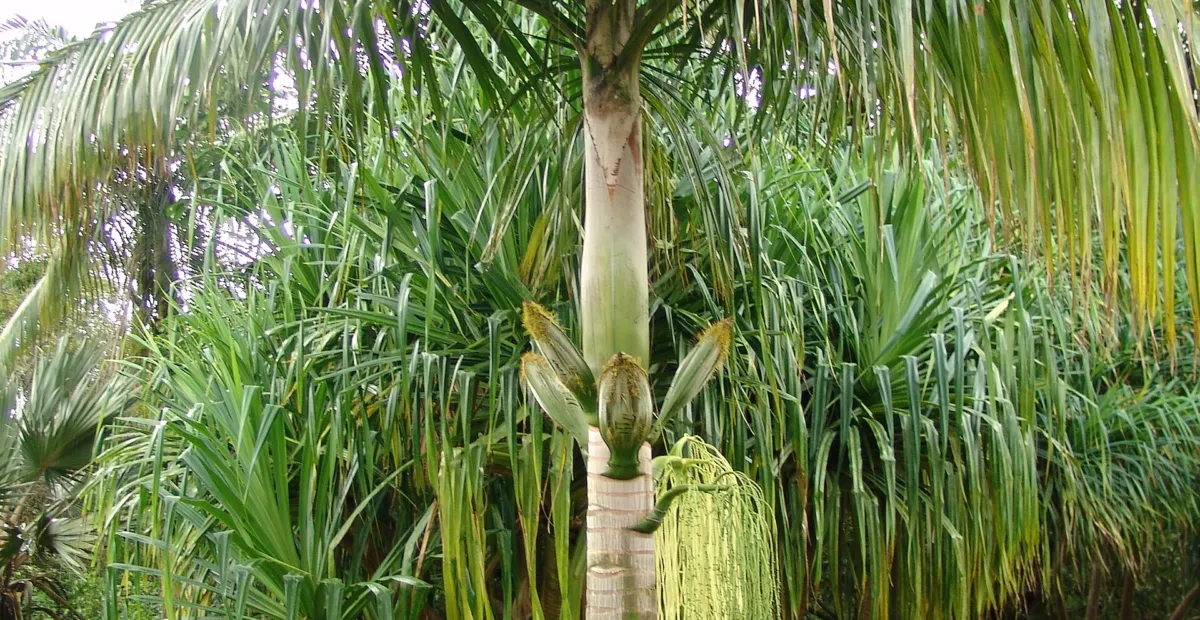
Deckenia nobilis forms one unbranched trunk with a terminal crown, rather than a clump. It is a large, long-lived tropical palm that needs stable warmth, strong drainage, and substantial overhead clearance. Young stems may carry yellow spines that become less evident with age, so handling and maintenance require care.
Planting and repotting
Plant only in frost-free regions after soil has warmed, preferably at the beginning of the rainy or reliably irrigated growing season. Set the root ball at its original depth, never burying the stem. Allow ample vertical and lateral room, stake young plants if exposed, and water consistently during establishment.
Repot only when roots have filled the container, using a deep, heavy pot that resists tipping. Minimize root disturbance and provide excellent drainage. Large specimens are difficult to transplant successfully because of their solitary trunk and palm-root architecture.
Propagation and pruning
Propagation
Propagate from fresh seed when available. Sow in a warm, clean, freely draining medium and maintain steady moisture without saturation. Germination timing and seed storage behavior are poorly documented, so fresh seed and bottom heat are prudent. Division is not applicable to a solitary, single-trunk palm.
Pruning
Remove only fully dead, damaged, or hazardous leaves with clean tools. Do not cut the growing point or excessively strip green fronds. Take care around juvenile yellow spines, and avoid pruning for cosmetic reshaping of the solitary crown.
Overwintering
Keep completely frost-free. In the continental United States, grow in a heated conservatory or greenhouse, or maintain as a container specimen that can be moved indoors before temperatures fall. Provide strong light, reduced watering in winter, and adequate ventilation; avoid cold drafts and chilled saturated soil.
Uses
Primarily a conservation, botanical-garden, and tropical ornamental palm. The immature palm heart has a documented culinary history as millionaire's salad, but harvesting destroys the entire plant and is inappropriate for conservation specimens. Do not treat historical food use as support for medicinal or unrestricted edible claims.
Appearance
A tall, solitary palm with a slender, unbranched trunk and a terminal crown of pinnate leaves. Young stems show distinctive yellow spines associated with the leaf-scar region; these spines diminish or disappear with maturity. The combination of a single trunk, tropical crown, and juvenile yellow spines helps distinguish it from other endemic Seychelles palms.
Flowering
This is a flowering palm with separate male and female flowers on the same plant. Detailed inflorescence structure and a dependable flowering calendar are not sufficiently documented in the sources reviewed.
Pollination and visitors
The species is a monoecious flowering palm, but reliable species-specific records identifying its animal pollinators or frequent flower visitors were not located.
Deckenia nobilis photos
Click any photo for a larger view. Source, author and license are shown separately.
Diseases and pests
Diseases
No Deckenia-specific disease profile was located. Prevent problems by using clean, free-draining media, avoiding chronic root saturation, disinfecting cutting tools, and inspecting imported or greenhouse plants for rot and fungal damage. Isolate symptomatic specimens and remove severely affected tissue with sterile tools.
Pests
No well-documented Deckenia-specific pest profile was found. Monitor for scale insects, mealybugs, mites, and palm-feeding beetles in collections, especially on stressed or imported plants. Use quarantine, washing, horticultural oil where appropriate, and label-compliant treatments rather than routine broad-spectrum insecticides.
Toxicity and pollen
No authoritative species-specific human or pet toxicity assessment was located. The palm heart is historically edible, but harvesting kills the plant and does not establish that all tissues are safe to ingest. Prevent children and pets from chewing unidentified plant material, and do not consume material from ornamental or chemically treated plants.
- Pollination / pollen
- Pollen production documented in a flowering palm; dispersal characteristics unknown.
Airborne pollen and allergy relevance have not been specifically assessed for Deckenia nobilis. As a flowering palm, it produces pollen, but the amount released into the air, dispersal pattern, and clinical allergy importance are unknown. People with pollen sensitivity should use ordinary precautions during flowering.
Native habitat
Native to the granitic Seychelles, where it occurs in wet tropical environments but is also associated with drier, well-drained sites from sea level to about 600 m. It can occupy exposed rocky locations as well as deep soils in gardens and managed collections.
Interesting fact
The species is endemic to the Seychelles and is the sole species in the genus Deckenia. Its traditional edible palm heart gave rise to the name millionaire's salad, but removing the heart kills the whole palm. Yellow spines on young stems are a useful identification feature and disappear as the palm matures.
Frequently asked questions (FAQ)
The most relevant questions about this plant, with short and direct answers.
🌱Quick care
What is Deckenia nobilis commonly called?⌄
Deckenia nobilis is commonly called millionaire's salad. It is a rare, solitary palm endemic to the Seychelles and the only species in the genus Deckenia.
Is Deckenia nobilis easy to grow?⌄
No, Deckenia nobilis is a challenging collector’s palm. It needs tropical warmth, reliable moisture, excellent drainage, and protection from cold.
How much light does Deckenia nobilis need?⌄
Give Deckenia nobilis full sun to partial shade. Young palms benefit from partial shade or filtered light, while established plants can tolerate stronger sun if adequately watered.
How often should I water Deckenia nobilis?⌄
Water Deckenia nobilis regularly to keep the soil moderately and consistently moist. Do not allow the root zone to remain waterlogged, because excellent drainage is essential.
Is Deckenia nobilis cold hardy?⌄
Deckenia nobilis is frost tender and should be protected from cold. It is best suited to frost-free tropical or warm subtropical conditions, or to a protected greenhouse in colder parts of the United States.
🌤️Environment and placement
Where does Deckenia nobilis grow naturally?⌄
Deckenia nobilis is native to the Seychelles, where it grows in hot, humid habitats from near sea level to about 2,000 feet. It is associated with tropical forests, slopes, ridges, and well-drained sites.
Can Deckenia nobilis grow outdoors in the United States?⌄
It can grow outdoors year-round only in the warmest frost-free areas, such as suitable parts of South Florida and Hawaii. Elsewhere in the United States, container or greenhouse culture is safer.
Can Deckenia nobilis grow indoors?⌄
A young Deckenia nobilis can be grown temporarily indoors in a very bright, warm, humid location. It eventually becomes a very large palm, so ordinary household conditions are not a practical long-term setting.
Does Deckenia nobilis need high humidity?⌄
Deckenia nobilis performs best with warm, humid air, especially when young. Good air circulation is still important to reduce fungal problems around consistently moist foliage and soil.
What USDA zone is suitable for Deckenia nobilis?⌄
Deckenia nobilis is generally limited to frost-free USDA Zones 11 and warmer, with local protection still important. Zone boundaries are only a guide because cold duration and exposure can vary widely.
💧Care and problems
What soil is best for Deckenia nobilis?⌄
Use deep, organic, sharply drained soil formulated for tropical palms. The soil should retain moderate moisture without becoming compacted or saturated around the roots.
Why are the leaves of my Deckenia nobilis turning brown?⌄
Brown leaves can result from drought, low humidity, cold exposure, root damage, or excessive salts. Check moisture and drainage first, then protect the palm from cold and harsh dry conditions.
Why is my Deckenia nobilis growing slowly?⌄
Slow growth is normal for Deckenia nobilis, particularly in containers or cool conditions. Growth improves with sustained warmth, bright light, consistent moisture, adequate root space, and balanced palm nutrition.
Does Deckenia nobilis need fertilizer?⌄
A balanced palm fertilizer can support Deckenia nobilis during active warm-season growth. Apply it only to moist soil and follow the product label to avoid salt buildup or root injury.
Does Deckenia nobilis have spines?⌄
Yes, young Deckenia nobilis plants can have conspicuous spines on the trunk, leaf bases, and foliage. Some spines become less prominent with maturity, but handling juvenile plants still requires caution.
🪴Planting and repotting
How should I plant Deckenia nobilis in the ground?⌄
Plant Deckenia nobilis in a warm, sheltered site with full sun to partial shade and deep, sharply drained soil. Set it at the same depth as its container and avoid disturbing the root ball unnecessarily.
Can Deckenia nobilis be grown in a container?⌄
Yes, young Deckenia nobilis plants can be grown in large containers with a fast-draining tropical-palm mix. Container culture is useful for moving the palm indoors or under cover during cold weather, but its eventual size is substantial.
When should I repot Deckenia nobilis?⌄
Repot Deckenia nobilis when roots have substantially filled the container or drainage has declined, preferably during warm active growth. Move it into only a moderately larger pot to reduce the risk of persistently wet soil.
How much space does Deckenia nobilis need?⌄
Allow generous vertical and horizontal space because Deckenia nobilis is a solitary palm that can eventually become very tall, with a broad crown. Keep people and walkways away from young plants because of their spines.
✂️Propagation and pruning
How is Deckenia nobilis propagated?⌄
Deckenia nobilis is propagated primarily from seed. Fresh, fully mature seed is generally preferred because palm seed viability can decline during storage.
How do I germinate Deckenia nobilis seeds?⌄
Clean fresh seeds thoroughly, sow them in a warm, lightly moist, well-drained medium, and maintain steady warmth and humidity. Germination can be slow and uneven, so avoid letting the medium dry out or remain saturated.
Can Deckenia nobilis be propagated from cuttings?⌄
No, ordinary stem or leaf cuttings are not a practical propagation method for Deckenia nobilis. As a solitary palm, it is normally raised from seed rather than divided or rooted from vegetative pieces.
Can I prune Deckenia nobilis?⌄
Prune only dead, badly damaged, or hazardous foliage from Deckenia nobilis. Do not cut the central growing point, because a solitary palm cannot replace a destroyed apical bud.
⚠️Toxicity and safety
Is Deckenia nobilis toxic to people or pets?⌄
Species-specific toxicity information for Deckenia nobilis is limited, so its toxicity should be treated as unknown. Keep children and pets away from the plant and do not allow them to chew any part.
Is the heart of Deckenia nobilis edible?⌄
The growing palm heart has traditionally been eaten as millionaire's salad, but harvesting it kills the entire palm. Because the species is rare and legally protected in its native range, it should not be harvested from wild or cultivated plants.
Is Deckenia nobilis dangerous to handle?⌄
Deckenia nobilis can be hazardous to handle because young plants may have sharp spines and reproductive structures can also be spiny. Wear thick gloves and protective clothing when planting, moving, or pruning it.
🌸Flowering and special interest
What do Deckenia nobilis flowers look like?⌄
Deckenia nobilis produces branched, drooping flower clusters with pale yellow to whitish flowers. The developing inflorescence is enclosed by a notably spiny protective structure.
Does Deckenia nobilis produce fruit and seeds?⌄
Yes, mature Deckenia nobilis produces small oval fruits that darken as they ripen and contain seeds. Fresh ripe seed is the main material used for propagation.
How long does Deckenia nobilis take to reach maturity?⌄
Deckenia nobilis is slow growing and can take many years to develop a mature trunk and flowering habit. Warm conditions, adequate moisture, and sufficient root space can improve growth but will not make it a fast palm.
Similar plants
 Coconut palm (Cocos nucifera) care guideCocos nucifera
 C. viminalis (Calamus viminalis) care guideCalamus viminalis
 Cascade palm (Chamaedorea cataractarum) care guideChamaedorea cataractarum
 Caranday Palm (Copernicia alba) care guideCopernicia alba
 Quindio Wax Palm (Ceroxylon quindiuense) care guideCeroxylon quindiuense
 Dictyosperma (Dictyosperma album) care guideDictyosperma album