
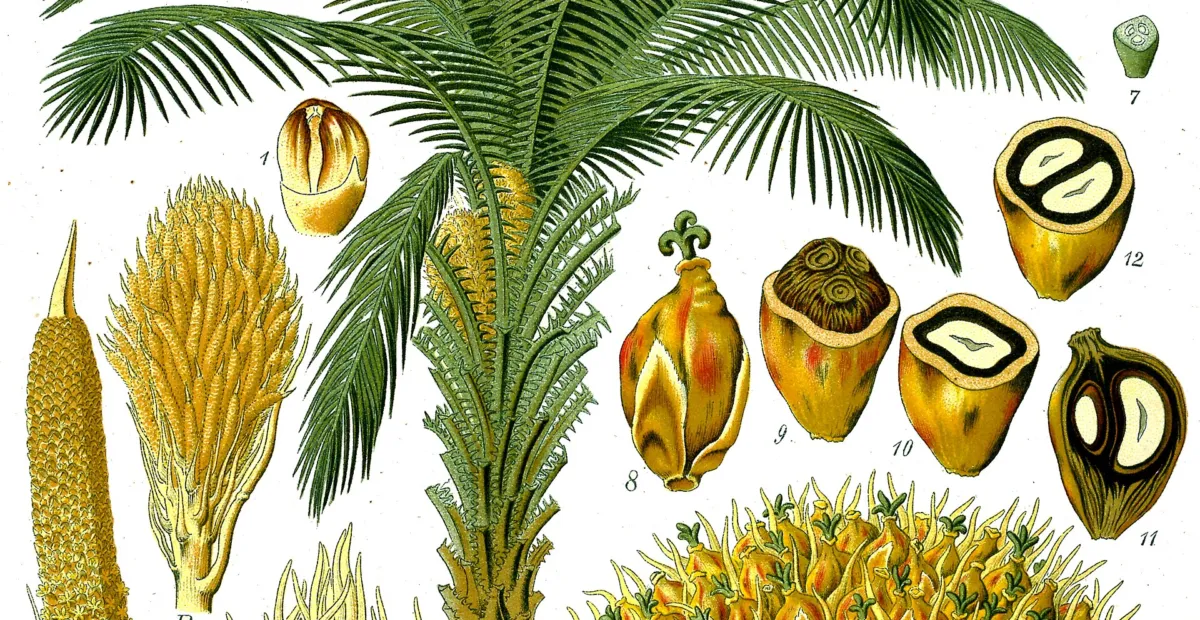
 Source:
African Oil Palm (Elaeis guineensis) short overview
African Oil Palm (Elaeis guineensis) is a large, evergreen tropical palm with a stout trunk, arching feather-shaped leaves, and dense clusters of oil-rich orange-red fruit. Native to wet tropical Africa, it thrives in intense light, warmth, high humidity, fertile moisture-retentive soil, and excellent drainage. In the United States, it is mainly a frost-free landscape tree or a demanding conservatory and container specimen.
Taxonomic classification
African Oil Palm (Elaeis guineensis) care guide
Light and placement
Give full sun outdoors, ideally with unobstructed southern or southeastern exposure, or very bright filtered light indoors. Young plants tolerate some filtering but become weak and stretched in dim rooms. Excessive direct heat behind glass can scorch leaves unless ventilation and moisture are adequate. Too little light causes long petioles, pale foliage, slow growth, and poor flowering.
Watering and humidity
Water deeply when the surface begins to dry, then allow excess water to drain completely. Keep the root zone consistently moist during warm growth, reducing frequency in cooler or darker conditions without allowing prolonged drought. Use room-temperature water indoors, flush containers periodically to limit salt buildup, and maintain humidity with grouping, a humidifier, or a naturally humid conservatory.
Soil and growing medium
Use deep, fertile soil that holds even moisture but drains freely. A loamy, humus-rich substrate is suitable, while compacted clay and persistently stagnant water can damage the extensive root system. Slightly acidic to neutral conditions are suitable; avoid strongly alkaline media and salt accumulation in containers.
Feeding
Feed actively growing palms with a complete palm fertilizer containing nitrogen, potassium, magnesium, and micronutrients, following the product label. Apply during warm growth and reduce or stop feeding when temperatures or light fall. Container plants benefit from lighter, regular applications; do not fertilize severely drought-stressed, recently transplanted, or waterlogged plants.
Growth and habit
This is a solitary, unbranched palm with a strong apical growing point and a broad, persistent crown. It can remain trunkless while young, then develops a stout trunk covered by old leaf bases before becoming smoother with age. Large horizontal roots make stable, deep soil and careful transplanting important.
Planting and repotting
Plant outdoors only in a reliably frost-free site after cold weather has ended. Set the palm at the same depth as it grew in its container, never burying the trunk base. Give it ample vertical and lateral room, mulch the root zone without touching the trunk, and irrigate deeply and regularly during establishment.
Repot container plants only when roots have substantially filled the pot, preferably during warm active growth. Move up one pot size, preserve the root ball, and use a heavy, sharply draining tropical-palm mix. Large specimens dislike root disturbance, so top-dressing and careful replacement of the upper mix may be safer than frequent repotting.
Propagation and pruning
Propagation
Propagate mainly from fresh seed. Remove adhering fruit tissue, use a warm, clean, moisture-retentive but well-aerated medium, and maintain consistently high temperatures and humidity. Germination can be slow and uneven. Commercial production may use selected seed or tissue culture, but clonal propagation is specialized and not practical for most home growers.
Pruning
Remove only dead, broken, or hazardous fronds using clean tools. Do not cut the central spear or green fronds unnecessarily, because the palm has one growing point and excessive removal reduces vigor. Wear protective clothing around spiny petiole bases and arrange professional help for tall specimens.
Overwintering
Move container plants indoors before temperatures approach the mid-50s °F. Keep them in the brightest available position, maintain moderate warmth and humidity, and water less often when growth slows. Avoid cold drafts, dry furnace air, and sudden changes in light. Outdoor specimens require a genuinely frost-free climate; freezing temperatures can cause severe or fatal injury.
Uses
Primarily grown for palm oil, palm-kernel oil, food products, biofuel feedstocks, and tropical agricultural production. It is also used as a dramatic ornamental palm in frost-free landscapes and large conservatories. Fruit and oil are commercially important, but home growers should avoid harvesting or processing large fruit bunches without appropriate equipment.
Appearance
The palm has a stout solitary trunk, a dense crown of long arching pinnate leaves, and numerous narrow leaflets arranged along a strong rachis. Young trunks retain persistent leaf bases, producing a rough textured surface; older trunks become more exposed and smoother. Mature fruit bunches are compact and brightly colored, changing from green toward orange, red, or dark tones.
Flowering
This monoecious palm produces separate male and female inflorescences on the same plant, usually in alternating phases. Dense axillary flower clusters emerge among the leaf bases; female inflorescences develop into heavy fruit bunches. Flowering can occur repeatedly in warm tropical conditions, but indoor plants may remain vegetative when light, heat, or maturity is insufficient.
Pollination and visitors
Oil palm flowers are chiefly associated with insect pollination. The weevil Elaeidobius kamerunicus is a well-documented and important visitor in cultivated plantations, while other insects may contribute locally. Flowering and pollination are strongest in warm tropical conditions; visitor communities differ by region.
Elaeis guineensis photos
Click any photo for a larger view. Source, author and license are shown separately.
Diseases and pests
Diseases
Prevent problems by avoiding waterlogged soil, improving air movement, disinfecting pruning tools, and removing badly damaged material. Potential issues include lethal yellowing-like disorders in some regions, basal or trunk rots, spear and bud damage, and fungal leaf spots. Diagnose regionally before treatment because palm diseases vary greatly by climate.
Pests
Watch for scale insects, mealybugs, mites, caterpillars, palm borers, rhinoceros beetles, and other trunk or crown pests, especially on stressed plants. Isolate infested containers, wash foliage where practical, improve growing conditions, and use regionally labeled controls only when necessary. Inspect spear leaves, leaf bases, and fruiting structures regularly.
Toxicity and pollen
No strong, species-specific evidence establishes Elaeis guineensis as a major poisonous plant for people or pets. The oil-rich fruit is an important food crop, but ornamental material should not be treated as automatically safe: unprocessed fruit, seeds, fibrous parts, and large quantities of any plant material may cause mechanical or gastrointestinal problems if eaten. Handle spiny leaf bases and fruit clusters carefully.
- Typical season
- Year-round in tropical production regions; no reliable national United States season established
- Pollination / pollen
- Airborne, insect-associated palm pollen
The species releases airborne pollen, and pollen has been detected in tropical aerobiological sampling. However, its importance as a United States outdoor aeroallergen is not well established, and reliable nationwide seasonal exposure data are lacking. People with pollen sensitivity should avoid handling flowering structures during dusty, windy conditions and rely on local allergy monitoring where available.
Native habitat
Native to humid tropical Africa, especially forest margins, river valleys, disturbed ground, and other warm wet environments. It favors high rainfall, deep fertile soils, abundant heat, and consistently available moisture, although good drainage remains important. Cultivation has spread it widely across tropical regions.
Interesting fact
The species is one of the world's most important oil crops. Its male and female inflorescences are produced separately on the same palm and often alternate over time. Oil-rich fruit develops in dense bunches, while mature leaves can become exceptionally large. The palm is native to tropical Africa but is now cultivated throughout the humid tropics.
Frequently asked questions (FAQ)
The most relevant questions about this plant, with short and direct answers.
🌱Quick care
What is the African Oil Palm?⌄
The African Oil Palm is Elaeis guineensis, a large, solitary tropical palm in the Arecaceae family. It is grown ornamentally and commercially for oil-rich fruit.
How much light does an African Oil Palm need?⌄
Give an African Oil Palm full sun outdoors or bright filtered light indoors. Acclimate indoor-grown plants gradually before placing them in strong direct sunlight.
How often should you water an African Oil Palm?⌄
Keep the soil evenly moist but not constantly waterlogged. Water when the surface begins to dry, and reduce watering somewhat during cool, low-light periods.
What soil is best for an African Oil Palm?⌄
Use deep, fertile, humus-rich soil that retains moisture while draining freely. A slightly acidic, organic loam is suitable, but the roots should not remain in stagnant water.
Can African Oil Palms grow indoors?⌄
Yes, young African Oil Palms can grow indoors in bright filtered or indirect light with consistently warm temperatures and adequate humidity. They eventually become very large, so indoor growing is usually temporary.
🌤️Environment and placement
What USDA hardiness zones can grow African Oil Palm outdoors?⌄
African Oil Palm is generally suited to USDA Zones 10 through 12. In cooler parts of the United States, grow it in a container and protect it indoors before temperatures approach freezing.
Can African Oil Palm tolerate frost?⌄
No, African Oil Palm is frost tender and should be protected from freezing temperatures. Even brief cold exposure can cause leaf damage, while prolonged freezing may kill the plant.
Can African Oil Palm grow in full sun?⌄
Yes, established African Oil Palms grow well in full sun when they receive sufficient moisture. Introduce plants grown in shade or indoors to direct sun gradually to reduce leaf scorch.
Does African Oil Palm need high humidity?⌄
African Oil Palm grows best in warm, humid conditions. Indoor plants may develop browning leaf tips in dry air, especially near heating or air-conditioning vents.
How large does an African Oil Palm get?⌄
In tropical outdoor landscapes, African Oil Palm can eventually reach about 50 feet tall with a broad crown. Container-grown plants usually remain smaller, but their long fronds still require substantial space.
Can African Oil Palm tolerate standing water?⌄
It can tolerate brief wet conditions better than many palms, but it should not remain in standing water for long periods. Plant it in moisture-retentive soil with reliable drainage, preferably on slightly raised ground.
💧Care and problems
Why are the leaves of my African Oil Palm turning brown?⌄
Brown leaves commonly result from dry soil, low humidity, salt buildup, cold injury, or excessive direct sun after a sudden change in conditions. Check moisture, drainage, temperature, and light before adjusting care.
Should I fertilize an African Oil Palm?⌄
Yes, fertilize during active growth with a balanced palm fertilizer that supplies nitrogen, magnesium, and micronutrients. Follow the product label and avoid heavy feeding when the plant is cold, dormant, or stressed.
What pests affect African Oil Palm?⌄
African Oil Palm can occasionally be affected by common palm pests such as scale insects, mites, and palm-feeding beetles, depending on location. Inspect fronds and leaf bases regularly and treat identified pests according to local extension guidance.
How do you clean African Oil Palm leaves?⌄
Remove dust from indoor leaves with a soft, damp cloth or a gentle lukewarm shower. Do not use leaf-shine products, which can interfere with normal leaf function and leave residue.
How often should an African Oil Palm be repotted?⌄
Repot an African Oil Palm when roots fill the container, growth slows, or water runs rapidly through the pot. Move it into a container only one size larger and use a stable, well-draining potting mix.
🪴Planting and repotting
How do you plant an African Oil Palm outdoors?⌄
Plant it in a warm, frost-free location with full sun, fertile moisture-retentive soil, and excellent drainage. Set the root ball at the same depth it was growing and water thoroughly after planting.
When is the best time to plant an African Oil Palm?⌄
Plant an African Oil Palm in late spring or early summer after the danger of cold has passed. Warm soil and a long growing season help the palm establish before cooler weather returns.
How much space does an African Oil Palm need?⌄
Allow ample room for a large trunk, spreading crown, long fronds, and surface roots. Keep it away from buildings, overhead wires, narrow walkways, and structures that could be damaged by its eventual size.
✂️Propagation and pruning
How do you propagate African Oil Palm?⌄
African Oil Palm is normally propagated from seed, while commercial production may also use specialized tissue culture. Seed germination is slow because the seeds have strong dormancy and require sustained warmth.
How long do African Oil Palm seeds take to germinate?⌄
African Oil Palm seeds may take several months to germinate, and untreated seeds can take much longer. Commercial protocols use warm treatment around 102–104°F for roughly two to three months, followed by soaking and warm, humid germination.
Can you grow African Oil Palm from a store-bought palm fruit?⌄
It is possible only if the fruit contains a viable seed and has not been processed or overheated. Fresh, properly cleaned seed is more reliable, but germination still requires prolonged warmth and patience.
Can African Oil Palm be propagated from cuttings?⌄
No, African Oil Palm is not normally propagated from ordinary stem or leaf cuttings. Use viable seed or specialized tissue-culture material instead.
Should you prune an African Oil Palm?⌄
Prune only dead, damaged, or severely diseased fronds and remove them close to the trunk without cutting into the growing point. Avoid removing green fronds unnecessarily, and wear gloves because the leaf bases and petioles can be sharp.
⚠️Toxicity and safety
Is African Oil Palm toxic to dogs or cats?⌄
There is no well-established major toxicity classification for African Oil Palm, but formal pet-safety evidence is limited. Prevent pets and children from chewing plant material, and contact a veterinarian or poison-control service if ingestion causes symptoms.
Are African Oil Palm leaves or trunks dangerous to handle?⌄
They can be hazardous because the petioles and leaf bases may have sharp structures, especially on young or field-grown plants. Wear gloves and protective clothing when planting, pruning, or moving a mature specimen.
Is African Oil Palm fruit edible?⌄
The species produces oil-rich fruit used commercially for palm oil and palm-kernel oil, but ornamental fruit should not be eaten unless it has been correctly identified, handled, and prepared. Avoid consuming fruit from treated or unknown plants.
🌸Flowering and special interest
Does African Oil Palm flower?⌄
Yes, African Oil Palm produces separate male and female flower clusters on the same plant. The flowers are borne among the leaves, and successful female flowering can be followed by large clusters of oil-rich fruit.
How long does it take an African Oil Palm to produce fruit?⌄
Under favorable tropical growing conditions, African Oil Palm may begin producing fruit about three to four years after field planting. Container plants, cool climates, and low light can delay or prevent fruiting.
Why is my African Oil Palm not flowering?⌄
Lack of flowering is usually caused by insufficient maturity, cool temperatures, inadequate light, drought stress, or container limitations. Indoor and temperate-climate plants may remain vegetative for many years and may never fruit.
What does African Oil Palm fruit look like?⌄
The fruit develops in dense bunches and is typically orange to reddish or dark at maturity, with an oily fleshy layer surrounding a hard seed. Fruit bunches can become heavy, so mature specimens need strong support and adequate space.
Similar plants
 Blue Mediterranean fan palm (Chamaerops humilis) care guideChamaerops humilis
 Dictyosperma (Dictyosperma album) care guideDictyosperma album
 Bamboo palm (Chamaedorea seifrizii) care guideChamaedorea seifrizii
 Quindio Wax Palm (Ceroxylon quindiuense) care guideCeroxylon quindiuense
 He Petticoat palm (Copernicia macroglossa) care guideCopernicia macroglossa
 Cerifera (Chamaerops humilis ‘Cerifera’)Chamaerops humilis 'Cerifera'