
 Source:
Cascade palm (Chamaedorea cataractarum) short overview
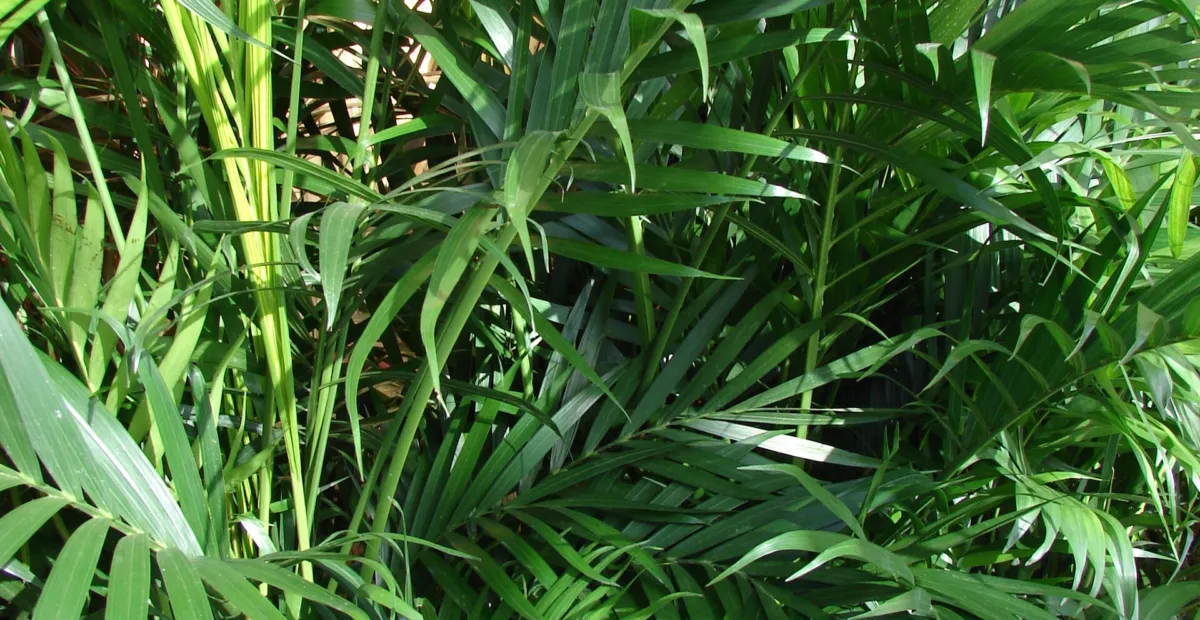
Cascade palm, Chamaedorea cataractarum, is a compact clumping palm native to southern Mexico. Its slender green stems support glossy, arching, feather-like fronds that create a lush cascading effect. Grow it in bright filtered light or partial shade, with evenly moist but well-drained soil and good humidity. It is useful as an indoor specimen, patio container plant, or sheltered landscape palm in warm U.S. climates, but it is frost-tender.
Taxonomic classification
Cascade palm (Chamaedorea cataractarum) care guide
Light and placement
Provide bright filtered light indoors, such as near an east window or a bright room with sheer-curtained south or west exposure. Outdoors, use partial shade or gentle morning sun with protection from intense afternoon heat. Too much direct sun can bleach or scorch fronds; too little light produces weak, stretched growth and sparse foliage.
Watering and humidity
Water thoroughly when the top inch of mix begins to dry, then allow excess water to drain fully. Keep the root zone evenly moist but never constantly saturated. Water more often during warm, bright growth and less in winter or low light. Dry air can cause brown tips, so increase humidity without leaving the soil waterlogged.
Soil and growing medium
Use a loose, humus-rich mix that drains freely while retaining moderate moisture. A quality tropical houseplant or palm mix amended with bark and perlite works well in containers. Slightly acidic to slightly alkaline conditions are tolerated, but avoid compacted, waterlogged soil and prolonged stagnation around the roots.
Feeding
Feed during active growth with a balanced palm or general houseplant fertilizer diluted to half strength every 4–6 weeks. Water first if the mix is dry, and pause or greatly reduce feeding in low-light winter conditions. Avoid heavy fertilizer applications, which can cause salt buildup and brown leaf tips.
Growth and habit
This is a slow- to moderate-growing, evergreen clumper that gradually forms a dense fountain of fronds from multiple slender stems. Keep old foliage tidy and avoid dividing the clump unless necessary, because disturbance can reduce vigor. Consistent moisture and warm temperatures support fuller growth.
Planting and repotting
Plant outdoors after the last threat of cold has passed, only in warm frost-free areas. Set the root ball at the same depth as it grew in its container and water thoroughly during establishment. Space plants about 3 feet apart for individual clumps, allowing room for the arching foliage.
Repot in spring or early summer only when roots have filled the container or drainage has declined. Move up one pot size, preserve the root ball, and use a free-draining palm or tropical houseplant mix. Avoid unnecessary root disturbance because established clumps can be slow to recover.
Propagation and pruning
Propagation
Propagate primarily from fresh seed. Sow soon after cleaning because palm seed viability can decline in storage; use a warm, sterile, evenly moist medium and expect germination to be variable. Dividing a clump is possible but risky because individual stems may lack sufficient roots.
Pruning
Remove yellowing or fully brown fronds at the base with clean pruners. Do not shear healthy green leaflets or remove more than necessary, since excessive cutting reduces the plant's energy reserves and ornamental density.
Overwintering
Move container plants indoors before temperatures approach 50°F. Place them in bright filtered light, keep them away from heating vents and cold windows, and reduce watering modestly while maintaining moderate moisture. Outdoor specimens in borderline climates need substantial frost protection, but prolonged freezing should be avoided.
Uses
Used as an ornamental foliage palm for shaded beds in warm climates, large containers, patios, atriums, and indoor rooms. Its arching fronds are effective in mass plantings and sheltered tropical-style landscapes. It has no well-supported culinary or medicinal use for home cultivation.
Appearance
The plant forms a dense clump of slender green, cane-like stems arising near ground level. Long pinnate fronds arch outward and downward, with numerous narrow glossy leaflets that give the plant its cascade-like silhouette. It is essentially trunkless in typical cultivation and has no spines.
Flowering
This dioecious palm produces small unisexual yellow flowers on inflorescences that emerge among the leaves. Female flower stalks may become bright orange as seeds develop, while male inflorescences wither after releasing pollen. Indoor plants may flower irregularly when mature and well established.
Pollination and visitors
Chamaedorea palms have small flowers associated with insect visitation, and research on the genus indicates that both insects and wind may contribute to pollination in different species. Species-specific visitor records for Chamaedorea cataractarum are limited, so no particular insect species is assigned.
Chamaedorea cataractarum photos
Click any photo for a larger view. Source, author and license are shown separately.
Diseases and pests
Diseases
Prevent disease by providing drainage, avoiding chronically saturated soil, and allowing foliage to dry after watering. Root and crown rots are the main concerns in poorly drained conditions; remove affected tissue, improve drainage, and reduce irrigation. Leaf-spot symptoms are more likely where foliage remains wet and air circulation is poor.
Pests
Watch for spider mites, scale, mealybugs, and aphids, especially indoors in dry air. Inspect leaf bases and stem junctions regularly. Isolate affected plants, wash foliage, improve humidity and airflow, and use horticultural soap or oil according to label directions. Avoid routine broad-spectrum insecticide use unless an infestation warrants it.
Toxicity and pollen
No authoritative species-specific toxicity assessment was located for Chamaedorea cataractarum. A related Chamaedorea species is listed as non-toxic to dogs and cats, but that evidence should not be extended automatically to this exact species. Prevent chewing, and seek medical or veterinary advice after significant ingestion or if symptoms occur.
- Typical season
- Not reliably documented for United States exposure
- Pollination / pollen
- Small-particle floral pollen; exposure data limited
The plant is a flowering palm that produces pollen, but reliable species-specific airborne pollen measurements and U.S. allergy data were not located. Its small, inconspicuous inflorescences and generally insect-associated floral biology suggest limited household pollen exposure, but this is not proof of zero allergy risk.
Native habitat
The species is native to southern Mexico, where it is associated with warm, humid tropical habitats and wet places such as stream margins and waterfall environments. It favors sheltered conditions, filtered light, organic soils, and reliable moisture rather than prolonged drought or exposure.
Interesting fact
The species epithet cataractarum refers to wet rocks and waterfalls.
It is a trunkless, clumping palm with stems arising near ground level.
Female inflorescence stalks can turn bright orange as seeds mature.
Its native range is concentrated in southern Mexico.
Frequently asked questions (FAQ)
The most relevant questions about this plant, with short and direct answers.
🌱Quick care
How do you care for a cascade palm, Chamaedorea cataractarum?⌄
Give cascade palm bright filtered light or partial shade, evenly moist well-drained soil, moderate humidity, and protection from temperatures below about 50°F. Avoid both prolonged drought and standing water.
How often should I water a cascade palm?⌄
Water when the soil surface begins to dry, then water thoroughly until excess drains from the pot. The exact schedule varies with light, temperature, pot size, and season, so check the soil rather than following a fixed calendar.
Does a cascade palm need direct sunlight?⌄
No; bright filtered light or partial shade is best. A little gentle morning sun may be tolerated, but strong afternoon sun can scorch the fronds, especially indoors through glass.
Is Chamaedorea cataractarum easy to grow indoors?⌄
Yes, it can be a manageable indoor palm when given bright indirect light and consistently moist but well-drained soil. It is less forgiving of repeated drying than many drought-tolerant houseplants.
🌤️Environment and placement
Where should I place a cascade palm indoors?⌄
Place it near a bright east- or north-facing window, or slightly back from a brighter window where light is filtered. Keep it away from heating vents, air-conditioning drafts, and cold glass during winter.
Can a cascade palm grow in low light?⌄
It tolerates partial shade, but very low indoor light can produce slower growth and weaker, less attractive foliage. Move it closer to a bright filtered-light source if growth declines or fronds become sparse.
Can I grow cascade palm outdoors in the United States?⌄
Yes, it can grow outdoors year-round in warm, frost-free areas, generally USDA Zones 9b–11 with suitable shade and moisture. In colder areas, grow it in a container and bring it indoors before temperatures approach 50°F.
How cold can a cascade palm tolerate?⌄
Cascade palm is frost-tender and should be protected below about 50°F. Cold snaps, frost, and chilly drafts can cause blackened foliage and lasting damage even when the plant later resumes growth.
Does cascade palm need high humidity?⌄
Moderate humidity is usually adequate, but higher humidity can help prevent brown leaf tips in dry homes. Good watering, protection from forced-air heat, and adequate light matter more than misting alone.
What soil is best for Chamaedorea cataractarum?⌄
Use loose, humus-rich, well-drained soil that retains moderate moisture. A quality potting mix amended with materials such as perlite or fine bark can improve drainage without making the root zone dry too quickly.
💧Care and problems
Why are my cascade palm leaves turning brown?⌄
Brown tips commonly result from dry soil, dry air, inconsistent watering, excess fertilizer salts, or root stress. Check the soil moisture and drainage first, then trim only the damaged portions if the remaining leaf tissue is healthy.
Why are cascade palm leaves turning yellow?⌄
Yellowing may indicate waterlogged soil, root problems, underwatering, aging fronds, or insufficient light. Inspect the roots and soil moisture before changing the watering routine, because adding more water to soggy soil can worsen the problem.
Why is my cascade palm dropping fronds?⌄
Frond drop can follow cold exposure, severe underwatering, overwatering and root damage, or sudden changes in light and humidity. Remove only dead fronds and correct the underlying environmental stress rather than pruning healthy green growth.
How do I treat spider mites or scale on a cascade palm?⌄
Isolate the palm, rinse the foliage and undersides of leaves, and repeat treatment with insecticidal soap or horticultural oil according to the product label. Improve light and reduce plant stress, while avoiding oil or soap treatments in hot direct sun.
How often should I fertilize a cascade palm?⌄
Fertilize lightly during active spring and summer growth with a balanced palm or houseplant fertilizer that supplies micronutrients. Avoid heavy feeding, and reduce or stop fertilizing when growth slows in fall and winter.
Can I use leaf-shine products on a cascade palm?⌄
No; avoid leaf-shine products because they can injure palm foliage and interfere with normal leaf function. Clean dusty fronds gently with lukewarm water and a soft cloth or shower spray.
🪴Planting and repotting
When should I repot a cascade palm?⌄
Repot in spring or early summer when roots fill the container, emerge from drainage holes, or water passes through unusually quickly. Palms dislike root disturbance, so move up only one container size and handle the root ball gently.
Does cascade palm like to be root-bound?⌄
It can tolerate slightly crowded roots and usually does not need frequent repotting. Repot when the plant is clearly root-bound or declining from restricted moisture access, rather than on a rigid annual schedule.
How do I plant cascade palm outdoors?⌄
Plant it in loose, moisture-retentive but well-drained soil in partial shade or filtered light. Choose a sheltered, frost-free site and leave enough space for its mature clump to spread without constant crowding.
Can cascade palm grow in a container?⌄
Yes, cascade palm grows well in a container with drainage holes and a moisture-retentive, well-drained mix. Use a stable pot because mature clumps can become broad, and do not let the container sit in drained water.
✂️Propagation and pruning
How do you propagate Chamaedorea cataractarum?⌄
Propagation is primarily by seed, although established clumps may sometimes be divided. Seed propagation is slow, while division can injure the roots and should be attempted only when natural rooted sections can be separated cleanly.
Can you divide a cascade palm?⌄
Sometimes, but division is stressful because the clump’s roots may be tightly intertwined. Divide only a healthy, established clump in spring or early summer, keeping substantial roots attached to every separated section.
Can cascade palm grow from cuttings?⌄
No; ordinary stem or leaf cuttings are not a reliable propagation method for this clumping palm. Use fresh seed or carefully separated rooted divisions instead.
How do you prune a cascade palm?⌄
Remove completely brown or dead fronds at their base with clean tools, and trim only brown leaflet tips for appearance. Do not cut the central growing point, and avoid removing large amounts of healthy foliage at once.
Can I cut cascade palm back to make it shorter?⌄
No; cutting back the growing crown will not produce a shorter, healthy plant and can kill the palm. Remove individual damaged fronds or move an overgrown plant to a larger space.
⚠️Toxicity and safety
Is cascade palm toxic to cats and dogs?⌄
The toxicity of Chamaedorea cataractarum itself is not clearly established by the provided evidence. Because closely related Chamaedorea palms may be listed as non-toxic, but that does not confirm this exact species, prevent pets from chewing it and contact a veterinarian if ingestion occurs.
Is cascade palm safe for children?⌄
Its exact human toxicity status is uncertain, so keep foliage, fruit, and potting materials away from young children. Seek medical advice or contact Poison Control if any part is swallowed and symptoms develop.
🌸Flowering and special interest
Does cascade palm flower indoors?⌄
Yes, mature plants can produce small yellow flower clusters, but indoor flowering is less reliable than outdoor or greenhouse flowering. Bright filtered light, warmth, adequate moisture, and maturity improve the chance of blooming.
What do cascade palm flowers look like?⌄
The flowers are small and yellow, appearing in branched clusters on stalks emerging from the clump. They are usually a minor ornamental feature compared with the palm’s arching green foliage.
Does cascade palm produce fruit?⌄
Yes, pollinated flowers can develop into small fruits that darken as they mature. Fruit production is more likely on mature outdoor plants, and seed should be handled and sown promptly if propagation is intended.
Similar plants
 Ribbon Fan Palm (Livistona decora) care guideLivistona decora
 Doum palm (Hyphaene thebaica) care guideHyphaene thebaica
 He mangrove fan palm (Licuala spinosa) care guideLicuala spinosa
 Cabbage Tree Palm (Livistona australis) care guideLivistona australis
 Nibong palm is an Asian species of palm tree in the family Arecaceae (Oncosperma tigillarium) care guideOncosperma tigillarium
 Nipa Palm (Nypa fruticans) care guideNypa fruticans