
 Source:
Coccothrinax readii short overview
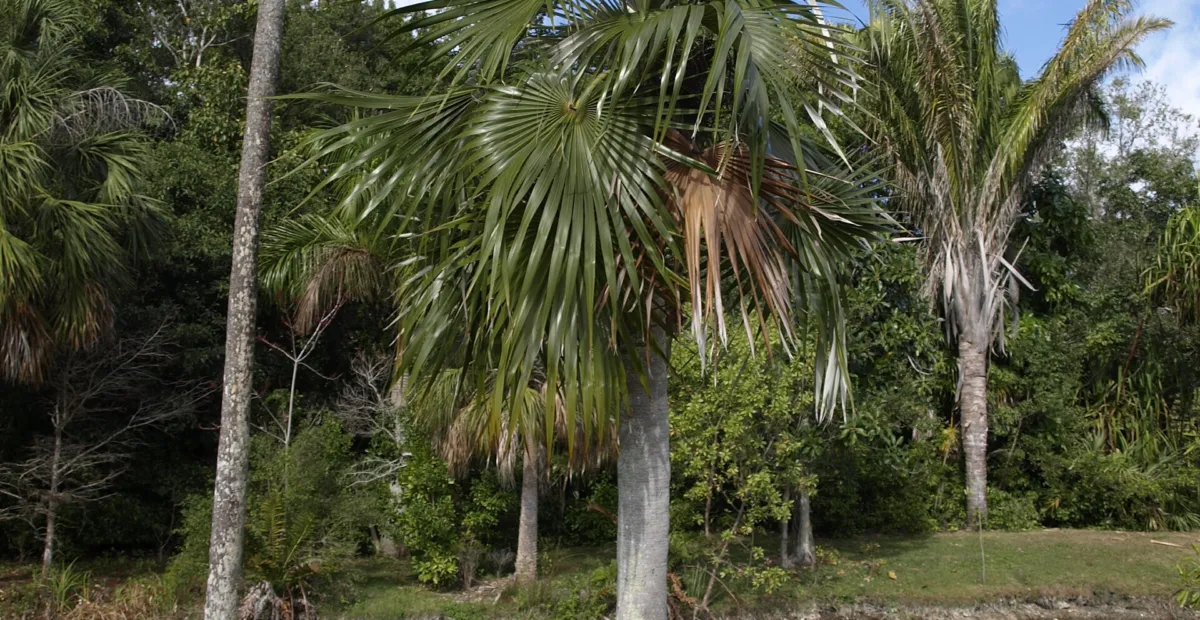
Coccothrinax readii is a rare, slender fan palm native to limestone coasts and lowland habitats of southeastern Mexico and northeastern Belize. It forms a solitary gray-brown trunk and an open crown of deeply divided leaves with silvery undersides. Fragrant cream-white flowers develop among the foliage, followed by small purple-black fruits. In the United States, it is mainly suited to frost-free landscapes, warm conservatories and carefully managed containers.
Taxonomic classification
Coccothrinax readii care guide
Light and placement
Provide full sun to light partial shade, with the brightest exposure practical in frost-free regions. A south- or southeast-facing site helps maximize warmth; use light afternoon shade in exceptionally hot, dry container situations after acclimation. Stretching, weak petioles and sparse foliage suggest insufficient light, while bleached patches or crisp scorching indicate excessive exposure combined with drought or sudden sun exposure.
Watering and humidity
Water deeply when the upper part of the mix has begun to dry, then allow excess water to drain completely. Keep newly planted specimens more evenly moist during establishment, but reduce irrigation in cool weather and during low-light indoor wintering. Never leave the pot standing in water. Humidity is helpful, but airflow is more important than constantly wet foliage.
Soil and growing medium
Use a sharply draining mineral mix with substantial sand, gravel or crushed limestone and only a modest amount of organic matter. Its native habitats include calcareous coastal substrates, so alkaline or slightly alkaline conditions are acceptable. Avoid heavy, permanently wet soils and containers that retain water around the roots.
Feeding
Feed during warm active growth with a complete palm fertilizer containing potassium and magnesium, applied at label strength or slightly conservatively. A slow-release product is practical for containers and landscapes. Do not fertilize during cold weather, immediately after severe root disturbance or when the root zone is dry; water first to reduce root injury.
Growth and habit
This is a slow-growing, solitary palm rather than a clumping species. It develops a narrow trunk and a relatively open crown, so maintenance is mainly protective: preserve the growing point, avoid trunk injury and prevent prolonged root saturation. Young plants benefit from steady warmth and consistent moisture while establishing.
Planting and repotting
Plant outdoors only in a reliably frost-free site after the soil has warmed. Set the palm at the same depth as it was growing in its container; do not bury the trunk. Allow generous air circulation and space it away from hardscape that reflects intense heat. Establish with regular deep watering, then reduce frequency as roots spread.
Repot only when roots have filled the container, preferably during warm active growth. Move into a slightly larger pot with a very free-draining palm or mineral mix. Handle the root ball carefully and keep the plant warm while it re-establishes.
Propagation and pruning
Propagation
Propagate from fresh seed. Clean away fruit tissue, sow in a warm, well-drained medium and keep evenly moist but never saturated. Germination and seedling development may be slow and irregular; use bottom heat and do not allow young plants to experience cold conditions.
Pruning
Remove only completely dead, broken or diseased leaves using clean tools. Do not cut green leaves merely to shape the crown, and never damage the central spear or growing point. Leave old leaf bases in place unless they detach naturally or create a specific safety problem.
Overwintering
Move containers indoors or into a heated conservatory before nights approach the low 40s°F. Give the plant the brightest available light, reduce watering in cool low light and keep it away from cold drafts. Outdoor specimens in marginal climates need overhead frost protection, dry roots and shelter from freezing wind, but prolonged freezes may still be fatal.
Uses
Best used as a specimen palm in frost-free landscapes, tropical collections, conservatories and large containers. Its silvery-backed foliage and slender solitary habit suit rock or limestone-inspired plantings. Native populations have documented local construction and traditional uses, but those uses should not be treated as recommendations for harvesting wild plants or for medicinal use.
Appearance
Coccothrinax readii forms a single slender gray-brown trunk and an open crown of palmate leaves. The blades are deeply divided into numerous segments, dark green on the upper surface and noticeably silvery beneath. Its unarmed trunk, narrow crown and dark mature fruits help distinguish it from some larger or more densely fibrous palms.
Flowering
This monoecious palm produces branched, interfoliar inflorescences that arch as fruits develop. The small flowers are cream-white and reported as fragrant. Flowers are followed by small, rounded fruits that mature purple-black. Reliable United States flowering dates are not well documented and may vary with warmth and cultivation.
Pollination and visitors
Species-specific visitor records were not located in the reviewed sources. The flowers are bisexual and fragrant, but a documented primary animal pollinator could not be confirmed confidently; no pollinator group is assigned here.
Coccothrinax readii photos
Click any photo for a larger view. Source, author and license are shown separately.
Diseases and pests
Diseases
Prevent disease by using a fast-draining substrate, avoiding overhead irrigation and maintaining air movement. Watch for persistent leaf spotting, crown decline or soft tissue, especially after cold or waterlogging. Remove badly affected material with sterilized tools and correct the underlying moisture or temperature stress; obtain a diagnosis before using fungicides.
Pests
Inspect periodically for scale insects, mealybugs and mites, especially on container plants kept in dry indoor air. Remove small infestations manually or with a suitable horticultural oil or soap when temperatures are moderate. Avoid spraying stressed plants and follow the product label. Good light, airflow and restrained nitrogen feeding reduce pest pressure.
Toxicity and pollen
No reliable species-specific human or veterinary toxicity assessment was located in the reviewed authoritative sources. Do not treat the plant as proven edible or proven safe solely because toxicity is undocumented. Prevent children and pets from chewing leaves, flowers or fruit, and seek professional advice after ingestion or irritation.
- Pollination / pollen
- Pollen produced by flowers; dispersal characteristics undocumented
A species-specific airborne pollen and allergy assessment was not found. As a flowering palm, it produces pollen, but the amount, dispersal pattern and clinical relevance for Coccothrinax readii are not sufficiently documented to assign a low, medium or high allergy category.
Native habitat
The species is native to southeastern Mexico, especially the Yucatán Peninsula, and northeastern Belize. It occurs in warm lowland and coastal settings, including limestone terrain, thin humus over calcareous rock, humid forest and coastal dunes, from near sea level to roughly 1,300 feet. Habitat loss and direct use have affected some Mexican populations.
Interesting fact
The species was described in 1980 by H. J. Quero. Its native range is concentrated in the Yucatán Peninsula and adjacent northeastern Belize. The palm is associated with limestone substrates and coastal environments. Mature fruits are rounded and purple-black, while the leaf undersides have a silvery appearance.
Frequently asked questions (FAQ)
The most relevant questions about this plant, with short and direct answers.
🌱Quick care
What is Coccothrinax readii?⌄
Coccothrinax readii is a slow-growing, solitary fan palm in the family Arecaceae, native to coastal areas of southeastern Mexico and northeastern Belize. It is valued for its slender trunk and fan-shaped leaves with silvery undersides.
Is Coccothrinax readii a silver palm?⌄
Coccothrinax readii is often called Mexican silver palm in horticultural references, but no verified local common name was provided for this profile. The scientific name should be used when accurate identification is important.
How much light does Coccothrinax readii need?⌄
Give Coccothrinax readii full sun to partial shade. Young plants may appreciate light afternoon protection, while established specimens can handle bright, open coastal conditions if their soil drains rapidly.
How often should I water Coccothrinax readii?⌄
Water Coccothrinax readii moderately, allowing the growing medium to dry somewhat between waterings. Established palms tolerate some drought, but prolonged dryness during hot weather can reduce vigor and leaf quality.
Is Coccothrinax readii frost hardy?⌄
Coccothrinax readii is frost tender and should be protected from freezing temperatures. It is best suited to frost-free or nearly frost-free parts of the United States, with container culture useful in colder areas.
How fast does Coccothrinax readii grow?⌄
Coccothrinax readii generally grows slowly, especially when young or grown in a container. Warm temperatures, strong light, excellent drainage, and consistent but not excessive moisture support its best growth rate.
🌤️Environment and placement
Where is Coccothrinax readii native?⌄
Coccothrinax readii is native to southeastern Mexico, especially the Yucatán Peninsula, and northeastern Belize. It occurs in coastal forests, sandy dunes, and other warm habitats with mineral or calcareous soils.
Can Coccothrinax readii grow in full sun?⌄
Yes, Coccothrinax readii can grow in full sun when gradually acclimated and supplied with sharply drained soil. Full sun is particularly appropriate for established plants in warm, humid, coastal-style conditions.
Can Coccothrinax readii grow in partial shade?⌄
Yes, Coccothrinax readii tolerates partial shade and may establish more easily there when young. Avoid dense, permanently dim shade, which can produce weaker growth and reduce the palm’s characteristic silvery appearance.
Is Coccothrinax readii suitable for coastal gardens?⌄
Coccothrinax readii is suitable for warm coastal gardens because it naturally grows near the coast and tolerates sandy, calcareous conditions. Provide good air circulation and prevent standing water around the roots.
What USDA zone is suitable for Coccothrinax readii?⌄
Coccothrinax readii is best treated as a warm-climate palm for frost-free or nearly frost-free USDA locations, broadly comparable to the warmest parts of Zones 10 and 11. Local exposure, winter lows, and protection strongly affect survival.
Can Coccothrinax readii grow indoors?⌄
Coccothrinax readii can be overwintered indoors in a bright, warm space, but it is not an easy long-term houseplant. Use a container with excellent drainage, provide strong light, and avoid cool, wet conditions.
💧Care and problems
What soil is best for Coccothrinax readii?⌄
Use very well-drained mineral soil, preferably sandy, rocky, or limestone-based. Coccothrinax readii tolerates calcareous or slightly alkaline conditions, but heavy, poorly drained clay should be improved or avoided.
Why are the leaves of my Coccothrinax readii turning yellow?⌄
Yellow leaves may result from overwatering, poor drainage, cold stress, nutrient deficiency, or normal aging of older fronds. Check the roots and soil moisture first, then correct drainage and avoid keeping the root zone constantly wet.
Why does Coccothrinax readii have brown leaf tips?⌄
Brown leaf tips commonly indicate drought stress, low humidity, root damage, salt buildup, or cold injury. Water thoroughly when the soil has partly dried, flush container soil occasionally, and keep the palm away from freezing temperatures.
Does Coccothrinax readii need fertilizer?⌄
Coccothrinax readii benefits from a balanced palm fertilizer during warm active growth, especially in containers or nutrient-poor mineral soil. Apply according to the product label and avoid fertilizing drought-stressed, cold-stressed, or waterlogged plants.
How do I protect Coccothrinax readii from cold?⌄
Move container plants indoors before freezing weather and shelter landscape specimens from wind and frost. Keep the root zone well drained, cover the crown temporarily during unusual cold, and remove protection when temperatures moderate.
Does Coccothrinax readii have serious pest problems?⌄
No species-specific pest profile is well established for Coccothrinax readii, but palms can develop scale insects, mites, or other problems under stress. Inspect leaf bases and undersides regularly and improve light, airflow, and watering practices.
🪴Planting and repotting
When should I plant Coccothrinax readii outdoors?⌄
Plant Coccothrinax readii outdoors during the warm growing season after cold weather has passed. In frost-prone parts of the United States, grow it in a container or plant only where reliable winter protection is available.
How should I plant Coccothrinax readii in the ground?⌄
Choose a sunny to lightly shaded site with fast-draining mineral soil, set the palm at the same depth as in its container, and water it thoroughly after planting. Do not bury the trunk base or allow water to collect around it.
Can Coccothrinax readii grow in a container?⌄
Yes, Coccothrinax readii can be grown in a container while young or where outdoor winters are too cold. Use a heavy pot with drainage holes, a gritty mineral mix, and a container only slightly larger than the root ball.
How often should I repot Coccothrinax readii?⌄
Repot Coccothrinax readii only when roots have substantially filled the container or drainage has declined. Because it grows slowly, repotting every few years may be sufficient; handle the root ball gently and avoid excessive potting-up.
✂️Propagation and pruning
How do you propagate Coccothrinax readii?⌄
Propagate Coccothrinax readii primarily from fresh seed. Sow the cleaned seed in a sterile, sharply drained medium, keep it warm and lightly moist, and be prepared for slow or uneven germination.
How long does Coccothrinax readii seed take to germinate?⌄
Coccothrinax readii seed may take several months to germinate, with some reports indicating that germination can begin after about four months. Fresh seed, steady warmth, and careful moisture control improve the chances of success.
Can Coccothrinax readii be propagated from cuttings?⌄
No reliable cutting method is established for Coccothrinax readii. As a solitary, single-trunk palm, it is normally propagated by seed rather than by stem cuttings or division.
Should I prune Coccothrinax readii?⌄
Prune Coccothrinax readii only to remove completely dead, broken, or hazardous fronds. Do not remove green fronds for appearance alone, because premature pruning can reduce vigor and expose the trunk to unnecessary damage.
⚠️Toxicity and safety
Is Coccothrinax readii toxic to people or pets?⌄
The toxicity of Coccothrinax readii is unknown because species-specific safety evidence is limited. Prevent children and pets from chewing plant material, and contact a poison-control service or veterinarian if ingestion causes symptoms.
Does Coccothrinax readii have thorns or sharp spines?⌄
Coccothrinax readii is described as an unarmed palm, so it does not have prominent trunk spines. Its stiff fronds and leaf stalks can still scratch, so place it away from narrow walkways and high-traffic areas.
🌸Flowering and special interest
Does Coccothrinax readii produce flowers?⌄
Yes, Coccothrinax readii produces small, creamy-white, often fragrant flowers on branched inflorescences that emerge among the leaves. Flowering is more likely after the palm is mature and growing strongly in warm conditions.
What fruit does Coccothrinax readii produce?⌄
After flowering, Coccothrinax readii can produce small, round fruits that mature to dark purple or nearly black. Each fruit contains a single seed, which can be used for propagation when fully mature and fresh.
How tall does Coccothrinax readii get?⌄
Coccothrinax readii is a small to medium solitary palm that can reach roughly 13 feet in favorable conditions, although cultivated plants may remain smaller. Growth and final size vary with climate, soil, and exposure.
Similar plants
 Coco-de-mer (Lodoicea maldivica) care guideLodoicea maldivica
 Cabbage Tree Palm (Livistona australis) care guideLivistona australis
 Mauritia flexuosa care guideMauritia flexuosa
 Livistona chinensis care guideLivistona chinensis
 Nibong palm is an Asian species of palm tree in the family Arecaceae (Oncosperma tigillarium) care guideOncosperma tigillarium
 He Queensland fan palm or Australian fan palm (Licuala ramsayi) care guideLicuala ramsayi