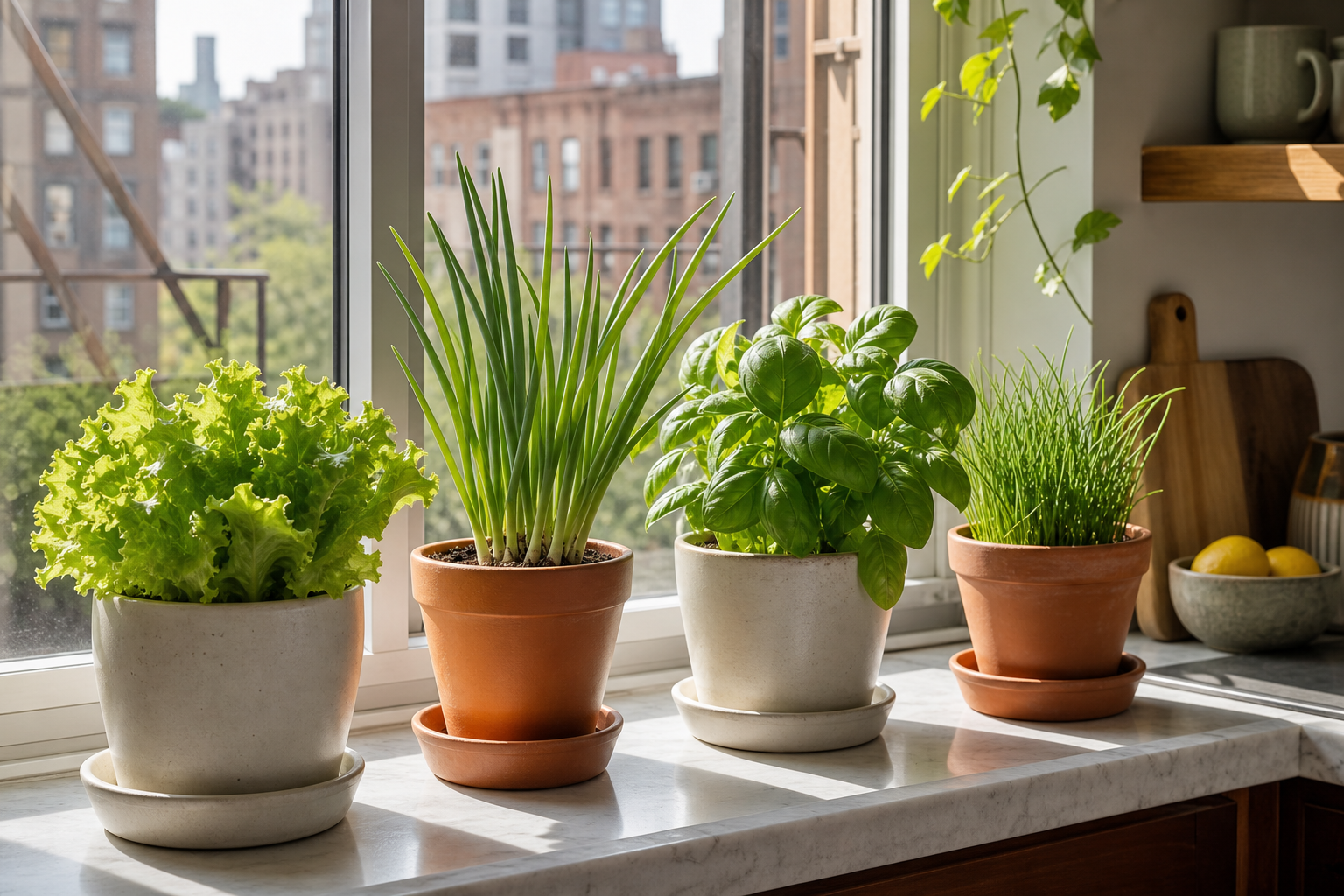
A sunny windowsill will not replace a full-size vegetable garden, but it can give you something just as satisfying: a steady supply of fresh leaves, tender herbs, and green garnish harvested minutes before dinner. You do not need a balcony, raised bed, or expensive hydroponic system to begin. A few containers, quality potting mix, seeds or small plants, and the brightest window in your apartment are enough.
The key is to choose crops that stay compact, tolerate containers, and reward frequent harvesting. For a first kitchen garden, try loose-leaf lettuce, green onions, basil, and chives. Each grows differently, so you can learn several useful skills at once: sowing seed, regrowing from a bulb, pinching herbs, and cutting leafy greens without pulling up the entire plant.
Start with the right windowsill setup
Light is usually the biggest limitation indoors. A south- or southwest-facing window is often the strongest choice in the United States, while an east-facing window may work well for less demanding crops such as chives and lettuce. Bright glass does not always mean bright growing conditions, especially in winter or when trees and nearby buildings shade the window.
Watch your chosen spot for a full day before planting. Notice how many hours direct sun reaches the sill, whether the area becomes hot in the afternoon, and whether cold air touches the glass at night. A windowsill that is comfortable for a houseplant may still be too dim for productive herbs.
- Choose containers with drainage holes and place them on waterproof saucers.
- Use a commercial potting mix rather than heavy garden soil, which can drain poorly in containers.
- Leave a small gap between the soil surface and the rim so water does not spill over.
- Keep foliage from pressing against cold glass or a heating vent.
- Rotate pots a quarter turn every few days so plants grow more evenly.
Most edible windowsill plants perform best when they receive several hours of strong light. If stems become long, thin, or noticeably tilted toward the glass, the plants are asking for more light. A white or balanced grow light on a timer can make the difference, particularly during short winter days. For leafy greens and herbs, supplemental lighting commonly runs for about 12 to 14 hours daily, following the light’s manufacturer guidance and keeping the fixture close enough to illuminate the leaves without overheating them.
Four reliable crops for a kitchen garden
1. Loose-leaf lettuce: the fastest salad harvest
Loose-leaf lettuce is one of the best windowsill vegetables for beginners because you can harvest individual leaves instead of waiting for a firm head to form. It also stays relatively compact and can provide baby greens within a few weeks under good conditions.
Look for seed packets labeled “loose leaf,” “cut-and-come-again,” or “baby leaf.” Leaf colors and textures vary widely. Green varieties often grow quickly and have a mild flavor, while red and bronze types can add color but may grow a little more slowly depending on the variety and light. Salad mixes are convenient, although individual varieties give you more control over flavor and harvest timing.
How to plant lettuce
- Fill a container at least 6 inches deep with moistened potting mix.
- Sow seeds thinly across the surface and cover them with approximately 1/8 inch of mix.
- Water gently with a spray bottle or a small stream so the seeds stay in place.
- Once seedlings appear, thin crowded plants with scissors, leaving the strongest seedlings several inches apart.
- Begin harvesting outer leaves when they are large enough to use, leaving the center growing point intact.
Lettuce generally prefers cooler conditions than basil. A room around 65 to 70°F is often more comfortable for indoor lettuce than a hot kitchen beside an oven. If the plants become crowded, cut a portion for a salad rather than waiting for every plant to reach full size. Crowding reduces air movement and can encourage weak, stretched growth.
2. Green onions: a small crop with a big payoff
Green onions, also called scallions or bunching onions, are excellent for narrow containers because they grow upright and do not need much horizontal space. You can grow them from seed, but beginners often find transplants or supermarket bunches easier to handle.
For a continuing windowsill supply, choose bunching onion varieties that do not form large bulbs. ‘Evergreen Hardy White’ is a popular type for slender green stalks, while red-stemmed or mild salad-onion varieties offer a different look and flavor. You can also plant a few store-bought onions with healthy roots, but regrowth is not always uniform, so treat it as an experiment rather than a guaranteed perpetual harvest.
How to plant and harvest green onions
- Use a container at least 6 inches deep with drainage.
- Space seedlings or rooted sections about 1 to 2 inches apart.
- Set rooted onions at the same depth they were growing, keeping the green tops above the mix.
- Harvest the outer stalks first, or cut the plant about 1 inch above the soil and allow it to regrow.
- Make a second container every few weeks if you want a more reliable rotation.
Green onions are forgiving, but they still need light and evenly moist soil. If the stalks are pale and floppy, move the container closer to the window or add a grow light. Snip only what you need for tacos, fried rice, baked potatoes, soups, or scrambled eggs.
3. Basil: a sunny windowsill favorite
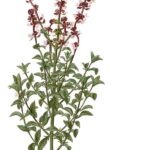
Basil brings the strongest summer feeling to an apartment kitchen. It grows quickly in warmth and bright light, and a single healthy plant can provide repeated harvests when you pinch it correctly.
Genovese basil produces the familiar broad leaves used for pesto and tomato dishes. Greek basil forms smaller leaves on a naturally compact plant, making it useful when space is tight. Cinnamon, lemon, and purple basils offer different aromas and colors, but they may vary in vigor and are often best treated as specialty plants rather than your only basil crop.
How to keep basil compact and productive
- Give basil the brightest location available; it usually needs more direct light than lettuce or chives.
- Use a pot at least 6 inches wide for one small plant, with room for roots to expand.
- When the plant has several sets of leaves, pinch just above a pair of leaves rather than removing isolated leaves from the stem.
- Remove flower buds promptly if your goal is tender leaves, since flowering can change the plant’s flavor and reduce leafy growth.
- Harvest regularly instead of waiting until the stems become tall and woody.
Basil dislikes cold windowsills. During winter, keep it away from freezing glass and drafts; temperatures below about 50°F can damage or kill the plant. If your kitchen window becomes cold overnight, move the pot a few inches back after sunset.
Do not expect every supermarket basil pot to become a long-lived houseplant. These pots often contain many crowded seedlings. You can divide them carefully into several containers, but the plants may still need strong light and regular trimming to remain healthy.
4. Chives: the low-fuss perennial herb
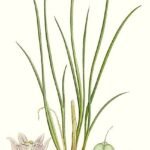
Chives are among the easiest herbs for a small indoor garden. Their slender leaves grow from a clump, tolerate less direct sun than basil, and return after repeated cutting when the plant remains healthy.
Common chives have a mild onion flavor and hollow leaves. Garlic chives have flatter leaves and a gentle garlic note. Compare the two if you enjoy experimenting: common chives suit baked potatoes and eggs, while garlic chives work well in dumplings, stir-fries, and compound butter.
How to grow chives indoors
- Plant one established clump in a container at least 6 inches wide.
- Keep the mix lightly and evenly moist, but never leave the pot sitting in water.
- Cut leaves from the outside of the clump, leaving the center to continue growing.
- Trim flower stems if you want the plant to focus on leaves.
- Every few years, divide an overcrowded clump into smaller sections and repot them.
Chives can be grown from seed, but a small nursery plant gives you a much faster first harvest. They may slow down in winter when light levels drop. That is normal; keep the plant alive, reduce harvesting, and resume heavier cutting when new growth accelerates.



Water by measurement, not by guesswork
Indoor plants often fail because they are watered on a schedule rather than according to the soil. A sunny, warm windowsill may dry a small pot quickly, while a dim, cool kitchen can leave the same amount of soil wet for many days.
Try this simple watering test for one week. Insert your finger about 1/2 inch into the mix. If it feels dry at that depth, water slowly until a small amount drains from the bottom. For a 6-inch pot, measure how much water you pour in and how much drains out. As a starting experiment, you might use about 1 cup of water for a small 6-inch container, then adjust based on the potting mix and plant size. The exact amount is less important than wetting the root zone thoroughly without leaving the pot submerged.
Record three details in a notebook:
- Date and time of watering.
- Approximate amount poured into the container.
- How the soil felt 24 and 48 hours later.
After several waterings, you will see a pattern. Lettuce may need more frequent attention because its shallow roots and leafy growth lose moisture quickly. Basil can also dry out fast in bright light. Chives and green onions may use less water, especially in a cooler room. These are useful observations, not rigid rules.
Always empty the saucer after watering. Constantly wet soil removes air from the root zone and can lead to root problems. On the other hand, do not wait for plants to collapse before watering. Repeated wilting can weaken growth and make harvests disappointing.
A simple windowsill growing experiment
If you enjoy comparing results, plant two varieties of the same crop in matching containers. For example, grow green loose-leaf lettuce beside red loose-leaf lettuce, or compare Genovese basil with Greek basil. Label each pot with the variety and sowing date.
Measure the first harvest date, the number of usable leaves, and how quickly each plant recovers after cutting. You may find that the “best” variety depends on your window. A compact Greek basil could outperform a larger Genovese type in a narrow sill, while red lettuce may offer more attractive salads even if the green variety produces slightly faster.
Keep the experiment fair by giving both pots the same container size, potting mix, watering method, and light exposure. You do not need laboratory equipment. A ruler, measuring cup, plant label, and a few notes are enough to turn everyday kitchen gardening into a useful learning project.
Common windowsill problems and quick fixes
Long, weak stems
This usually points to insufficient light. Move the plant closer to a brighter window, rotate it regularly, or add supplemental lighting. Avoid trying to solve a light problem with extra fertilizer.
Yellowing leaves
Check the soil before watering again. Yellow leaves can appear when roots stay too wet, but an older leaf naturally yellowing is not always a crisis. Confirm that the container drains freely and that the plant is not sitting in collected water.
Dry, crispy edges
Check for inconsistent watering, hot afternoon sun, or a nearby heating vent. Water thoroughly when the soil reaches the appropriate dryness, and move the pot away from direct blasts of hot air.
Crowded seedlings
Thin them with clean scissors rather than trying to save every sprout. The remaining plants will receive more light and air, and the tiny thinnings can often be added to a sandwich or salad when they are clean and tender.
Harvest your way to a more useful garden
Think of a windowsill garden as a rotating pantry, not a miniature farm. Sow a small amount of lettuce every two or three weeks instead of planting one large batch. Keep one basil plant for regular pinching and one younger plant coming along. Replace tired green onions while the existing container is still producing.
Harvest with clean scissors or your fingers, and take only what you can use promptly. Fresh leaves and herbs are at their best when added directly to meals. A small harvest of chives on a baked potato or a handful of lettuce in a lunch salad may seem modest, but these repeated moments are what make an apartment garden worthwhile.
Begin with one bright window and two containers if four crops feel ambitious. Once you understand how light, temperature, and soil moisture behave in your home, add the other plants. With a little observation and regular harvesting, even the smallest kitchen can become a productive, welcoming garden.