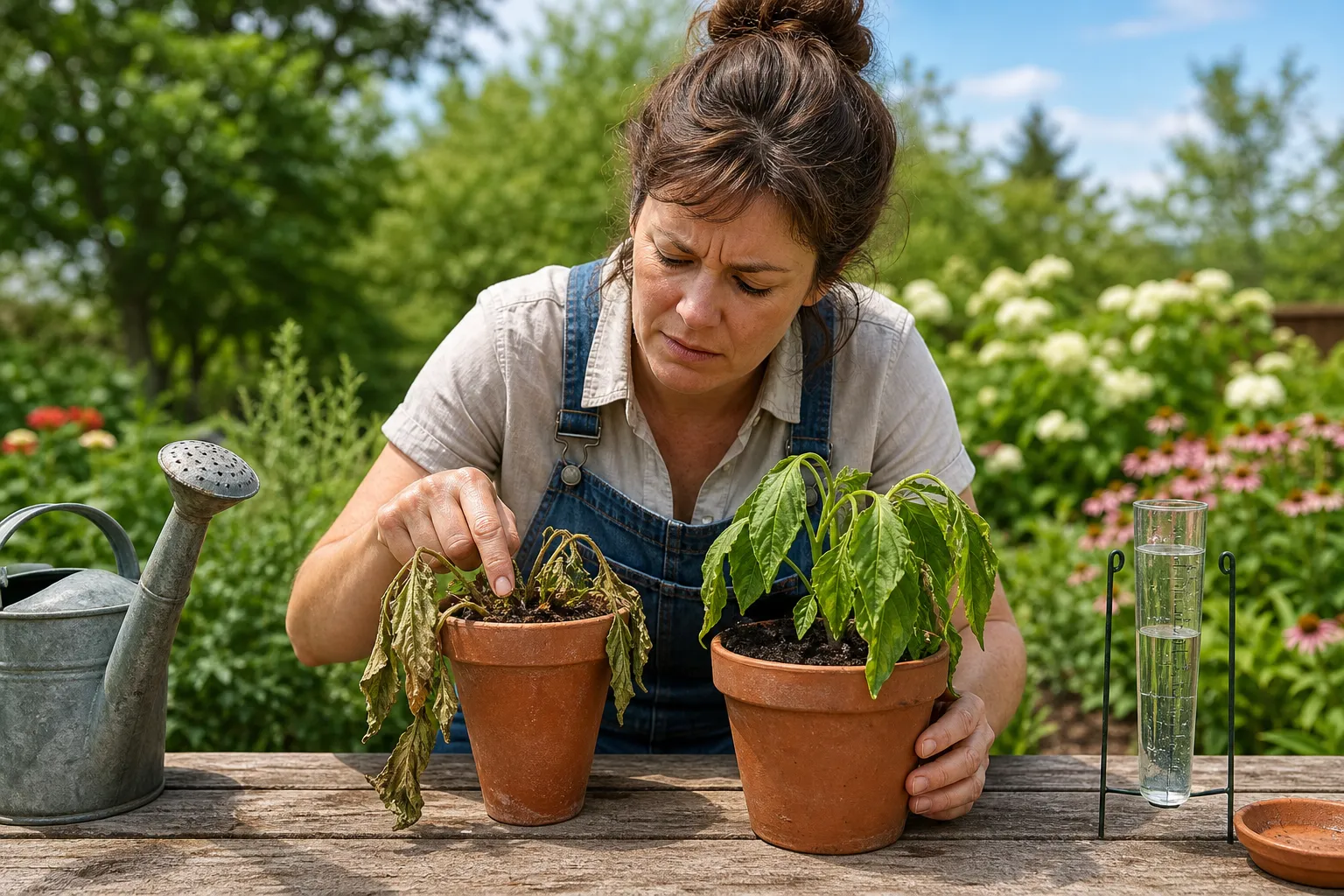
A drooping plant seems to ask for one thing: water. But wilting is not a diagnosis—it is a clue. A plant may sag because its soil is dry, yet the same floppy leaves can appear when the soil is soggy, the roots are damaged, the afternoon sun is intense, or the plant is simply protecting itself from heat.
Before you reach for the hose or watering can, pause for a quick investigation. Check the soil, consider the weather, look at the leaves and stems, and think about what has changed recently. That extra minute can save a genuinely thirsty plant—and prevent you from drowning one that already has more water than it can use.
Why plants wilt in the first place
Leaves and young stems stay firm partly because water creates pressure inside their cells. As water leaves the foliage faster than the roots can replace it, that pressure falls and the plant begins to droop. Hot, dry, windy conditions can accelerate water loss even when the soil still contains usable moisture.
That is why a healthy tomato, squash, hydrangea, or annual flower may look tired during the hottest part of the afternoon and recover after sunset. If the leaves stand up again by morning, the plant may have experienced temporary heat stress rather than a serious shortage of water.
True drought stress becomes more concerning when the soil is dry and the plant fails to recover overnight. Continued stress can lead to crispy leaf edges, leaf drop, stalled growth, fewer flowers, or smaller fruit. The important distinction is not simply “wilting or not wilting,” but whether the root zone contains water the plant can actually access.
The first test: check the root zone, not the leaves
Surface soil can look dry while the deeper root zone remains moist. The reverse can also happen: a thin top layer may feel damp after a light watering, while the rest of the container or planting bed is bone-dry.
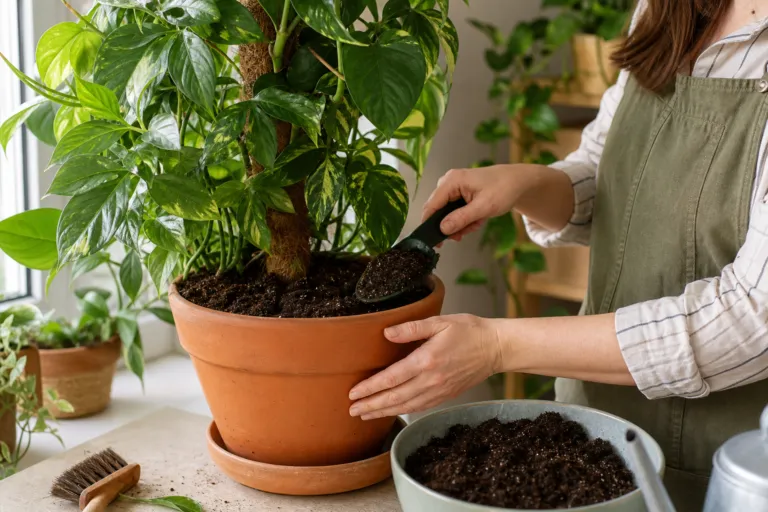
For houseplants and containers
- Push your finger about 2 inches into the potting mix, or use a wooden skewer to sample deeper soil.
- If the mix feels dry at that depth and the plant’s care needs allow it, water thoroughly.
- If the mix feels cool and damp, wait and inspect the plant for another cause.
- Make sure excess water can drain from the pot, then empty the saucer after watering.
A moisture meter can provide an additional clue, but treat inexpensive meters as guides rather than absolute judges. Readings can vary with soil type, probe placement, salts, and the condition of the instrument. Your finger, a skewer, and knowledge of the plant often tell a more useful story together.
For garden beds and landscape plants
Check soil where the roots are concentrated rather than at the bare edge of the planting bed. For many established shrubs and trees, dig a small hole beneath the canopy and examine the soil roughly 6 to 9 inches down. If it is cool and moist, watering may not be the answer. If it is dry and crumbly, the plant may genuinely need a deep soak.
For vegetables and annual flowers, checking about 2 inches below the surface is a practical starting point. Sandy soils dry quickly, while clay soils may remain wet for much longer. Mulch, wind exposure, plant size, recent rainfall, and competition from nearby roots also change how quickly a bed loses moisture.
Signs your plant is genuinely thirsty
Underwatering usually produces a pattern rather than a single symptom. Look for several clues that agree with one another:
- The soil is dry well below the surface, not merely dusty on top.
- Leaves feel less firm than usual and may droop throughout the day.
- Leaf edges or tips turn brown, dry, and crisp.
- A container feels unusually light when you lift it.
- Potting mix pulls away from the inside edge of the pot.
- New growth wilts first, especially on soft-stemmed plants.
- The plant improves after a thorough watering, provided the roots remain healthy.
A plant that has been dry for a long time may not recover immediately. Water should reach the entire root ball or root zone, but avoid flooding repeatedly if the soil has become water-repellent. In a container, water slowly until some drains from the bottom. If water runs straight down the sides, apply it in stages so the dry mix has time to absorb moisture.
When a thirsty-looking plant has too much water
Overwatering does not always make a plant look lush. Roots need both moisture and air in the spaces between soil particles. When soil stays saturated, roots may struggle to function or may become damaged, leaving the foliage wilted even though the pot feels wet.
Possible clues include:
- Soil remains wet for many days between waterings.
- Leaves wilt but feel soft rather than crisp.
- Older leaves turn yellow or drop prematurely.
- The soil smells sour or stagnant, or algae appears on the surface.
- Stems near the soil line become soft, dark, or sunken.
- Roots are brown or black and mushy rather than firm and light-colored.
These signs can overlap with disease, poor drainage, compacted soil, cold damage, or nutrient problems, so avoid declaring “root rot” from one yellow leaf alone. Stop automatic watering, inspect drainage, and allow the appropriate portion of the growing medium to dry before watering again. Severely affected plants may need a closer root and container inspection.
Heat stress: the plant looks thirsty, but the soil is moist
On a hot, bright, or windy day, leaves can lose moisture faster than roots can replace it. Plants respond by reducing water loss, sometimes by drooping, curling leaves, or temporarily closing tiny leaf openings called stomata. This can happen even when the root zone is adequately moist.
Heat stress is more likely when:
- Wilting begins during the hottest part of the day.
- The plant looks noticeably better in the evening or early morning.
- The soil remains cool and moist beneath the surface.
- Leaves curl inward without becoming immediately crisp.
- Plants sit against hot pavement, reflective walls, or containers that heat quickly.
Do not automatically add more water every time a plant droops at 3 p.m. First check the soil. If it is moist, provide temporary shade where appropriate, protect containers from reflected heat, and improve the mulch layer around outdoor plants. If the soil is dry, water promptly rather than waiting for a preferred morning schedule; preventing severe drought stress matters more than following a rigid clock.
Different plants, different signals
Plant variety matters. A cucumber and a rosemary plant can stand beside each other in the same weather while asking for very different moisture levels. A large-leaved hydrangea may wilt dramatically during heat, whereas rosemary often keeps a firmer appearance in relatively dry soil. Succulents and many Mediterranean herbs generally prefer the mix to dry more between waterings than tropical foliage plants.
Even within one crop, varieties may behave differently. In a simple comparison, grow a compact patio tomato and a vigorous indeterminate tomato in similar containers. The larger plant usually develops more foliage and may lose water faster, while the smaller plant may remain firm longer. That does not mean the compact variety should follow a calendar; pot size, sun, wind, and root development still determine when water is needed.
Leaf posture can also be normal behavior. Some plants fold, hang, or change orientation in response to light, temperature, or their natural daily rhythm. Compare the plant with its own appearance in the morning rather than judging it against a neighboring species.

A small watering experiment that replaces guesswork
Try this practical experiment with three similar containers of the same plant. Choose pots with drainage holes and use the same potting mix. Label them A, B, and C.
- Water all three thoroughly until excess water drains from the bottom.
- Let A dry until the top 2 inches feel dry.
- Keep B evenly moist, watering only when the mix begins to dry at the same depth.
- Keep C wetter for a short comparison, but never leave it standing in water.
- Record the pot weight, soil feel, weather, and leaf posture at the same time each day.
For a more precise measurement, weigh each container immediately after watering and again before the next watering. The difference represents water lost from the pot, although some of that loss comes from evaporation and some from the plant. A 10-inch container might lose several ounces in mild indoor conditions and considerably more outdoors; the useful result is the pattern in your own growing space, not a universal number.
For a garden bed, place a simple rain gauge nearby and record rainfall. As a general vegetable-garden reference, 1 inch of water over 100 square feet equals about 62 gallons. Measure your bed’s length and width, multiply to find square footage, and use the gauge to see whether rain or irrigation supplied approximately that amount. Treat this as a starting point, not a command: sandy beds, raised beds, newly planted seedlings, and heat waves may require different timing.
How to water without creating a new problem
Water deeply enough
Apply water slowly at the soil surface so it can move into the root zone instead of running away. A soaker hose, drip line, watering wand, or slow hand watering often works better than a fast blast from a hose. Aim at the base of the plant, especially during windy weather.
Use the calendar only as a reminder
“Water every Tuesday” is easy to remember but unreliable. Water demand changes with temperature, humidity, light, wind, pot size, plant size, soil texture, and drainage. Use the calendar to remind you to inspect plants, not to force a watering session when the soil is already wet.
Water at the right depth
Frequent, shallow sprinkles may wet only the surface. For established plants, a slower soak that reaches the active root zone is usually more useful than repeated light applications. Newly planted plants are the exception: their smaller root systems may need more frequent checks while they establish.
Recheck after watering
Several hours later, inspect the soil again. In a container, confirm that water reached the lower portion of the root ball and drained freely. In the landscape, check beneath the mulch and a few inches into the soil. If the surface is wet but deeper soil is dry, adjust the speed and duration of watering rather than simply watering more often.
A five-minute wilt diagnosis
- Step 1: Look at the whole plant, including new growth, older leaves, stems, and soil surface.
- Step 2: Feel the soil at the plant’s likely root depth.
- Step 3: Check whether the plant recovers overnight.
- Step 4: Consider recent heat, wind, repotting, fertilizing, pruning, or transplanting.
- Step 5: Check drainage and, if necessary, inspect roots.
- Step 6: Change one thing at a time and observe the response.
If the soil is dry, water thoroughly and monitor recovery. If it is wet, pause watering and investigate drainage or root health. If it is moist and the plant revives by morning, heat or normal daily water balance may explain the temporary wilt.
Trust the evidence, not the drama
Wilted leaves are excellent messengers, but they are not always accurate translators. The most reliable diagnosis combines leaf appearance with soil moisture, weather, plant type, container condition, and the plant’s response over time.
Next time a plant looks thirsty, resist the reflex to water first and ask a better question: Can the roots access enough moisture right now? Once you learn to check below the surface, distinguish crisp drought symptoms from soft overwatering symptoms, and notice daily heat patterns, watering becomes much less mysterious—and your plants become far more resilient.