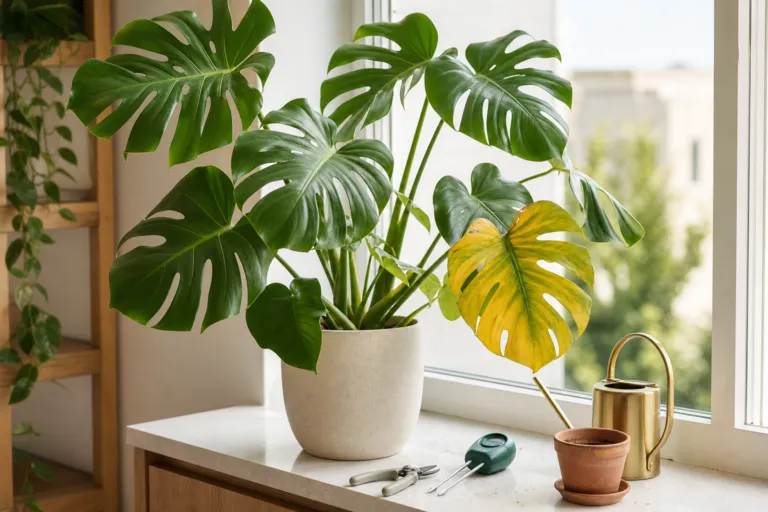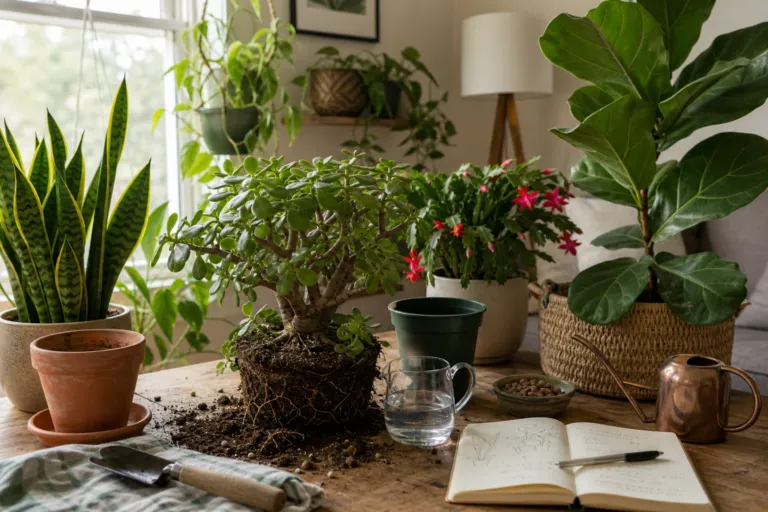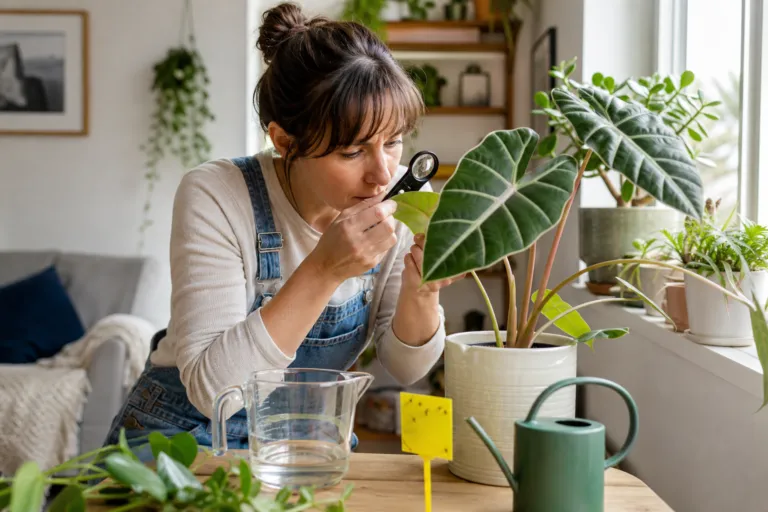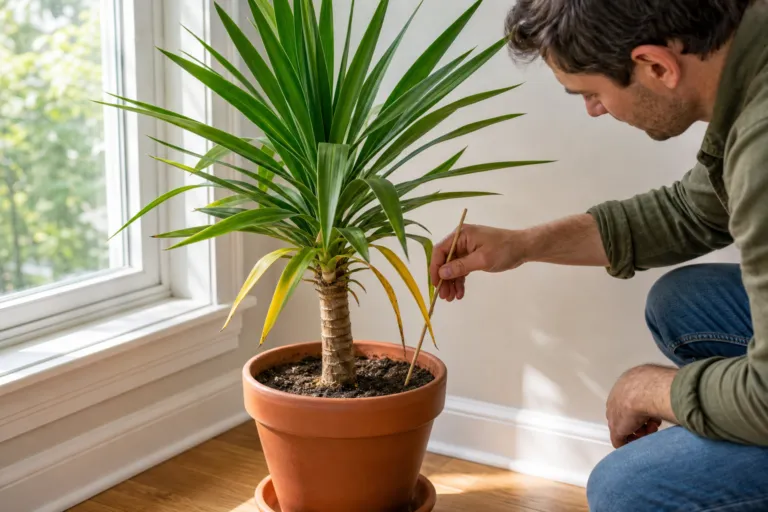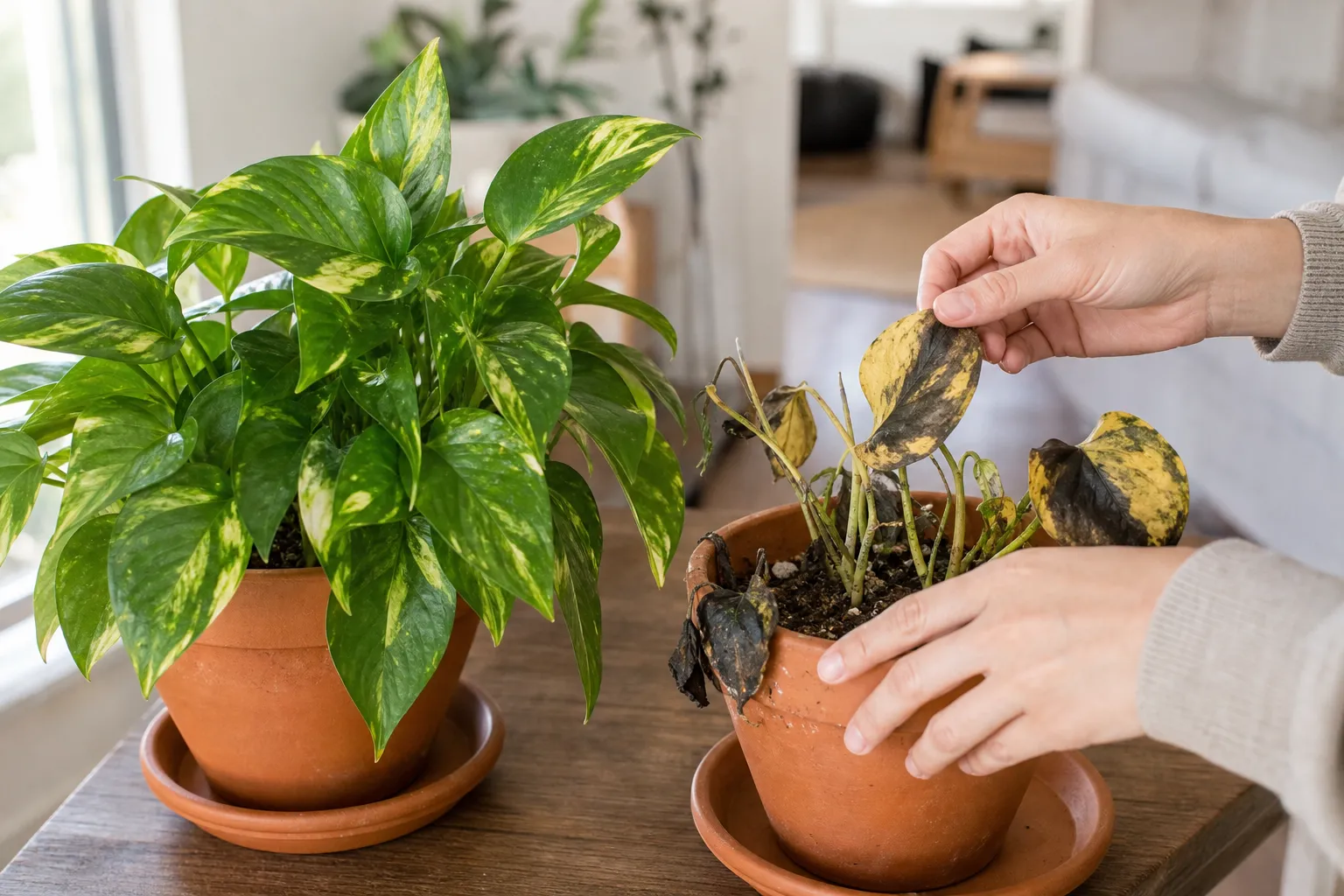
Black leaves are one of the most alarming houseplant problems – but they do not always mean your plant is doomed. A dark patch may come from overwatering, cold air, sun damage, a fungal or bacterial leaf spot, pests, or even natural aging. The most useful clue is not simply the color. Look closely at where the blackening appears, how it feels, and what the soil and roots are doing.
Before you reach for fertilizer or a spray, take a few minutes to investigate. A careful diagnosis can save healthy tissue, prevent the problem from spreading, and help you adjust your plant’s care with confidence.
First, identify what “black” looks like
Blackening can appear in several different patterns. A soft, spreading patch suggests a different problem from a dry, crisp edge or a thin, dusty coating on the leaf surface.
- Soft, dark or water-soaked areas: often point to excess moisture, cold injury or tissue decay.
- Dry, crisp black or brown edges: may follow underwatering, low humidity, fertilizer buildup or intense light.
- Small round spots: can indicate a leaf-spot disease, especially when spots have yellow halos or continue appearing on new leaves.
- A washable black coating: may be sooty mold growing on sticky honeydew produced by insects.
- Black roots with a limp plant: strongly suggest root damage associated with waterlogged potting mix.
Also consider the plant’s age. An occasional older leaf turning yellow, brown and eventually dark before dropping can be normal. Concern rises when several leaves change at once, new growth is affected, or the plant declines rapidly.
1. Overwatering and root rot are the most common suspects
Many houseplants develop black leaves after the potting mix stays wet for too long. The problem is not one generous watering by itself; it is the repeated combination of saturated soil, poor drainage and roots that cannot get enough oxygen.
Damaged roots can no longer supply water properly, so the plant may wilt even though the soil feels wet. Leaves may turn yellow first, then develop dark, soft areas or drop from the plant. This is especially common in plants grown in oversized containers, decorative pots without drainage holes, or dense soil that drains slowly.
How to check for a root problem
- Feel the potting mix several inches below the surface rather than watering by calendar alone.
- Make sure excess water can escape through the drainage holes.
- Slide the plant gently from its pot if the plant is wilting while the mix remains wet.
- Healthy roots are generally firm. Rotten roots may be brown or black, soft, slimy and unpleasant-smelling.
If only a few roots are damaged, you can trim away the mushy portions with clean, disinfected scissors and repot into fresh, well-draining mix. Choose a container only slightly larger than the remaining root ball. Afterward, water thoroughly once, let the excess drain, and wait until the plant’s growing needs indicate it is ready for another drink.
Do not assume that a strict weekly schedule works for every plant. A small pothos in a bright window may dry much faster than a large rubber plant in a dim corner. As a simple home experiment, check the soil of two plants at the same time for a week and record how deep the moisture remains. You may find that one needs water after 5 or 6 days while the other is still damp after 10 days.
2. Cold drafts can blacken leaves quickly
Warm-climate houseplants often react badly to sudden cold. A leaf touching a chilly window, sitting near an exterior door, or exposed to a winter draft may develop black or dark brown patches within days. The damage can look wet at first and later become dry and papery.
Cold injury is more likely when the plant is also wet. Waterlogged roots and cold temperatures together slow the plant’s ability to absorb water and can intensify tissue damage.
Where cold damage commonly happens
- Against a cold window during winter nights
- Beside frequently opened doors
- Near heating and cooling vents
- During transport from a garden center in freezing weather
- When leaves touch cold glass or a drafty wall
Move the plant to a stable location away from drafts, but avoid a sudden move into strong direct sun. Damaged sections will not turn green again, so focus on protecting new growth. Remove badly damaged leaves once the extent of the injury is clear.
3. Leaf-spot diseases cause spreading dark marks
Fungal and bacterial leaf spots can appear as black, brown or reddish-brown lesions. They may be circular or irregular, sometimes with a yellow margin. Spots can enlarge, merge together and eventually kill sections of the leaf.
These problems are more likely when foliage stays wet, plants are crowded together, air movement is poor, or infected leaves and debris remain in the pot. Splashing water can move disease-causing organisms from one leaf to another.
What to do when spots keep spreading
- Separate the affected plant from nearby houseplants.
- Remove severely spotted leaves with clean scissors.
- Discard infected plant material rather than composting it indoors.
- Water the potting mix directly and keep leaves as dry as practical.
- Improve air circulation without placing the plant in a cold draft.
- Clean tools and hands after handling the plant.
A few isolated marks do not always mean a serious disease. Watch the pattern over several days. If new spots continue to appear despite better airflow and careful watering, consider asking a local county extension office, university plant clinic or experienced nursery professional for a diagnosis. Avoid treating every dark spot with a pesticide; the wrong product may add stress without solving the cause.
4. Water on leaves and intense light can create damaged patches
Some plants, including African violets and other fuzzy-leaved species, are sensitive to water sitting on their foliage. Droplets can leave marks, encourage spotting or magnify light on the leaf surface. Cold water can also shock tender leaves.
Watering from the base or directing the stream onto the soil is often helpful. If leaves become wet, allow them to dry in good air circulation rather than leaving the plant crowded in a humid corner.
Strong sunlight through glass can scorch leaves, especially after a plant has been moved from a dim store or interior room. Scorched tissue may look pale, tan, brown or nearly black. Damage usually appears on the side facing the window and does not spread in the same way as a disease.
Compare varieties when choosing a location. A compact, dark-leaved philodendron may tolerate brighter conditions than a delicate prayer plant, while a variegated plant may need more light to maintain its pattern but still suffer in hot afternoon sun. A sheer curtain or a position several feet from a bright south- or west-facing window can provide a gentler transition.
5. Pests can lead to black, sooty leaves
Some insects feed on plant sap and leave behind a sticky substance called honeydew. A dark, powdery coating may then grow on that residue. This is known as sooty mold. It may make leaves look black even though the leaf tissue underneath is still green.
Inspect the undersides of leaves, stems and leaf joints for scale, aphids, mealybugs or other sap-feeding insects. Sticky leaves, tiny insects, cottony clusters or small shell-like bumps are useful clues.
- Wipe a small number of affected leaves gently with a damp cloth.
- Rinse suitable plants with a gentle stream of lukewarm water.
- Isolate the plant while you monitor and manage the infestation.
- Repeat inspections because eggs and hidden insects may be missed the first time.
Choose any insect-control product carefully and follow its label, including directions for indoor use and plant safety. Test a small area first when the label permits, because some foliage is easily damaged by sprays.
6. Fertilizer buildup and dry air may cause dark edges
Blackened or browned tips and margins sometimes follow an erratic watering routine, very dry indoor air or excess fertilizer salts in the potting mix. These problems often begin at the edges rather than as wet spots in the middle of the leaf.
Indoor air can become especially dry during winter when heating systems run frequently. A humidifier, grouping compatible plants, or moving the plant away from a heat vent may help. Avoid keeping the pot constantly wet simply to increase humidity; that can damage roots.
If you suspect fertilizer buildup, pause feeding and water thoroughly with plain water, allowing it to drain completely. Do not let the pot sit in runoff. Follow the fertilizer label and use a lighter feeding schedule during periods of slow growth.
A practical black-leaf diagnosis in five minutes
- Look at the pattern. Are the marks on the edges, scattered across the leaf, or concentrated on new growth?
- Touch the tissue. Is it soft and wet, or dry and crisp?
- Check the soil. Is it bone-dry, evenly moist, or still saturated several days after watering?
- Inspect roots and pests. Look for mushy roots, insects, sticky residue or cottony deposits.
- Review recent changes. Think about moving the plant, repotting, a cold night, a heat wave, fertilizer, a new window or a missed watering.
Write down what you observe instead of changing five things at once. Adjust one or two factors, then watch the plant for a week or two. New leaves are often more informative than old damage because they show whether the plant’s current conditions are improving.
Should you remove black leaves?
Remove leaves that are mostly black, collapsing, badly diseased or clearly dead. Use clean scissors and avoid tearing the tissue. If only a small section is damaged, you can trim the affected area while leaving as much healthy green tissue as possible.
A leaf with a single dry mark can remain attached if it is still helping the plant. Pruning cannot repair existing damage, but it can improve appearance and, when disease is involved, reduce the amount of infected tissue.
The encouraging takeaway
Black leaves are a symptom, not a diagnosis. Start with the basics: check the roots, improve drainage, protect the plant from cold and harsh sun, keep foliage clean and dry, and inspect carefully for pests or spreading spots.
Most importantly, do not panic or overcorrect. Houseplants respond best to steady care rather than a series of sudden changes. Once you learn to read the pattern of the damage, a black leaf becomes useful information – and your next flush of healthy growth will show that you are on the right track.