 Source:
 He century pla (Agave americana) short overview
he century pla (Agave americana) is a large, evergreen succulent perennial native to the southwestern United States and Mexico. Its broad blue-gray rosette leaves carry sharp marginal teeth and terminal spines, while mature plants may produce a spectacular summer flower stalk more than 20 feet tall. It thrives in full sun, lean sharply drained soil, and dry conditions, but sap, spines, and eventual plant death after flowering require thoughtful placement and handling.
Taxonomic classification
He century pla (Agave americana) care guide
Light and placement
Give full sun, ideally with southern or western exposure and unobstructed airflow. In very hot desert climates, light afternoon shade can reduce scorch, especially after moving a plant outdoors. Insufficient light produces looser, greener growth and weaker form; intense sun after indoor culture can bleach or burn leaves, so acclimate gradually.
Watering and humidity
Water deeply, then allow the soil to dry thoroughly before watering again. During the warm growing season, established plants may need only occasional irrigation; reduce sharply in fall and winter, especially in cool weather. Container plants need more frequent checks than in-ground specimens, but never leave the pot standing in runoff.
Soil and growing medium
Use a gritty, sharply draining soil dominated by sand, mineral grit, or small rock. Avoid heavy clay and sites that stay wet after rain, because saturated roots are prone to rot. The species tolerates a broad pH range, from mildly acidic through mildly alkaline, and does not require rich soil.
Feeding
Feed sparingly because rich fertility can produce weak, overly lush growth. In spring, apply a small amount of balanced, low-nitrogen succulent fertilizer at label strength, or use a thin compost dressing in outdoor soil. Do not fertilize newly divided plants, drought-stressed plants, or plants sitting in cold, wet soil.
Growth and habit
This species forms a stemless, persistent rosette and may gradually produce a substantial clump of offsets. Growth is slow, but the eventual flowering event is dramatic and terminal for the mother rosette. Remove unwanted pups early if you need to control spread or maintain clearance around spiny foliage.
Planting and repotting
Plant outdoors in spring after the danger of hard frost has passed, choosing the warmest, sunniest well-drained site available. Set the root ball at the same depth it was growing, never burying the crown. Leave ample room for the mature rosette and keep it away from paths because of the spines.
Repot container plants in spring only when roots fill the pot or the plant becomes unstable. Use a heavy, wide container with large drainage holes and a gritty succulent mix. Wear thick gloves and protect the leaves while handling; allow disturbed roots to dry briefly before watering.
Propagation and pruning
Propagation
Separate rooted offsets or pups in spring or early summer, allowing cut surfaces to callus briefly before planting into dry, gritty mix. Seeds can be sown in a warm, well-drained medium; seedlings grow more slowly than offsets and are useful when genetic diversity is desired.
Pruning
Remove only dead or badly damaged leaves, cutting close to the base with sanitized tools. Trim cautiously because leaf margins and tips are rigid and sharp. After flowering, remove the spent stalk once it is fully dry if safe access is available; retain healthy offsets unless they need thinning.
Overwintering
In Zones 8 and colder, protect outdoor plants from prolonged freezing, winter rain, and frozen wet soil with a rain shelter, frost cloth, or a sheltered south-facing position. Move container plants indoors before hard freezes and keep them in the brightest cool, dry location available. Resume watering gradually in spring.
Uses
A dramatic architectural specimen for drought-tolerant, gravel, rock, slope, coastal, and container plantings. In parts of Mexico, the heart and developing flower stalk have documented traditional food uses, but preparation is specialized. Do not consume home-grown material without authoritative identification and safe processing; sap and spines require precautions.
Appearance
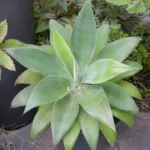
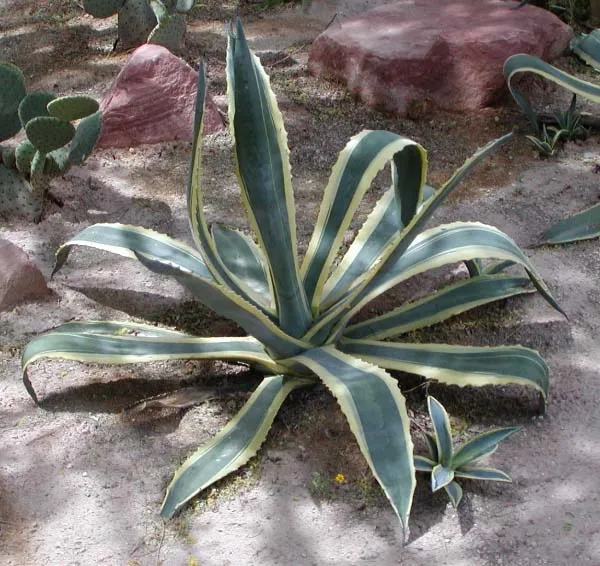
The plant is stemless, with thick, fleshy, strap-shaped leaves arranged in a bold basal rosette. Leaves range from blue-green to gray-green and taper to rigid terminal spines, with teeth along the margins. The mature silhouette is symmetrical and sculptural, while offsets create increasingly broad clumps.
Flowering
After many years of vegetative growth, the plant sends one central, rapidly elongating stalk that may exceed 20 feet. Branches near the upper portion carry panicles of tubular greenish-yellow to yellow flowers. The flowering rosette normally dies afterward, while offsets or seed may continue the planting.
Pollination and visitors
The large flowering display is visited by a range of animals, including insects, birds, and bats across the Agave genus. Exact visitor composition varies with region and flowering time; this profile does not assign a single pollinator species to A. americana without stronger species-specific documentation.
Agave americana photos
Click any photo for a larger view. Source, author and license are shown separately.
Diseases and pests
Diseases
Root and crown rot are the main concerns, especially in heavy, wet soil or during prolonged cool rainfall. Prevent problems with raised or amended planting sites, sparse irrigation, and clean cutting tools. Remove badly rotted tissue and improve drainage rather than repeatedly treating the plant with fungicide.
Pests
Agave snout weevil can tunnel into the plant and cause collapse; inspect the crown for holes, frass, or soft tissue. Slugs and snails may chew leaves in humid regions. Reduce hiding places, avoid excess irrigation, remove severely infested material, and follow local extension guidance before using an insecticide.
Toxicity and pollen
Sap from the leaves is reported to cause contact dermatitis and irritation, with calcium oxalate crystals identified as a toxic principle. The sharp foliage can also cause mechanical injury. Wear gloves and eye protection when cutting or dividing, wash exposed skin promptly, and keep plant material away from children and animals.
- Typical season
- Primarily summer in the United States, when flowering occurs
- Pollination / pollen
- Primarily animal-dispersed floral pollen
Agave americana is generally animal-pollinated rather than a classic wind-pollinated plant, so widespread airborne pollen exposure is not well established. Because species-specific allergy studies are limited, an allergy risk of zero cannot be claimed. Avoid handling flowers or sap if they trigger symptoms and seek medical advice for persistent reactions.
Native habitat
Its native range extends from the southwestern United States into Mexico, especially seasonally dry regions. It is associated with hot climates, open rocky or sandy ground, strong sunlight, and pronounced dry periods. Good drainage and winter warmth are more important than high soil fertility.
Interesting fact
The familiar century-plant name is misleading: flowering commonly takes decades rather than a century. The inflorescence can rise several times higher than the foliage. The species is monocarpic, meaning the flowering rosette dies after reproduction, although offsets often preserve the clone.
Frequently asked questions (FAQ)
The most relevant questions about this plant, with short and direct answers.
🌱Quick care
How do I care for he century pla (Agave americana)?⌄
Give Agave americana full sun, sharply drained gritty soil, and infrequent deep watering. Allow the soil to dry completely between waterings, and protect the plant from prolonged temperatures below about 10°F.
Is Agave americana easy to grow?⌄
Yes, Agave americana is generally easy to grow when it receives strong sunlight and excellent drainage. Overwatering, poor drainage, and winter cold are the most common causes of failure.
🌤️Environment and placement
How much sun does Agave americana need?⌄
Agave americana grows best in full sun, meaning at least 6 hours of direct light daily. Plants moved from shade should be acclimated gradually to prevent sunscald.
Can Agave americana grow indoors?⌄
Agave americana can grow indoors temporarily, but it usually becomes difficult to manage because it needs intense light and eventually grows very large and heavily armed. Use the brightest sunny window or a strong grow light, and water sparingly.
What USDA Hardiness Zones are suitable for Agave americana?⌄
Agave americana is best suited to warm climates, commonly around USDA Zones 8b through 11, although cold tolerance varies with plant condition and exposure. In colder areas, grow it in a container that can be protected or moved before freezing weather.
Can Agave americana survive frost?⌄
Agave americana tolerates brief light frost when established and kept dry, but it should be protected below about 10°F. Wet soil and repeated freezing can cause more damage than a short, dry cold spell.
Where should I plant Agave americana outdoors?⌄
Plant Agave americana in a sunny, open location with fast-draining soil and enough room for its broad, spiny rosette. Keep it away from walkways, entrances, play areas, and places where people or pets may brush against the leaves.
💧Care and problems
How often should I water Agave americana?⌄
Water Agave americana deeply but infrequently, allowing the soil to dry fully before watering again. Established outdoor plants may need little or no supplemental water during rainy periods, while containers usually require more frequent monitoring.
How do I know if Agave americana is overwatered?⌄
Overwatering is indicated by soft or discolored leaves, a collapsing center, unpleasant-smelling roots, or a mushy base. Stop watering, improve drainage, and inspect the roots for rot before replanting in dry succulent soil.
Why are the leaves of my Agave americana turning brown?⌄
Brown leaves can result from sunburn, frost injury, drought stress, physical damage, or root problems from excess moisture. Remove only completely dead tissue after identifying the likely cause, because trimming healthy leaves reduces the plant’s reserves.
Why is my Agave americana leaning?⌄
Agave americana may lean because it is reaching for light, has been weakened by overwatering, or is growing in loose or waterlogged soil. Move it to stronger light and check that the base and roots are firm rather than soft.
Does Agave americana need fertilizer?⌄
Agave americana usually needs little fertilizer because it is adapted to lean, dry conditions. If growth is weak, apply a light, balanced succulent fertilizer during active growth and avoid heavy feeding, especially in winter.
Should I remove damaged leaves from Agave americana?⌄
Remove leaves that are completely dead, rotting, or dangerously broken, using clean tools and protective gloves. Do not routinely cut healthy outer leaves, because the plant uses them for energy and they protect the growing center.
🪴Planting and repotting
What soil is best for Agave americana?⌄
Use gritty, sandy, sharply drained succulent soil that does not retain water around the roots. In garden beds, amend heavy clay with mineral material and plant the rosette slightly high so rainwater drains away from the crown.
How do I plant Agave americana in the ground?⌄
Dig a hole no deeper than the root ball and several times wider, then set the plant at the same depth or slightly higher. Backfill with well-draining soil, keep soil away from the central crown, and wait several days before the first thorough watering.
Can Agave americana grow in a container?⌄
Yes, Agave americana grows well in a sturdy container with drainage holes and a gritty succulent mix. Choose a heavy pot to prevent tipping and leave room around the plant because the mature leaves are large and sharply spined.
When should I repot Agave americana?⌄
Repot Agave americana in spring or early summer when the plant is actively growing and the weather is warm. Move it only one container size larger, use dry well-draining mix, and handle the leaves with thick gloves and protective clothing.
✂️Propagation and pruning
How do I propagate Agave americana from offsets?⌄
Separate rooted offsets from the parent plant with a clean knife or spade, then let cut surfaces dry for several days before planting. Place each offset in dry, sharply drained soil and begin light watering only after roots have started to establish.
Can Agave americana be grown from seed?⌄
Yes, Agave americana can be grown from seed, although seed-grown plants develop slowly and may not resemble selected cultivars exactly. Sow fresh seed in a sterile, well-draining medium and keep it lightly moist in warm, bright conditions.
Does Agave americana produce pups?⌄
Yes, Agave americana commonly produces offsets, or pups, around the base, especially as the mature rosette approaches flowering. These offsets can be left to form a colony or separated for propagation.
⚠️Toxicity and safety
Is Agave americana poisonous to people or pets?⌄
Agave americana has irritating sap and hazardous spines, so contact can cause skin irritation, painful punctures, or eye injury. Treat it as a low-severity irritant plant and keep children and pets away from damaged leaves and sap.
Can Agave americana cause a rash?⌄
Yes, the sap of Agave americana can cause irritant dermatitis, and some people develop a stronger reaction after skin exposure. Wear gloves, long sleeves, and eye protection when cutting, transplanting, or removing offsets.
How should I handle Agave americana safely?⌄
Use thick gloves, long sleeves, eye protection, and long-handled tools when handling Agave americana. Keep the leaf tips and cut material away from walkways, and dispose of spiny debris where people and animals cannot contact it.
Are Agave americana leaf spines dangerous?⌄
Yes, the marginal teeth and rigid terminal spine can puncture skin deeply and may cause serious eye injuries. Plant the agave away from traffic areas and consider removing only unavoidable sharp tips with proper protective equipment.
🌸Flowering and special interest
How long does Agave americana take to flower?⌄
Agave americana typically flowers after about 10 to 30 years rather than after a literal century. The timing depends on climate, vigor, growing conditions, and the individual plant.
How tall does an Agave americana flower stalk get?⌄
The flowering stalk of Agave americana can reach roughly 25 to 30 feet tall. It rises rapidly from the center of the rosette and may require substantial clearance from buildings, power lines, and nearby trees.
Does Agave americana die after flowering?⌄
Yes, the flowering rosette normally dies after blooming because Agave americana is monocarpic. Before or during flowering, it often produces offsets that continue growing after the original rosette declines.
When does Agave americana bloom?⌄
Agave americana commonly blooms in spring or summer, although the season varies with climate and growing conditions. A rapidly enlarging central bud or stalk signals that flowering is beginning.
Why is my Agave americana growing a tall stalk?⌄
A tall central stalk means the Agave americana rosette is entering its final flowering phase. The stalk will produce flowers and possibly seed, while offsets may form around the base before the original rosette dies.