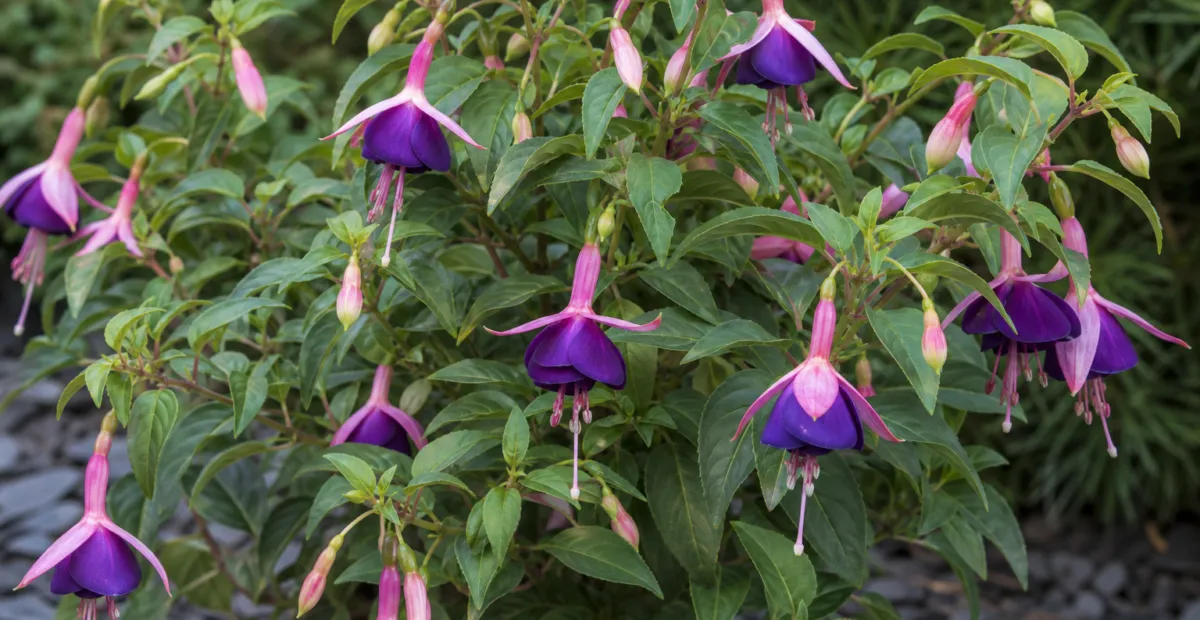
 AI-generated illustration
Fuchsia ‘Ben Jammin’ short overview
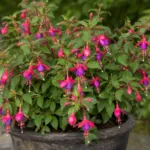
Fuchsia ‘Ben Jammin’ is a compact, upright bush fuchsia bred by Howard Carless and introduced in 1993. Its pendent flowers combine pale pink tubes, pink sepals flushed with aubergine, and a dark aubergine-purple corolla. The plant flowers freely from summer into fall and suits sheltered beds, patio containers, rock gardens, and short standards. Although listed as hardy in some mild climates, it needs reliable winter protection in much of the United States.
Taxonomic classification
Fuchsia ‘Ben Jammin’ care guide
Light and placement
Give bright filtered light or partial shade, ideally with morning sun and protection from intense late-afternoon heat. East- and west-facing positions are usually safer than hot south-facing exposures in warm climates. Too much sun, heat, or dry wind can scorch leaves and cause wilt; too little light produces weak, stretched growth and fewer flowers. In cool regions, more direct sun may be tolerated if moisture is consistent.
Watering and humidity
Water deeply when the surface begins to dry, then allow excess water to drain completely. Keep the root ball evenly moist during active growth and flowering; containers may need daily checks in hot weather. Reduce watering in fall and winter, especially when the plant is dormant, but do not let roots become bone-dry for prolonged periods. Good drainage is essential.
Soil and growing medium
Use fertile, moisture-retentive but well-drained soil or a quality container mix. Loam, sandy loam, and clay amended with organic matter can work if excess water drains freely. Fuchsia tolerates a broad pH range, from mildly acidic through neutral to mildly alkaline, but performs best where the root zone remains evenly moist and rich in organic matter.
Feeding
Feed during active growth with a balanced liquid fertilizer at half strength every two to four weeks, or use a controlled-release product according to its label. Water the plant first if the soil is dry. Stop regular feeding in late summer or when the plant is being prepared for dormancy; do not fertilize a cold, resting, or severely drought-stressed plant.
Growth and habit
This is a compact, self-branching bush with short-jointed stems and a naturally upright outline. Regular pinching during early growth encourages additional flowering shoots and a fuller framework. Its deciduous habit allows strong spring renewal after winter dormancy or pruning, while container plants may need staking if trained as standards.
Planting and repotting
Plant outdoors after the danger of hard frost has passed and soil has warmed. Set the crown and lower stems somewhat deeper than a typical bedding plant, following hardy-fuchsia practice, and firm the soil without compacting it. Allow about 24 inches between plants or use one plant per suitably sized container. Water thoroughly while roots establish.
Repot container plants in early spring, just as new growth begins, moving up only one pot size. Refresh depleted mix, retain as much root ball as practical, and ensure the container has generous drainage holes. If the plant is overwintered dormant, repot before restarting growth rather than during the cold resting period.
Propagation and pruning
Propagation
Softwood or semi-hardwood cuttings are the practical method. Take healthy non-flowering shoots during active growth, remove lower leaves, insert into a clean, free-draining medium, and keep humid with bright indirect light until rooted. Cuttings preserve the named cultivar; seed will not reliably reproduce ‘Ben Jammin’.
Pruning
Prune in late winter or early spring before vigorous new growth. Remove dead, weak, or crossing stems, then shorten the previous season’s flowering shoots to a few buds above the older woody framework. Pinch new shoot tips during the growing season to promote branching. Avoid severe late-season pruning, which can remove developing flowering wood.
Overwintering
In most U.S. climates, move container plants indoors before frost. Keep them cool, roughly 40–50°F, with low light during dormancy and water sparingly, about every three to four weeks or when the root ball is nearly dry. In mild outdoor climates, mulch the crown deeply and shelter the plant from cold, drying winds. Reacclimate gradually outdoors in spring.
Uses
Useful as a compact flowering shrub, patio-container specimen, short standard, border accent, or sheltered rock-garden plant. It provides nectar-bearing flowers for hummingbirds and other flower visitors. The berries of fuchsias are sometimes edible, but this cultivar is ornamental rather than a dependable fruit crop and should not be promoted as food without confirmed identification.
Appearance
The plant has short-jointed stems, medium to dark green ovate leaves, and toothed margins. Its upright bush form carries pendent flowers that contrast strongly with the foliage. The sepals show pink with a pale aubergine flush, while the corolla is a deep aubergine-purple. Deciduous winter behaviour can leave a woody framework before spring regrowth.
Flowering
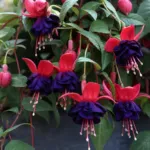
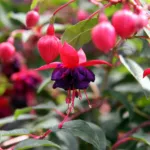
Flowers are pendent and produced freely on new growth from early summer into fall, often continuing until frost in a long warm season. The cultivar is described as single to semi-double, with a pale pink tube, pink sepals flushed pale aubergine, and a dark aubergine-purple corolla. Flowering is strongest when the plant receives bright light without excessive afternoon heat or drought.
Pollination and visitors
Fuchsia flowers are commonly visited by hummingbirds and may also receive bee and bumblebee visits. The tubular, pendent floral structure offers accessible nectar for long-tongued visitors. Evidence for a specific pollinator species visiting this named cultivar is lacking, so no species-level Latin name is assigned.
Diseases and pests
Diseases
Watch for fuchsia rust, gray mold, and, less commonly, honey fungus. Reduce disease pressure with good air circulation, clean up fallen foliage, avoid wetting leaves late in the day, and remove badly affected material. Do not keep the root zone waterlogged, especially in containers. Confirm diagnoses before using fungicides and follow the product label.
Pests
Aphids, fuchsia gall mite, capsid bugs, fuchsia flea beetles, and vine weevil may occur. Inspect shoot tips, leaf undersides, and roots regularly. Improve plant vigor, remove heavily infested growth, and use a strong water spray for small aphid outbreaks. For persistent pests, choose a targeted, pollinator-conscious treatment and follow the label.
Related diseases and pests
Only Plant Doctor profiles whose host data indicate this plant may be affected are shown here.
 PestCyclamen mitePhytonemus pallidus
 DiseaseBlack Root RotBerkeleyomyces basicola
 DiseaseGray MoldBotrytis cinerea
 PestCabbage Stem Flea BeetlePsylliodes chrysocephala
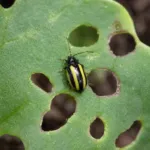 PestTurnip flea beetlePhyllotreta nemorum (Linnaeus, 1758)
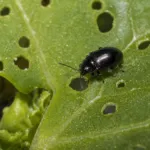 PestTurnip Flea BeetlePhyllotreta atra (Fabricius, 1775)
 Environmental stressWaterlogging
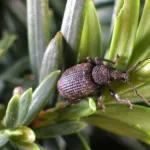 PestBlack Vine WeevilOtiorhynchus sulcatus
Toxicity and pollen
Fuchsias are generally regarded as non-toxic to dogs and cats by veterinary poison-control plant listings for the genus, and the berries are reported as edible but not especially palatable. Avoid encouraging children or pets to eat ornamental plant material because cultivar-specific fruit chemistry and individual sensitivities are not well documented. Contact a poison center or clinician after significant ingestion.
- Typical season
- During flowering, typically June through October in much of the United States
- Pollination / pollen
- Heavy, insect-carried pollen; little airborne dispersal
Fuchsia flowers are generally animal-pollinated rather than wind-pollinated, so airborne pollen exposure is expected to be low. The plant can still cause individual contact or inhalation sensitivity, particularly when flowers are handled closely, but cultivar-specific allergy studies were not located. Remove spent flowers carefully if personal sensitivity is suspected.
Native habitat
‘Ben Jammin’ is a cultivated hybrid rather than a wild species, so it has no single native habitat. Its Fuchsia ancestry reflects woodland-edge and montane environments where soils are fertile, moisture is dependable, and light is filtered. In cultivation it prefers shelter from drying winds, heat-reflective surfaces, and severe winter exposure.
Interesting fact
‘Ben Jammin’ was bred by Howard Carless and introduced in 1993. Specialist records list ‘Purperklokje’ and ‘White King’ as its parents. The cultivar’s name was reportedly taken from the breeder’s dog. Its short-jointed, self-branching habit makes it suitable for compact standards as well as bush forms.
Frequently asked questions (FAQ)
The most relevant questions about this plant, with short and direct answers.
🌱Quick care
How do you care for Fuchsia 'Ben Jammin'?⌄
Grow Fuchsia 'Ben Jammin' in bright filtered light or partial shade, fertile well-drained soil, and evenly moist conditions. Protect it from freezing temperatures and hot, drying exposure.
Is Fuchsia 'Ben Jammin' a hardy fuchsia?⌄
Fuchsia 'Ben Jammin' is generally treated as half-hardy in the United States, so it may survive mild winters but should be protected from freezing. In colder areas, grow it in a container and overwinter it under cover.
How big does Fuchsia 'Ben Jammin' get?⌄
Fuchsia 'Ben Jammin' typically reaches about 18–24 inches tall, with a compact, upright, bushy habit. Size can vary with climate, pruning, and whether it is grown in the ground or a container.
Is Fuchsia 'Ben Jammin' annual or perennial?⌄
Fuchsia 'Ben Jammin' can behave as a perennial in mild, frost-free or lightly frosty climates, but it is often grown as an annual outdoors in colder parts of the United States. Container plants can be overwintered indoors.
🌤️Environment and placement
Does Fuchsia 'Ben Jammin' prefer sun or shade?⌄
Fuchsia 'Ben Jammin' performs best in bright filtered light to partial shade. Gentle morning sun is usually suitable, while intense afternoon sun can cause wilting, leaf scorch, and faded flowers.
Can Fuchsia 'Ben Jammin' grow indoors?⌄
Yes, Fuchsia 'Ben Jammin' can be grown indoors near a bright window with filtered light and good air circulation. Keep the potting mix evenly moist but never saturated, and avoid hot, dry air from vents.
Where should I plant Fuchsia 'Ben Jammin' outdoors?⌄
Plant Fuchsia 'Ben Jammin' in a sheltered location with morning sun or bright partial shade and protection from strong winds. A patio container, shaded border, or protected courtyard is suitable.
What USDA zones are suitable for Fuchsia 'Ben Jammin'?⌄
Fuchsia 'Ben Jammin' is best treated as a tender or half-hardy perennial in the United States rather than assigned a universally reliable zone rating. In areas with freezing winters, protect the plant indoors or provide substantial winter protection.
Can Fuchsia 'Ben Jammin' tolerate heat?⌄
Fuchsia 'Ben Jammin' can tolerate moderate summer warmth when its roots stay evenly moist and the plant receives afternoon shade. Heat, dry soil, and intense direct sun together can cause rapid wilting and reduced flowering.
💧Care and problems
How often should I water Fuchsia 'Ben Jammin'?⌄
Water Fuchsia 'Ben Jammin' whenever the soil surface begins to dry, keeping the root zone evenly moist. Water more often during hot weather, but allow excess water to drain fully.
Why are the leaves on my Fuchsia 'Ben Jammin' turning yellow?⌄
Yellow leaves on Fuchsia 'Ben Jammin' are commonly caused by overwatering, poor drainage, or normal aging of older foliage. Check that the soil is moist but not soggy and inspect the roots and plant for pests.
Why is my Fuchsia 'Ben Jammin' wilting?⌄
Wilting usually means Fuchsia 'Ben Jammin' is too dry, overheated, exposed to strong sun, or suffering from damaged roots in waterlogged soil. Check soil moisture, move the plant to filtered light, and improve drainage if necessary.
How do I fertilize Fuchsia 'Ben Jammin'?⌄
Feed Fuchsia 'Ben Jammin' with a balanced, diluted fertilizer during active growth, following the product label. Stop or greatly reduce feeding when growth slows in fall and winter.
Should I deadhead Fuchsia 'Ben Jammin'?⌄
Yes, removing spent flowers and developing berries can help Fuchsia 'Ben Jammin' continue producing blooms. Deadheading is especially useful when the plant is flowering heavily in a container.
What pests affect Fuchsia 'Ben Jammin'?⌄
Fuchsia 'Ben Jammin' may attract aphids, fuchsia gall mites, capsid bugs, flea beetles, caterpillars, and vine weevils. Inspect new growth and the undersides of leaves regularly, and treat problems promptly with an appropriate labeled control.
What diseases affect Fuchsia 'Ben Jammin'?⌄
Fuchsia 'Ben Jammin' can be affected by rust, gray mold, and occasionally root-related problems caused by persistently wet soil. Good air circulation, clean watering practices, and well-drained soil reduce risk.
🪴Planting and repotting
What soil is best for Fuchsia 'Ben Jammin'?⌄
Use fertile, moisture-retentive but well-drained loam, sandy loam, or amended clay for Fuchsia 'Ben Jammin'. In containers, choose a quality potting mix amended with material that improves drainage.
Can Fuchsia 'Ben Jammin' grow in a container?⌄
Yes, Fuchsia 'Ben Jammin' is well suited to containers because of its compact, upright growth. Use a pot with drainage holes and protect the container from freezing, since container roots are more exposed to cold.
When should I plant Fuchsia 'Ben Jammin' outdoors?⌄
Plant Fuchsia 'Ben Jammin' outdoors after the danger of freezing has passed and nighttime temperatures are consistently mild. Avoid late-season planting in cold climates because the roots may not establish before winter.
How should I overwinter Fuchsia 'Ben Jammin'?⌄
Before freezing weather, move container-grown Fuchsia 'Ben Jammin' to a bright, cool, sheltered location and reduce watering while growth slows. In mild climates, an in-ground plant may remain outside with deep mulch and protection from cold, drying winds.
Should Fuchsia 'Ben Jammin' be planted deeply?⌄
For outdoor cultivation, planting the base of Fuchsia 'Ben Jammin' slightly deeper can provide additional winter protection where the cultivar is grown as a hardy fuchsia. Do not bury the plant in waterlogged soil, and follow local conditions rather than relying on deep planting alone.
✂️Propagation and pruning
How do you propagate Fuchsia 'Ben Jammin'?⌄
Propagate Fuchsia 'Ben Jammin' from softwood or semi-hardwood cuttings. Take healthy nonflowering shoots, place them in a sterile, moist rooting medium, and keep them in bright indirect light until roots develop.
When should I prune Fuchsia 'Ben Jammin'?⌄
Prune Fuchsia 'Ben Jammin' in early to mid-spring as new growth begins. Remove dead or weak stems and shorten older flowering shoots to encourage strong branching and new-season flowers.
How hard can you cut back Fuchsia 'Ben Jammin'?⌄
You can cut Fuchsia 'Ben Jammin' back substantially in spring, but retain a sound woody framework with viable buds. Avoid heavy pruning late in the season because it can remove developing flower-bearing growth.
⚠️Toxicity and safety
Is Fuchsia 'Ben Jammin' poisonous to dogs or cats?⌄
Fuchsia 'Ben Jammin' is generally considered low toxicity, but pets should not be encouraged to chew ornamental plant material. Contact a veterinarian if a pet consumes a significant amount or develops symptoms.
Can you eat the berries of Fuchsia 'Ben Jammin'?⌄
Fuchsia berries are generally considered edible, but those from Fuchsia 'Ben Jammin' are ornamental and are not a dependable food crop. Identification, growing conditions, and taste can vary, so do not treat the berries as a regular edible harvest.
🌸Flowering and special interest
When does Fuchsia 'Ben Jammin' bloom?⌄
Fuchsia 'Ben Jammin' generally flowers from summer into fall and may continue until frost when conditions remain favorable. Blooming is strongest with consistent moisture, adequate light, regular feeding, and occasional deadheading.
What do Fuchsia 'Ben Jammin' flowers look like?⌄
Fuchsia 'Ben Jammin' has small to medium, single or semi-double flowers with pale pink tubes, pink sepals flushed with aubergine, and a dark aubergine-purple corolla. The flowers hang from an upright, compact, bushy plant.
Why is my Fuchsia 'Ben Jammin' not flowering?⌄
Poor flowering is usually caused by insufficient light, dry soil, excessive heat, overfertilizing with nitrogen, or pruning at the wrong time. Provide bright filtered light, steady moisture, and spring pruning rather than cutting off new-season growth.
Does Fuchsia 'Ben Jammin' attract hummingbirds?⌄
Yes, the tubular, pendent flowers of Fuchsia 'Ben Jammin' can attract hummingbirds and other pollinators. Plant it where the flowers are visible and provide reliable moisture during the blooming season.