
 AI-generated illustration
Fuchsia ‘Royal Velvet’ short overview
Fuchsia 'Royal Velvet' is an upright, bushy cultivar raised by Waltz in 1962. It produces large, double, pendant flowers from summer into autumn, combining crimson-red tubes and sepals with deep purple petals splashed in crimson. The dark green foliage is deciduous, and the plant is best treated as a frost-tender perennial in much of the United States. Grow it in a sheltered container or moist, fertile border with bright light and regular watering.
Taxonomic classification
Fuchsia ‘Royal Velvet’ care guide
Light and placement
Provide bright light with morning sun or filtered light and afternoon shade, especially in hot US climates. An east- or sheltered west-facing position is suitable; protect from harsh midday exposure and drying wind. Too little light produces lanky growth and fewer flowers, while excessive heat and direct afternoon sun can scorch leaves, wilt plants and fade blooms.
Watering and humidity
Water thoroughly when the surface begins to dry, then allow excess water to drain completely. Keep the root zone evenly moist during active growth; containers may need frequent watering in hot weather. Reduce watering in autumn and winter, but do not let overwintered plants become bone dry. Good airflow matters more than misting for humidity management.
Soil and growing medium
Use fertile, moisture-retentive but freely draining loam. In containers, choose a high-quality peat-free or soilless mix amended for drainage. Fuchsias generally tolerate acidic, neutral and mildly alkaline conditions; avoid compacted soil that stays saturated around the roots.
Feeding
Feed monthly from spring through late summer with a balanced liquid fertilizer at label strength or slightly weaker for container plants. Water the soil first if it is dry. Stop feeding in autumn as growth slows and avoid fertilizing plants kept cool or dormant over winter.
Growth and habit
A vigorous, upright, self-branching shrub with a rounded bushy habit. Flowering occurs on current-season growth, so regular pinching or selective pruning can maintain density and encourage more flowering shoots. In cold climates it is commonly grown seasonally and overwintered under protection.
Planting and repotting
Plant outdoors after the danger of frost has passed, setting the root ball so the crown is level with the surrounding soil. Space plants about 18–24 inches apart where grown as shrubs. Establish with consistent moisture and shelter from drying winds.
Repot container plants in spring when roots fill the pot, moving up only one pot size. Refresh exhausted mix, preserve the root ball where possible, and water thoroughly after planting. Ensure the container has unobstructed drainage.
Propagation and pruning
Propagation
Take softwood cuttings in spring or semi-hardwood cuttings in late summer. Use clean tools, short non-flowering shoots, a free-draining rooting medium and bright indirect light. Keep the medium evenly moist until roots form.
Pruning
Prune lightly after flowering or in late winter before vigorous spring growth. Remove weak, damaged or crossing stems and shorten long shoots to encourage branching. Avoid severe pruning while the plant is actively flowering unless rejuvenation is needed.
Overwintering
Before the first hard freeze, move container plants indoors to a cool, bright room, greenhouse or frost-free conservatory. Reduce watering as growth slows, remove fallen leaves and keep the plant just moist. In mild climates, a sheltered outdoor position with deep mulch may work, but the cultivar should not be exposed to sustained freezing.
Uses
Useful as a flowering patio container plant, sheltered border subject, conservatory plant or seasonal hanging display. Its pendant, nectar-rich flowers can contribute to a hummingbird- and bee-friendly planting, but this named cultivar should not be treated as a native US plant.
Appearance
The plant has dark green, simple leaves on branching stems and an upright, bushy outline. Its identifying feature is the large double pendant bloom: crimson-red tube and sepals contrast with deep purple petals marked or splashed in crimson. The foliage is deciduous, and the stems remain relatively soft compared with woody landscape shrubs.
Flowering
This is a double-flowered, free-flowering cultivar. Flowers are borne on new growth from summer into autumn, with a crimson tube and short, broad crimson sepals surrounding deep purple petals splashed with crimson. Flowering is strongest when the plant receives bright light, adequate moisture and regular feeding.
Pollination and visitors
Fuchsia flowers are documented as nectar resources for hummingbirds and bees, and fuchsia floral structure is associated with bird pollination in many New World species. Evidence for frequent visits to 'Royal Velvet' specifically is limited, so the attraction rating is cautious.
Diseases and pests
Diseases
Watch for fuchsia rust, gray mold and, less commonly, honey fungus. Improve air circulation, avoid wetting foliage late in the day, remove infected leaves promptly and discard severely affected material. Reduce watering and humidity during cool winter storage.
Pests
Common problems include aphids, capsid bugs, fuchsia gall mite, fuchsia flea beetle, glasshouse red spider mite and vine weevil. Inspect new growth and leaf undersides regularly, isolate infested containers, wash off light infestations and use targeted treatments only when necessary.
Related diseases and pests
Only Plant Doctor profiles whose host data indicate this plant may be affected are shown here.
 PestCyclamen mitePhytonemus pallidus
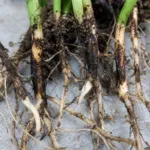 DiseaseBlack Root RotBerkeleyomyces basicola
 DiseaseGray MoldBotrytis cinerea
 PestRed Palm WeevilRhynchophorus ferrugineus
 PestCabbage Stem Flea BeetlePsylliodes chrysocephala
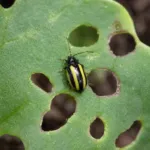 PestTurnip flea beetlePhyllotreta nemorum (Linnaeus, 1758)
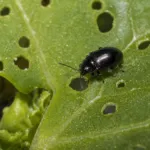 PestTurnip Flea BeetlePhyllotreta atra (Fabricius, 1775)
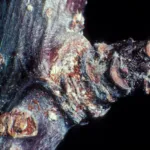 PestEuropean red mitePanonychus ulmi
Toxicity and pollen
Reliable pet references identify Fuchsia species as non-toxic to dogs and cats, while the RHS notes that fuchsia berries are edible but usually sparse and not generally grown as a fruit crop. Avoid encouraging children or pets to eat ornamental plant material because cultivar-specific ingestion data are limited and berries may cause minor digestive upset in some individuals.
- Typical season
- During flowering, mainly summer through fall
- Pollination / pollen
- Mostly retained within insect- or bird-visited flowers
Fuchsia is animal-pollinated and its pollen is generally not considered a major airborne seasonal allergen. However, no cultivar-specific aerobiology or clinical allergy testing was located, so a zero-risk claim would be unjustified. Sensitive people should avoid handling flowers if symptoms occur.
Native habitat
This is a garden-origin hybrid cultivar rather than a wild population, so it has no single native habitat. Its Fuchsia lineage is associated with moist, mild habitats in the Americas and other regions, and the cultivar performs best in fertile, moisture-retentive soil with protection from extremes.
Interesting fact
The cultivar was raised by Waltz in 1962. Its double flowers have short, broad crimson sepals and deep purple petals splashed with crimson. It can be trained as an upright shrub or standard, but frost protection is required in most of the United States.
Frequently asked questions (FAQ)
The most relevant questions about this plant, with short and direct answers.
🌱Quick care
How do you care for Fuchsia 'Royal Velvet'?⌄
Grow Fuchsia 'Royal Velvet' in bright indirect light or partial shade, keep the soil evenly moist, and use fertile, well-drained soil. Protect it from freezing temperatures and feed during active growth.
How often should you water Fuchsia 'Royal Velvet'?⌄
Water Fuchsia 'Royal Velvet' whenever the soil surface begins to dry, keeping the root ball evenly moist but not waterlogged. Container plants may need frequent watering during hot, dry weather.
What soil is best for Fuchsia 'Royal Velvet'?⌄
Use fertile, moisture-retentive, well-drained loam or a quality container mix for Fuchsia 'Royal Velvet'. Avoid dense soil that stays saturated around the roots.
🌤️Environment and placement
Does Fuchsia 'Royal Velvet' need full sun or shade?⌄
Fuchsia 'Royal Velvet' performs best in partial shade or bright indirect light, although it can tolerate some gentle morning sun. Protect it from intense afternoon heat and sun, especially in hot climates.
Can Fuchsia 'Royal Velvet' grow indoors?⌄
Yes, Fuchsia 'Royal Velvet' can be grown indoors near a bright window with good air circulation. Keep it away from hot, dry air and avoid placing it in poorly lit rooms.
Can Fuchsia 'Royal Velvet' grow outside in the United States?⌄
Yes, Fuchsia 'Royal Velvet' can grow outdoors during the frost-free growing season in much of the United States. In colder areas, grow it in a container and move it under protection before freezing weather.
What USDA hardiness zone is suitable for Fuchsia 'Royal Velvet'?⌄
Fuchsia 'Royal Velvet' is best treated as a tender or half-hardy fuchsia unless a local grower confirms greater hardiness. In USDA Zones 8 and colder, winter protection or indoor overwintering is generally advisable.
Can Fuchsia 'Royal Velvet' tolerate heat?⌄
Fuchsia 'Royal Velvet' prefers cool to moderate growing conditions and may struggle in prolonged heat. Provide afternoon shade, consistent moisture, and protection from reflected heat in hot regions.
What temperature is too cold for Fuchsia 'Royal Velvet'?⌄
Freezing temperatures are too cold for Fuchsia 'Royal Velvet' and can damage stems, leaves, and roots. Move containers indoors or into a frost-free shelter before the first freeze.
Is Fuchsia 'Royal Velvet' good for containers?⌄
Yes, Fuchsia 'Royal Velvet' is well suited to containers because moisture, soil quality, and winter protection are easier to manage. Use a pot with drainage holes and do not allow the mix to dry completely.
💧Care and problems
Why are the leaves on my Fuchsia 'Royal Velvet' turning yellow?⌄
Yellow leaves on Fuchsia 'Royal Velvet' are commonly caused by overwatering, poor drainage, or natural aging. Check the roots and soil moisture before increasing water or fertilizer.
Why is Fuchsia 'Royal Velvet' wilting even when the soil is wet?⌄
Wilting despite wet soil may indicate waterlogged roots, root damage, excessive heat, or poor air circulation. Improve drainage and shade, and inspect the roots for brown, soft, or foul-smelling tissue.
Why is my Fuchsia 'Royal Velvet' getting leggy?⌄
Fuchsia 'Royal Velvet' may become leggy when light is insufficient or the growing tips are not pinched. Move it to brighter indirect light and pinch young shoots to encourage branching.
How often should you fertilize Fuchsia 'Royal Velvet'?⌄
Feed Fuchsia 'Royal Velvet' with a balanced liquid fertilizer during active growth, following the product label. Reduce or stop feeding during winter dormancy or when growth has slowed substantially.
What pests affect Fuchsia 'Royal Velvet'?⌄
Fuchsia 'Royal Velvet' may be affected by aphids, whiteflies, spider mites, fuchsia gall mites, or vine weevils. Inspect new growth and leaf undersides regularly and treat infestations promptly.
How do you prevent root rot in Fuchsia 'Royal Velvet'?⌄
Prevent root rot by using a well-drained mix, a pot with drainage holes, and a watering schedule that keeps the soil moist but not saturated. Empty saucers after watering.
🪴Planting and repotting
When should you plant Fuchsia 'Royal Velvet' outdoors?⌄
Plant Fuchsia 'Royal Velvet' outdoors after the danger of frost has passed and nighttime temperatures are reliably mild. Harden container-grown plants gradually before placing them outside permanently.
How do you repot Fuchsia 'Royal Velvet'?⌄
Repot Fuchsia 'Royal Velvet' when roots fill the container or water runs through unusually quickly, moving it into a pot only slightly larger. Refresh the well-drained mix and water thoroughly after repotting.
Can Fuchsia 'Royal Velvet' be planted in the ground?⌄
Yes, Fuchsia 'Royal Velvet' can be planted in the ground where summers are moderate and freezing weather is limited. Choose fertile, moisture-retentive soil in partial shade and provide winter protection where needed.
✂️Propagation and pruning
How do you propagate Fuchsia 'Royal Velvet'?⌄
Propagate Fuchsia 'Royal Velvet' from softwood or semi-hardwood cuttings taken from healthy, nonflowering shoots. Root the cuttings in a clean, lightly moist propagation medium under bright indirect light.
When is the best time to take Fuchsia 'Royal Velvet' cuttings?⌄
Take Fuchsia 'Royal Velvet' cuttings during active growth when stems are pliable but not extremely soft. Avoid weak, diseased, or heavily flowering shoots.
How do you prune Fuchsia 'Royal Velvet'?⌄
Prune Fuchsia 'Royal Velvet' in late winter or early spring after the risk of hard freezes has passed, removing dead or damaged wood and shortening healthy stems to encourage branching. Avoid major pruning just before freezing weather.
Should you deadhead Fuchsia 'Royal Velvet'?⌄
Yes, remove faded flowers and developing seed pods from Fuchsia 'Royal Velvet' to help maintain continued flowering. Pinch or cut them off just behind the flower.
How do you make Fuchsia 'Royal Velvet' bushier?⌄
Make Fuchsia 'Royal Velvet' bushier by pinching the growing tips after new shoots develop several sets of leaves. Repeated pinching during the growing season encourages more side branches and potential flower sites.
⚠️Toxicity and safety
Is Fuchsia 'Royal Velvet' toxic to dogs?⌄
Fuchsia 'Royal Velvet' is generally regarded as having low toxicity and is not usually considered poisonous to dogs. Prevent pets from chewing large amounts of any ornamental plant and contact a veterinarian if symptoms develop.
Is Fuchsia 'Royal Velvet' toxic to cats?⌄
Fuchsia 'Royal Velvet' is generally regarded as having low toxicity and is not usually considered poisonous to cats. Even so, discourage repeated chewing and seek veterinary advice if a cat shows illness after eating plant material.
🌸Flowering and special interest
When does Fuchsia 'Royal Velvet' bloom?⌄
Fuchsia 'Royal Velvet' typically flowers from summer into fall when it receives adequate light, moisture, and nutrition. Blooming may decline during extreme heat or low-light conditions.
What do the flowers of Fuchsia 'Royal Velvet' look like?⌄
Fuchsia 'Royal Velvet' produces pendulous double flowers with crimson-red tubes and sepals and deep purple petals marked with red. The flowers are especially prominent from summer through fall.
Why is Fuchsia 'Royal Velvet' not blooming?⌄
Poor flowering in Fuchsia 'Royal Velvet' is usually linked to insufficient light, excessive heat, drought stress, or overly vigorous unpruned growth. Provide bright indirect light, steady moisture, and spring pruning or tip-pincing.
How can you get more flowers on Fuchsia 'Royal Velvet'?⌄
For more flowers, give Fuchsia 'Royal Velvet' bright indirect light, consistent moisture, regular feeding during active growth, and timely removal of faded blooms. Pinching young shoots can also increase the number of flowering branches.
Similar plants
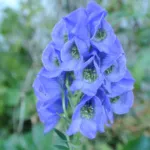 Azure Monkshood (Aconitum carmichaelii) care guideAconitum carmichaelii
 Monkshood (Aconitum ‘Stainless Steel’)Aconitum 'Stainless Steel'
 Monkshood (Aconitum ‘Bressingham Spire’)Aconitum 'Bressingham Spire'
 Golden full moon maple (Acer shirasawanum ‘Aureum’)Acer shirasawanum 'Aureum'
 Globosum (Acer platanoides ‘Globosum’)Acer platanoides 'Globosum'
 Striped maple (Acer pensylvanicum) care guideAcer pensylvanicum