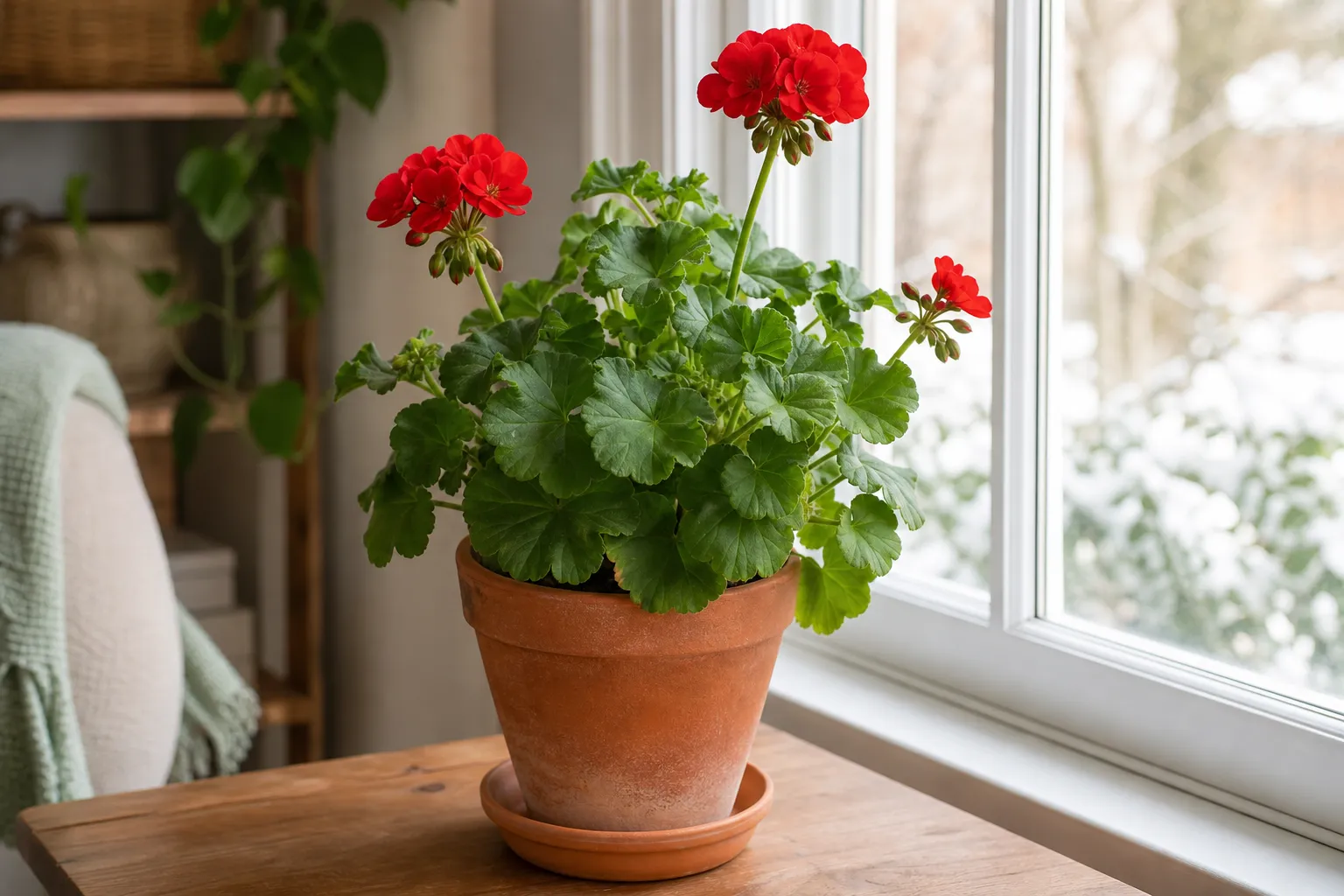
Overwintering geraniums is less about keeping them lush and blooming all winter and more about helping them adjust to a slower season. The plants sold as garden geraniums are usually Pelargonium species, tender perennials that cannot tolerate freezing temperatures in most of the United States. Bring them indoors before frost, give them the right amount of light and water, and they can return to the patio or garden next spring.
The most common failures come from five avoidable mistakes: waiting too long, bringing pests indoors, providing too little light, watering on a summer schedule, and pruning or feeding at the wrong time. Once you understand how geraniums respond to shorter days, cooler temperatures, and indoor air, winter care becomes much simpler.
First, understand what changes indoors
Outside, a geranium may receive many hours of direct sun, warm air movement, and rapid drying after rain. Indoors, light levels usually drop, temperatures stay steadier, and the potting mix may remain damp for much longer. The plant naturally slows down, and it may shed some leaves while adapting.
That leaf drop does not always mean the plant is dying. A change in light, humidity, temperature, and location can cause temporary yellowing or loss of older leaves. However, soft stems, a sour-smelling pot, persistent wilting, or spreading spots suggest a more serious problem.
You can overwinter geraniums in three practical ways:
- As an active houseplant: Keep the plant in a bright window and water whenever the upper layer of potting mix becomes dry.
- In a cool, nearly dormant state: Store a cut-back potted plant in a cool, frost-free space and water sparingly.
- As cuttings: Root healthy stem tips in late summer or fall and grow smaller plants indoors.
The best method depends on your available light, indoor space, and the type of geranium you grow.
Mistake No. 1: Waiting for the first hard frost
One of the easiest mistakes is leaving geraniums outdoors until the weather forecast looks truly wintry. A killing frost can damage leaves and stems overnight, and a plant already chilled or blackened is much harder to save.
In much of the United States, plan to move geraniums indoors before nighttime temperatures regularly fall into the 40s Fahrenheit, especially if a frost warning is possible. In warmer regions, you may have a longer transition period, but a sudden freeze can still cause serious damage. Use your local average first-frost date as a planning guide, not as a deadline.
A simple fall checklist
- Choose healthy plants before cold weather arrives.
- Remove dead flowers, yellow leaves, and damaged stems.
- Prune overly long growth by about one-third to one-half if the plant is too large for its indoor space.
- Inspect the pot, drainage holes, and saucer.
- Move the plant indoors before frost, then help it adjust gradually to the new environment.
Do not assume that a sheltered porch will protect a container plant. Pots cool much faster than garden soil, and roots near the sides of a container are exposed to cold from every direction.
Mistake No. 2: Bringing outdoor pests inside
A geranium can look perfectly healthy while aphids, whiteflies, spider mites, scale, or other hitchhikers hide beneath leaves or around stem joints. Indoors, these pests lose many of the natural controls they encounter outside and can spread to other houseplants.
Before bringing a plant inside, examine both sides of the leaves, the newest shoots, flower buds, and the surface of the potting mix. Look for sticky residue, fine webbing, distorted new growth, clusters of tiny insects, or pale speckling.
How to quarantine a geranium
- Keep the plant away from other houseplants for several days while you inspect it.
- Rinse the foliage gently with water, paying attention to leaf undersides.
- Remove badly damaged leaves and spent flowers.
- Wash the outside of the container and clear away plant debris.
- Continue checking the plant each time you water it.
If a plant has a serious infestation or obvious disease, it may be wiser to discard it and save a healthy cutting from another plant. Follow the label carefully if you choose a product for indoor plant pests, and never use a garden treatment indoors unless the label specifically permits that use.
Mistake No. 3: Putting the plant in a dim, warm corner
Geraniums need bright light to stay compact and produce flowers. A warm room with weak light encourages lanky, pale growth. This is especially common when a plant moves from full summer sun directly to a dark shelf or a window several feet from the glass.
A bright south- or west-facing window is often the strongest natural option in winter. East-facing windows can also work, particularly for plants that receive several hours of direct morning sun. Keep foliage from touching cold glass, and avoid placing the pot directly beside a radiator, heat register, or drafty exterior door.
If natural light is limited, use a supplemental grow light. Position it according to the manufacturer’s directions and use a timer to provide a consistent daily schedule. The goal is not to force heavy winter flowering; it is to prevent weak, stretched growth and keep the plant healthy until spring.
Compare your geraniums rather than treating every plant identically
Zonal geraniums, ivy geraniums, scented-leaf types, and specialty cultivars may respond differently indoors. An upright zonal plant may remain relatively compact after pruning, while a trailing ivy geranium can become awkward if it receives insufficient light. Scented geraniums are often grown mainly for foliage and may not flower much during the short days of winter.
Place the most light-hungry plants closest to the brightest window, while keeping an eye on leaf color and stem length. If new growth stretches noticeably toward the glass, the plant probably needs more light, a closer position, or supplemental illumination.
Mistake No. 4: Watering by the calendar
Overwatering is one of the most damaging winter mistakes. Indoor geraniums use less water when growth slows, and a container that dried quickly outdoors may stay wet for a week or longer inside. Constantly soggy potting mix reduces air around the roots and can lead to root problems.
Do not water every Saturday simply because that was your summer routine. Instead, test the potting mix with your finger. For an actively growing geranium, wait until the top 1 to 2 inches feels dry before watering. For a cool, nearly dormant plant, allow more of the mix to dry and water only when the plant shows a genuine need.
A useful watering measurement
For a typical 6-inch container in a bright indoor window, check the soil every three to four days during the first few weeks indoors. When the upper 1 to 2 inches feels dry, water slowly until a small amount drains from the bottom. Let the pot drain completely, then empty the saucer. Depending on room temperature, light, and potting mix, this may mean watering roughly every 7 to 14 days – but the soil test matters more than the number.
A cool, dormant plant may need only a modest drink about once a month. That schedule is a starting point, not a rule. A plant in a warm room may dry sooner, while one in a cool basement may need much less. Never leave the roots standing in water, and make sure the container has unobstructed drainage holes.
Signs you may be watering incorrectly
- Too much water: yellowing leaves, soft stems, fungus gnats, a sour odor, or constantly wet mix.
- Too little water: limp leaves, dry potting mix pulling away from the container, and crispy leaf edges.
- Too little light plus too much water: weak growth and slow drying, often followed by leaf yellowing.
Good drainage is just as important as careful watering. Use a fresh, porous potting mix and do not place a small container inside a decorative cachepot where runoff can collect unseen.
Mistake No. 5: Pruning, feeding, and repotting too aggressively
Bringing a geranium indoors is not the same as preparing it for rapid summer growth. Heavy feeding, frequent repotting, or severe pruning at the wrong time can add stress when the plant is already adjusting.
Before moving the plant indoors, remove weak or diseased material and shorten excessively long stems. A reduction of about one-third to one-half is usually enough for an actively growing potted plant. Make cuts just above healthy leaf nodes to encourage branching later. If the plant is being stored in a cool, dark, nearly dormant location, it can be cut back more firmly, leaving a sturdy framework of stems.
Once indoors, wait before fertilizing. If the plant is barely growing, fertilizer is unlikely to help and may accumulate in the potting mix. Resume feeding only when you see active new leaves or buds, and use a balanced water-soluble fertilizer at half the label strength. Avoid fertilizing dry or wilted roots; water with plain water first.
When repotting makes sense
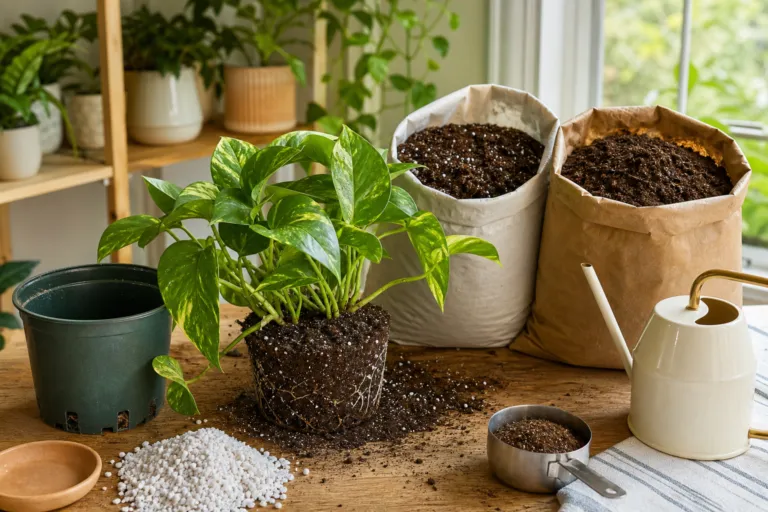
Repot only when the container is damaged, drainage is poor, the roots are severely crowded, or the existing mix has broken down. Choose a pot only slightly larger than the current one. An oversized container holds extra moisture and makes winter watering more difficult.
For many plants, spring is the better time to refresh the potting mix, trim winter growth, and encourage a strong new root system. As days lengthen, move the plant toward brighter light and gradually increase watering and feeding.
How to bring geraniums back outdoors in spring
Do not move a wintered geranium directly from a dim indoor location into intense outdoor sun. First place it outdoors in a sheltered, shaded or partly shaded spot for a few hours. Gradually increase its exposure to sunlight over 7 to 14 days, bringing it inside if temperatures are unusually cold.
Wait until the danger of frost has passed and nighttime temperatures are consistently mild. Trim weak stems, remove winter-damaged leaves, and begin regular watering once the plant resumes active growth. If roots fill the pot, repot before placing the geranium in its summer container.
A quick winter-care routine
- Check for pests before the plant enters the house.
- Give it the brightest practical location.
- Keep it away from freezing glass, heaters, and drafts.
- Test the potting mix before every watering.
- Empty saucers after the pot drains.
- Prune lightly for shape and remove damaged growth.
- Delay fertilizer until new growth appears.
- Inspect weekly for pests, stretched stems, or persistently wet soil.
Overwintering geraniums is a lesson in adjustment. The plant does not need the same conditions it enjoyed during a sunny July; it needs a careful transition, good drainage, and enough light to remain sturdy. Avoid these five common mistakes, and even a modest windowsill can give your favorite geraniums a healthy head start for the next growing season.