 AI-generated illustration
 Canna ‘Golden Lucifer’ short overview
Canna 'Golden Lucifer' brings a vivid tropical effect to sunny U.S. gardens with upright stems of golden-yellow flowers heavily speckled in orange-red above broad, lush green leaves. This clump-forming rhizomatous perennial performs best in rich, moisture-retentive but well-drained soil and also grows well in large containers. It is frost-tender in much of the country, so lift and store the rhizomes before hard freezes.
Taxonomic classification
Canna ‘Golden Lucifer’ care guide
Light and placement
Give Golden Lucifer full sun, ideally 6 or more hours of direct light in a warm, sheltered location. A south- or west-facing border, raised bed, or patio container is suitable. Too little light produces weak, floppy growth and fewer flowers; intense heat with drought can scorch leaves, so pair strong light with dependable moisture.
Watering and humidity
Water deeply after planting, then keep the root zone evenly moist throughout active growth. Containers may need watering more often than beds, especially during hot or windy weather. Reduce watering after frost and during dormant rhizome storage; never leave stored rhizomes wet, but do not allow actively growing plants to dry severely.
Soil and growing medium
Use fertile, organic-rich soil that holds steady moisture without remaining waterlogged. Loam or sandy loam with generous compost suits cannas well. Drainage is especially important in containers and winter storage. The cultivar tolerates a broad pH range, from acidic through alkaline, so amendment should be guided by a soil test rather than assumed preference.
Feeding
At planting, incorporate finished compost and avoid placing concentrated fertilizer directly against the rhizome. Once shoots are actively growing, feed every 4–6 weeks with a balanced slow-release or diluted liquid fertilizer. Stop routine feeding as growth slows in fall and do not fertilize dormant, stored rhizomes.
Growth and habit
This cultivar forms an upright leafy clump from branching rhizomes and grows rapidly once temperatures are warm. In a long season it can expand into a substantial mass, so leave space for offsets and divide congested clumps periodically. Spent stems can be removed to redirect the plant toward fresh flowering growth.
Planting and repotting
Plant outdoors in spring after frost danger has passed and the soil has warmed. Set rhizomes horizontally with growing eyes upward, about 2–4 inches deep; commercial guidance for this cultivar may use shallower planting. Space plants about 12–24 inches apart for a fuller display, or allow more room where large leaves and air circulation are priorities. Water thoroughly after planting.
Repot container-grown plants in spring as growth begins, moving them into a heavy, wide container with drainage holes. Refresh part of the potting mix and replant the rhizome near the same depth, leaving room for seasonal clump expansion. Divide crowded rhizomes at the same time if each section has a healthy growing eye.
Propagation and pruning
Propagation
Divide established rhizomes in spring when new growth begins or before winter storage. Each division must retain at least one sound growing eye. Seed is possible in Canna generally, but named cultivars may not come true and some cultivated forms can have limited seed production.
Pruning
Deadhead fading flower clusters to keep the plant tidy and support repeat bloom. Remove yellowing or damaged leaves at the base. After frost blackens the foliage, cut stems back to a few inches before digging rhizomes for storage.
Overwintering
After frost blackens the foliage, cut stems back to 2–3 inches, lift the rhizomes, and let surface moisture dry. Store them in barely moist peat, vermiculite, or similar packing material in a cool, dark, frost-free place, ideally around 40–50°F. Inspect periodically and discard any soft or rotting sections. In mild climates, a deep mulch may protect rhizomes, but reliable survival depends on local winter temperatures.
Uses
Use Golden Lucifer as a warm-season focal plant in sunny borders, raised beds, tropical-style plantings, and large patio containers. Its strong flower stems can be used for short-lived arrangements. It is ornamental rather than a documented edible or medicinal cultivar; do not consume plant parts without authoritative identification and guidance.
Appearance
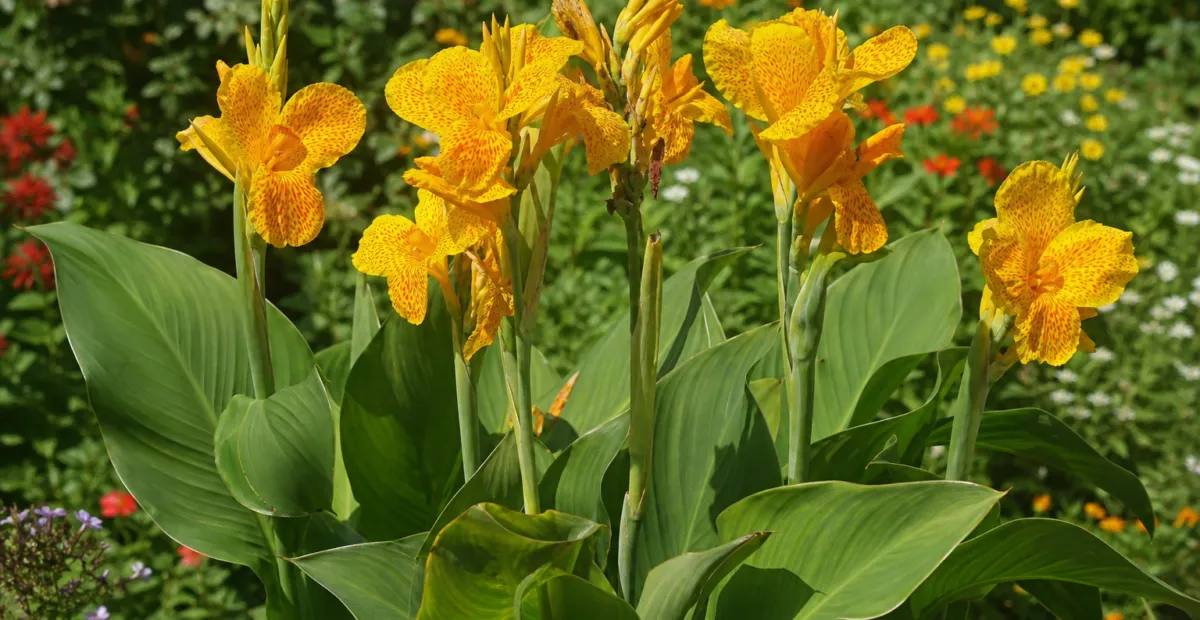
Golden Lucifer has broad, glossy, paddle-shaped green leaves carried on sturdy upright stems. The main identification feature is the contrast between vivid yellow flowers and dense orange-red speckling across the showy floral parts. The plant develops from thick, jointed rhizomes and remains visually bold even before flowering because of its tropical foliage.
Flowering
The true flowers are borne in upright terminal clusters above the foliage. Golden Lucifer has bright yellow blooms marked with conspicuous orange-red speckles. Flowering generally begins in early summer and can continue into mid-autumn or until frost when plants receive warmth, moisture, and regular feeding. Removing faded flower clusters can help maintain a tidy display and encourage continued production.
Pollination and visitors
Canna flowers can provide nectar and pollen resources for hummingbirds and bees; university extension guidance identifies hummingbirds and bumblebees as visitors to some cannas. Evidence for this exact named cultivar is less specific, so the attraction rating is conservative.
Diseases and pests
Diseases
Prevent problems by giving plants full sun, good air movement, and soil that drains reliably. Watch for fungal leaf spots, rust, and rhizome rot, especially in crowded, persistently wet conditions. Remove badly affected foliage, avoid overhead watering late in the day, sanitize tools, and discard rotting rhizomes rather than storing them.
Pests
Inspect new foliage for Japanese beetles, caterpillars, spider mites, aphids, and thrips. Strong plants usually tolerate minor feeding damage. Remove heavily infested leaves, rinse foliage with water, encourage beneficial insects, and use a labeled treatment only when damage is persistent or severe.
Related diseases and pests
Only Plant Doctor profiles whose host data indicate this plant may be affected are shown here.
 PestCitrus mealybugPlanococcus citri
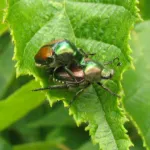 PestJapanese beetlePopillia japonica
 DiseaseRhizopus soft rotRhizopus stolonifer
 DiseaseAlternaria leaf spot and fruit rotAlternaria alternata
 DiseaseRhizoctonia DiseasesRhizoctonia solani Kühn
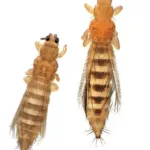 PestOnion thripsThrips tabaci Lindeman
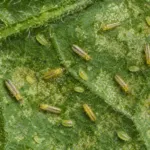 PestMelon thripsThrips palmi Karny
 PestChilli thripsScirtothrips dorsalis Hood
Toxicity and pollen
ASPCA lists canna lily as non-toxic to dogs and cats. That evidence is based on canna lily records rather than a laboratory study of this named cultivar. Normal plant material can still cause mild gastrointestinal upset if eaten in quantity, and children should not be encouraged to chew ornamental plants.
- Typical season
- During summer flowering
- Pollination / pollen
- Insect-carried pollen; not typically wind-dispersed
Canna pollen is associated primarily with insect-mediated transfer rather than abundant wind dispersal. This makes widespread airborne exposure less likely than with wind-pollinated plants, but sensitive individuals can still react to pollen or flower contact. Avoid rubbing eyes after handling and wash hands if irritation occurs.
Native habitat
Named cannas are horticultural hybrids and cultivars rather than plants with one confirmed wild habitat. The genus is associated with tropical and subtropical regions of the Americas. Garden cannas prefer warm conditions, fertile soils, dependable moisture, and a long frost-free season; they do not tolerate frozen rhizomes.
Interesting fact
The cultivar is described as a miniature or dwarf type in some bulb catalogs, yet other horticultural listings report plants around 3–4 feet tall. This variation likely reflects growing conditions, stock, and regional production. Cannas are rhizomatous relatives of gingers and bananas, and their showy petals are largely petal-like staminodes.
Frequently asked questions (FAQ)
The most relevant questions about this plant, with short and direct answers.
🌱Quick care
What is Canna 'Golden Lucifer'?⌄
Canna 'Golden Lucifer' is a clump-forming, frost-tender canna cultivar with green foliage and yellow flowers marked with orange-red speckles. It typically grows about 3 to 4 feet tall and blooms from summer into fall in warm conditions.
How much sun does Canna 'Golden Lucifer' need?⌄
Canna 'Golden Lucifer' grows best in full sun, ideally receiving at least 6 hours of direct sunlight daily. Strong light supports sturdier growth and better flowering, although afternoon shade can help in extremely hot climates.
How often should I water Canna 'Golden Lucifer'?⌄
Keep the soil evenly moist throughout the growing season, watering whenever the surface begins to dry. Do not leave container plants standing in stagnant water, because the rhizomes need moisture with adequate drainage.
Is Canna 'Golden Lucifer' a perennial?⌄
Canna 'Golden Lucifer' is a rhizomatous perennial in frost-free climates, but it is usually grown as a summer annual where winters freeze the ground. In colder areas, lift and store the rhizomes or move containers indoors before hard frost.
🌤️Environment and placement
What USDA hardiness zones can grow Canna 'Golden Lucifer' outdoors year-round?⌄
Canna 'Golden Lucifer' can generally remain outdoors year-round in warm USDA zones, commonly listed around Zones 8–10. In colder zones, winter survival is unreliable without lifting the rhizomes and storing them in a frost-free location.
Where should I plant Canna 'Golden Lucifer' in the garden?⌄
Plant Canna 'Golden Lucifer' in a sunny, sheltered border or near a patio where its tropical foliage and spotted yellow flowers can be seen. Choose fertile, moisture-retentive soil that drains freely rather than a permanently waterlogged site.
Can Canna 'Golden Lucifer' grow in a container?⌄
Yes, Canna 'Golden Lucifer' grows well in a large container with fertile, moisture-retentive potting mix and drainage holes. Container growing is especially useful in colder parts of the United States because the plant can be moved indoors for winter.
How tall does Canna 'Golden Lucifer' get?⌄
Canna 'Golden Lucifer' usually reaches about 3 to 4 feet tall, although height varies with climate, soil fertility, moisture, and the length of the growing season. Give it enough room to form a broad clump without crowding nearby plants.
How wide does Canna 'Golden Lucifer' spread?⌄
A mature clump of Canna 'Golden Lucifer' commonly spreads about 1.5 to 3 feet. Space rhizomes roughly 12 to 18 inches apart for a fuller planting, allowing additional room if you want the clump to expand over several seasons.
💧Care and problems
What type of soil is best for Canna 'Golden Lucifer'?⌄
Use fertile, moisture-retentive, well-drained loam or sandy loam for Canna 'Golden Lucifer'. Improve poor soil with compost, but avoid heavy, constantly saturated ground that can encourage rhizome rot.
Does Canna 'Golden Lucifer' need fertilizer?⌄
Canna 'Golden Lucifer' benefits from regular feeding during active growth, especially in containers or lean soil. Apply a balanced fertilizer or a bloom-supporting feed according to the product label, and avoid excessive nitrogen if flowering is weak.
Why is my Canna 'Golden Lucifer' not flowering?⌄
Poor flowering is most often caused by insufficient sunlight, cool conditions, drought, or excessive nitrogen. Move container plants to brighter light, keep the soil evenly moist, and allow the rhizomes a long warm growing season.
Why are the leaves of my Canna 'Golden Lucifer' turning yellow?⌄
Yellow leaves can result from natural aging, underwatering, overwatering, poor drainage, or nutrient stress. Check soil moisture and drainage first, then remove only leaves that are fully yellow or damaged.
What pests attack Canna 'Golden Lucifer'?⌄
Canna 'Golden Lucifer' may be affected by aphids, slugs, snails, and spider mites, particularly when grown under glass or in hot, dry conditions. Inspect new growth and leaf undersides regularly, and use a control method labeled for the pest and plant.
Can Canna 'Golden Lucifer' get canna virus?⌄
Yes, Canna 'Golden Lucifer' can be affected by canna viruses, which may cause streaking, mottling, distorted leaves, or reduced vigor. Remove and discard clearly symptomatic plants rather than propagating them, because viruses can spread through divisions and sap-feeding insects.
Should I deadhead Canna 'Golden Lucifer'?⌄
Deadhead Canna 'Golden Lucifer' by removing spent flowers and developing seed pods when you want a neater appearance and continued blooming. Deadheading is not always essential, but it can redirect energy toward additional flower production.
Does Canna 'Golden Lucifer' need pruning?⌄
Canna 'Golden Lucifer' needs little routine pruning beyond removing spent flower stalks and damaged leaves. After frost blackens the foliage, cut the stems back before lifting the rhizomes or leaving them dormant in a suitably warm climate.
🪴Planting and repotting
When should I plant Canna 'Golden Lucifer' rhizomes?⌄
Plant Canna 'Golden Lucifer' rhizomes in spring after the danger of frost has passed and the soil has warmed to at least about 60°F. Starting rhizomes indoors several weeks earlier can extend the flowering season in cooler regions.
How deep should Canna 'Golden Lucifer' rhizomes be planted?⌄
Plant Canna 'Golden Lucifer' rhizomes horizontally about 2 to 4 inches deep, with the growing eyes facing upward when visible. Water after planting, then keep the soil consistently moist as shoots develop.
How far apart should I plant Canna 'Golden Lucifer'?⌄
Space Canna 'Golden Lucifer' rhizomes about 12 to 18 inches apart for a massed display while allowing room for clump formation. Use wider spacing if you want each plant to remain visually distinct.
Can I plant Canna 'Golden Lucifer' near a pond?⌄
Canna 'Golden Lucifer' can grow near a pond if planted in moist, well-drained soil rather than permanently submerged conditions. Keep the rhizomes out of standing water unless the container or planting system is specifically designed for wetland culture.
✂️Propagation and pruning
How do I propagate Canna 'Golden Lucifer'?⌄
The most reliable way to propagate Canna 'Golden Lucifer' is by dividing its rhizomes in spring. Separate healthy sections with at least one strong growing eye, then replant them immediately at shallow depth.
Can Canna 'Golden Lucifer' be grown from seed?⌄
Canna 'Golden Lucifer' can produce seeds, but seed-grown plants may not come true to the named cultivar. Rhizome division is preferred when you want plants that retain the cultivar’s yellow, orange-red-speckled flowers.
When should I divide Canna 'Golden Lucifer'?⌄
Divide Canna 'Golden Lucifer' rhizomes in spring as new growth begins or just before planting outdoors. Spring division makes it easier to identify healthy buds and reduces the time that cut rhizomes remain vulnerable to rot.
How do I overwinter Canna 'Golden Lucifer' rhizomes?⌄
After frost blackens the foliage, dig up Canna 'Golden Lucifer' rhizomes, let excess soil dry off, and store them in barely moist peat-free compost, vermiculite, or a similar medium. Keep them in a dark, frost-free place where temperatures remain cool but do not freeze.
⚠️Toxicity and safety
Is Canna 'Golden Lucifer' toxic to dogs and cats?⌄
Canna 'Golden Lucifer' is generally regarded as non-toxic to dogs and cats. Even non-toxic plants can cause mild stomach upset if eaten in quantity, so contact a veterinarian or animal poison service if a pet shows symptoms.
Is Canna 'Golden Lucifer' safe around children?⌄
Canna 'Golden Lucifer' is generally considered a low-risk ornamental plant, but children should not be encouraged to eat its leaves, flowers, or seeds. Supervise young children in the garden and remove fallen plant material if ingestion is a concern.
🌸Flowering and special interest
When does Canna 'Golden Lucifer' bloom?⌄
Canna 'Golden Lucifer' typically blooms from early or midsummer into fall, often continuing until frost in a warm, sunny location. Bloom timing is later in cool climates or when rhizomes are planted late.
What do Canna 'Golden Lucifer' flowers look like?⌄
The flowers of Canna 'Golden Lucifer' are bright yellow and heavily marked with orange-red speckles. They are carried above lush green, paddle-shaped foliage on upright stems, creating a tropical-looking display.
How can I make Canna 'Golden Lucifer' bloom longer?⌄
To extend flowering, grow Canna 'Golden Lucifer' in full sun, keep the soil evenly moist, feed during active growth, and remove spent flowers. Protecting the plant from cold and planting early enough for a long warm season also helps.