
 Source:
 Canna ‘Stuttgart’ short overview
Canna 'Stuttgart' is a striking, tall canna cultivar grown for its large glaucous leaves, boldly splashed and streaked with creamy white, and its smaller apricot-orange flowers. It forms an imposing upright clump in warm summer conditions, especially where the foliage receives bright light with protection from harsh afternoon sun. Keep the soil fertile and consistently moist, then lift and store the rhizomes in cold climates before hard frost.
Taxonomic classification
Canna ‘Stuttgart’ care guide
Light and placement
Give bright light with several hours of sun, but protect the foliage from the harshest afternoon rays in hot climates. A south- or west-facing sheltered site with filtered afternoon shade is suitable. Too much intense sun can scorch the white leaf sectors; too little light produces weaker stems, less color contrast, and fewer flowers.
Watering and humidity
Water deeply when the upper inch of soil begins to dry, keeping the root zone consistently moist during active growth. Containers may need frequent watering in summer, while newly planted rhizomes should not be left to dry out. Reduce watering after dormancy begins and keep stored rhizomes only barely moist so they do not shrivel or rot.
Soil and growing medium
Use fertile, humus-enriched loam or sandy loam that holds steady moisture without becoming waterlogged. Good drainage is essential around the rhizomes, particularly in containers and during winter storage. The cultivar tolerates acidic, neutral, or alkaline soils, but a productive garden soil near neutral is a practical target.
Feeding
Feed during active growth with compost plus a balanced, water-soluble fertilizer at label strength, commonly every 3–4 weeks. Cannas are heavy feeders when growing rapidly, but do not fertilize dry soil or dormant rhizomes. Reduce feeding as growth slows in autumn and stop before lifting plants for storage.
Growth and habit
This cultivar makes a vigorous, upright clump from spreading rhizomes and produces new shoots as the season progresses. Strong growth depends on warmth, moisture, fertility, and protection from damaging wind. Its large variegated leaves can scorch in intense heat, while excessive shade may reduce flowering and weaken the display.
Planting and repotting
Plant outdoors after the danger of frost has passed and the soil has warmed. Set rhizomes horizontally about 3–4 inches deep, with growing eyes facing upward. Space plants about 18–24 inches apart for a solid display while allowing air movement. Water thoroughly after planting and maintain even moisture during establishment.
Repot container-grown plants in spring as growth resumes, moving them into fresh, fertile mix and a container with drainage holes. Choose a heavy, stable pot because the tall foliage can become top-heavy. If the rhizomes have filled the pot, divide them while dormant or just before active growth.
Propagation and pruning
Propagation
Divide healthy rhizomes in spring as growth begins. Each division should contain at least one sound eye or growing point. Use clean tools and discard soft or diseased sections. Seed is not a reliable way to reproduce this cultivar true to type because named canna cultivars may vary genetically.
Pruning
No routine structural pruning is needed. Remove spent flower spikes and damaged leaves during the growing season. After frost blackens the foliage, cut stems back to a few inches above the rhizomes before lifting or mulching. Sanitize tools when cutting plants with suspicious streaking or distorted growth.
Overwintering
In USDA Zones 7–8, lift rhizomes after frost blackens the foliage, let them dry briefly, and store them in barely moist peat, vermiculite, or similar material at about 40–50°F. In milder areas, leave them in the ground under a deep, dry mulch. Replant after spring frost danger has passed.
Uses
Use as a tall architectural accent in mixed borders, tropical-style plantings, sheltered courtyards, and large containers. The variegated leaves provide strong visual interest even when flowering is light. Stems and flower spikes can contribute to seasonal arrangements, but the cultivar is primarily ornamental rather than a documented food or medicinal plant.
Appearance
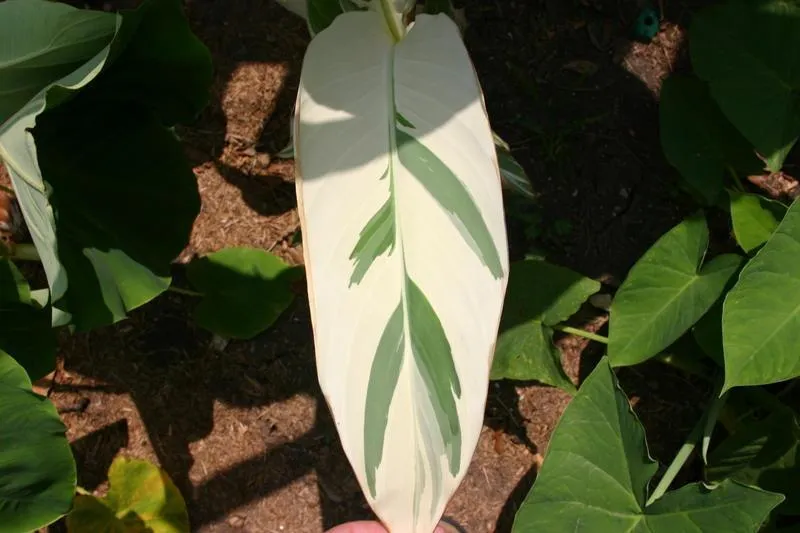
The plant is recognized by its erect green stems and very large, oval to lance-shaped leaves colored gray-green or glaucous green and irregularly marked with cream-white sectors and streaks. The variegation may be uneven from leaf to leaf, and white tissue can brown after stress. Upright apricot flower spikes emerge above the foliage.
Flowering
Upright terminal flower spikes appear from summer into autumn when plants receive adequate warmth and moisture. The flowers are relatively small for the plant, light apricot to orange, and rise above the variegated foliage. Deadheading spent clusters can help maintain a tidy display and encourage continued flowering.
Pollination and visitors
Reliable cultivar-specific documentation of animal visitors was not located. Canna flowers can be fertile and self-pollinating, so no particular pollinator group is assigned here. This ecological uncertainty is separate from the plant's low airborne-pollen concern.
Diseases and pests
Diseases
Potential problems include canna viruses, rhizome rot, bacterial bud rot, fungal leaf spot, rust, and root-knot nematodes. Use clean planting stock, avoid persistently saturated soil, improve air circulation, and water at the base rather than wetting foliage late in the day. Remove and discard plants with severe virus symptoms rather than propagating them.
Pests
Watch for slugs and snails, aphids, caterpillars, and glasshouse red spider mite. Inspect leaf undersides and rolled young leaves regularly. Hand-pick larger pests, wash off aphids or mites with water, and use a labeled treatment only when damage is persistent. Avoid stressing the plant with drought, which can worsen foliage injury.
Related diseases and pests
Only Plant Doctor profiles whose host data indicate this plant may be affected are shown here.
 PestCitrus mealybugPlanococcus citri
 DiseaseRhizopus soft rotRhizopus stolonifer
 DiseaseBacterial soft rotPectobacterium carotovorum
 PestEuropean red mitePanonychus ulmi
 PestCitrus red mitePanonychus citri
 DiseaseAlternaria leaf spot and fruit rotAlternaria alternata
 DiseaseRhizoctonia DiseasesRhizoctonia solani Kühn
 PestGreen Peach AphidMyzus persicae
Toxicity and pollen
ASPCA lists canna lily as non-toxic to dogs and cats. This assessment should not be treated as permission to eat the plant: any plant material may cause digestive upset, and children or pets should not be encouraged to chew rhizomes, leaves, or flowers. Seek medical or veterinary advice after a concerning exposure.
- Typical season
- Summer into early autumn while flowers are open
- Pollination / pollen
- Large, flower-associated pollen; not chiefly wind-dispersed
Canna pollen is associated with flowers rather than prominent wind dispersal, and this cultivar is not widely documented as a major airborne allergen. Sensitivity cannot be ruled out, especially during close handling of flowers. Avoid rubbing the eyes after gardening and wash hands after contact if you notice irritation.
Native habitat
Canna 'Stuttgart' is a cultivated garden selection rather than a wild species, so it has no separate native habitat. Its canna background reflects warm, seasonally moist environments, and it performs best in fertile soils with a long growing season. In temperate US gardens it behaves as a summer perennial and is commonly overwintered as dormant rhizomes.
Interesting fact
The cultivar is associated with the botanical gardens at Stuttgart, Germany. Its white leaf areas result from reduced or absent chlorophyll in affected tissue. It is among the tallest commonly grown cannas and can produce long, thin, vigorous rhizomes. The name 'Striata' is frequently misapplied to it, although RHS treats that synonym as incorrect.
Frequently asked questions (FAQ)
The most relevant questions about this plant, with short and direct answers.
🌱Quick care
What is Canna 'Stuttgart'?⌄
Canna 'Stuttgart' is a tall, rhizomatous canna cultivar grown mainly for its bold green-and-white variegated leaves and pale apricot to orange flowers. It is a warm-season perennial where winters are mild and is commonly grown as an annual or overwintered rhizome in colder parts of the United States.
How much light does Canna 'Stuttgart' need?⌄
Give Canna 'Stuttgart' bright light with protection from intense afternoon sun. Morning sun or filtered light helps preserve the white variegation and reduces the risk of leaf scorch, especially in hot climates.
How often should I water Canna 'Stuttgart'?⌄
Keep the soil evenly moist throughout the growing season. Water whenever the surface begins to dry, because drought stress can cause wilting and browning, but avoid stagnant water around the rhizome.
Is Canna 'Stuttgart' easy to grow?⌄
Canna 'Stuttgart' is generally easy to grow when supplied with warmth, moisture, fertile soil, and adequate light. Its variegated leaves can be more prone to sunburn and stress than those of solid-green cannas.
🌤️Environment and placement
Where should I plant Canna 'Stuttgart' outdoors?⌄
Plant Canna 'Stuttgart' in a sheltered, bright location with morning sun and afternoon protection. A moist border, pond edge, patio container, or protected courtyard works well if the soil drains freely.
Can Canna 'Stuttgart' grow in full sun?⌄
Canna 'Stuttgart' can tolerate some full sun, but full-day exposure is often unsuitable in hot, bright conditions. The white areas of its leaves may scorch, so afternoon shade or filtered light is usually safer.
Can Canna 'Stuttgart' grow in shade?⌄
Canna 'Stuttgart' can grow in bright partial shade, but deep shade usually produces weaker stems, less vigorous growth, and fewer flowers. Aim for several hours of bright light, preferably with gentler morning sun.
What USDA zones are suitable for Canna 'Stuttgart'?⌄
Canna 'Stuttgart' is usually treated as hardy outdoors in USDA Zones 8–10 or 8–11, depending on the source and local winter conditions. In colder zones, lift and store the rhizomes before freezing weather.
How tall does Canna 'Stuttgart' get?⌄
Canna 'Stuttgart' commonly reaches about 4–6 feet tall, although height varies with climate, container size, moisture, fertility, and winter survival. Exceptional plants grown in very favorable conditions may become taller.
Is Canna 'Stuttgart' suitable for containers?⌄
Canna 'Stuttgart' grows well in a large container with fertile, moisture-retentive but well-drained potting mix. Choose a heavy pot that can support a 4–6-foot plant and provide afternoon protection to limit leaf scorch.
Can Canna 'Stuttgart' grow near a pond?⌄
Canna 'Stuttgart' is well suited to a moist pond margin or boggy garden area, provided the rhizome is not kept in stagnant, oxygen-poor water. Keep the planting medium wet but reasonably well drained.
💧Care and problems
What soil is best for Canna 'Stuttgart'?⌄
Use fertile, moist but well-drained loam or sandy loam for Canna 'Stuttgart'. Improve poor soil with organic matter, but avoid heavy clay that stays cold and waterlogged around the rhizomes.
How should I fertilize Canna 'Stuttgart'?⌄
Feed Canna 'Stuttgart' with a balanced garden fertilizer or compost during active growth. Regular moisture and adequate nutrition support large foliage and flowering, but excessive fertilizer can produce lush leaves with fewer blooms.
Why are the leaves of my Canna 'Stuttgart' turning brown?⌄
Brown leaf edges on Canna 'Stuttgart' are most often caused by intense afternoon sun, drought, dry air, or wind. Move container plants to filtered light and keep the soil evenly moist while removing badly damaged leaves.
Why is my Canna 'Stuttgart' losing its variegation?⌄
Canna 'Stuttgart' can occasionally produce greener leaves or partially revert, and the amount of variegation may vary between shoots. Remove wholly green shoots at the base if they are overtaking more strongly variegated growth.
Why does Canna 'Stuttgart' have white or pale leaves?⌄
White or pale sections are the cultivar’s normal variegation, but an almost entirely white leaf has little chlorophyll and may weaken quickly. Bright filtered light, steady moisture, and removal of completely white growth can help maintain plant vigor.
Why is Canna 'Stuttgart' not flowering?⌄
Canna 'Stuttgart' may fail to flower because of insufficient light, cool weather, drought, overcrowding, or excessive nitrogen. Give it warmth, bright light with afternoon protection, consistent moisture, and fertile soil during the growing season.
What pests commonly affect Canna 'Stuttgart'?⌄
Canna 'Stuttgart' may be affected by caterpillars, aphids, spider mites, or thrips, especially when plants are stressed. Inspect the undersides of leaves regularly and use a targeted, label-approved treatment only when pests are confirmed.
Should I deadhead Canna 'Stuttgart'?⌄
Deadhead Canna 'Stuttgart' by removing spent flower clusters and cutting back exhausted flowering stems. This improves appearance and can encourage the plant to produce additional flower stalks before the growing season ends.
🪴Planting and repotting
When should I plant Canna 'Stuttgart' rhizomes?⌄
Plant Canna 'Stuttgart' rhizomes outdoors in spring after the danger of hard frost has passed and the soil has warmed. In colder regions, start rhizomes indoors several weeks earlier and transplant them after nighttime temperatures improve.
How deep should I plant Canna 'Stuttgart' rhizomes?⌄
Plant Canna 'Stuttgart' rhizomes about 2–4 inches deep with the growing eyes facing upward. In loose, well-drained soil, slightly deeper planting can help anchor tall plants, but avoid burying them in cold, saturated ground.
How far apart should Canna 'Stuttgart' be planted?⌄
Space Canna 'Stuttgart' about 18–24 inches apart for a full display while allowing air circulation. Give extra room in very fertile conditions because the rhizomes can expand into broad clumps.
Can I plant Canna 'Stuttgart' in the ground in USDA Zone 7?⌄
You can grow Canna 'Stuttgart' in the ground in USDA Zone 7, but the rhizomes should generally be lifted before freezing weather. Mulching may help in mild winters, yet it is not a dependable substitute for storage.
How do I overwinter Canna 'Stuttgart' in cold climates?⌄
After frost damages the foliage, cut the stems back, dig the rhizomes, and let them dry briefly before storing them in a cool, dark, frost-free place. Pack them loosely in barely dry peat, vermiculite, or similar material and check periodically for rot.
Can Canna 'Stuttgart' stay outdoors over winter?⌄
Canna 'Stuttgart' can usually remain outdoors year-round only where the ground does not freeze deeply, generally USDA Zones 8–10 or warmer. In colder areas, freezing temperatures can damage or kill the rhizomes unless they are protected or lifted.
✂️Propagation and pruning
How do I propagate Canna 'Stuttgart'?⌄
Propagate Canna 'Stuttgart' by dividing its rhizomes in spring, ensuring each division has at least one healthy growing eye. Seed is less useful for preserving this named cultivar because seedlings may not reproduce the parent’s variegated foliage.
When should I divide Canna 'Stuttgart'?⌄
Divide Canna 'Stuttgart' in spring as new shoots begin to emerge or just before active growth starts. This makes the eyes easier to identify and gives each division a long warm season to establish.
Should I cut back Canna 'Stuttgart' in fall?⌄
Cut Canna 'Stuttgart' stems to a few inches above the soil after frost blackens the foliage or before lifting the rhizomes. In frost-free climates, remove old stems and leaves as they decline to encourage clean new growth.
⚠️Toxicity and safety
Is Canna 'Stuttgart' toxic to dogs and cats?⌄
Canna 'Stuttgart' is considered non-toxic to dogs and cats. Even non-toxic plants can cause mild stomach upset if eaten in quantity, so prevent pets from digging up or repeatedly chewing the foliage and rhizomes.
🌸Flowering and special interest
What color flowers does Canna 'Stuttgart' produce?⌄
Canna 'Stuttgart' produces pale apricot, peach, orange, or soft orange flowers, with the exact shade varying by plant and growing conditions. The flowers contrast strongly with its green-and-white variegated leaves.
When does Canna 'Stuttgart' bloom?⌄
Canna 'Stuttgart' usually blooms from mid to late summer and may continue into early fall or until frost when conditions remain warm and moist. Plants started late or grown in cool regions may flower later.
Are the leaves or flowers more ornamental on Canna 'Stuttgart'?⌄
The variegated leaves are usually the main ornamental feature of Canna 'Stuttgart', while the pale apricot to orange flowers provide seasonal contrast. Protecting the foliage from harsh afternoon sun is therefore especially important.
Similar plants
 Yellow lantern chili (Capsicum chinense) care guideCapsicum chinense
 Capsicum baccatum care guideCapsicum baccatum
 Serrano (Capsicum annuum ‘Serrano’)Capsicum annuum 'Serrano'
 Purple Beauty (Capsicum annuum ‘Purple Beauty’)Capsicum annuum 'Purple Beauty'
 Numex Twilight (Capsicum annuum ‘Numex Twilight’)Capsicum annuum 'Numex Twilight'
 Explosive Ember Chili Pepper (Capsicum annuum ‘Explosive Ember’)Capsicum annuum 'Explosive Ember'