
 Source:
 Tovelit (Hydrangea macrophylla ‘Tovelit’) short overview
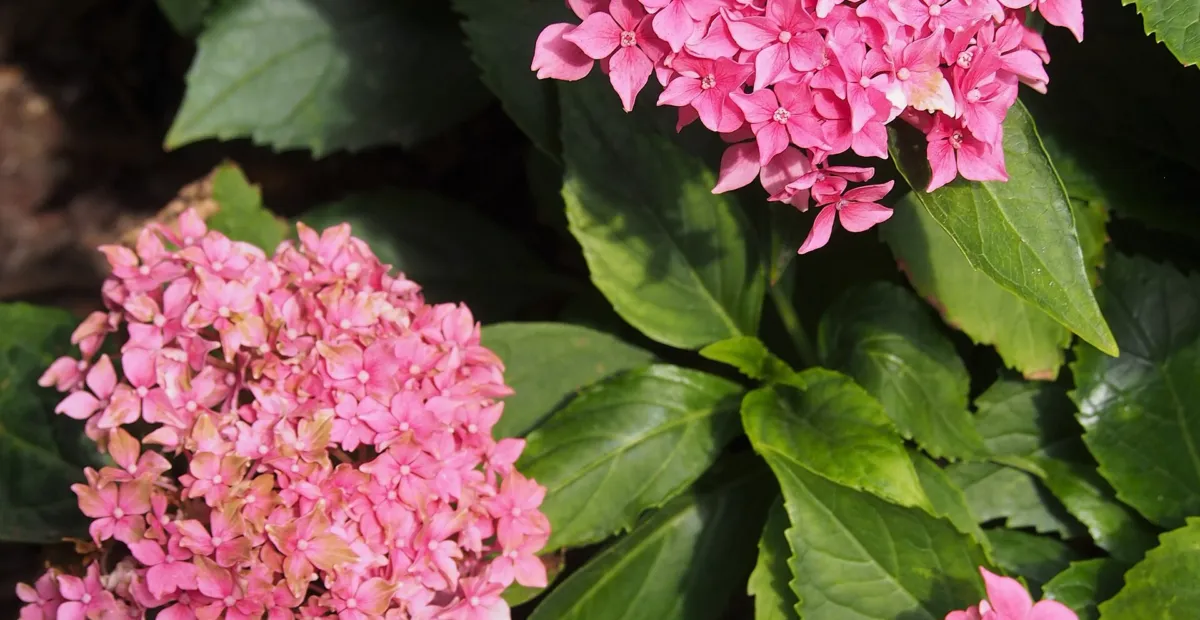
Hydrangea macrophylla 'Tovelit' is a compact mophead hydrangea from Norway, valued for its rounded rose-violet flower clusters and dark green, coarsely toothed leaves. The blooms may shift toward blue in sufficiently acidic soil, while alkaline conditions tend to preserve pinker tones. It grows best in a sheltered site with morning sun or bright partial shade, evenly moist humus-rich soil, and protection from winter damage to old flowering stems.
Taxonomic classification
Tovelit (Hydrangea macrophylla ‘Tovelit’) care guide
Light and placement
Choose morning sun or bright partial shade, ideally with protection from intense afternoon heat and drying wind. Too much direct afternoon sun can cause wilt, scorched leaves, and faded flowers; too much shade may produce weak, leafy growth and fewer blooms. An east-facing site or bright woodland-edge position is usually a good compromise.
Watering and humidity
Water deeply when the upper inch of soil begins to dry, keeping the root zone evenly moist rather than alternating between drought and saturation. Increase frequency during hot, dry weather and reduce it during cool or rainy periods. Container plants may need daily checks in summer. Mulch helps reduce evaporation, but do not let soil remain waterlogged.
Soil and growing medium
Use fertile, humus-rich soil that holds moisture but drains excess water. A slightly acidic to neutral root environment is suitable; soil pH also influences flower color, with more acidic conditions favoring bluer tones and less acidic conditions generally producing pinker or rose-violet flowers. Improve sandy soil with compost and avoid persistently waterlogged sites.
Feeding
Apply a balanced, slow-release shrub fertilizer in early spring as growth begins, following the product label. A thin compost mulch can improve soil structure and nutrient availability. Avoid heavy nitrogen feeding, which can produce lush foliage with weaker flowering, and do not fertilize drought-stressed, newly frozen, or actively declining plants.
Growth and habit
A compact, rounded shrub with a moderate growth rate and a tendency to form a dense leafy framework. Because flowering is mainly carried on older stems, maintenance should prioritize preserving healthy canes through winter and avoiding hard annual cutback. Mulching helps stabilize soil moisture and root temperature.
Planting and repotting
Plant in spring or fall when the soil is workable. Set the root ball level with the surrounding soil, never deeply buried. Space plants about 3 feet apart for a continuous grouping, allowing extra room where a larger specimen is expected. Mulch with compost or shredded bark, keeping mulch away from the stems, and water consistently during establishment.
Repot container plants in early spring before active growth, moving up one pot size at a time. Use a moisture-retentive but well-drained shrub or ericaceous-style mix. Refresh the upper layer annually if the root ball is not crowded, and water thoroughly after transplanting.
Propagation and pruning
Propagation
Use softwood or semi-ripe stem cuttings in late spring through summer. Take healthy non-flowering shoots, remove lower leaves, insert into a sterile, evenly moist rooting medium, and maintain high humidity with bright filtered light. Cultivar seed will not reliably reproduce 'Tovelit' true to type.
Pruning
Prune lightly after flowering only when necessary, removing spent heads and weak, damaged, or crossing stems. Avoid cutting the whole plant back in fall or early spring because the next season's flower buds are commonly carried on older wood. If winter damage occurs, wait until spring growth shows which stems are alive, then cut back to healthy tissue.
Overwintering
In colder areas, mulch the root zone with 3–4 inches of bark or leaf compost after the ground cools. Protect stems from prevailing winter wind with a loose wrap or wire cage filled with insulating leaves, but avoid airtight plastic. Because flowering is mainly on old wood, winter protection is especially valuable in zones 6 and colder. Container plants need an unheated protected location and occasional moisture.
Uses
Use as a compact ornamental shrub in shaded borders, woodland-style gardens, sheltered foundation beds, patio containers, and seasonal cut-flower arrangements. The dried flower clusters can remain decorative after the growing season. It is not an edible or medicinal plant, and ingestion should be avoided.
Appearance
The plant forms a compact, rounded framework of sturdy stems bearing broad, dark green, coarsely toothed leaves. Large spherical mophead clusters sit above the foliage in summer. In autumn, leaves may take on burgundy-red tones before dropping. The combination of compact habit, coarse foliage, and rounded rose-violet heads helps distinguish it from lacecap cultivars.
Flowering
This cultivar produces rounded mophead clusters in summer, mainly from buds formed on older stems. The showy parts are predominantly sterile sepals, while small fertile flowers may occur within the cluster. Flower color is variable and can range from rose-violet toward blue according to soil chemistry. Heavy winter or pruning damage to old stems can reduce flowering the following season.
Pollination and visitors
Mophead cultivars are dominated by showy sterile florets and generally offer fewer accessible fertile flowers than lacecap forms. Small fertile flowers may still support occasional insect visits, but strong pollinator attraction should not be assumed for this cultivar.
Hydrangea macrophylla 'Tovelit' photos
Click any photo for a larger view. Source, author and license are shown separately.
Diseases and pests
Diseases
Reduce leaf and flower disease by providing good air circulation, watering at the soil surface, removing fallen diseased foliage, and avoiding prolonged wetness on leaves. Watch for leaf spot, powdery mildew, gray mold, and root or crown problems in poorly drained soil. Prune out affected tissue with clean tools and improve drainage rather than relying on routine fungicide use.
Pests
Inspect new growth and leaf undersides for aphids, two-spotted spider mites, scale, and hydrangea leaf tiers. Encourage natural predators, rinse light infestations with water, and use horticultural soap or oil only when needed and according to the label. Avoid drought stress, which can worsen mite problems, and avoid unnecessary broad-spectrum insecticides during bloom.
Related diseases and pests
Only Plant Doctor profiles whose host data indicate this plant may be affected are shown here.
 DiseaseGray MoldBotrytis cinerea
 PestCyclamen mitePhytonemus pallidus
 PestChilli thripsScirtothrips dorsalis Hood
 DiseaseAster yellows‘Candidatus Phytoplasma asteris’
 PestStrawberry foliar nematodeAphelenchoides fragariae
 PestTwo-spotted spider miteTetranychus urticae
 DiseaseMaple powdery mildewSawadaea bicornis
 DiseaseCucurbit Powdery MildewPodosphaera xanthii (Castagne) U. Braun & Shishkoff
Toxicity and pollen
Hydrangeas contain cyanogenic compounds, and ingestion of plant material can cause gastrointestinal upset; serious cyanide poisoning is considered uncommon. Keep foliage and flowers away from children and pets, and seek medical or veterinary advice after significant ingestion. Do not use the plant as food or medicine.
- Typical season
- Summer flowering period
- Pollination / pollen
- Insect-carried pollen; limited airborne exposure
Hydrangea macrophylla is insect-pollinated and its pollen is not typically regarded as a major airborne allergen. The dense mophead structure further limits exposed fertile flowers, but sensitive individuals should still avoid assuming zero allergy risk around flowering plants.
Native habitat
The cultivar is a garden selection rather than a wild population. Its species is associated with moist, temperate habitats in Japan and nearby East Asia. In cultivation, it performs best in fertile soils with reliable moisture, shelter from drying winds, and protection from intense afternoon heat.
Interesting fact
The cultivar is reported to originate from Norway despite belonging to a species native to Japan and neighboring East Asian regions.
'Tovelit' is listed as a dwarf or compact cultivar of Hydrangea macrophylla.
Its rounded mophead clusters are mainly composed of showy sterile florets.
Flower color can move toward blue in more acidic soil conditions.
Old stems are important because this cultivar flowers mainly on older wood.
Frequently asked questions (FAQ)
The most relevant questions about this plant, with short and direct answers.
🌱Quick care
How do you care for Hydrangea macrophylla 'Tovelit'?⌄
Give Hydrangea macrophylla 'Tovelit' morning sun or partial shade, fertile evenly moist soil, and protection from harsh winter conditions. Water deeply when the soil surface begins to dry, especially during hot weather.
How big does Hydrangea macrophylla 'Tovelit' get?⌄
Hydrangea macrophylla 'Tovelit' is a compact bigleaf hydrangea that usually reaches about 2.5 to 3 feet tall and wide. Its mature size can vary with climate, pruning, soil, and growing conditions.
Is Hydrangea macrophylla 'Tovelit' a mophead or lacecap?⌄
Hydrangea macrophylla 'Tovelit' is generally grown as a mophead hydrangea, producing rounded flower clusters. Individual descriptions may vary slightly because bloom shape and color can change with growing conditions.
🌤️Environment and placement
Where should I plant Hydrangea macrophylla 'Tovelit'?⌄
Plant Hydrangea macrophylla 'Tovelit' where it receives morning sun and afternoon shade or bright partial shade. A sheltered location is preferable because strong sun, drying wind, and winter exposure can damage foliage or flower buds.
Can Hydrangea macrophylla 'Tovelit' grow in full sun?⌄
Hydrangea macrophylla 'Tovelit' can tolerate some additional sun if the soil stays reliably moist, but full-day sun is risky in hot U.S. climates. Morning sun followed by afternoon shade is the safer placement.
What USDA hardiness zone is Hydrangea macrophylla 'Tovelit' suitable for?⌄
Hydrangea macrophylla 'Tovelit' is most dependable where winter temperatures allow its old stems and flower buds to survive. In colder parts of the United States, it may regrow as a foliage plant but produce few or no flowers after winter damage.
Can Hydrangea macrophylla 'Tovelit' tolerate heat?⌄
Hydrangea macrophylla 'Tovelit' can grow in warm areas when protected from intense afternoon sun and supplied with consistent moisture. Heat, drought, and reflected sunlight can cause wilting, leaf scorch, and reduced flowering.
What type of soil does Hydrangea macrophylla 'Tovelit' need?⌄
Use fertile, humus-rich soil that holds moisture but drains freely. Amending compact, sandy, or poor soil with organic matter can improve moisture consistency and root growth.
Does soil pH affect the flower color of Hydrangea macrophylla 'Tovelit'?⌄
Yes, soil pH can influence the flower color of this bigleaf hydrangea, with more acidic conditions often encouraging blue or violet tones and less acidic conditions favoring pink or reddish tones. Color response depends on available aluminum, soil chemistry, and the plant’s growing conditions.
💧Care and problems
How often should I water Hydrangea macrophylla 'Tovelit'?⌄
Water Hydrangea macrophylla 'Tovelit' whenever the upper soil begins to dry, keeping the root zone evenly moist but not waterlogged. During hot or dry weather, container plants may need water daily while landscape plants may need deep watering several times per week.
Why is my Hydrangea macrophylla 'Tovelit' wilting?⌄
Wilting is usually caused by dry soil, excessive heat, intense afternoon sun, or damaged roots. Check soil moisture, water deeply, and provide temporary shade; persistent wilting despite moist soil may indicate poor drainage or root problems.
Why are the leaves on my Hydrangea macrophylla 'Tovelit' turning brown?⌄
Brown leaf edges or patches commonly result from drought, heat, sun scorch, wind, or fertilizer injury. Keep the soil consistently moist, protect the plant from harsh afternoon sun, and avoid applying concentrated fertilizer to dry soil.
Why is Hydrangea macrophylla 'Tovelit' not flowering?⌄
The most common causes are winter-killed flower buds, pruning at the wrong time, insufficient light, or excessive nitrogen. Because bigleaf hydrangeas commonly flower on older stems, cutting them back in fall, winter, or early spring can remove the next season’s blooms.
What pests affect Hydrangea macrophylla 'Tovelit'?⌄
Hydrangea macrophylla 'Tovelit' may be affected by aphids, hydrangea scale, capsid bugs, and vine weevils. Inspect new growth, leaf undersides, stems, and container roots regularly, and address infestations early with an appropriate labeled treatment.
What diseases can affect Hydrangea macrophylla 'Tovelit'?⌄
Possible problems include leaf spot, powdery mildew, gray mold, and other fungal diseases favored by wet foliage and poor air circulation. Water at the soil line, remove badly affected leaves, and avoid overcrowding the plant.
🪴Planting and repotting
When is the best time to plant Hydrangea macrophylla 'Tovelit'?⌄
Plant Hydrangea macrophylla 'Tovelit' in spring or fall when temperatures are moderate and the soil is workable. Spring planting is often safer in colder regions because the shrub has more time to establish before winter.
Can Hydrangea macrophylla 'Tovelit' grow in a container?⌄
Yes, its compact size makes Hydrangea macrophylla 'Tovelit' suitable for a large container with drainage holes. Use moisture-retentive potting mix, water consistently, and protect the container and roots from severe winter freezes.
How far apart should I plant Hydrangea macrophylla 'Tovelit'?⌄
Space Hydrangea macrophylla 'Tovelit' about 3 feet apart for individual shrubs or a slightly closer distance for a fuller mass planting. Allow enough room for mature airflow and avoid crowding the plant against walls or other shrubs.
How should I mulch Hydrangea macrophylla 'Tovelit'?⌄
Apply a 2- to 3-inch layer of organic mulch over the root zone, keeping it a few inches away from the stems. Mulch helps moderate soil temperature and conserve moisture, but excessively deep or wet mulch can encourage stem and root problems.
✂️Propagation and pruning
When should I prune Hydrangea macrophylla 'Tovelit'?⌄
Prune Hydrangea macrophylla 'Tovelit' immediately after flowering, removing spent flower heads and selectively shortening older stems if needed. Avoid routine fall, winter, or early-spring pruning because the plant may already have formed next year’s flower buds.
How hard can I cut back Hydrangea macrophylla 'Tovelit'?⌄
Limit pruning to dead, damaged, weak, or overcrowded stems unless severe winter injury requires more removal. If all older stems die back, cut out the dead wood in spring and retain any healthy new shoots, although flowering may be delayed or absent.
Can Hydrangea macrophylla 'Tovelit' be propagated from cuttings?⌄
Yes, Hydrangea macrophylla 'Tovelit' can be propagated from softwood cuttings taken in early summer or hardwood cuttings taken during dormancy. Rooting success is generally best with healthy, disease-free stems kept evenly moist in a sterile medium.
⚠️Toxicity and safety
Is Hydrangea macrophylla 'Tovelit' poisonous to pets?⌄
Hydrangea macrophylla 'Tovelit' should be treated as potentially harmful if eaten by dogs, cats, or other pets. Keep pets from chewing the plant and contact a veterinarian or animal poison service if ingestion occurs.
Is Hydrangea macrophylla 'Tovelit' toxic to people?⌄
Hydrangea macrophylla 'Tovelit' is potentially toxic if ingested and may also irritate sensitive skin during handling. Keep plant material away from children and wear gloves when pruning or handling damaged foliage.
🌸Flowering and special interest
When does Hydrangea macrophylla 'Tovelit' bloom?⌄
Hydrangea macrophylla 'Tovelit' generally flowers in summer, with timing varying by climate and winter survival. In colder regions, flowering may be sparse or missing if the previous season’s stems and buds were damaged.
What color are Hydrangea macrophylla 'Tovelit' flowers?⌄
The flowers may appear rose-pink, reddish pink, violet, or blue depending largely on soil chemistry and growing conditions. The cultivar is commonly described as a compact mophead with pink to violet-blue flower clusters.
Does Hydrangea macrophylla 'Tovelit' bloom on old wood or new wood?⌄
Hydrangea macrophylla 'Tovelit' should be treated primarily as an old-wood bloomer unless reliable cultivar-specific evidence confirms otherwise. Protect older stems through winter and avoid unnecessary pruning before flowering.
Will Hydrangea macrophylla 'Tovelit' rebloom all summer?⌄
Do not assume that Hydrangea macrophylla 'Tovelit' is a dependable rebloomer. Available cultivar information supports summer flowering, but consistent repeat blooming is not clearly documented for this specific plant.
Similar plants
 Penny Mac (Hydrangea macrophylla ‘Penny Mac’)Hydrangea macrophylla 'Penny Mac'
 Blaumeise (Hydrangea macrophylla ‘Blaumeise’)Hydrangea macrophylla 'Blaumeise'
 Hamburg mophead hydrangea (Hydrangea macrophylla ‘Hamburg’)Hydrangea macrophylla 'Hamburg'
 Taube (Hydrangea macrophylla ‘Taube’)Hydrangea macrophylla 'Taube'
 Blue Wave (Hydrangea macrophylla ‘Blue Wave’)Hydrangea macrophylla 'Blue Wave'
 Smooth hydrangea or sevenbark (Hydrangea arborescens) care guideHydrangea arborescens